
菜包粿 càibāo guǒ, the vegetable parcel, is a steamed rice-skin dumpling the size of two fingers, and 梅陇镇 Méilǒng zhèn in 海丰县 Hǎifēng xiàn has been making it for at least as long as anyone has bothered to write down: a translucent wrapper pressed to within a millimetre, folded into a spindle round a filling of greens, dried shrimp and peanuts. 汕尾市 Shànwěi shì is the prefecture locals call 海陆丰 Hǎilùfēng, where the Hoklo-speaking plains of the coast and the Hakka hills of 陆河县 meet inside one boundary, and the rice cake belongs firmly to the plains.
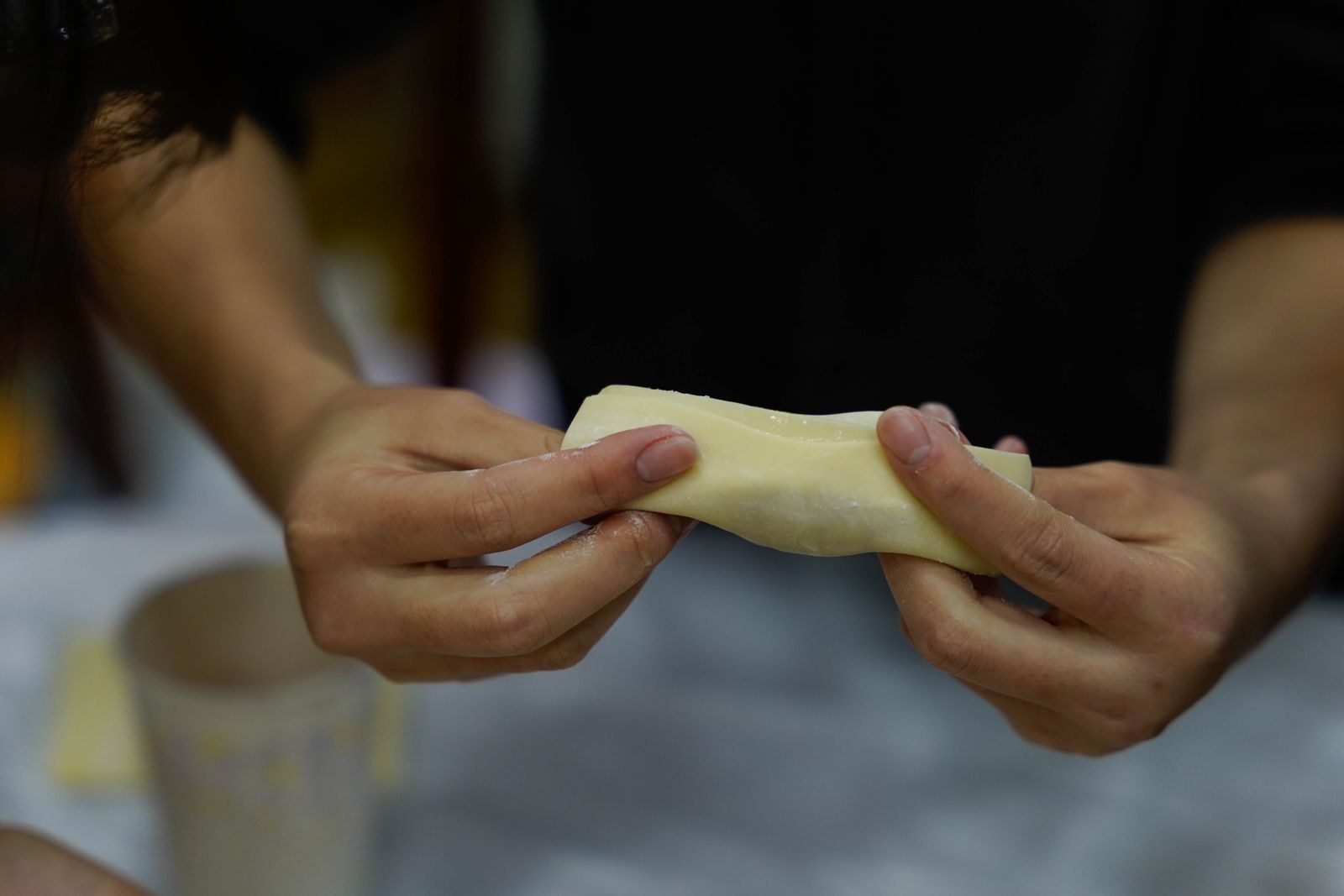
The wrapper is rice and nothing else. 粘米粉 zhān mǐ fěn, the flour of the dry-oil rice, is poured into boiling water with a little salt and oil, stirred into a paste and kneaded for a long time into what the trade calls the 粿坯 guǒ pī; the traditional rule is that both the 粘米 and the glutinous rice should come from the most recent harvest, milled fresh and blended in proportion, because the skin has to be thin, elastic and unbroken at once. Shaping uses a tool rather than a hand: the 粿躏 guǒlìn is a pottery ball the size of an egg, turned in a full circle over the dough to press out a thin concave shell.
The filling is the market garden and the drying rack together: shredded white radish, cabbage, mung-bean sprouts, 沙葛 shāgé jicama, celery, garlic, diced pork, 鱿脯 yóupǔ dried squid, 虾干 xiāgān dried shrimp, peanut kernels and 大地鱼粉 dàdì yú fěn, the dried-flatfish powder this coast reaches for in place of salt. Each parcel is folded into a spindle, the two ends pinched shut and laid in rows on the 朗埗 lǎngbù, a steamer tray woven from reed or bamboo, over a fierce fire in an iron wok. The cook brushes them at once with raw oil and scatters coriander over them.
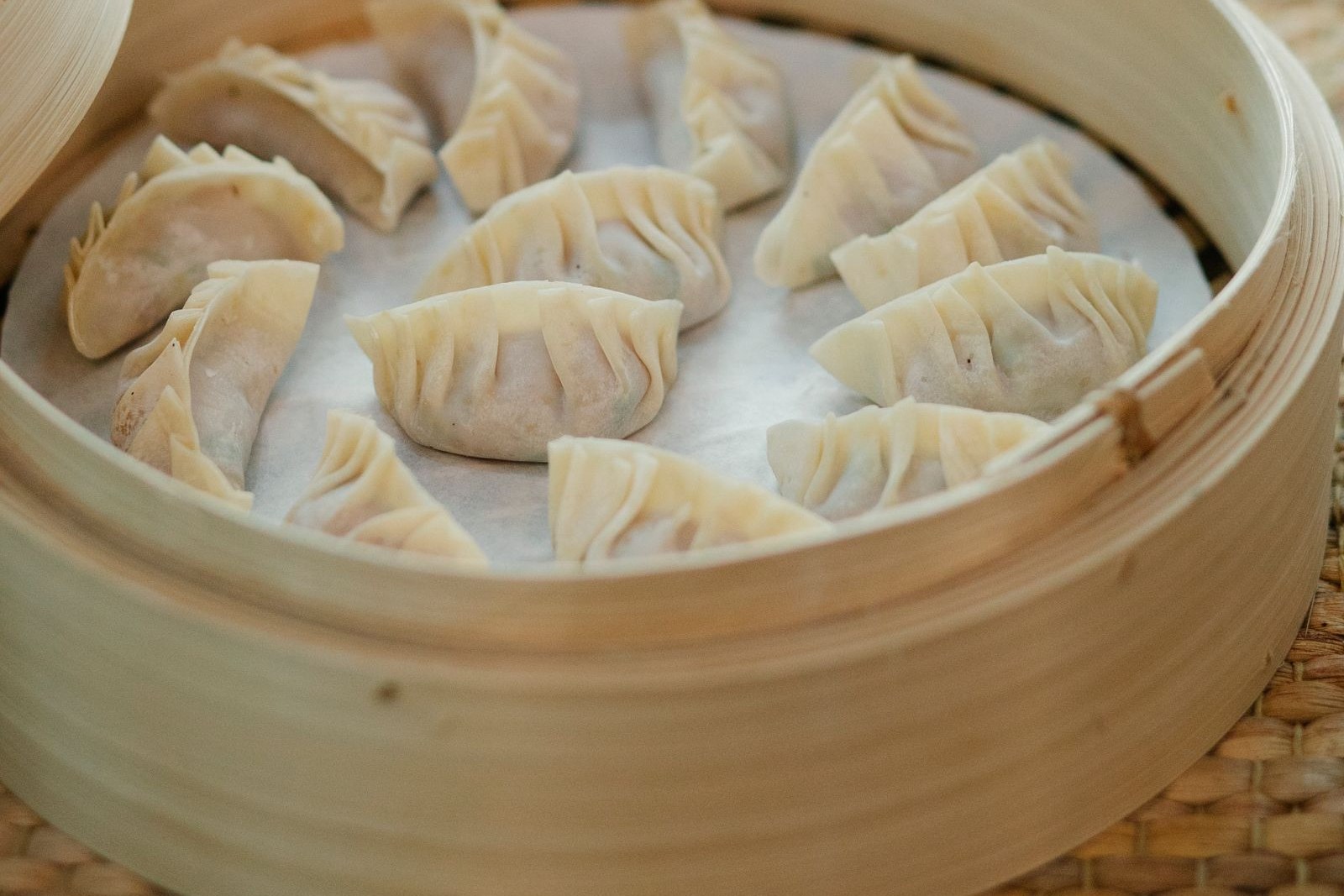
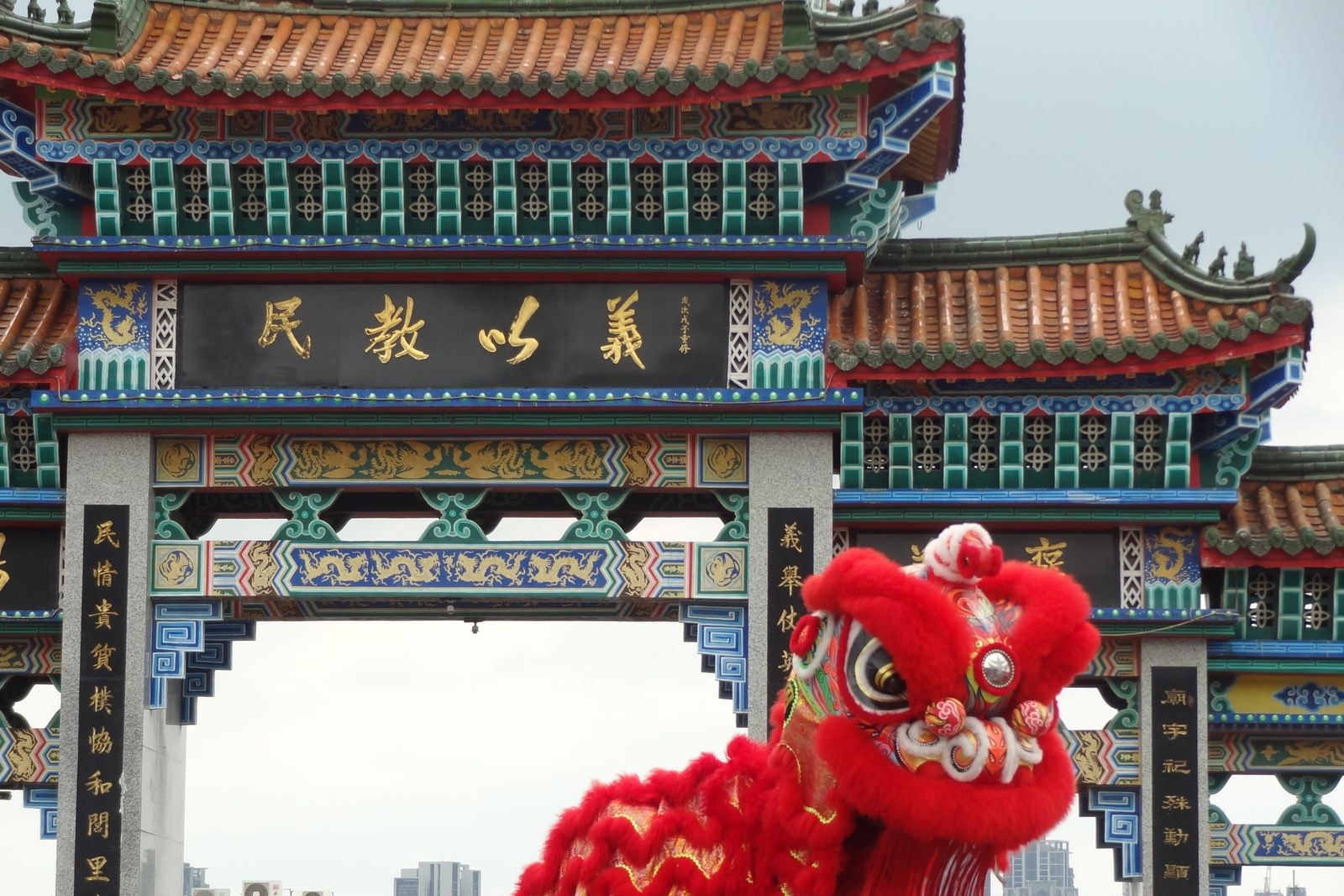
At the table they are dipped in chilli sauce, oyster sauce or soy, and eaten with plain tea or with wine; they are also fried, which gives a crisp skin and a soft centre. The dish’s real life, though, is the calendar. 正月二十 zhēngyuè èrshí, the twentieth day of the first lunar month, is 开市日 kāishì rì, the opening of the market, the first great festival of the year in 梅陇墟 Méilǒng xū: five-coloured arches at the street corners, flags across the road, lion troupes, opera troupes, shawm and silk-and-bamboo bands, and every household making parcels. A guest going home is handed a plate to carry.
The other date is 十月初一, the first day of the tenth month, called 十月朝 shíyuè zhāo, when the Meilong plain thanks the gods and honours its ancestors, and the parcels belong to the eight seasonal festivals as well; older practice made them a 面前 miànqián, a gift carried between relatives. The pun does a lot of work: 菜 cài, greens, sounds like 财 cái, wealth, so wrapping the greens inside the skin is read as 把财包起来, putting the money away for the year. Two origin stories circulate and both are stories, one of a Qing youth named 王坣 Wáng Táng who died building the sea wall, and one of fishermen settling a market town.
Words and Names
菜包粿 càibāo guǒ is the parcel and 菜粿 càiguǒ the same thing shortened; 菜包仔, little vegetable parcel, is the affectionate form in 海丰. 粿 guǒ is the rice-cake family word, 粿躏 guǒlìn the pottery shaper and 朗埗 lǎngbù, sometimes written 朗涉, the woven steaming tray. In the filling, 沙葛 is jicama, 鱿脯 dried squid, 虾干 dried shrimp and 大地鱼粉, also called 铁脯烀 tiěfǔhū, the dried flatfish seasoning. 开市日 kāishì rì, the twentieth of the first month, is the market-town festival this dish is bound to.
What the Locals Know
Two questions about the cake are open in the record. The first is whether 菜包 càibāo and 鱼包 yúbāo are the two official kinds: the city’s own account of 海陆丰 snacks says the parcels divide by filling into a vegetable one and a fish one made from 海乌鱼, with the 金盘围 version famous, but that claim appears on a single official page and no other source repeats it. The second is size: one write-up says 海丰’s parcels are small and finger-shaped, one to a mouth, while people in 陆丰 make them larger, and no standard settles it.
The county line is clear otherwise. On 25 July 2024 the Haifeng county government published its fourth batch of county-level intangible heritage, listing 菜包粿制作工艺 on an application from 梅陇镇; on 8 January 2026 the city government added the same technique to the fourth batch of municipal heritage, on an application from 海丰县. Production stays domestic, though a food-valley project now has firms developing frozen parcels and applying for geographical-indication protection. Meilong children still sing 舂白米,做菜包, pound the white rice, make the parcel.
What to look for is simple. A good 菜包粿 is thin enough to show the green through it, and the fold at head and tail should be tight; it should be steamed to order rather than reheated, since the county warns that repeated steaming costs the flavour; and it should be eaten within the hour. In 海丰 the pairing to ask for is a plate of them with 菜茶 càichá, the other dish this part of the coast is known for and a different thing entirely, or else a bowl of beef-ball soup. In the city, 二马路 Èr mǎ lù is where the old rice-cake shops are.
flowcloud would say that 梅陇菜包粿 is a market town’s lunch written down as a technique – rice from the last harvest pressed to a millimetre with a pottery ball, greens and dried shrimp wrapped into a spindle, steamed hard, oiled, and eaten with tea before the skin has time to cool.
Where to find it: 梅陇墟 Méilǒng xū in 梅陇镇 Méilǒng zhèn, 海丰县 Hǎifēng xiàn, where the market’s rice-cake shops steam them from morning and 施家 Shījiā has been at the same frontage for over fifty years; 二马路 Èr mǎ lù in 汕尾城区 Shànwěi chéngqū, where 源记菜粿 Yuánjì càiguǒ at number 162 and the shops beside it sell parcels with 小米粿 and 芋儿饺; 公平镇 Gōngpíng zhèn for its differently shaped 三角粿 sānjiǎo guǒ; and the streets of 梅陇 on 正月二十 zhēngyuè èrshí for 开市日 kāishì rì. Order them fresh out of the steamer, eat them with hot tea or a bowl of 菜茶, and buy a few extra to carry, since the local habit is to send a guest home with a plate.