
Mending Roubing: The Palace-Nail Beef Pies of Xicheng District, Beijing
门钉圆厚汁如泉,一口咬破满唇鲜。Méndīng yuánhòu zhī rú quán, yī kǒu yǎopò mǎn chún xiān – The door-nail pie round and thick, juice like a spring; one bite breaks it, freshness flooding the lips.
门钉肉饼 méndīng ròubǐng mending roubing is the only Beijing snack named after architecture, and the name is the whole backstory: 门钉 méndīng are the brass studs hammered in neat grids across the gates of the 故宫 Gùgōng Forbidden City, and the pie is shaped to match – a thick, round, domed disc the size of a coaster, fried to a deep gold so it reads, from above, exactly like a row of palace door-nails. The filling is 牛肉 niúròu beef, the 回民 Huímín Hui-Muslim kitchen’s signature rather than the pork of Han Beijing, loosened with 大葱 dàcōng scallion and a measured pour of broth so the inside is not a dry patty but a hot reservoir – which is the trap and the joy of the thing: the first bite must be taken with the lip guarding the seam, because the 汁 zhī juice erupts, and a careless eater wears the filling down his chin. The crust is the compromise between a 饼 bǐng flatbread and a 包子 bāozi bun – sealed, pan-fried crisp on both faces, soft at the dome – and the honest version keeps the wall thin enough that crust never out-weighs filling.
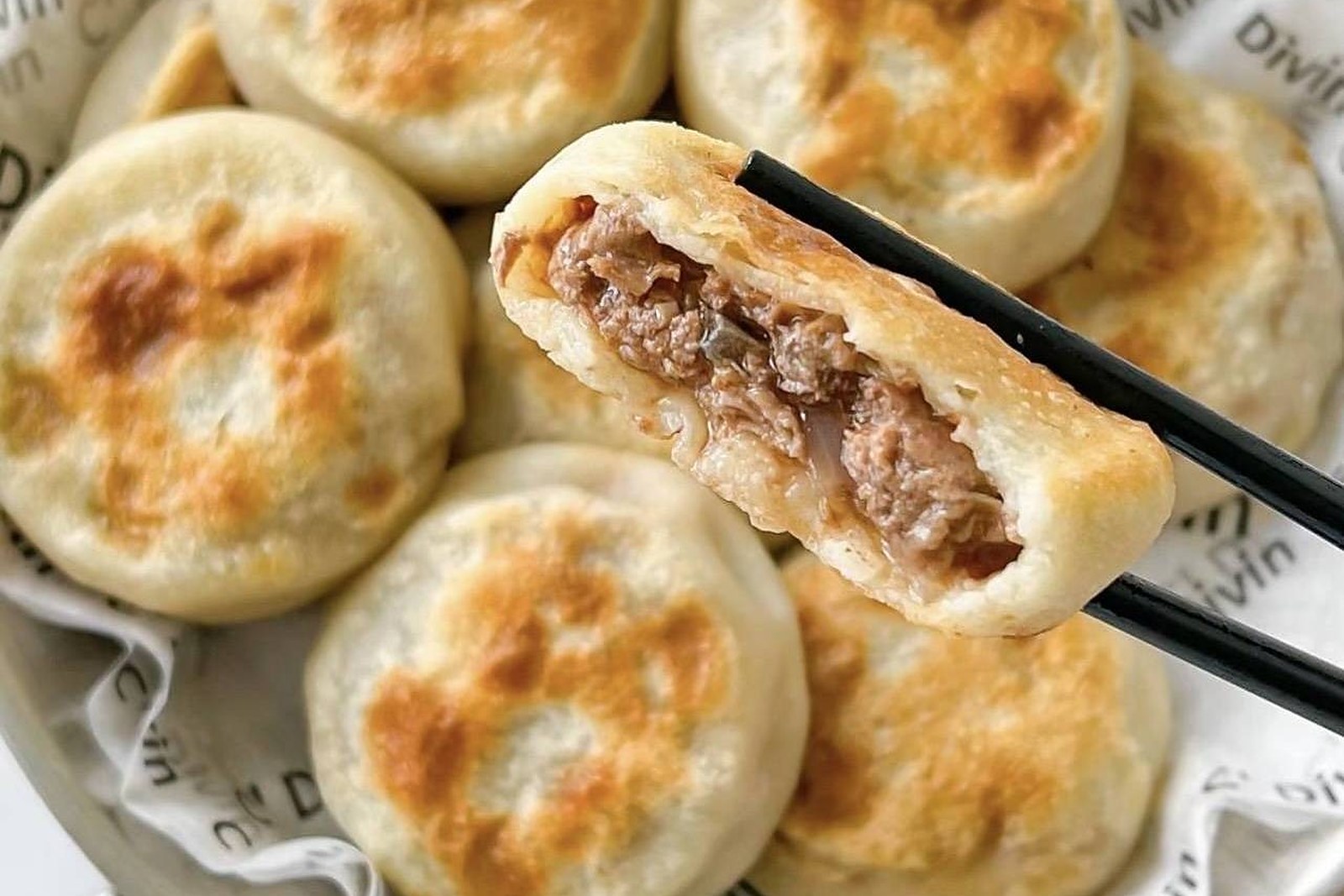
The dish belongs to the 牛街 Niújiē Niujie corridor, Xicheng District’s historic Hui quarter, where the 清真 qīngzhēn halal kitchens have turned beef into a local grammar – 门钉肉饼 méndīng ròubǐng alongside 牛肉饼 niúròubǐng and the slower 馅饼 xiànbǐng – and where the morning counter fries them to order so the dome is still 烫 tàng scalding at the fold. This is a snack-grade meal rather than a restaurant sitting: you buy two or three, eat them leaning over the paper, and the bill is small enough to be worth confirming the details rather than memorised, because the price tracks the beef and the oil, not the folklore. The honest order is at a Hui counter that fries to order – a stack kept warm under a lamp has already given up its juice to the steam tray, and the dome that stands proud and hot is the one worth the wait.
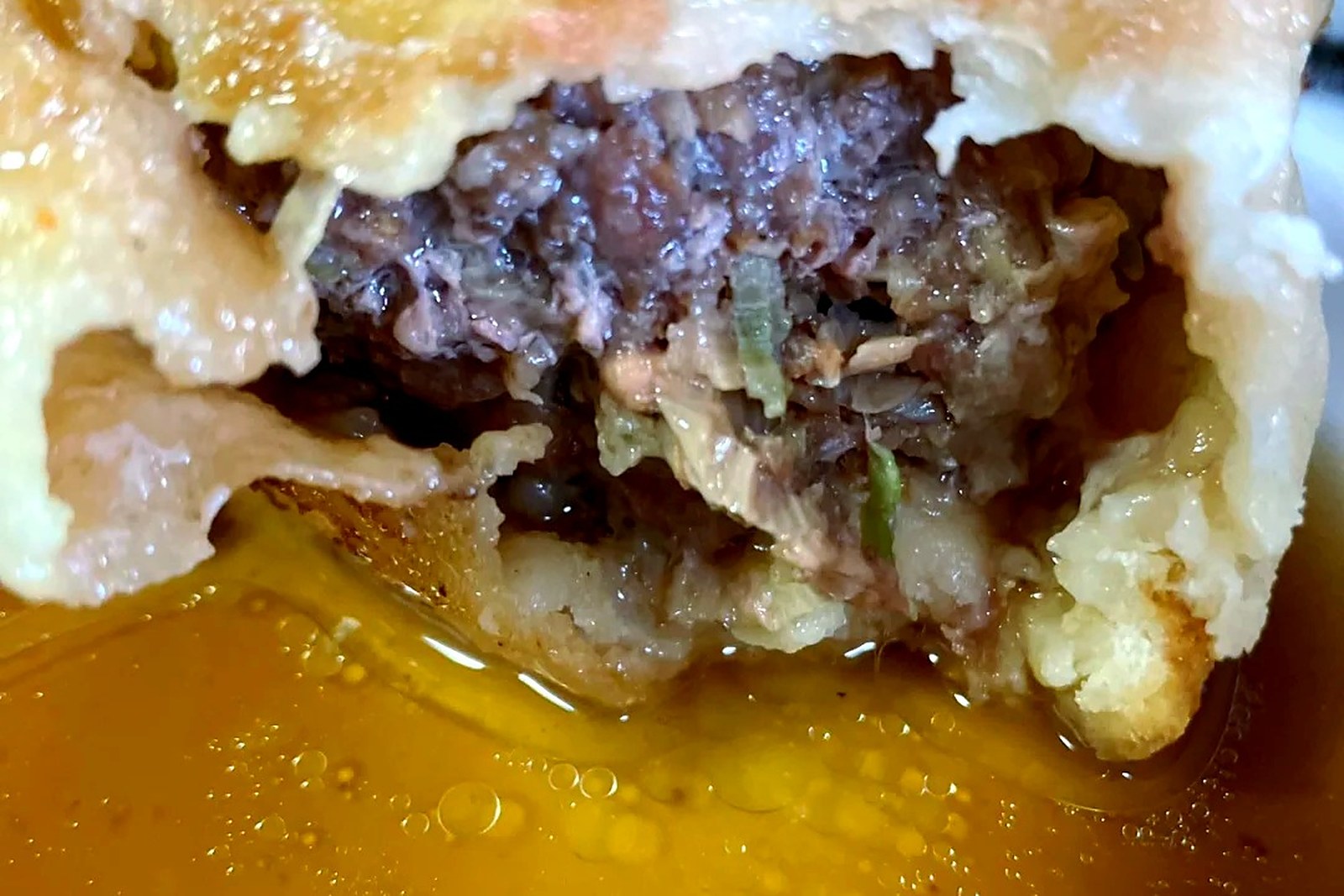
The wry truth is that 门钉肉饼 méndīng ròubǐng is over-rated as a photo prop and under-rated as a juice-engineering problem: visitors pose the disc next to a gate diagram and leave, while locals grade the pie by how much broth it still holds, a number that drops by the minute once it leaves the pan. The real divide is Hui versus Han versions – the Hui kitchen seasons cleaner and fries in 清油 qīngyóu clarified oil, and the 牛街 Niújiē counters hold the standard – and the quieter argument is thick-versus-thin wall, because a pie that buries its beef under bready crust has mistaken architecture for dinner. Season is mostly irrelevant; this is a year-round snack, hot in January and still welcome in July, the difference being only how fast you eat it before the juice settles.
The self-deprecating footnote: a food writer will measure the disc against a 门钉 méndīng photograph, explain the Forbidden City etymology to a fry-cook who learned it from his grandfather, bite once, wear the 汁 zhī down his sleeve, and then order a fourth “for the cross-section shot” – which is the honest grade: 门钉肉饼 méndīng ròubǐng is a palace-nail pie that the writer will document more than he eats, and the juice always wins on the shirt.
Words and Names
门钉肉饼 méndīng ròubǐng / mending roubing · a thick round beef pie shaped like the brass studs on Forbidden City gates 门钉 méndīng / door-nail · the palace gate stud the pie is named and shaped after 牛肉 niúròu / beef · the Hui-kitchen filling, loosened with broth into a hot reservoir 回民 Huímín / Hui Muslim · the community whose kitchens made the beef pie a Beijing grammar 牛街 Niújiē / Niujie · Xicheng District’s historic halal quarter, the home corridor of the pie 清真 qīngzhēn / halal · the dietary kitchen the counters cook within 汁 zhī / juice · the hot broth inside the pie that erupts on the first bite 西城区 Xīchéng Qū / Xicheng District · the Beijing district holding the Niujie halal corridors
What the Locals Know
- Guard the seam: the first bite must trap the 汁 zhī juice, because a careless chomp wears the filling down your chin – the pie is a reservoir, not a patty.
- Fry-to-order only: a dome kept warm under a lamp has already bled its broth into the tray; the pie worth eating stands proud and scalding from the pan.
- Hui counters hold the standard: the 牛街 Niújiē kitchens season cleaner and fry in 清油 qīngyóu, and a thick bready wall means the house mistook the gate for the meal.
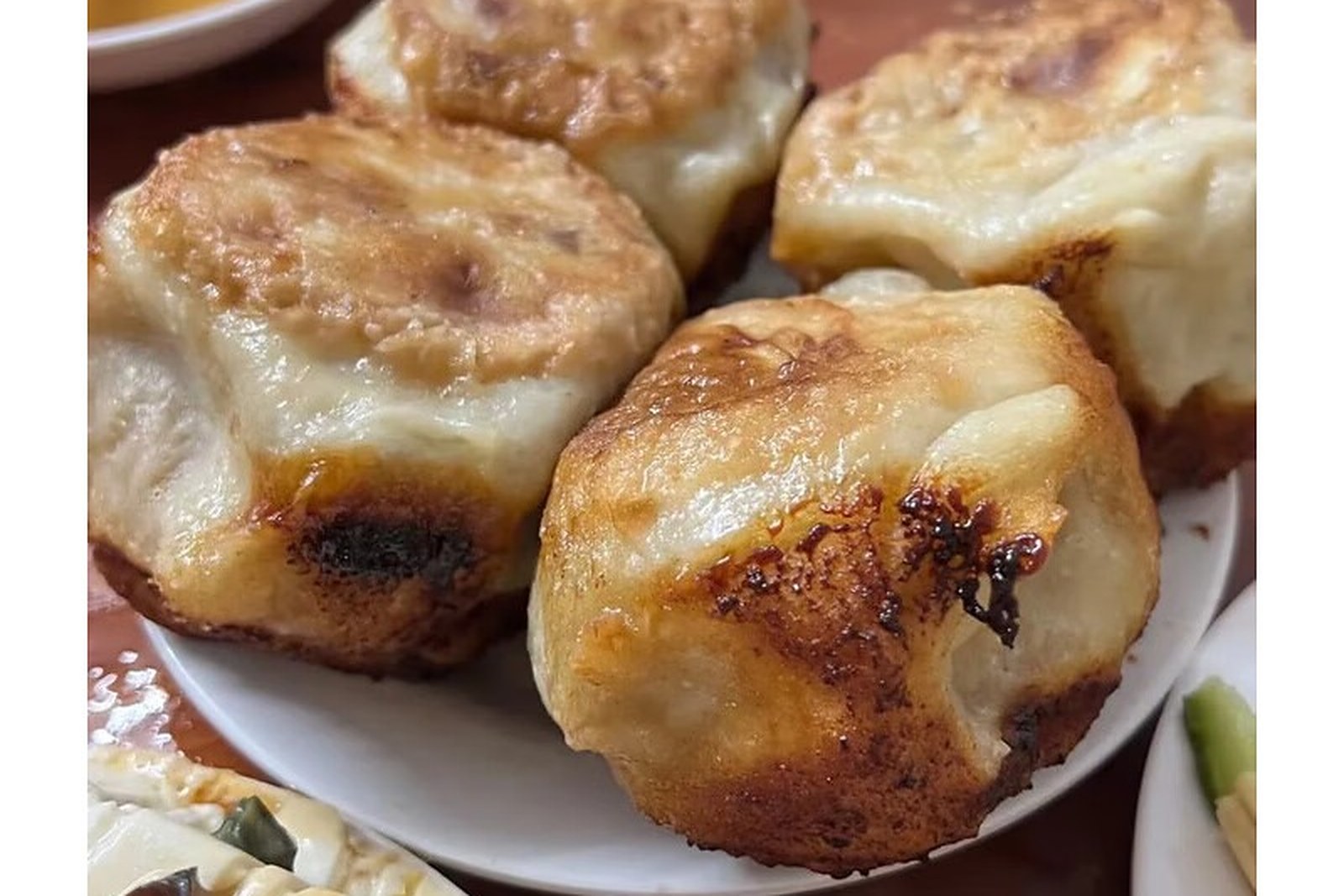
flowcloud would say that the 门钉肉饼 méndīng ròubǐng is Xicheng District’s palace-nail pie – a thick 牛肉 niúròu beef disc named for the 门钉 méndīng studs of the 故宫 Gùgōng gates, fried crisp and filled with hot broth, born in the 回民 Huímín kitchens of 牛街 Niújiē – and that the honest move is to buy it fried-to-order, bite to trap the juice, and judge the house by how much broth it still holds, because the architecture is the joke and the filling is the point. All checked October 2026.
Where to find it: Xicheng District Xīchéng Qū – the 清真 qīngzhēn halal counters of 牛街 Niújiē Niujie and the surrounding Hui corridors, frying 门钉肉饼 méndīng ròubǐng to order (worth confirming the details – which counters still hand-form and pan-fry rather than reheat); a pie or three runs small, eaten hot over paper. Mending roubing is the palace-nail beef pie of Xicheng District, Beijing, juice before monument.