
One Stall, Two Textures: Urumqi’s Mianfeizi and Michang
肺肠同案各成章,一勺辣油定短长 Fèi cháng tóng àn gè chéng zhāng, yī shào làyóu dìng duǎn cháng – Lung and sausage share one board, each its own chapter; one ladle of chili oil settles the score
正文:米肠子面肺子 Mǐchángzi Miànfèizi the rice-sausage and stuffed-lung pair is the odd couple of 乌鲁木齐市 Wǔlǔmùqí Shì Urumqi City’s street tables – a combination so local that elsewhere in China the names draw blanks, yet here the two sit side by side on every night-market board. 面肺子 miànfèizi is lamb lung washed, then filled with a wheat-starch slurry and steamed until it sets into pale, custard-firm blocks that slice like pressed tofu; 米肠子 mǐchángzi is sheep casing packed with rice, minced lamb fat, onion and carrot, boiled into plump coils that cut into glistening gold coins. The pair travels together because they answer each other: the lung blocks tender and bland, made to carry sauce; the rice sausage chewy and savoury, made to carry the bite. A vendor’s cut-and-mix – both chopped into a bowl, then doused in chili oil, black vinegar, garlic water and a fistful of coriander – is the dish’s whole ceremony, done in under a minute and eaten standing at the cart.
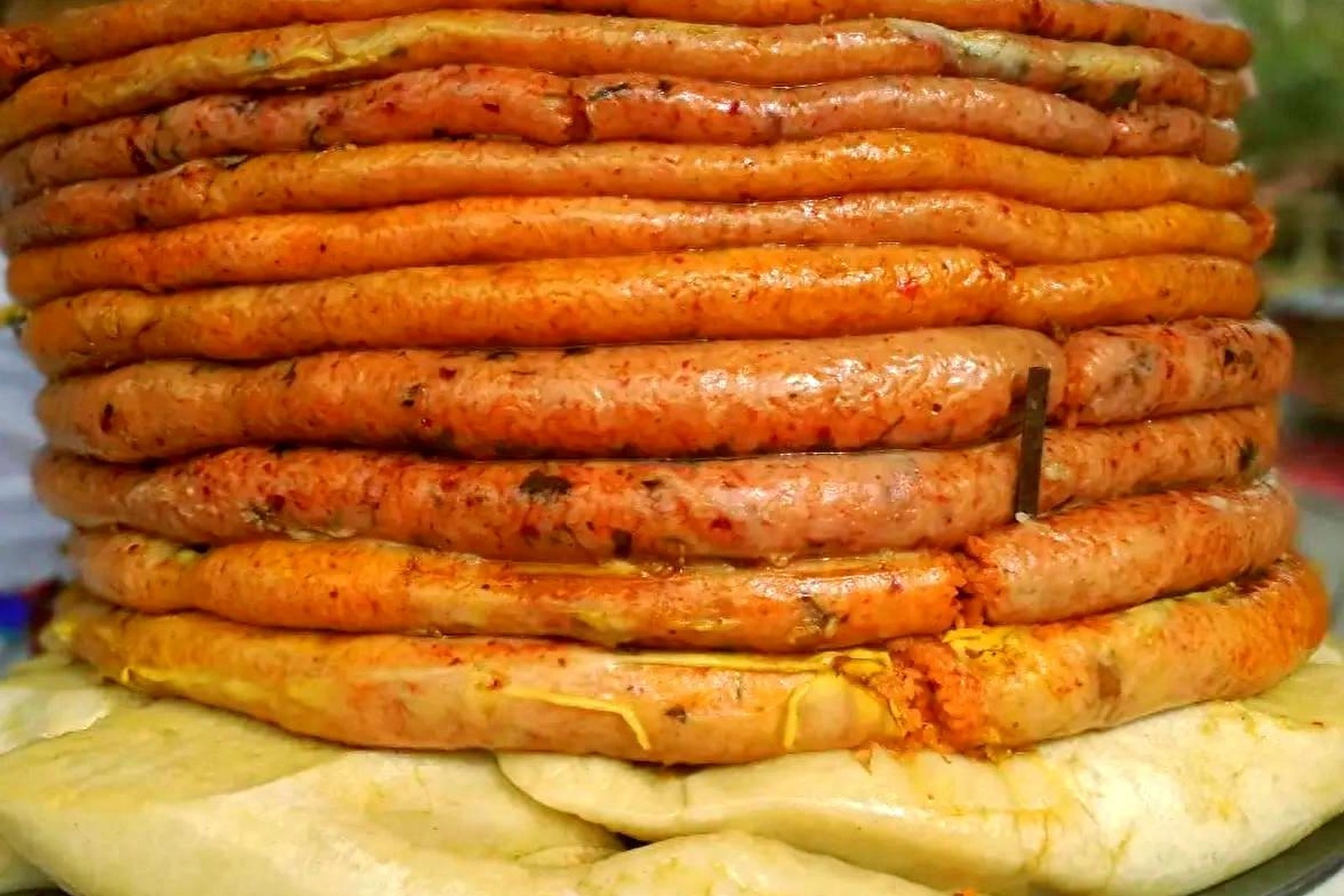
The lung is the craft’s exam. Washing a lung clean without tearing it takes patience the modern kitchen rarely spends, and the slurry must be poured in stages – fill, rest, top up – so the curd sets even through every lobe. Old-school masters slice the finished blocks against the grain into sheets that hold their shape in sauce but yield at once to the tooth; a poorly washed or rushed batch smells Gamey and the regulars simply walk on. The rice sausage has its own quiet technique: the casing packed two-thirds full so the rice has room to swell, pricked all over before boiling so the skin never bursts.
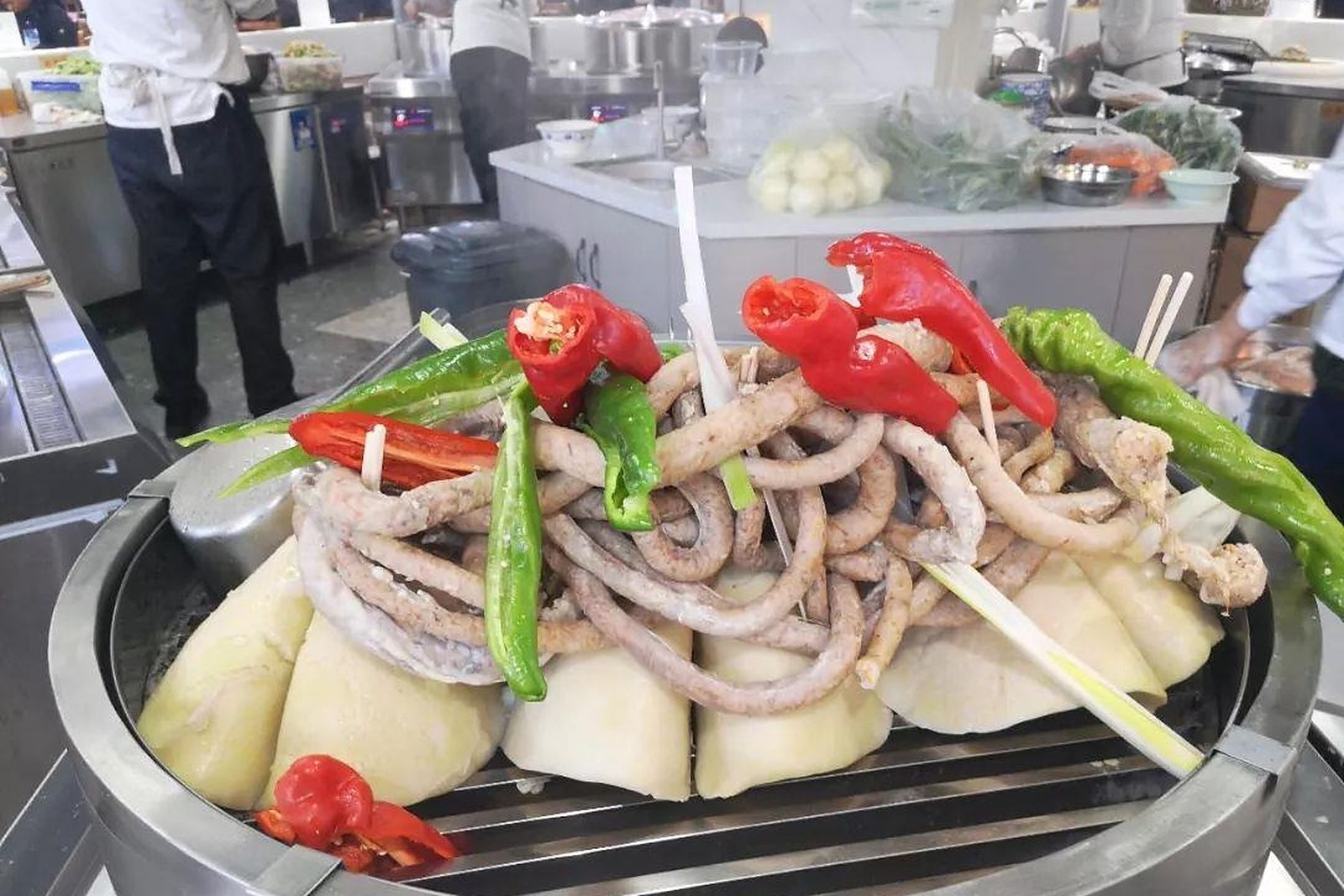
The stall is the dish’s proper home. Night markets around the Grand Bazaar and the older districts keep mianfeizi carts beside the kebab grills – the vendor lifts a coil from the pot, cuts what you order by eye, and mixes the bowl to your spice tolerance, the whole exchange a minute long and the queue a rolling conversation. Regulars judge a cart by its chili oil: pressed fresh, fragrant rather than merely hot, ladled with a flourish that is half seasoning and half show.
Words and Names
What the Locals Know
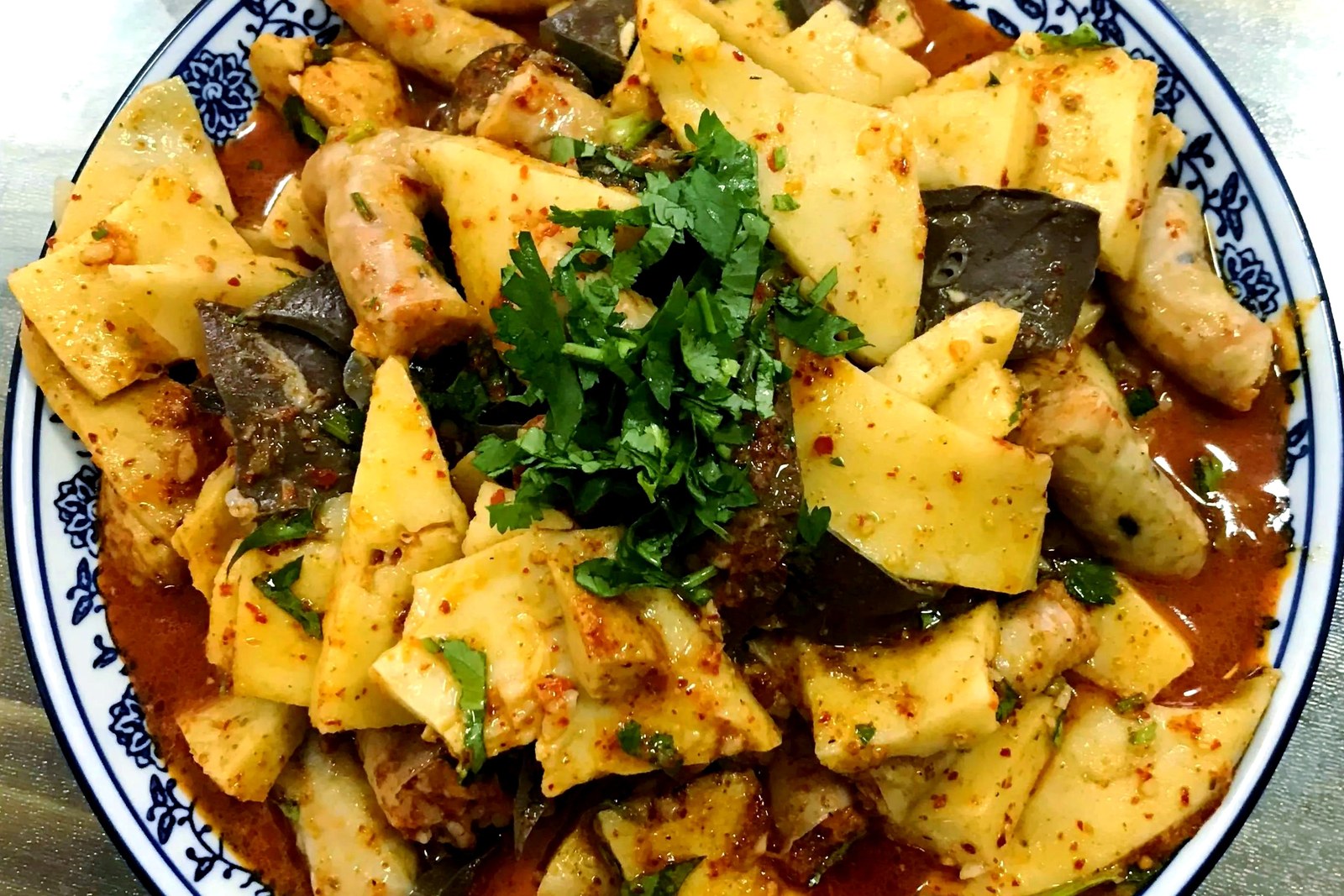
flowcloud would say the mianfeizi pair is Urumqi’s textbook of texture: lung blocks built to carry the sauce, rice coins built to answer back, and a minute of vendor theatre that turns a bowl into a night out. All checked November 2026.
Where to find it: The pair lives at Urumqi’s night markets and the bazaar-district food streets – order by the cut (“a bit of each” is the canonical first bowl), take the mixed bowl standing at the cart, tune chili oil and vinegar at the counter, and follow the carts where the local queue never quite breaks; evenings are the canonical slot and the Grand Bazaar streets the classic ground. All checked November 2026.