
Miaofeng Rose Pastries: Rose Petals, Flaky Pastry and Flower-Valley Air of Mentougou District, Beijing
妙峰谷里玫瑰艳,一饼酥心藏花香。Miào fēng gǔ lǐ méi guī yàn, yī bǐng sū xīn cáng huā xiāng – In Miaofeng’s valley the roses blaze; one flaky pastry heart hides the flower’s scent.
妙峰山玫瑰饼 Miàofēng Shān méiguībǐng Miaofeng rose pastries are the flower-valley pastry Beijing’s northwest hills have been baking since before the gift-box era, and the address is a rose field: 妙峰山 Miàofēng Shān Miaofeng Mountain, the 门头沟区 Méntóugōu Qū Mentougou District, Beijing high country whose 金顶 Jīndǐng “Golden Summit” shrine drew incense pilgrims up from the capital for centuries, and whose 玫瑰谷 Méiguī Gǔ Rose Valley around 涧沟村 Jiàngōu Cūn Jiangou village has grown high-elevation roses for just as long – petals harvested at the brief early-summer bloom and sugar-cured into 玫瑰酱 méiguījiàng rose jam, the dark fragrant filling the valley’s ovens fold into flaky 鲜花饼 xiānhuābǐng flower pastries and 玫瑰饼 méiguībǐng rose rounds (worth confirming the details of each bakery’s season and recipe). The form is the 京式糕点 Jīngshì gāodiǎn Beijing-style pastry – a 酥皮 sūpí flaky lamination, short and fragrant, stuffed to the seam with petal jam – sold warm at the village counters and boxed for the drive home. The craft most visitors under-rate is the jam: the honest star is the 玫瑰酱 méiguījiàng – whole petals cured with sugar until they read 软糯 ruǎnnuò soft and wine-dark – not the pastry box, and a filling that tastes of flavouring rather than flower has failed the valley it came from. The naming is the tell: 妙峰 Miàofēng “marvellous peak” was a pilgrim’s word for the summit, and the roses now harvest the same mountain air the incense once prayed in.
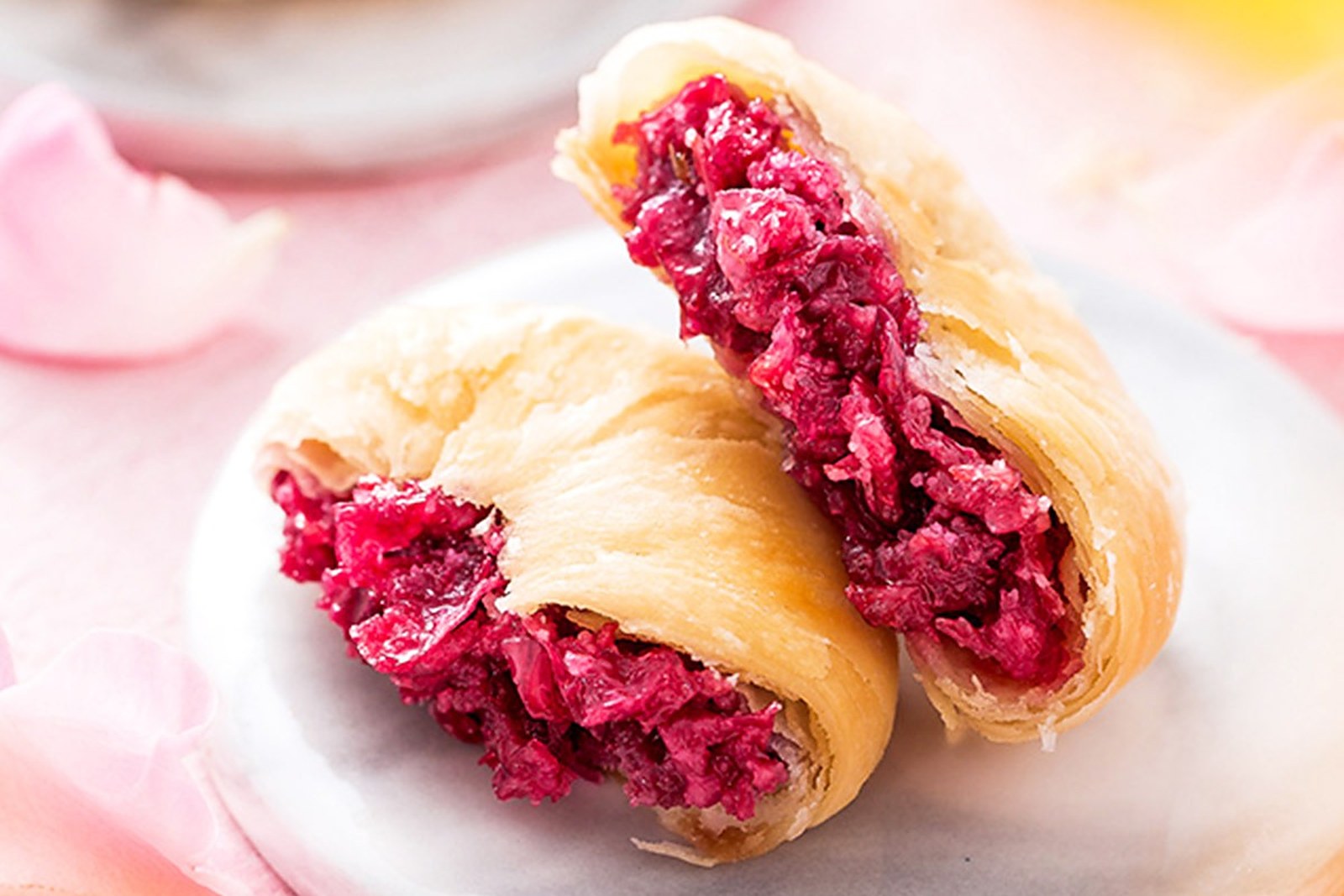
The eating is a small seasonal repertoire built around one flower, and the grammar leans 甜 tián sweetness plus 酥 sū flake to match the 周末 zhōumò weekend drive crowd. The anchor is the 玫瑰饼 méiguībǐng – the flaky round eaten warm off the tray, petal jam bleeding dark at the bite – backed by jars of 玫瑰酱 méiguījiàng for the kitchen at home, 玫瑰花茶 méiguī huāchá rose tea poured at the valley’s tea counters, boxed 鲜花饼 xiānhuābǐng for the gift run, and the mountain-product shelves where the valley’s honey and walnuts sit beside the pastry – the same shelves, on the district seat’s streets, that carry the jars of 白蜜 báimì white honey this district is also known for. The bloom runs short – traditionally a few weeks around the turn into summer, the precise weeks worth confirming the details – and the honest counters mark the difference: a 新酱 xīn jiàng new-jam pastry off the harvest reads brighter and deeper than the same pastry built from a jar that waited out the year, and the families who pick the petals will say so without being asked. Around the valley the old pilgrimage landscape still holds – shrine walks, viewing terraces, farmhouse tables – because the pastry is the souvenir, but the rose field is the reason.
The honest grade is geography plus the 花期 huāqī bloom clock. In 门头沟区 Méntóugōu Qū Mentougou District, Beijing the counters cluster along the climbing road into the 涧沟村 Jiàngōu Cūn Jiangou basin, where the clientele is half 周末 zhōumò weekenders off the mountain road and half returning families who buy by the box for relatives in the city, a mix that keeps the filling honest in a way a mall bakery cart never could – a valley counter is graded by customers who know exactly which week the petals were picked (worth confirming the details – which ovens bake daily in season and which sell through the off-season from storage). A per-person bill runs small – pastry-and-tea money, box money if you are carrying gifts – so call it worth confirming the details rather than a fixed number, and time the trip if you can, because the bloom does not wait for weekends, the road up narrows badly when it fills, and the counters sell through by afternoon in the good weeks.
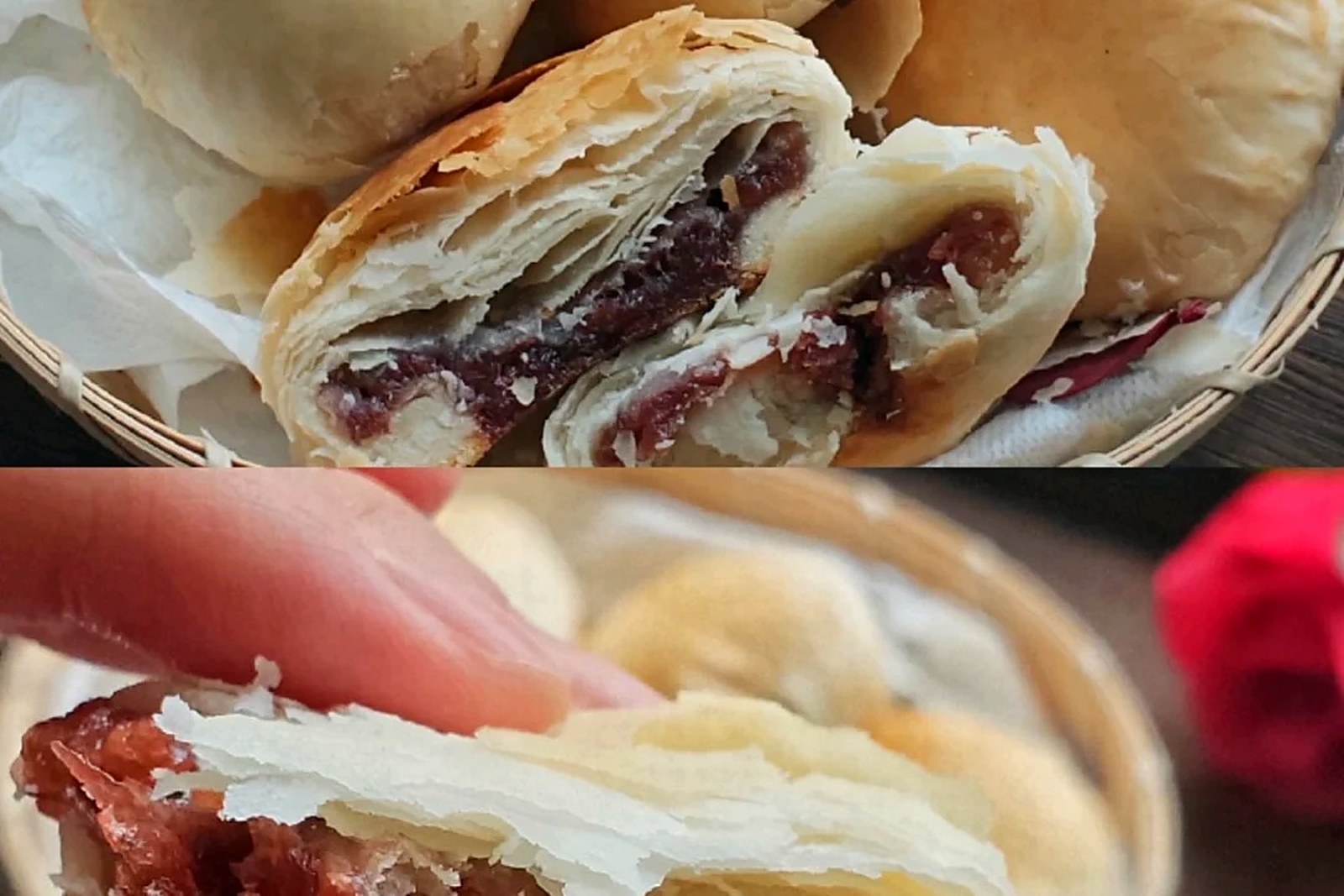
The wry truth is that 妙峰山玫瑰饼 Miàofēng Shān méiguībǐng is over-rated as a souvenir and under-rated as agriculture: city shops sell the boxed version long after the freshness, travel lists file it as “local specialty” between photographs of the shrine, while the actual trade – a mountain valley that has grown roses at elevation for generations, picked by hand in a short window – barely registers with the people holding the box. The honest star is the petal jam, not the packaging: the real divide is 真花瓣 zhēn huābàn true petals versus 香精 xiāngjīng flavouring – a real filling reads fibrous, wine-dark, faintly bitter at the edge of the sweet, a flavoured paste reads uniform and flatly perfumed, and no extra sugar hides it – worth confirming the details, counter by counter, because both versions travel in similar boxes. Season rules the trade harder than any mall pastry counter: the weeks around the bloom are the valley’s whole year – the fields pink, the ovens hot, the counters empty by late afternoon – and the rest of the calendar lives honestly off the jars.
The self-deprecating footnote, and the district braid: a food writer will drive two hours for “authentic rose pastry”, explain terroir to a 老板娘 lǎobǎnniáng proprietress who is boxing a dozen by feel, photograph the pink fields at heroic shutter, and then call the warm round “commendably floral” as if he had discovered petals – which is the honest grade: 妙峰山玫瑰饼 Miàofēng Shān méiguībǐng is a bloom-season pastry the writer will romanticise more than he times correctly, and the valley family at the next counter has bought its festival boxes and gone before the shutter closes. The same 门头沟区 Méntóugōu Qū Mentougou District, Beijing thread runs on: the vegetarian pots of 潭柘寺素斋 Tánzhè Sì sùzhāi Tanzhe temple vegetarian food simmer by the ancient temple, the wood-fire courtyards of 爨底下农家菜 Cuàndǐxià nóngjiācài Cuandixia farmhouse food steam in the ancient village, the noodle steam of 大峪城区食肆 Dàyù chéngqū shísì Dayu area eats rises by the district seat, and the glass jars of 京西白蜜 Jīngxī báimì Jingxi white honey wait on the mountain-product shelves – one district, four more tables.
Words and Names
妙峰山 Miàofēng Shān / Miaofeng Mountain · the pilgrimage peak of northern Mentougou District 玫瑰谷 Méiguī Gǔ / Rose Valley · the high basin where the pastry’s petals are grown 涧沟村 Jiàngōu Cūn / Jiangou Village · the village at the valley head that holds the counters 玫瑰酱 méiguījiàng / rose jam · the sugar-cured petal filling that grades every pastry 鲜花饼 xiānhuābǐng / fresh-flower pastry · the flaky filled round of the 京式 pastry family 酥皮 sūpí / flaky pastry shell · the lamination that carries the jam 花期 huāqī / bloom season · the short early-summer window the whole trade waits for 门头沟区 Méntóugōu Qū / Mentougou District · the Beijing district holding the rose valley
What the Locals Know
- Time the bloom: the harvest weeks in early summer are the only days a 新酱 xīn jiàng new-jam pastry exists, and the counters sell through by afternoon (worth confirming the details of the exact weeks).
- Read the filling, not the box: true petal jam reads fibrous and wine-dark with a faint bitter edge; uniform perfumed paste is 香精 xiāngjīng flavouring in a nicer costume.
- Buy jars for home, boxes for gifts: the 玫瑰酱 méiguījiàng keeps longer than the pastry and survives the drive down the mountain better.
- Pair the trip with the summit: the 金顶 Jīndǐng shrine walk and the valley counters share one narrow road – go early, or the parking eats the pastry hour.
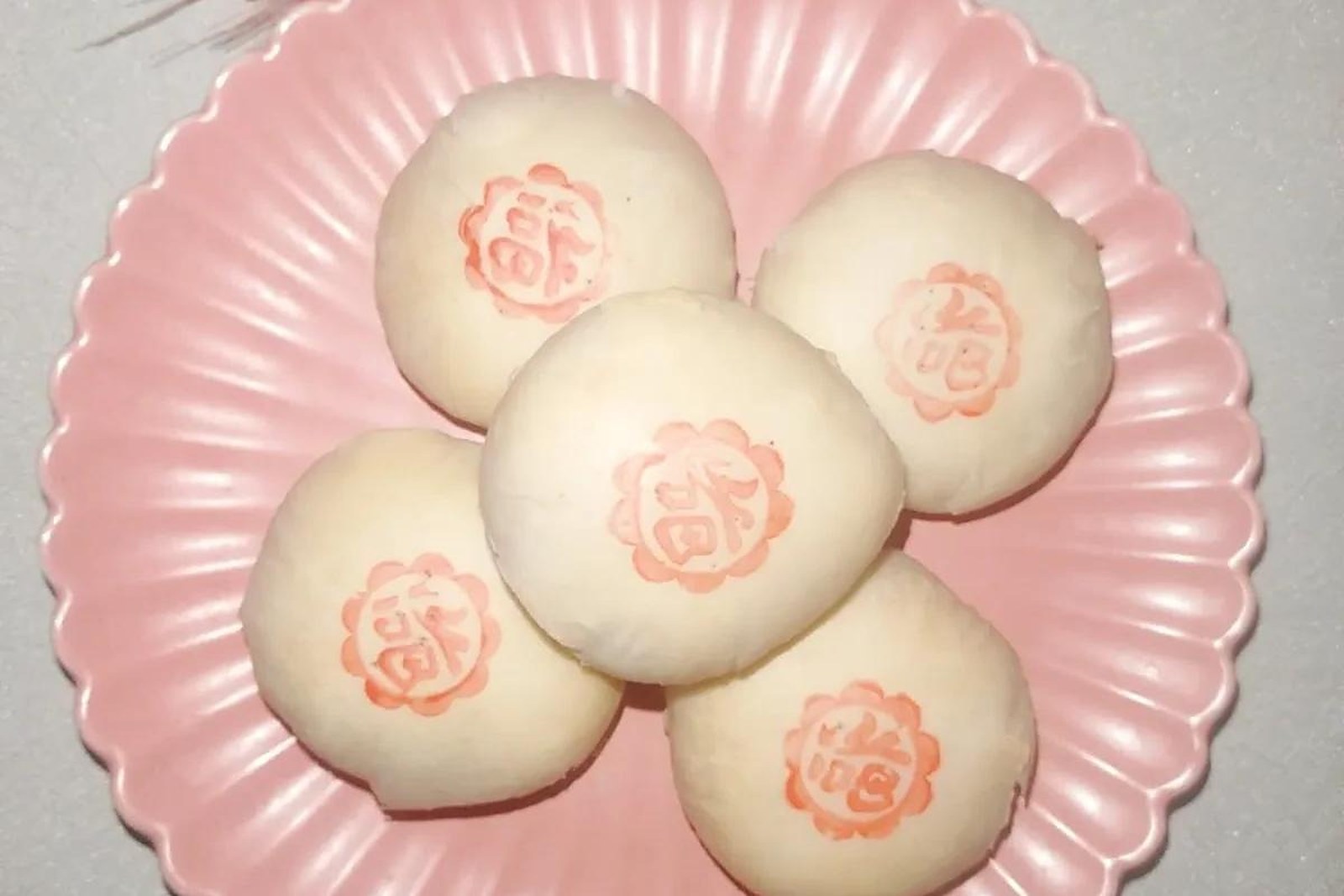
flowcloud would say that the 妙峰山玫瑰饼 Miàofēng Shān méiguībǐng is the rose petals, flaky pastry and flower-valley air of Mentougou District, Beijing – a 玫瑰谷 Méiguī Gǔ basin above 涧沟村 Jiàngōu Cūn where high-elevation roses cure into 玫瑰酱 méiguījiàng and fold into 酥皮 sūpí rounds on the old pilgrimage mountain – and that the honest move is to time the bloom, read the filling, and carry the jam jar home, because the rose field is the reason and the box is only the souvenir. All checked October 2026.
Where to find it: Mentougou District Méntóugōu Qū, Beijing – the 妙峰山 Miàofēng Shān Miaofeng rose country around 玫瑰谷 Méiguī Gǔ Rose Valley and 涧沟村 Jiàngōu Cūn Jiangou village in northern Mentougou, where village counters bake 玫瑰饼 méiguībǐng, pour 玫瑰花茶 méiguī huāchá and sell jars of 玫瑰酱 méiguījiàng along the summit road (worth confirming the details – which ovens bake daily in bloom season and which sell off-season stock); a per-person bill runs pastry-and-tea small, so call it worth confirming the details rather than a fixed number. Miaofeng rose pastries are the rose petals, flaky pastry and flower-valley air of Mentougou District, Beijing, petals before packaging.