
Ten past ten on a weekday in 民主村 Mínzhū Cūn Minzhu Village, and the canteen by the central square is doing the thing that made this place nationally famous among people who study old neighbourhoods: a queue of old people, a tray, a plate, and a young parent with a stroller on the same line. Minzhu Village sits in 九龙坡区 Jiǔlóngpō Qū Jiulongpo, Chongqing Municipality’s south-west district – a block of 1950s red-brick housing wedged between two of the city’s biggest malls. This page eats at that canteen, late-morning, and its argument is deliberately not about the postcode. It is about the plate.
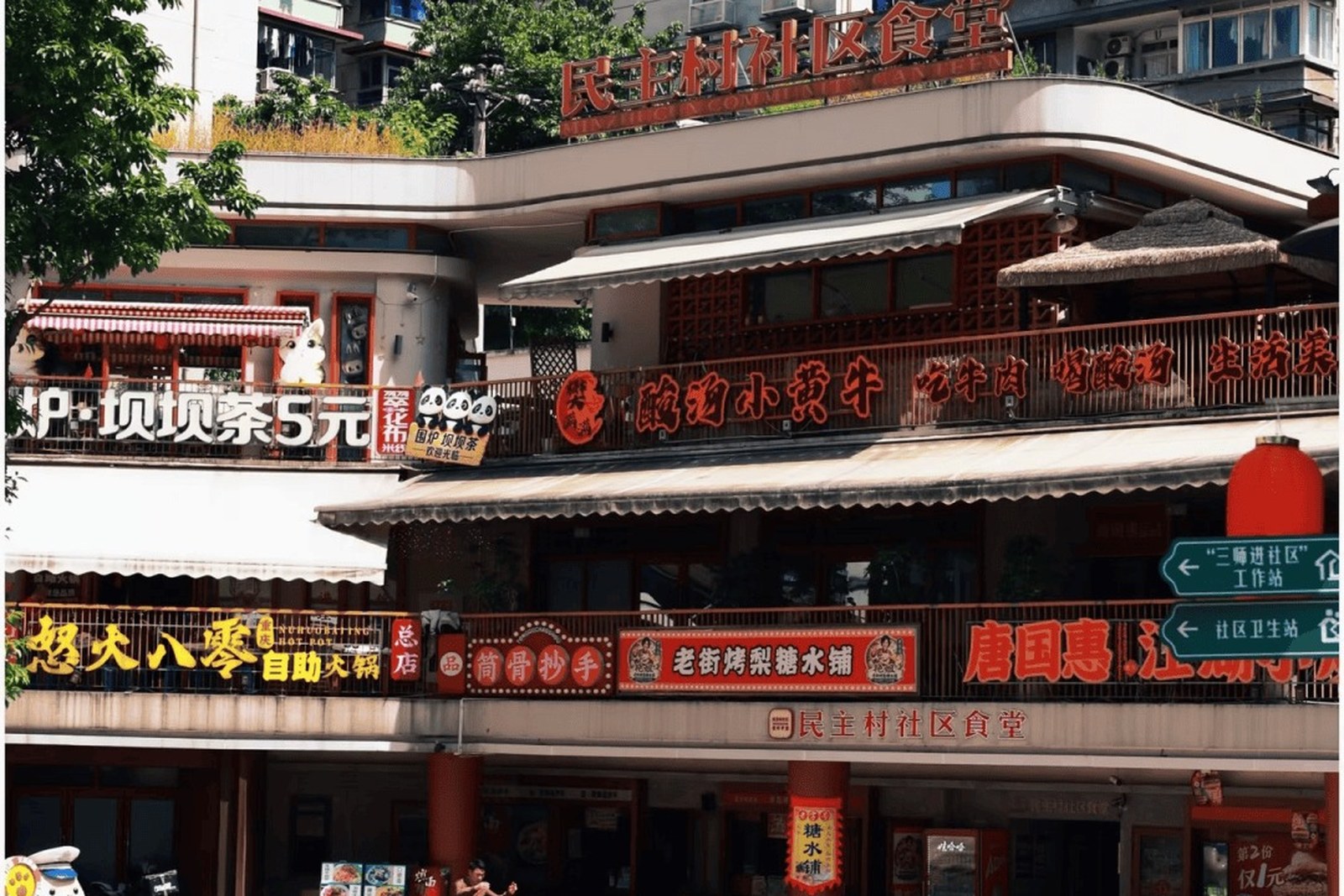
The estate’s facts are the reason the food exists. Minzhu Village was the staff housing for a state construction-machine-tool plant, built in stages from the 1950s to the 1990s, more than a hundred blocks of it, the oldest over seventy years old, and it sat in the middle of a working district that grew tall around it while it stayed low – a red-brick neighbourhood with the mall district’s towers on two sides, which the district’s own account describes as a hollow. Seen from above, the block matrix of buildings was said to spell out the plant’s name. The estate was taken up for renewal on a keep-renovate-demolish-add basis rather than cleared – the 留改拆增 formula – which in practice means the brick stays, the wiring goes underground, and only the dangerous buildings come down. The first phase was finished and opened in April 2023.
The reason the food arrived is demographic, and it is the most important single fact on this page. The estate is a community of older people: the count of residents over sixty runs to more than two thousand, and roughly a third of them live alone, by the community’s own published figure. An old person alone in a fourth-floor walk-up on a reworked estate has one problem above all others, and the community named it plainly – cooking is hard. The response was a canteen beside the central square, built by the community working with neighbouring merchants rather than arriving as a private venture, which is the difference between a food business and a food service.
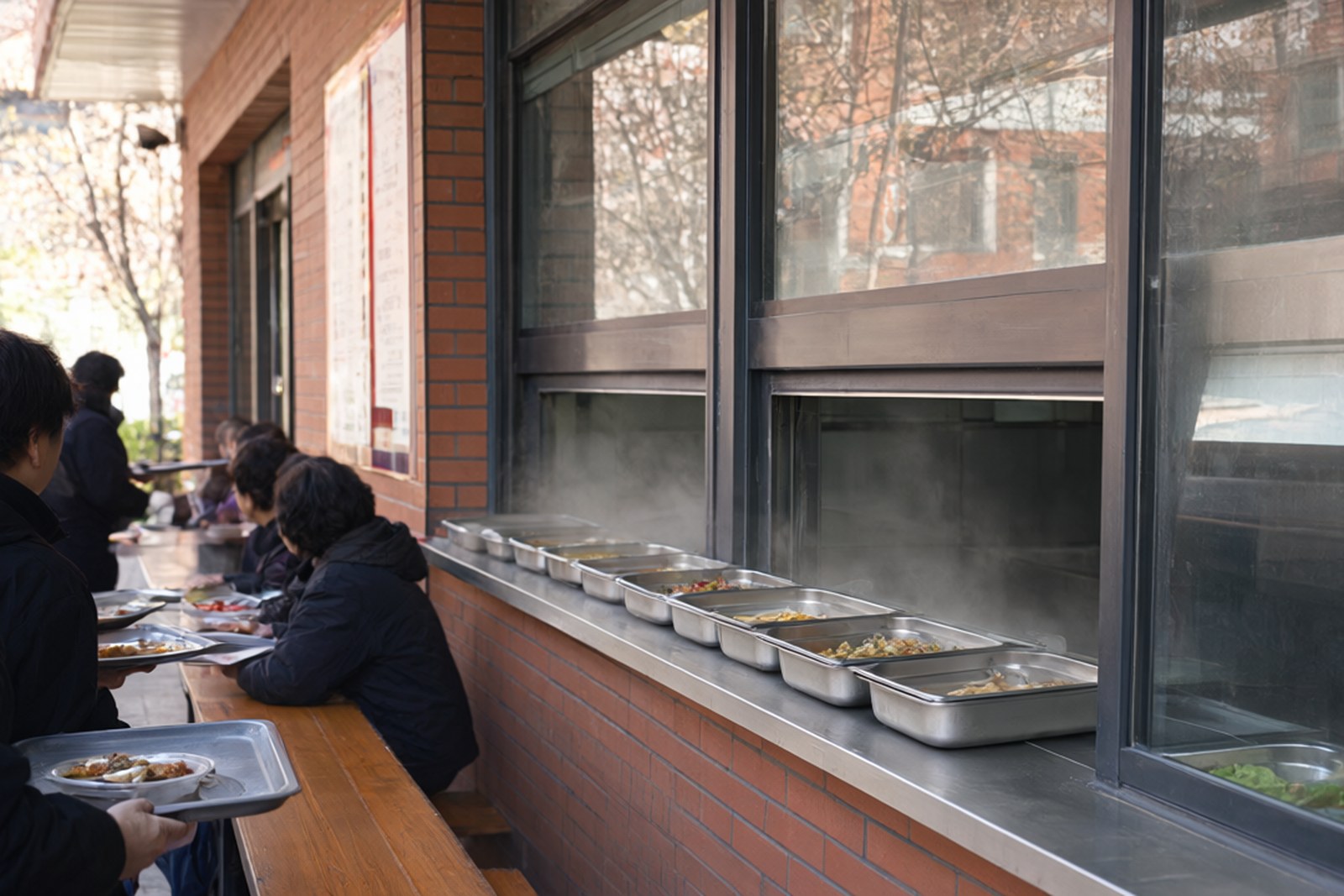
What the canteen is not is a nostalgia exhibit: it is a service with a catchment of old residents on fixed incomes, which is why its price ceiling is a design constraint rather than an afterthought, and why the plate it serves is set soft, wet and high-flavour, and served with rice. The renewal also brought a second clientele this quarter did not have five years ago: the ground floors that used to be storage are now a row of small businesses – coffee bars, small restaurants, craft and repair shops – in numbers the district’s 2026 reporting puts in the hundreds of premises, run by people who live here rather than by chains passing through. A canteen that keeps old people fed across the day and a coffee bar that draws the young out of the upstairs flats are the same argument in two registers.
Words and Names
民主村 Mínzhū Cūn Minzhu Village, the former staff housing of the state construction-machine-tool plant, in 谢家湾街道 Xièjiāwān Jiēdào Xiejiawan subdistrict, built in stages from the 1950s to the 1990s. 留改拆增 liú gǎi chāi zēng the “keep, renovate, demolish, add” formula the renewal ran on instead of clearance; 苏式红砖房 sūshì hóngzhuānfáng the Soviet-style red-brick blocks that were kept. 社区食堂 shèqù shítáng the community canteen, built by the community working with neighbouring merchants on a site beside the central square. 完整社区 wánzhěng shèqū the “complete community” designation the village carries as one of the first national pilots, under a list of 106 communities issued in July 2023, and as one of the first ten casebook exemplars the housing ministry selected from that pilot.
What the Locals Know
The plate that matters here is not a signature dish, and residents would find the question odd. The canteen’s own test is whether an old resident can eat three meals a day without cooking and without walking further than the square, and the price has to stay inside a pension. What regulars judge is different from what the district reports: the queue moves, the tables are cleaned when they should be, the staff know who is on a salt-free diet, and the open counter means you can see what you are about to eat. The second half of the local knowledge is that this quarter changed its mind about itself: residents who had been there since the plant’s housing days speak of the renewal as the moment the estate stopped being something to be ashamed of, and the community’s leadership reports young people moving back into the upper floors. The caution is equally local – a rebuilt estate can become an empty one, and what makes the canteen work is that it was built for the people who were already here.
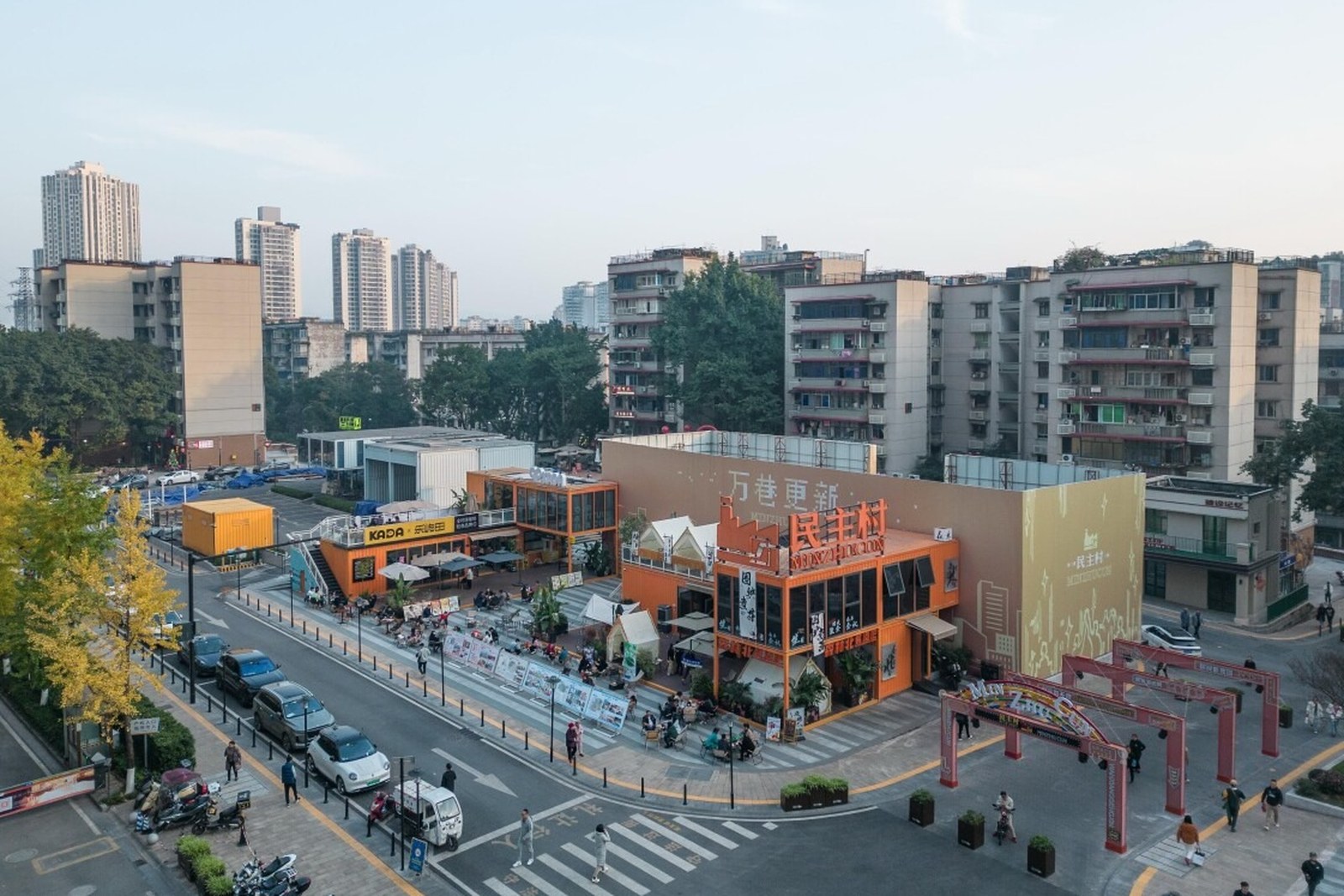
flowcloud would say that Minzhu Village’s community canteen is a plate rather than a postcode – the canteen that came back with the housing, on the estate of the old state construction-machine-tool plant: more than a hundred red-brick blocks built from the 1950s to the 1990s, renewed from 2022 on the keep-renovate basis rather than cleared, first phase finished in April 2023, and named to the national list of complete communities that July. It was built for the more than two thousand residents over sixty, about a third of them living alone, for whom cooking was the problem; the ground floors around it now run the coffee bars and craft shops, and the lunch queue is where the renewal’s argument is settled.
Where to find it: the community canteen and the ground-floor food row of 民主村 Mínzhū Cūn Minzhu Village, 谢家湾街道 Xièjiāwān Jiēdào Xiejiawan subdistrict, 九龙坡区 Jiǔlóngpō Qū Jiulongpo District, Chongqing Municipality – the central square and the surrounding blocks, between the Yangjiaping and MixC malls, which are joined to the village by the renewed paths. Metro line 2 to Yangjiaping station is the nearest stop. The canteen’s hours and arrangements change with the estate’s population, so treat any specific time as unreliable and go at the middle of the day when the queue is the point; no prices are quoted here, and price is the canteen’s own design constraint. The construction history, the renewal basis and the April 2023 first phase come from district and city reporting of 2023-2026; the July 2023 pilot list and the first casebook of complete communities are the ministry’s own publications; the resident and premises counts are reported figures, checked October 2026 and subject to drift.