
Yanshan Chestnuts: Sugar-Roasted Pans, Mountain Groves and the Autumn Nut of Miyun District, Beijing
燕山秋栗枝头老,糖炒一锅满巷香。Yānshān qiū lì zhītóu lǎo, táng chào yī guō mǎn xiàng xiāng – On the Yanshan trees the autumn chestnuts age on the branch; one sugar-roasting pot perfumes the whole lane.
燕山板栗 Yānshān bǎnlì Yanshan chestnuts are the mountain nut Beijing’s autumns smell of, and the address is a slope: the groves of 栗树 lìshù chestnut trees that climb the 燕山 Yān Shān Yanshan mountains across northern 密云区 Mìyún Qū Miyun District, Beijing, where the villages under the groves grew into the billing everyone prints – the chestnut belt of the capital’s north – terraces of broad leaf and spiny burr where the mountains hand off to orchard lanes (worth confirming which valleys hold the oldest trees). The craft most visitors under-rate is the roast: 糖炒栗子 táng chào lìzi sugar-roasted chestnuts, the street pan where nuts tumble with sand and syrup until the shells shine and the kernels inside turn sweet and floury – a craft the district supplies more nuts to than most customers ever guess, since the same groves fill the paper bags of the capital’s street corners. The naming is the tell: nuts billed simply by the range answer to the mountains where the thin shells and deep sweetness were the honest signal of good ground (worth confirming the crop’s geographical-indication listing and registry). The eater’s test is still the peeled kernel, not the sack’s stamp.
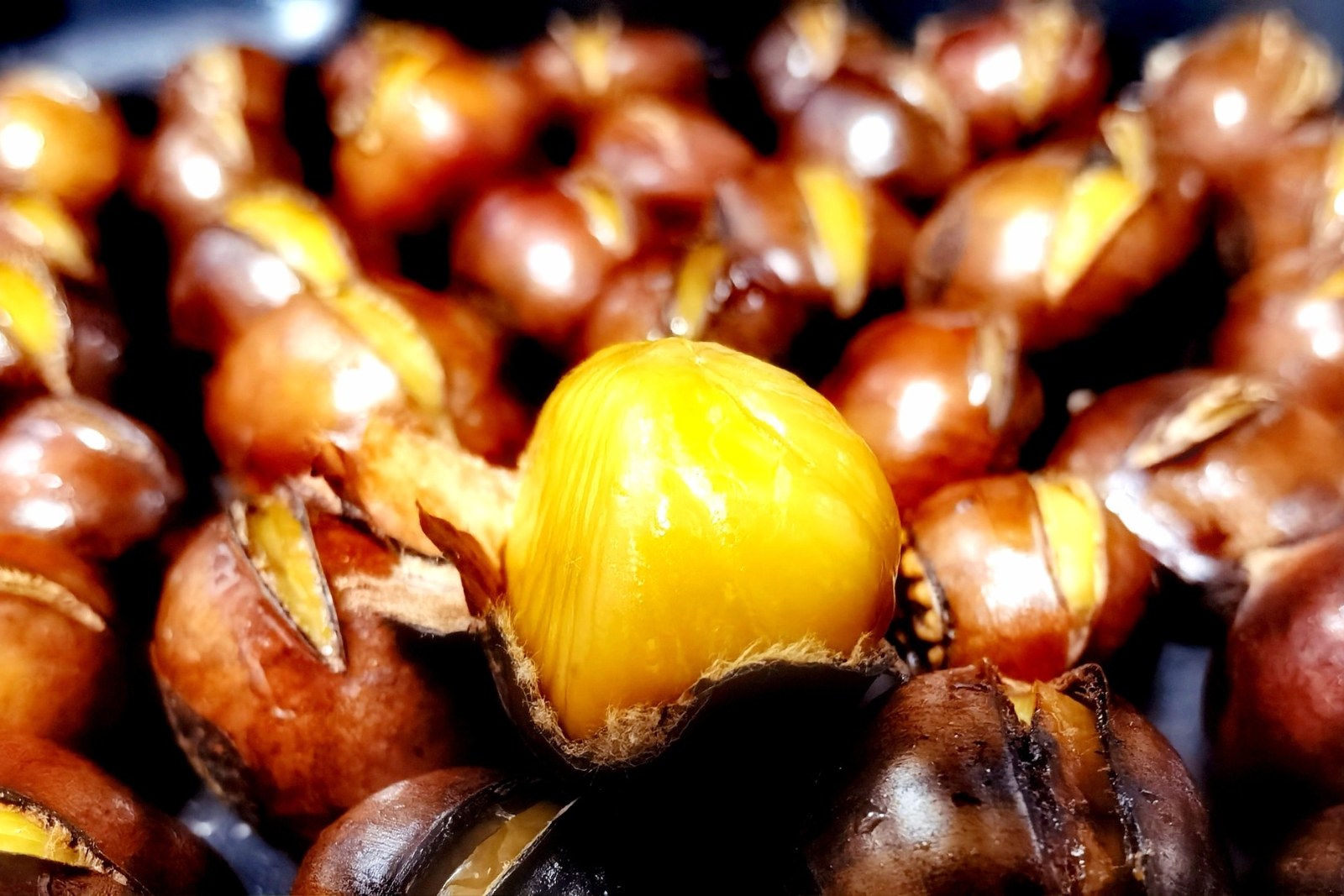
The eating is a roast-and-peel grammar written for a nut graded by the way the shell gives, and it leans 甜 tián sweetness plus 糯 nuò floury-soft to match the autumn street. The anchor is the freshly roasted nut: shell cracking clean under a thumb, skin slipping off in one pull, the golden kernel underneath dense and faintly smoky – the street snack that empties a paper bag before the bus arrives. Around the pan the grove runs its supporting cast: raw nuts sold by the sack at the village sheds for winter boiling and storage, 板栗宴 bǎnlì yàn chestnut feasts at the farmhouse tables – chestnut stewed with chicken, chestnut and millet porridge, chestnut-stuffed buns, candied chestnuts – and the new season’s nuts sorted by size into gift cartons for the 中秋 Zhōngqiū mid-autumn trade (worth confirming the details – each village harvests and packs its own way). The rule the groves teach: buy for the pan or for the sack – the roasted nut wants eating the same hour, the raw nut wants a cool room and a month’s patience.
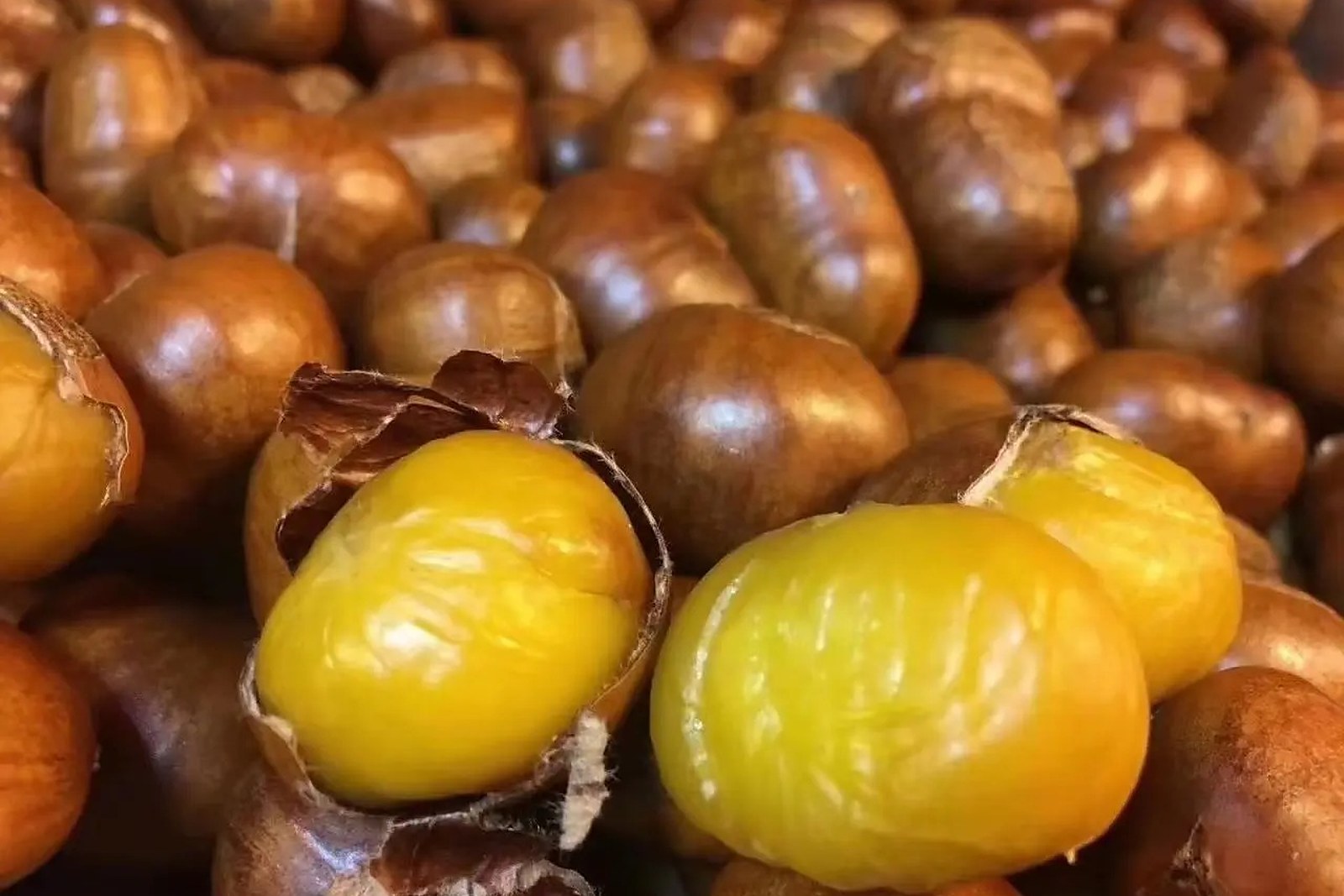
The honest grade is geography plus the harvest clock. In 密云区 Mìyún Qū Miyun District, Beijing the groves scatter along the mountain roads of the district’s north and northwest, where the clientele is half 周末 zhōumò weekend buyers and half the wholesale trade that empties the sheds before the city’s pans ever see the nuts – a mix that keeps the groves honest, because a grower here is graded by buyers who return every October (worth confirming the details – which villages run roadside sales and when). The picker’s test costs nothing: a fresh nut sits heavy in the palm, its shell glossy and tight; a light rattling one dried on the shelf, and no sugar glaze hides it – then taste one kernel plain, because an honest roast needs no perfume to cover old stock. A per-sack or per-bag bill runs on the grade and the month, so call it worth confirming the details rather than a fixed number, and come in mid-autumn: the burrs split as the nights cool, the best sheds thin fast after the first frost, and the roast pans downtown fill the moment the new crop lands.
The wry truth is that 燕山板栗 Yānshān bǎnlì is over-rated as a street-snack photograph and under-rated as mountain horticulture: the snack genre files it under “autumn treat”, while the actual thing – groves that bank a short mountain summer, burrs split and swept by hand, and a kernel that sweetens the longer it cures – is slope farming the paper bag never explains. The self-deprecating footnote, and the district braid: a food writer will discourse on “terroir in a shell”, photograph the steaming pan at heroic shutter, and then call the nut “commendably seasonal” as if sugar were a mountain – which is the honest grade: 燕山板栗 Yānshān bǎnlì is a working grove’s crop the writer will romanticise more than he peels, and the family at the next shed has eaten a dozen raw-cured kernels and booked a sack for the winter before the shutter closes. The same 密云区 Mìyún Qū Miyun District thread runs on: the iron-pot braises of 水库炖鱼 Shuǐkù dùn yú Reservoir stewed fish roll in the lakeside village kitchens, the thin-skinned baskets of 黄土坎鸭梨 Huángtǔkàn yālí Huangtukan ya pears line the harvest counters, the hundred-flower jars of 密云蜂蜜 Mìyún fēngmì Miyun honey sweeten the mountain stalls, and the old braised perfume of 古北烧肉 Gǔběi shāoròu Gubei roast meat drifts through the Water Town tables – one district, four more tables.
Words and Names
- 燕山板栗 Yānshān bǎnlì / Yanshan chestnuts · the mountain nut the range named for - 糖炒栗子 táng chào lìzi / sugar-roasted chestnuts · the street-pan snack the crop is famous for - 板栗宴 bǎnlì yàn / chestnut feast · the farmhouse table built around the nut - 栗树 lìshù / chestnut tree · the slope planter that carries the crop forward - 糯 nuò / floury-soft texture · the melt a good kernel is graded by - 燕山 Yān Shān / Yanshan mountains · the range holding the groves - 密云区 Mìyún Qū / Miyun District · the Beijing district in the chestnut belt
What the Locals Know
- Weigh before you buy: a fresh chestnut sits heavy for its size – a kernel that rattles in its shell dried out weeks ago, glaze or no glaze.
- Crack, don’t bite: press the shell flat-sided under the thumb at the seam – a clean crack means a clean peel; bitten shells drag the skin off with the kernel.
- Two clocks, two buys: roasted nuts are for the hour, raw sacks are for the winter – never mix them in the same cupboard.
- Ask for the 新栗 xīn lì new crop: nuts from this autumn peel sweeter and flourier than last winter’s stock the pan has been finishing off (worth confirming the season’s dates).
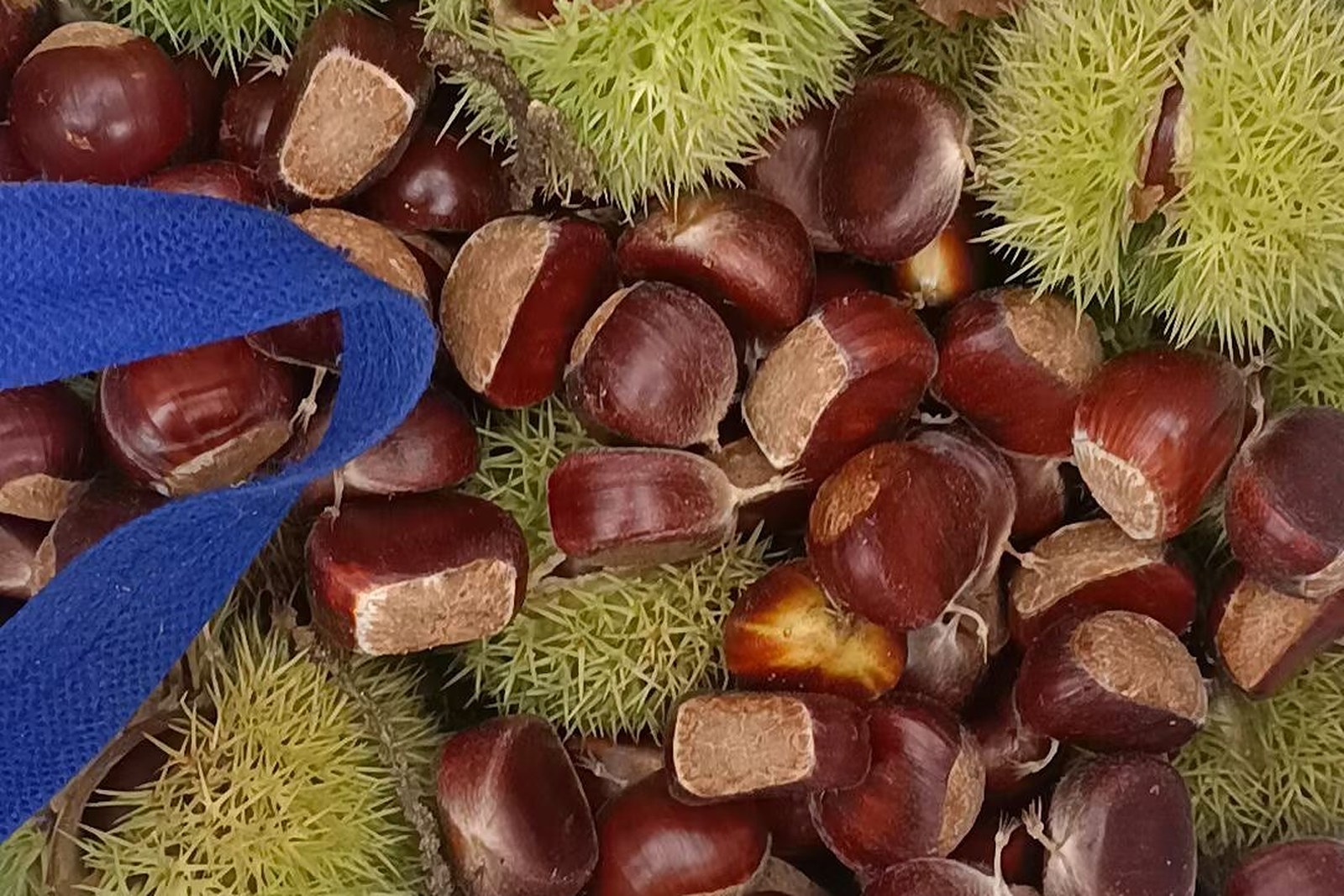
flowcloud would say that the 燕山板栗 Yānshān bǎnlì is the sugar-roasted pans, mountain groves and the autumn nut of Miyun District, Beijing – a 糖炒栗子 táng chào lìzi discipline where 栗树 lìshù groves cure the kernel into a 糯 nuò finish – and that the honest move is to weigh before you buy, crack at the seam, and keep the two clocks apart, because the mountain built the sweetness and the pan only built the perfume. All checked October 2026.
Where to find it: Miyun District Mìyún Qū, Beijing – the chestnut groves and village sheds along the mountain roads of the district’s north, where the new crop comes off the trees in mid-autumn and the 糖炒栗子 táng chào lìzi pans take it from there (worth confirming the details – which villages run roadside sales and their season); a per-sack bill runs on the grade and the month, so call it worth confirming the details rather than a fixed number. Yanshan chestnuts are the sugar-roasted pans, mountain groves and the autumn nut of Miyun District, Beijing, weight before glaze. All checked October 2026.