
Steamed and Scalding: Momo
蒸笼揭起白雾散,一屉藏包半城香 Zhēnglóng jiē qǐ bái wù sàn, yī tì zàng bāo bàn chéng xiāng – The steamer lid lifts and white mist scatters; one tray of momo perfumes half the town
藏包 zàng bāo momo, the steamed bun that Xizang shares with the whole Himalayan arc, is Shigatse’s favorite quick meal and a teahouse staple alongside sweet tea in 西藏自治区日喀则市 Xīzàng Zìzhìqū Rìkāzé Shì Shigatse. A thin flour wrapper is pleated around a filling of minced yak beef and onion, ginger and a little suet for richness, then stacked in bamboo steamers over rolling steam; the classic local shape gathers the dough into a pleated top-knot, and the breakfast version shrinks to dumpling scale, sold by the tray from dawn.
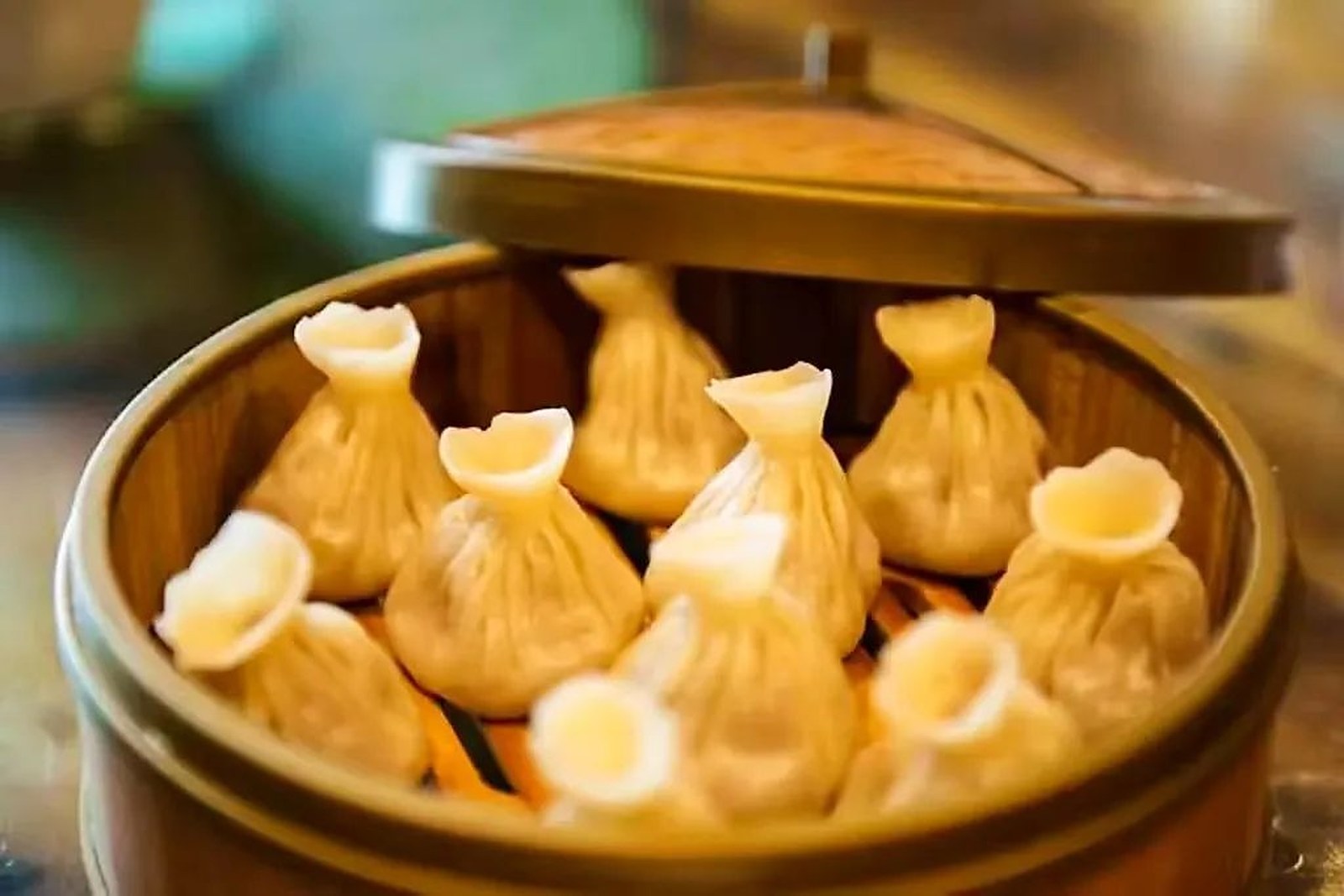
The craft is in the pleat and the juice. A good momo wrapper stays thin enough to show the filling’s shadow while holding the broth that renders out of the yak meat as it steams; the pleats gather at the top-knot in even folds that the maker’s thumb sets by muscle memory. The moment the lid lifts – steam scattering, wrappers going translucent, the ginger and meat smell jumping out – is the whole snack’s advertisement, and trays rarely wait long.
Eating one takes technique. The wrapper scalds, the broth inside scalds harder, and every local learns the same first move: bite a small hole in the side, drink the steam and juice out of the opened bun, then finish it dipped in the chili sauce that stands on every table. Newcomers who bite straight in remember the lesson; the reward either way is juicy, peppery and faintly sweet from the onion, with the dark depth of yak under it all.
What momo really marks is the shared table of the Himalaya. The same pleated bun travels from Ladakh to Bhutan under the same name, and every region claims its own pleat count and filling ratio – Shigatse’s leans on yak beef, bigger wrappers and a top-knot like a small purse. In the city it is the morning market’s hot currency, the bus-stop breakfast, and the dish every returning student eats first; few foods anywhere do more work in fewer bites.
The same 西藏自治区日喀则市 Xīzàng Zìzhìqū Rìkāzé Shì Shigatse holds more flavors worth chasing: 朋必 péngbì the grasped pea-starch snack, 藏面 zàng miàn the yak-broth noodle bowl, 青稞酒 qīngkě jiǔ the fermented barley wine, or 奶渣 nǎizhā the dried cheese curds – four more doors into the same Shigatse table.
Words and Names
藏包 zàng bāo momo, the Tibetan steamed bun; 牦牛肉馅 máoniú ròu xiàn the yak-meat filling; 褶子 zhězi the pleats that seal the top-knot; 蘸水 zhàn shuǐ the chili dip on every table; 蒸笼 zhēnglóng the bamboo steamer stack; 早点 zǎodiǎn the breakfast trade momo anchors.
What the Locals Know
The shadow test tells the truth – hold a momo up to the light and a good wrapper glows translucent with the filling’s outline visible; a doughy wrapper hides a dry bun. Juice is the point, so the first bite is always defensive. And the market regulars judge a stall by its steam: a stack of steamers cycling fast means the trays never cool, which means the wrapper never dries. All checked November 2026.
flowcloud would say momo is the Himalaya’s shared signature: one pleated purse of dough that crosses every border on the plateau and still tastes best at the counter three streets from your bed.
Where to find it: The morning market streets near the old town and the teahouse counters across the city steam fresh trays through the morning; Tibetan restaurants list them as steamed buns on bilingual menus all day. All checked November 2026.