
Mongol Milk Tea: The Steppe’s Salted Morning Tea, With a Dairy Spread That Fills the Whole Table
盐茶一锅暖晨昏 Yán chá yī guō nuǎn chénhūn – One salted pot of tea warms morn and dusk
In Bortala’s Mongol households the day starts from a pot of milk tea: brick tea broken into the pot and stewed to color, fresh milk folded in with the ladle raised and poured, a pinch of salt to finish. Salted tea is the steppe’s standard answer – tea aroma, milk aroma, and that phantom salt twining together; the first sip may puzzle, the second begins the craving. The pot stays warm on the stove, and a guest entering receives a bowl first: the steppe’s greeting.
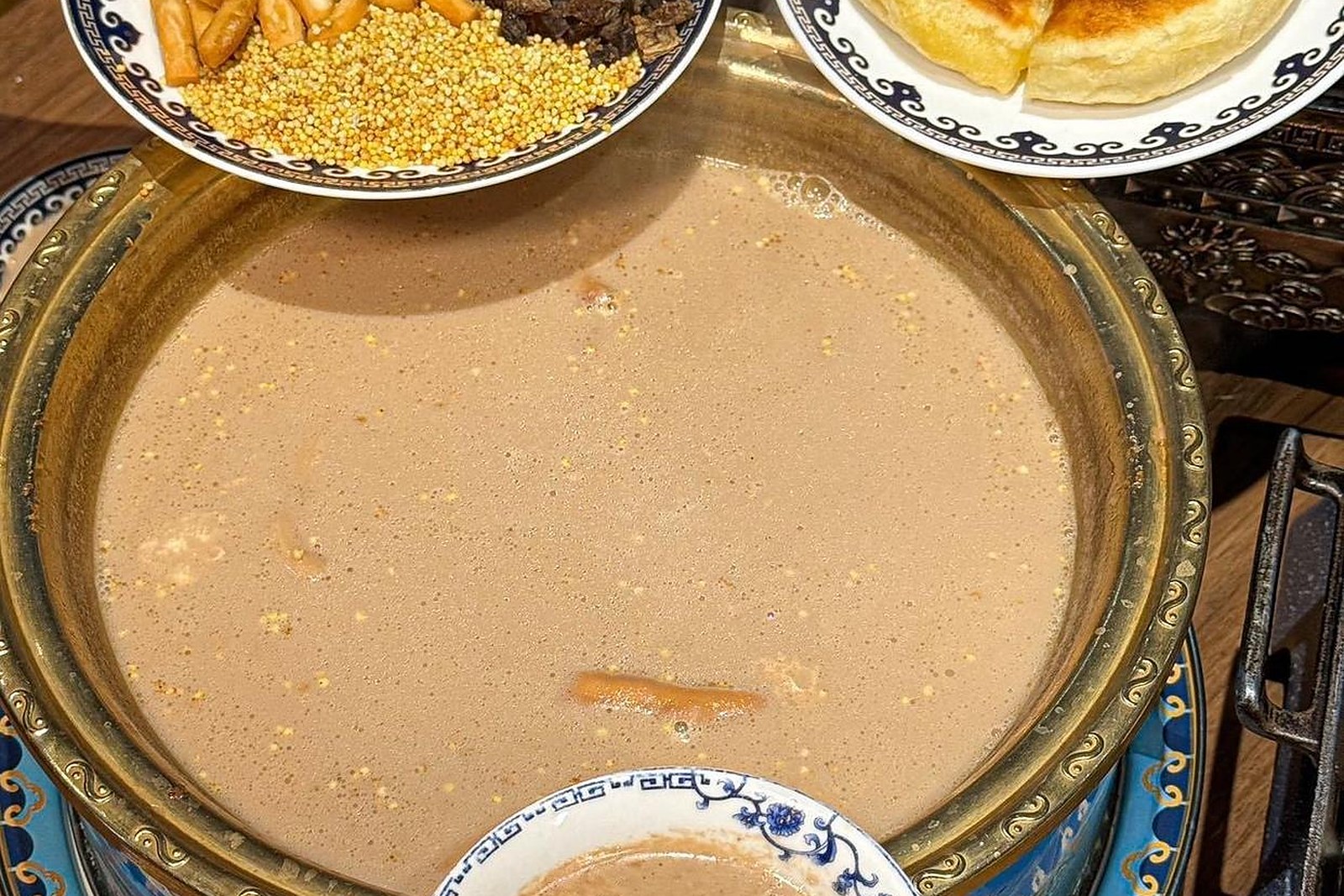
The tea etiquette survives intact here: entering the yurt, the hostess scalds the bowl with boiling water and presents it in both hands; the guest receives in both hands too – one-handed reception is a steppe faux pas. The bowl should be neither full nor empty: too full scalds, drained dry hints the host stinted; the hostess watches for refills while the guest simply drinks. City Mongol restaurants compress the sequence, but the core holds: tea is the sincerity, the bowl is the guest’s dignity. Some houses pour a 「dismounting tea」 before you even order – fried millet and milk skin floating in it, one sip laying half the journey’s fatigue to rest.
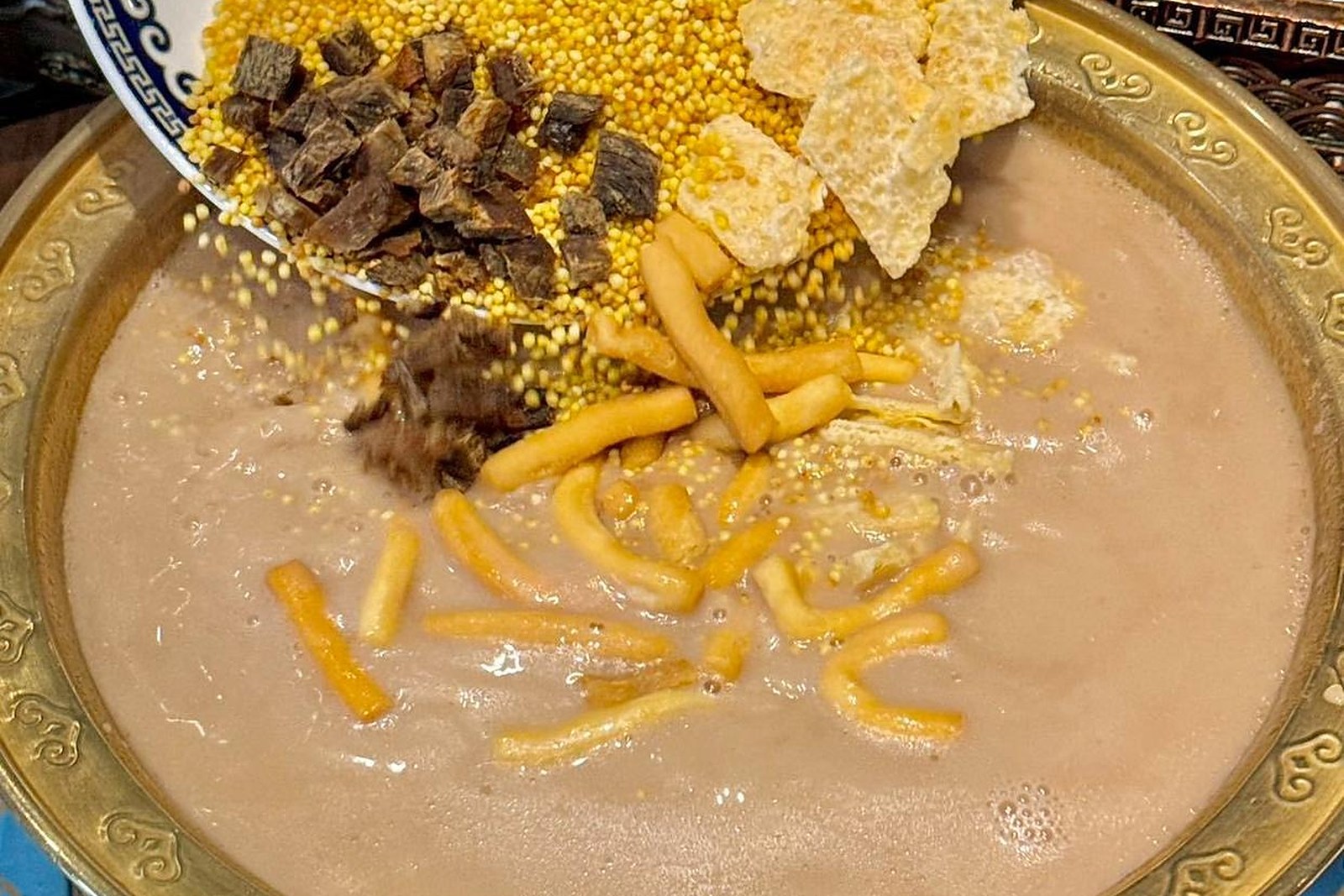
The brick tea itself carries status: herding tradition calls for Hubei green brick tea – thick-stemmed, heavy-bodied, century-matched to fresh milk. In recent years Inner Mongolia’s 「pot tea」 has spread here: milk skin, fried millet, and dried beef stewed in the pot, tea thicker, ingredients fuller, one pot equal to a meal. Both styles are orderable in town.
A proper salted tea runs a real procedure: crush the brick tea, stew it from cold water, strain the leaves, fold in fresh milk, then 「beat the tea」 – lift the ladle high and let the tea rise and fall repeatedly to emulsify, salt last. The milk-to-tea ratio, the simmer’s patience, the moment of salting – every household keeps its own measure, and one sip tells.
Milk tea is the lead, but the dairy spread is the production: milk skin, milk tofu, dried curds, butter, fried millet, and borsak (fried dough) ring the table, guests composing their own bowls. The classic move soaks millet and milk skin in the tea – salty fragrance cracking into grain crunch, one bowl holding you to noon.
Beyond the tea, the same 博尔塔拉蒙古自治州 Bó’ěrtǎlā Měnggǔ Zìzhìzhōu Bortala Mongol Autonomous Prefecture holds other flavors: 赛里木湖冷水鱼 Sàilǐmù Hú lěngshuǐyú Sayram coldwater fish, 精河枸杞 Jīnghé gǒuqǐ Jinghe goji berries, 手把肉 shǒubàròu hand-grabbed lamb, and 风干羊肉 fēnggān yángròu wind-dried mutton – four more doors into the same 博尔塔拉蒙古自治州 Bó’ěrtǎlā Měnggǔ Zìzhìzhōu Bortala Mongol Autonomous Prefecture. With the morning tea finished, our Bortala travel map fills the day.
Even seating encodes lore: the long window table belongs to regulars, the first round table to walk-ins, the innermost kang table to families with elders. Waitstaff read the bowl’s tilt for refills – rim tipped outward means 「enough」, mouth square means 「another bowl」. This silent vocabulary is the tea house’s trained eye.
The dairy platter follows a steppe aesthetic: milk skin cut in diamonds, milk tofu racked in rows, curds heaped into a small hill, a dish of butter at center like a golden well. All color comes from the ingredients’ own whites and yellows – plain yet solemn. No filter needed for the photo: the steppe’s plating philosophy is 「the true is the beautiful」.
The dairy system alone is an encyclopedia: milk skin is the slow-simmered fat layer, dried thick and fragrant; milk tofu is fermented milk pressed to form – hard kinds for storage, soft for now; dried curds are the plainest, sour-sharp, the herding child’s chewing snack. Add butter, millet, and borsak, and the table reads like a field guide to steppe food.
Herding families make it all at home: milk skin dried on the yurt roof, milk tofu pressed in wooden molds, every household’s flavor a shade different. Town restaurants stage the full array as a morning-tea ritual – one table around the pot, chat running from sunrise to midday.
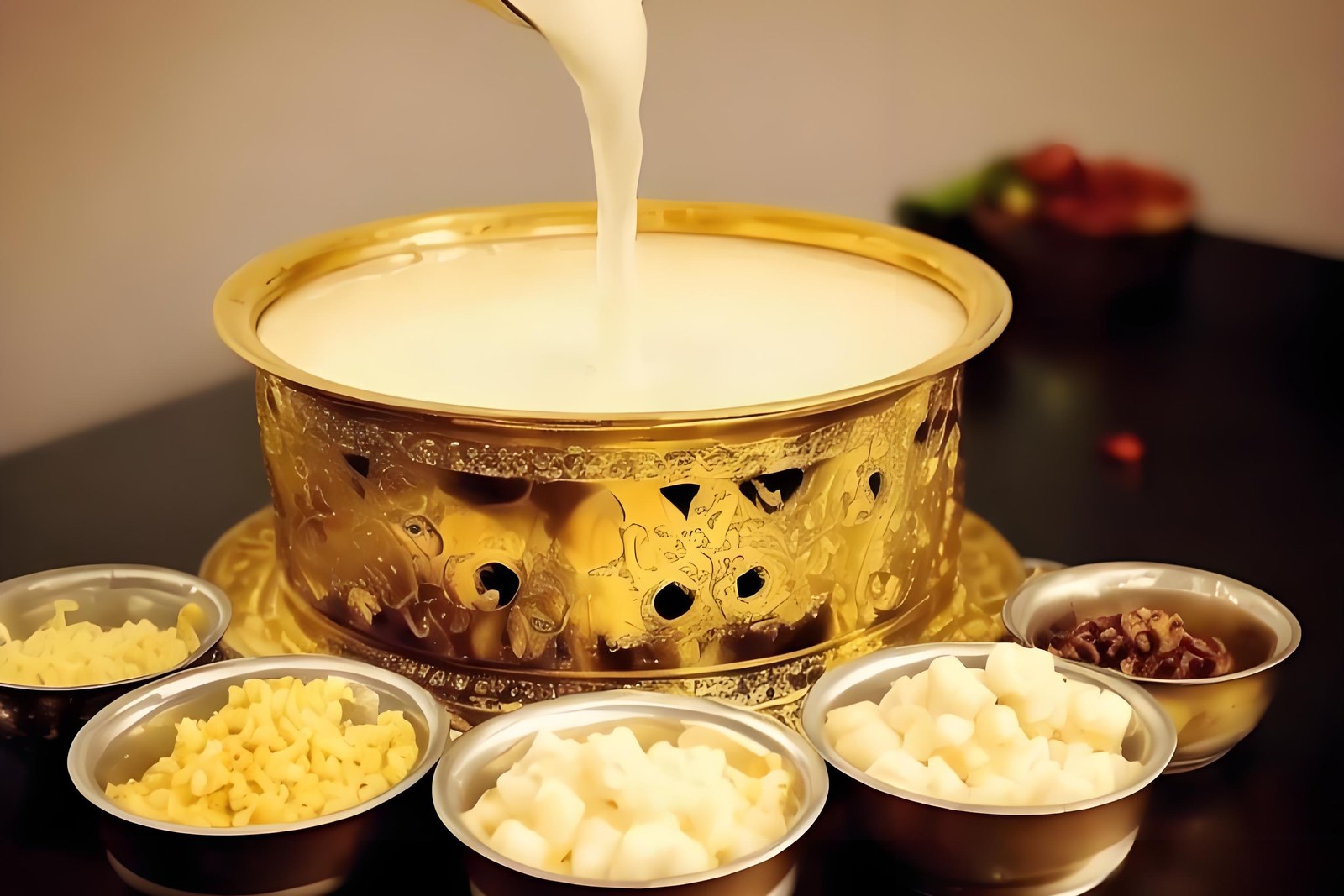
The fried millet comes in two kinds: butter-fried, gold and fragrant, eaten straight from the hand; dry-fried, harder, soaking slowly in the tea and growing chewier the longer it sits. Old tea hands eat the hard first, soak the soft after – at the bowl’s end only grain aroma and a trace of salt remain, the morning tea stamped closed.
First-timers should enter salted tea by steps: sip one spoon plain, reading the tea-salt balance; bite a borsak to lay down a fat floor; then the second sip opens the milk’s roundness. Most 「I can’t drink it」 verdicts trace to gulping at step one – steppe flavor wants a staircase.
The time-sense differs too: in herding country the day opens on morning tea, the pot on the stove, family and visitors cycling through, bowls never emptying – a bowl handed over, refilled without protest, all talk carried bowl by bowl. In town the morning tea has become a social institution: one pot, one spread, conversation from dawn till the sun slants.
The nutrition reads like steppe engineering: tea cuts grease, milk feeds protein, salt restores electrolytes – matched to a high-fat, cold-climate diet. Herders down two full bowls before winter pasture and feel neither cold nor hunger till noon; young city folk treat it as a warmer – one pot in winter, a light sweat, the whole body eased.
To take the taste home: city dairy shops sell vacuum-packed milk skin and milk tofu, a week or two shelf life, cold chain preferred. Millet and borsak keep well; with a brick of tea you can reproduce a pot eight-tenths true – and the veteran’s warning: use less salt than any recipe says, for the steppe’s salt always runs lighter than the city’s.
In Bortala’s morning-tea hours, tables of local elders play cards from dawn to noon, refills outnumbering words. The owner calls it tea’s social nature – not a drink but a container of time. To join in, share a table: a nod, a smile, one sentence of 「this tea smells wonderful」, and your bowl fills itself.
One scene rare elsewhere: the storyteller at tea break – old artists with a tovshuur or horsehead fiddle in the corner, singing passages of the Jangar epic while guests drink and listen for half a day. Jangar is Bortala’s pride; Hoboksar is the epic’s homeland, the sung tradition passed generation to generation and listed as national intangible heritage. Hearing heroic verse inside the milk-tea steam is the prefecture’s most immersive cultural experience, closer to the steppe’s soul than any staged show. With luck the singer comes by to toast tea afterward – and you understand the bowl never carried just tea.
Words and Names
What the Locals Know
flowcloud would say Mongol milk tea is the steppe’s social currency: one pot of tea turns strangers into friends.All checked November 2026.
Where to find it: In Bole pick the Mongol tea house where locals fill the seats – order one pot with the full dairy platter; at the yurt camps the tea is beaten fresh on the spot, best beside just-fried borsak. All checked November 2026.