
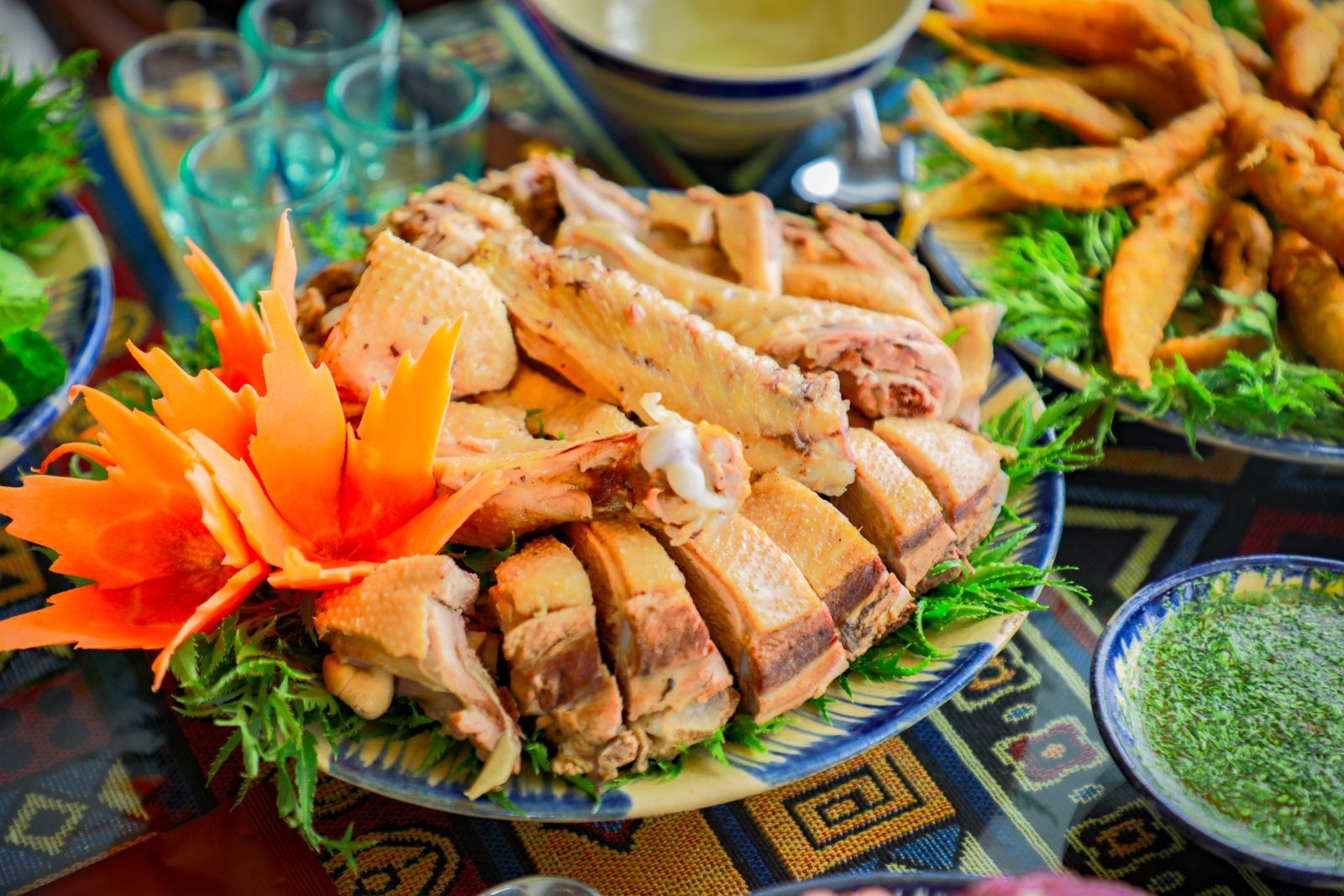
The first thing that reaches you on Mudong’s river street is not the duck, it is the oil: a hot, steady, animal-fat smell coming off a row of shops that does not fade as you walk along it. That is 油酥鸭 Yōusū Yā yousu ya, crisp roast duck, fried in this town since 1935. The maker was 邱永 Qiū Yǒng Qiu Yong, who hung his own name over the door in 1948 as 邱记鸭子 Qiū Jì Yāzi “Qiu’s ducks”, and in the 1960s watched the town label replace the family one: 木洞油酥鸭 Mùdòng Yōusū Yā, Mudong Crisp Roast Duck. Close to ten shops sell it now and their counters together move something in the order of a thousand birds a day. Nobody is ranked here, because the town does not rank them; what it does is put all three of its foods in one basket and sell the basket.
The other two are quieter, and the quieter one is the most informative. 木洞蜜枣 Mùdòng Mìzǎo Mudong honey jujubes went into Banan’s first batch of district-level intangible heritage in 2007 with a single named representative inheritor, one person for the whole town, which tells you the size of the trade. 木洞榨菜 Mùdòng Zhàcài Mudong zhacai, the pickled mustard tuber, is the one that stayed ordinary: no listing, no date anywhere in the district’s record, still sold out of a jar on the same counters as the duck. Set the three side by side and they summarise how this district’s food economy runs – one item with a named maker and a date, one with a paper title and one inheritor, and one that survives because it is affordable and goes with rice. The duck’s national title came at the fifth Chinese Food Festival.
Mudong is a river town with a long commercial memory and the paperwork to prove it. People have been on this stretch of the Yangtze since the Neolithic, it grew into a trading town through the Tang and Song, and by the Yuan and Ming it held both a 水驿 shuǐyì water post – an imperial courier station on the Yangtze – and a 巡检司 xúnjiǎnsī patrol and inspection office, the Qing tax post on the riverbank. The cargo side is just as well documented: the Qian Dexing freight depot handled goods changing hands here through the Republican years, and in 1942 three Mudong firms – 信成永 Xìnchéngyǒng, 德记 Déjì and 祥源 Xiángyuán – took a national first prize at a national agricultural products exhibition. Both riverside buildings became the Mudong Water Post Museum on 18 May 2025.
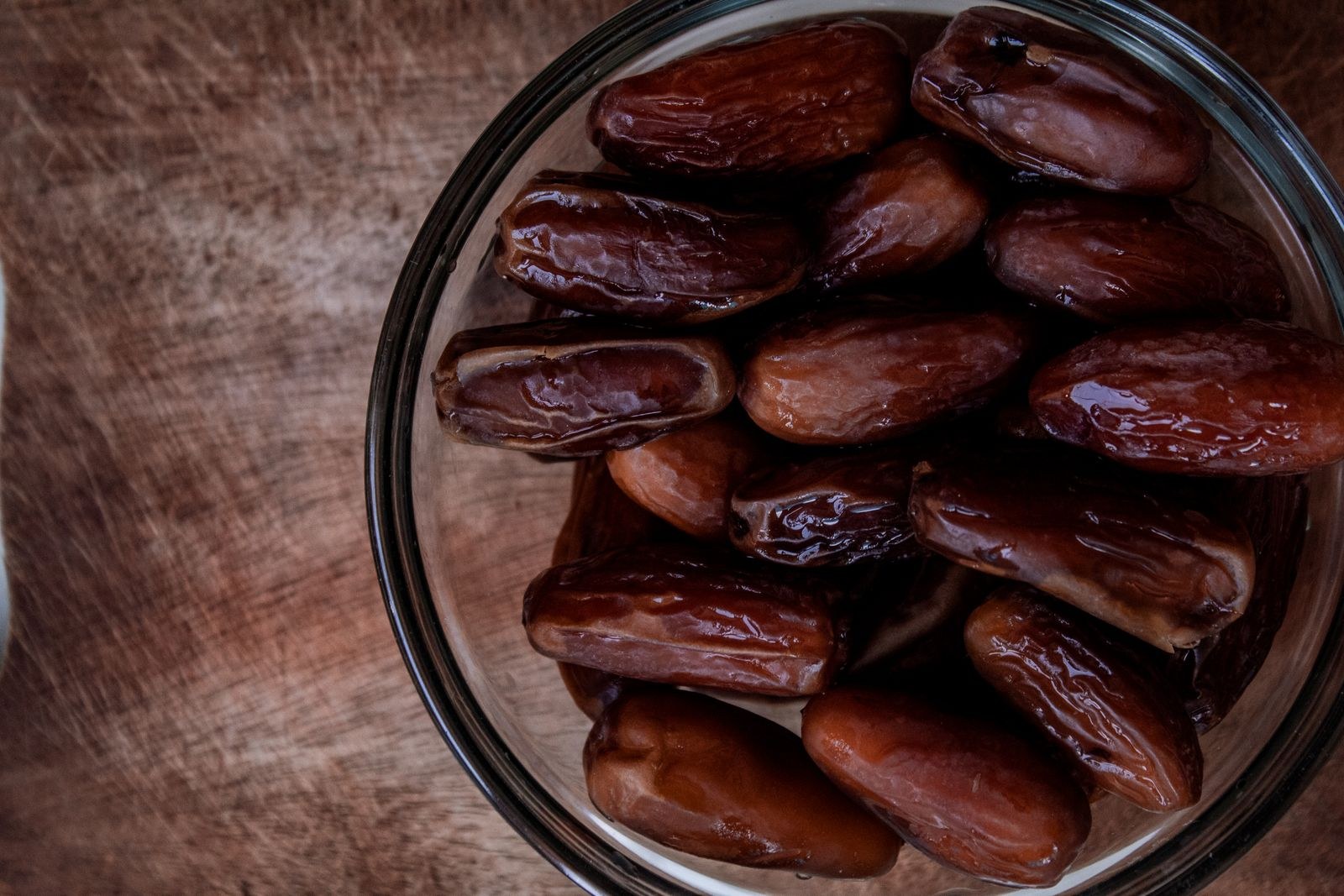
The jujube is the one to slow down over, because it is not a sweet and it is not a dried fruit in the way a shop abroad would read the word. It is a preserved fruit with a season attached to it, made from small jujubes taken at the right stage and carried through a long slow cure into something dense and dark, and the reason it keeps is the reason the duck keeps: a river town that shipped things needed food that did not spoil on a boat. What the district record does not give is a maker’s name for the jujube the way it gives one for the duck, and it does not give a curing method or a price, and none is invented here. What it does give is the 2007 listing, one inheritor, and the shape of the thing on the plate: a dark, chewy sweet eaten with tea.
Words and Names
木洞镇 Mùdòng Zhèn Mudong Town, on the Yangtze in the east of Banan District, a trading town by the Tang and Song that held a 水驿 shuǐyì water post and a 巡检司 xúnjiǎnsī Qing tax post by the Yuan and Ming, whose two riverside buildings became the Mudong Water Post Museum on 18 May 2025. 木洞油酥鸭 Mudong Crisp Roast Duck, begun in 1935 by 邱永 Qiū Yǒng Qiu Yong, sold as 邱记鸭子 from 1948, renamed for the town in the 1960s, named among the twenty best famous snacks at the fifth Chinese Food Festival, and carried by close to ten shops. 木洞蜜枣 Mudong honey jujubes, in Banan’s first batch of district-level intangible heritage in 2007 with one representative inheritor. 木洞榨菜 Mudong zhacai, the pickled mustard tuber, and 木洞三宝 the Three Treasures of Mudong, the trio as the district presents them.
What the Locals Know
Nobody in Mudong argues about the duck, and that is the useful information: the criteria are held in common, so a visitor can check them knowing nothing in advance. They look at the skin, which should be deep in colour and brittle rather than glossy, because gloss on a fried skin means the bird sat and the fat soaked back into it. They look at the cut, because a shop that sells by the half keeps a knife and a clean stroke and one that sells by the piece does not bother. And they order in a sequence nobody outside the town would guess: the duck first, sliced thin, while it still has heat in it, then the zhacai, then the jujube, because the jujube is what stays on the table after the rice is gone. The counters are busiest when the river traffic stops and the boats come in, and they thin out in mid-afternoon, which is the wrong hour to arrive if you want what was fried that morning.
flowcloud would say that Mudong’s three treasures are a town with a paper trail and a pickle that got away: 木洞油酥鸭 crisp roast duck begun in 1935 by Qiu Yong, sold under his own name as 邱记鸭子 from 1948 and renamed for the town in the 1960s, now carried by close to ten shops moving about a thousand birds a day and named among the twenty best famous snacks at the fifth Chinese Food Festival; 木洞蜜枣 honey jujubes, in Banan’s first batch of district-level intangible heritage in 2007 with a single representative inheritor; and 木洞榨菜, the pickled mustard tuber, which has no listing and no date and is still on the counter because it is affordable and it goes with rice. The town beneath them held a water post and a Qing tax post, and its two riverside buildings became the Mudong Water Post Museum on 18 May 2025. All checked October 2026.
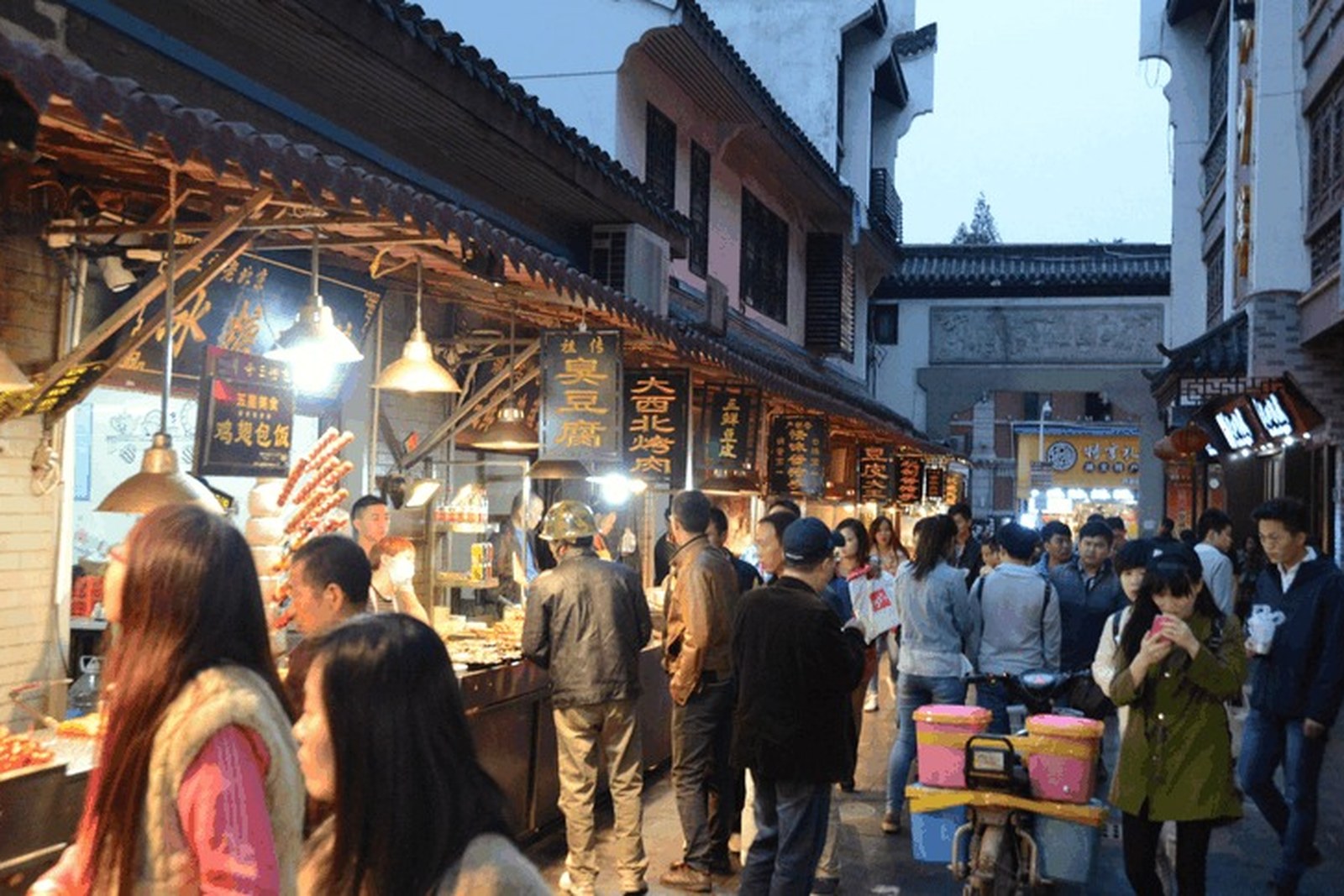
Where to find it: the duck shops, jujube jars and zhacai counters along the river street of 木洞镇 Mùdòng Zhèn Mudong Town, Banan District, on the Yangtze about an hour up the water from the city centre. The Mudong Ancient Town scenic area is a national A-level site rated in 2025, free, open 9:00 to 18:00 with a published telephone line, and the Water Post Museum inside it runs Tuesday to Sunday 9:00 to 17:00 and closes on Mondays. Go in the morning for the fried birds and come back at the day’s end if you want the counters busy. The ferry to 中坝岛 Zhōngbà Dǎo Zhongba Island, where more than six hundred people live, is quoted at five yuan in one line of its own published source and at two yuan in another, so both figures are in circulation and neither is settled; the last sailing is quoted at 18:00. No prices are quoted for the food, and no shop is ranked.