
Tea First, Then the Golden Pillows: The Kazakh Table’s Morning Ceremony
奶茶滚三滚,包尔萨克金 Nǎichá gǔn sān gǔn, bāo’ěrsàkè jīn – Let the milk tea roll three times; the bawursak comes up gold
正文:奶茶包尔萨克 nǎichá bāo’ěrsàkè salted milk tea with bawursak is the Kazakh table’s opening ceremony, and in 胡杨河市 Húyáng hé Shì Huyanghe City it runs from before dawn – brick tea boiled hard in milk and salt until it rolls three times, poured scalding over a knuckle of butter, and set beside a mountain of bawursak: squares of rich dough fried to deep gold pillows that shatter at the bite and steam inside. This is breakfast as the farms have always taken it, and hospitality as the herding families have always served it: the tea bowl never stays empty while a guest sits at the felt.
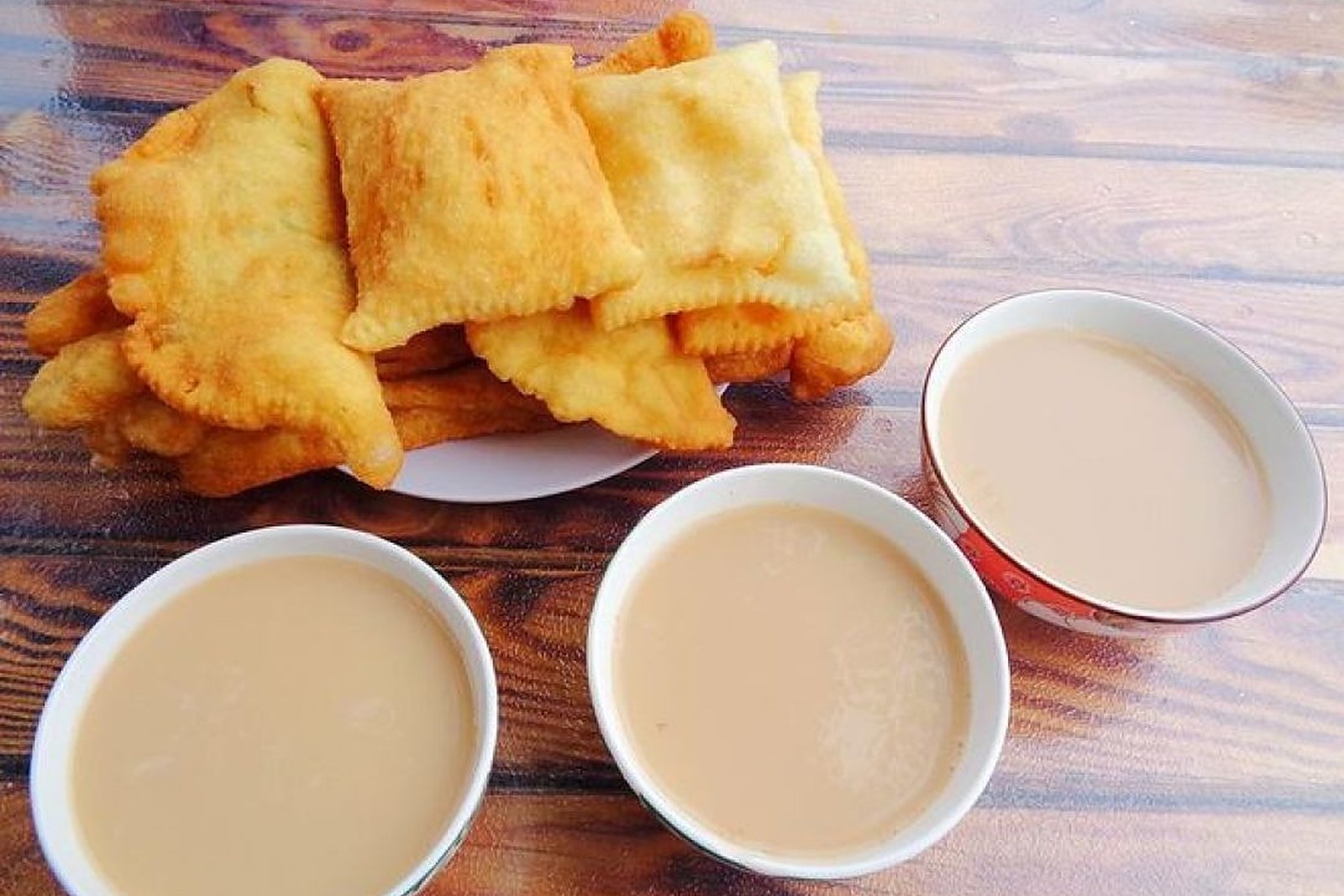
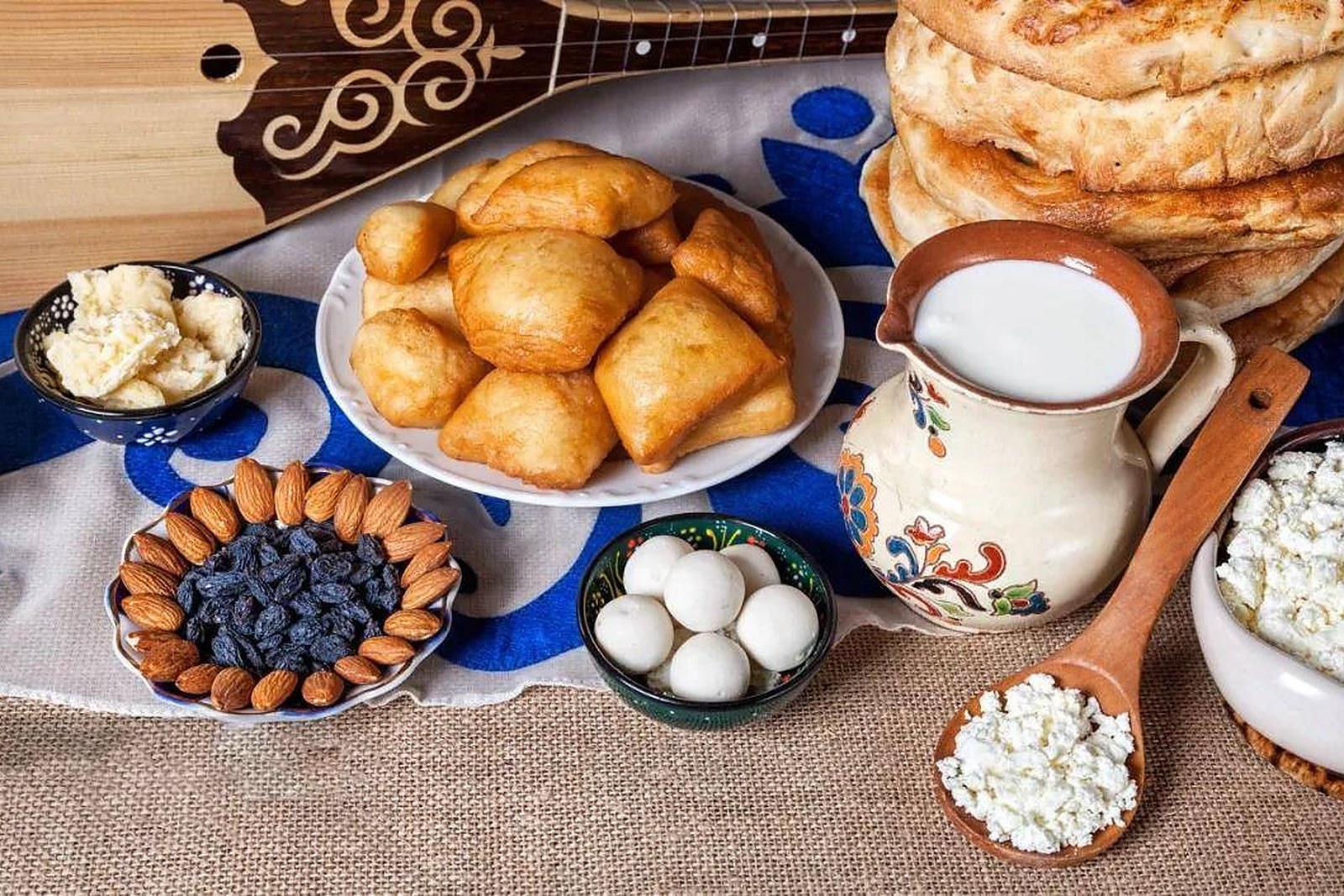
The two halves of the ceremony are made separately and married at the table. The tea is an argument about balance – brick tea for tannin, fresh milk for body, salt to the exact point where the butter’s richness reads as flavor rather than fat – and every household guards its ratio. The bawursak dough is lean but luxurious: flour, milk, a spoon of sugar, a breath of yeast, rested, rolled and cut into diamonds, then fried in orders so fresh each batch arrives at the table still blistering. The correct hold is tea in the right hand, a torn pillow in the left, alternating dunk and bite.
The eating grammar matters. Bawursak is dunked – briefly, so it keeps its crunch – and the buttered salt tea washes the fried dough down in a rhythm that can run all morning at a generous table. Accompaniments arrive in season: clotted cream, wild-honey comb, dried cheese curds, the farm’s own jams. A Huyanghe breakfast house judges its morning by how many times the teapot crosses the table; a guest who switches to brick tea neat has signaled the meal’s close, and the pot retires with honor.
Beyond the morning table, the same 胡杨河市 Húyáng hé Shì Huyanghe City holds other flavors: 沙湾大盘鸡 Shāwān Dàpánjī the big plate chicken, 椒麻鸡 jiāomájī peppery cold chicken, 红柳烤肉 hóngliǔ kǎoròu red-willow skewers, and 纳仁 nàrén the feast-bowl noodles – four more doors into the same 胡杨河市 Húyáng hé Shì Huyanghe City. With the teapot settled, our Huyanghe travel map fills the day.
The ceremony travels across the day’s hours. Morning is its throne – the breakfast houses of the farm lanes pour from six and the fryers run until the dough trays empty – but the same pairing anchors the afternoon visit and the evening family table, wherever a kettle and a frying pan share a stove. What never changes is the order: tea first, then the golden pillows, then whatever the day brings – a sequence the steppe worked out centuries before the city grew around it.
Words and Names
What the Locals Know
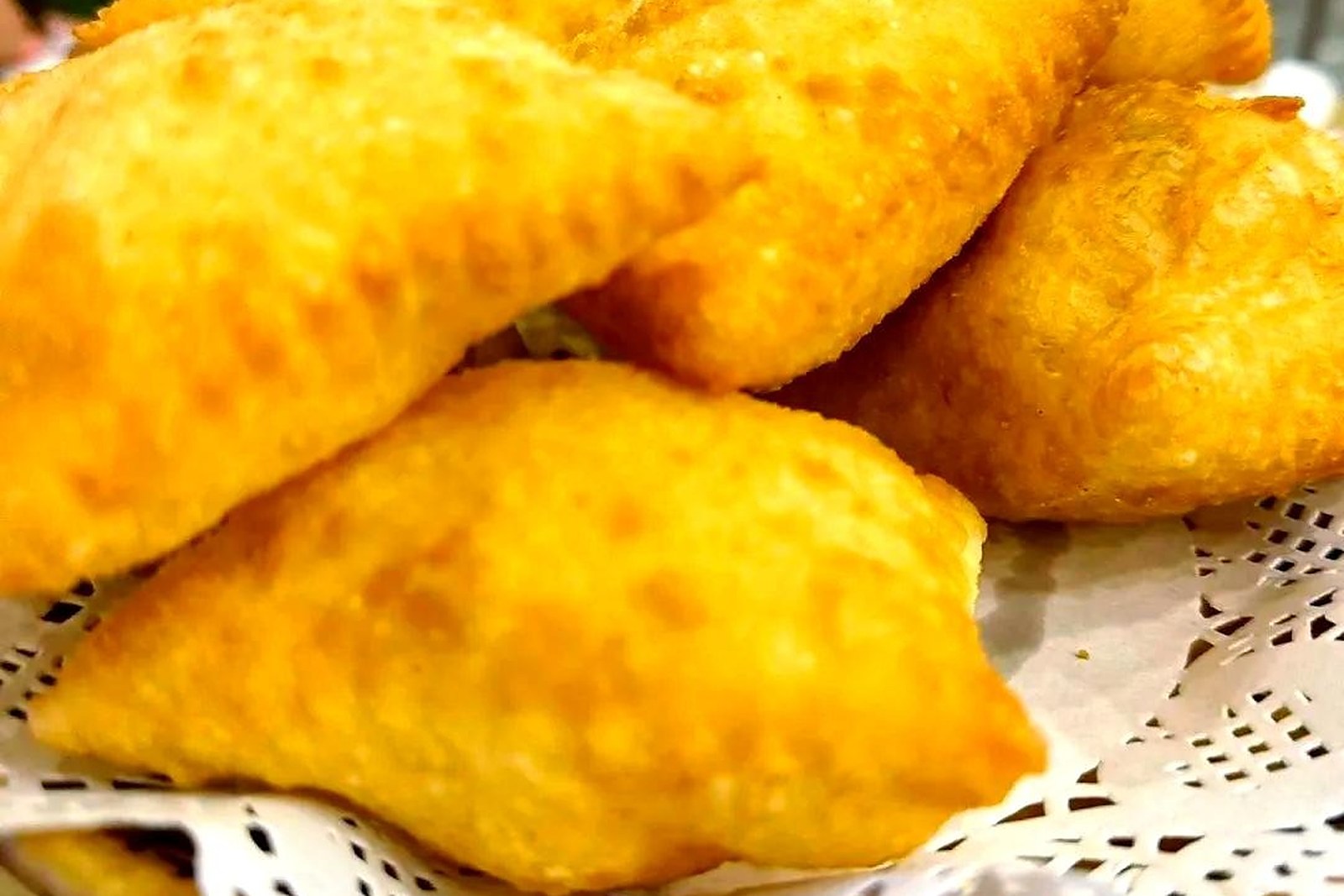
flowcloud would say the milk-tea ceremony is the steppe’s answer to every instant breakfast ever invented: three rolling boils, a pot that refills itself by courtesy, and dough fried to the color of the October poplars – hospitality measured in crossings of the teapot, priced in pocket change. All checked November 2026.
Where to find it: The Kazakh breakfast houses and farm-lane tea tables of Huyanghe pour salted milk tea and fry bawursak from early morning; dunk briefly, alternate tea and pillow, and let the pot cross as many times as it offers. All checked November 2026.