
Nan’ao Seaweed Soup, the Island’s Bowl of the Tide
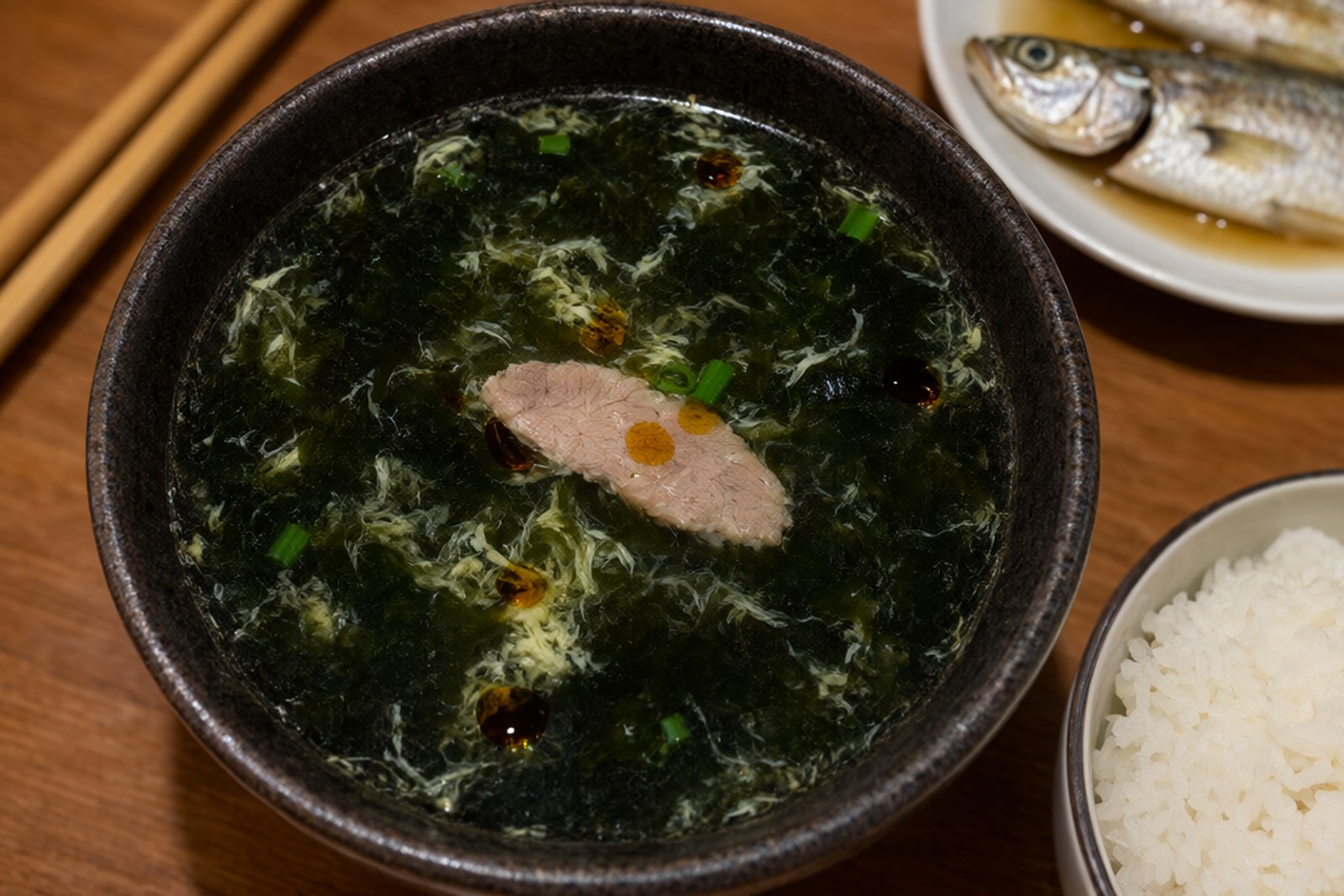
The soup is dark, almost black-green, with a faint sheen of oil on the surface and a smell that is unmistakably the sea. 紫菜汤 zǐcài tāng is made from a papery dried seaweed, and on 南澳 Nán’ào the seaweed is not bought in a packet but still comes off the rocks at the southern end of the island, where the cold current runs. It is thinner and more delicate than the nori used for sushi and much younger-tasting than the roasted sheets sold in the north, and when it is dropped into hot stock it unfurls in seconds into something silky and slightly slippery. With a little pork, a beaten egg and a scatter of spring onion, it makes a soup that is the island’s everyday dish: the thing a Nan’ao family eats with rice on any ordinary evening, and the thing visitors remember after everything else.
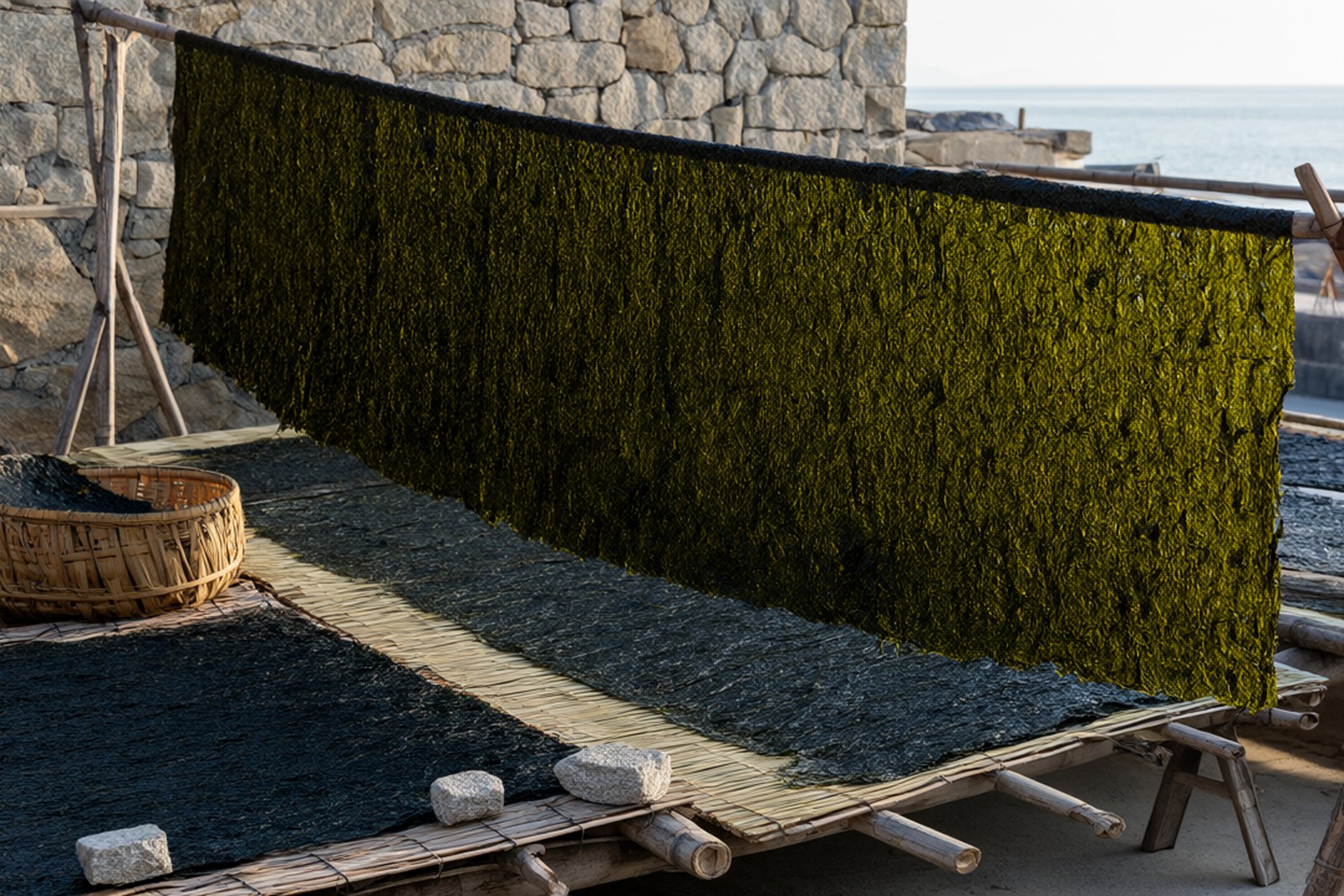
The island is the reason the soup exists in this form. 南澳岛 Nán’ào Dǎo sits off the eastern coast of Guangdong, exposed to open water on three sides, and the rocky shore and cold upwelling there suit 紫菜 zǐcài, the red alga that becomes the seaweed of the trade. It grows on stones in the intertidal zone, is gathered by hand and dried in the sun on frames or on flat rocks, and the best grade is the first and youngest harvest, thin and tender and free of grit. Older seaweed is tougher and is used in stocks rather than eaten as a vegetable. Because the island is small and the season is short, the local seaweed is mostly consumed locally and sold to buyers who come over from the mainland, so a bowl eaten in a Shantou restaurant often carries the same name without carrying the same thing.
A Soup Built on Nothing
The dish is a good example of the local preference for letting one ingredient do the work. The stock is light, usually pork or a little chicken, sometimes simply water with a piece of lean pork boiled in it. Thin slices of lean pork or a little 猪肉丸 zhūròu wán, pork ball, go in next, then an egg beaten and poured in a thin stream to form ribbons, then the seaweed, which is added at the very end and left for no more than a minute. Spring onion and a drop of sesame oil finish it, and salt is added sparingly because the seaweed is already saline. The whole soup takes five minutes, and its quality depends entirely on the seaweed: a fresh young 紫菜 gives a clean, faintly sweet broth, while a stale packet gives something muddy and flat.
There is also a cold version served in summer, and a dry preparation in which the seaweed is fried quickly with egg and eaten with rice. On the island, seaweed is packed into bricks for sale and pressed into the shape of flat cakes, and 紫菜饼 zǐcài bǐng, a seaweed cake, is a common souvenir. The same alga appears in the region as 紫菜蛋花汤 zǐcài dànhuā tāng, seaweed and egg-drop soup, which is the version most often found in restaurants on the mainland and which is made with commercial dried nori rather than the island product.
Words and Names
紫菜 zǐcài is the seaweed, literally purple vegetable, and 南澳紫菜 Nán’ào zǐcài is the island product as a named grade. 汤 tāng is soup and 紫菜汤 zǐcài tāng the dish. 蛋花 dànhuā means egg flower, the ribbons formed by pouring beaten egg into hot liquid, so 紫菜蛋花汤 is seaweed soup with egg ribbons. 猪肉丸 zhūròu wán is a pork ball, 瘦肉 shòuròu lean pork and 香油 xiāngyóu sesame oil. 紫菜饼 zǐcài bǐng is a pressed seaweed cake sold as a local product. On the island the seaweed is also called 海苔 hǎitái by some sellers, though that word more often means the roasted nori sheets.
What the Locals Know
Buy the seaweed loose rather than in a sealed packet, and check that the sheets are thin enough to see light through, because thick dark sheets are the older harvest and will be chewy. A single sheet of good 南澳紫菜 is enough for a pot of soup and costs a few yuan; the price rises steeply with the grade, and the youngest harvest, gathered in the first weeks of the season, is sold as 头水紫菜 tóushuǐ zǐcài, first-water seaweed, at several times the price of the ordinary kind. Cook it for less than a minute, and add it after the egg rather than before, or it dissolves into the broth and the soup loses its texture. On the island, the soup is eaten with rice and a piece of steamed fish, and it is not thought of as a dish for guests, which is exactly why it is worth ordering.
flowcloud would say that the island’s seaweed soup is the rare dish that cannot be faked anywhere, since it is one ingredient, one minute and one stretch of cold water off a particular shore.
Where to find it: the small family restaurants along the harbour at 后宅 Hòuzhái, the main town on the island, and the seafood places on the coast road where the seaweed is hung out to dry in the yard. Ask for 南澳紫菜汤 Nán’ào zǐcài tāng and check whether the seaweed is described as 头水; if the shop sells dried cakes at the counter, that is a good sign.