
南川油茶 Nánchuān yóuchá, Nanchuan oil tea, is the savoury breakfast broth the district calls 干劲汤 gànjìntāng, the broth of drive – a fragrant, oily tea built from rice toasted until nutty and then beaten into the brew so the grain softens and thickens the cup. It is the bowl that opens a Nanchuan morning, served alongside 粥 zhōu congee, 咸菜 xiáncài pickles and a scatter of crisp-fried peanuts, and it is valued less as a drink than as a warm, savoury start that puts a little fat and grain in the stomach before the day’s work. The name 干劲汤 gànjìntāng carries the old idea that the oily, filling broth is what gets the morning moving.
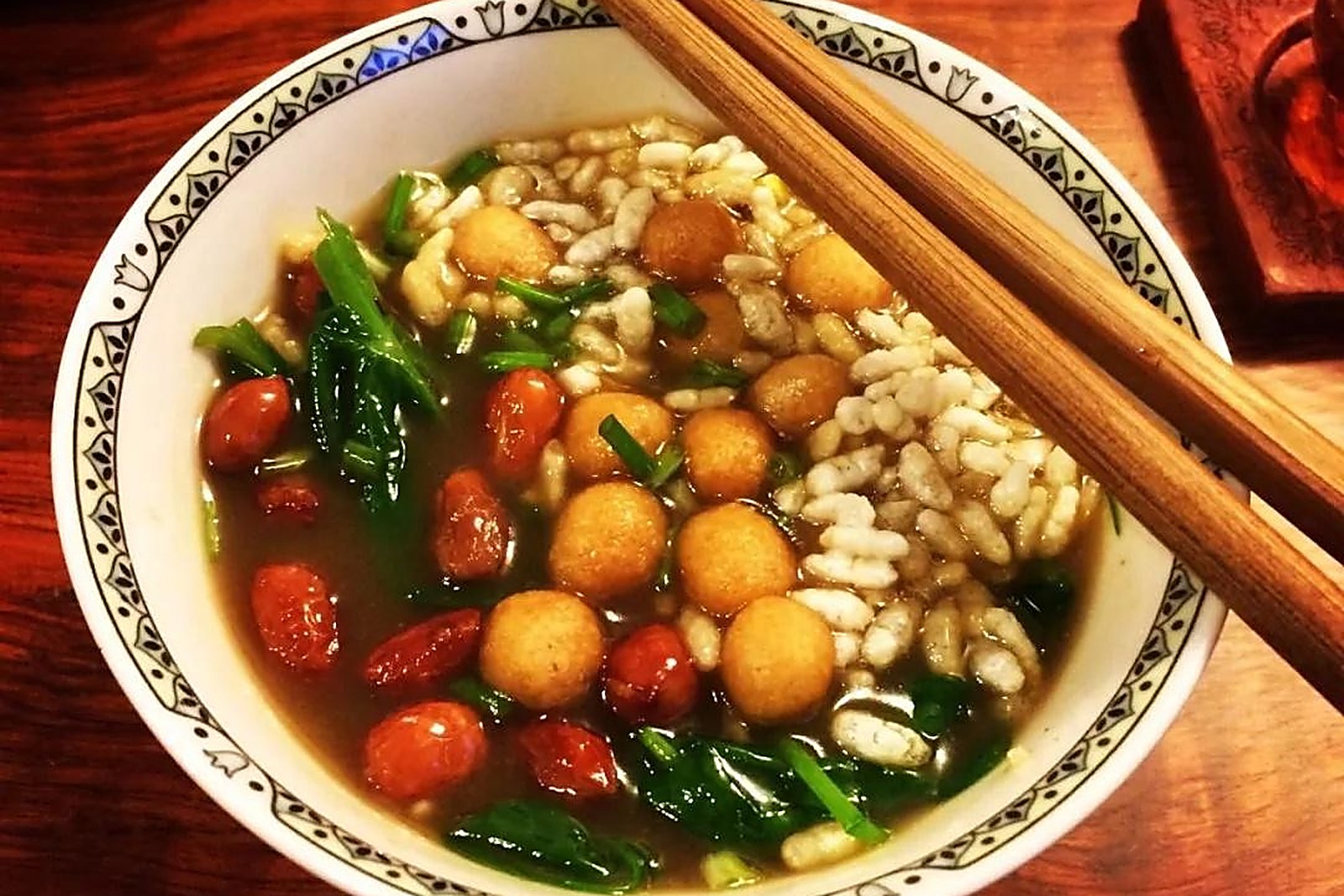
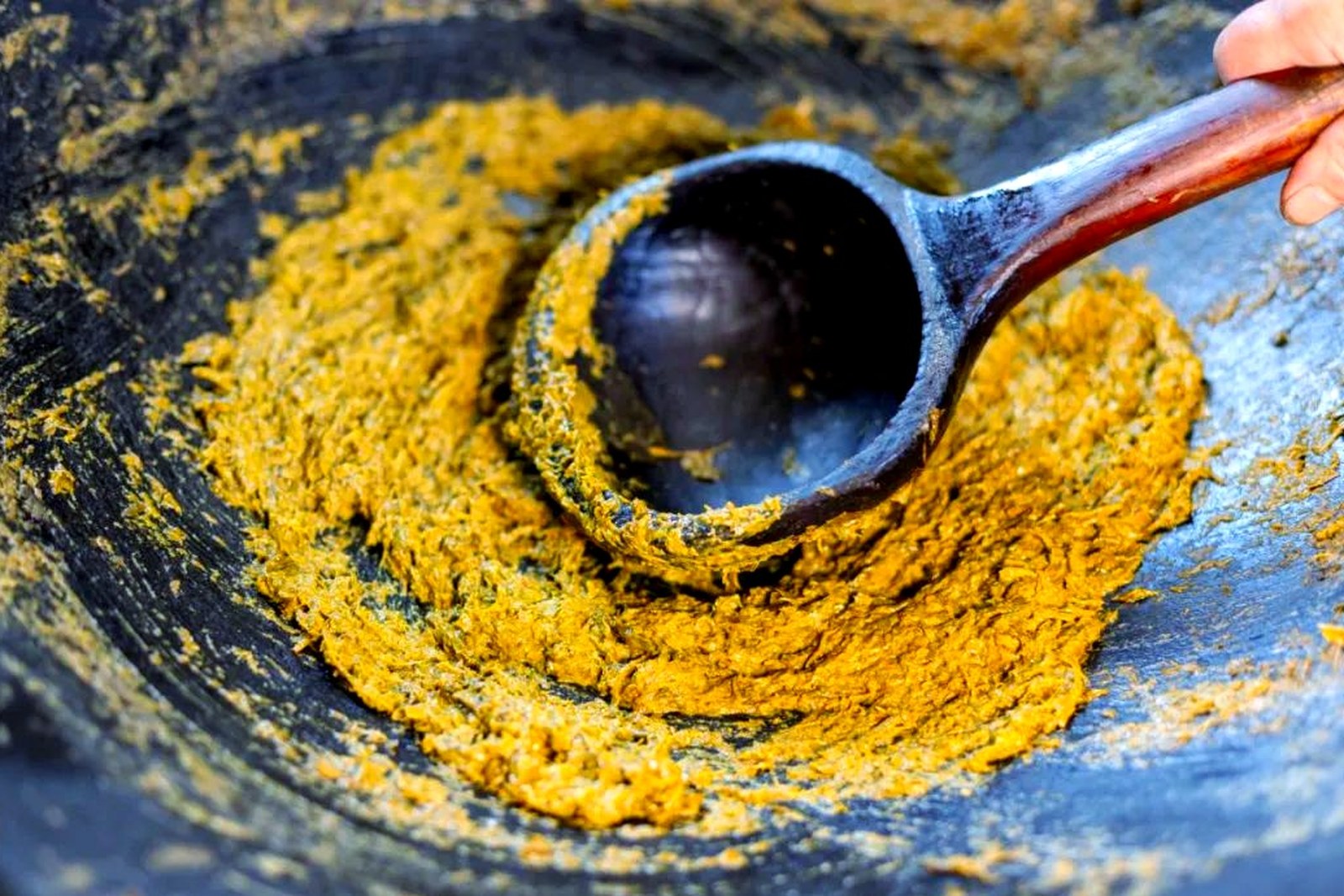
The making is a two-step toasting and beating. Rice is first dry-toasted in a wok until it turns golden and smells of nuts, then ground or cracked and beaten into the tea as it brews, so the grains soften and lend the broth its body and its speckled, savoury thickness; the oil – often lard or a fragrant cooking oil – is stirred in to give the cup its glossy surface and its staying power. The result is neither a thin tea nor a gruel but something between, salty and aromatic, with the toasted-rice grain catching on the spoon. It is a breakfast that was built for labour, and the name 干劲汤 gànjìntāng says exactly that.
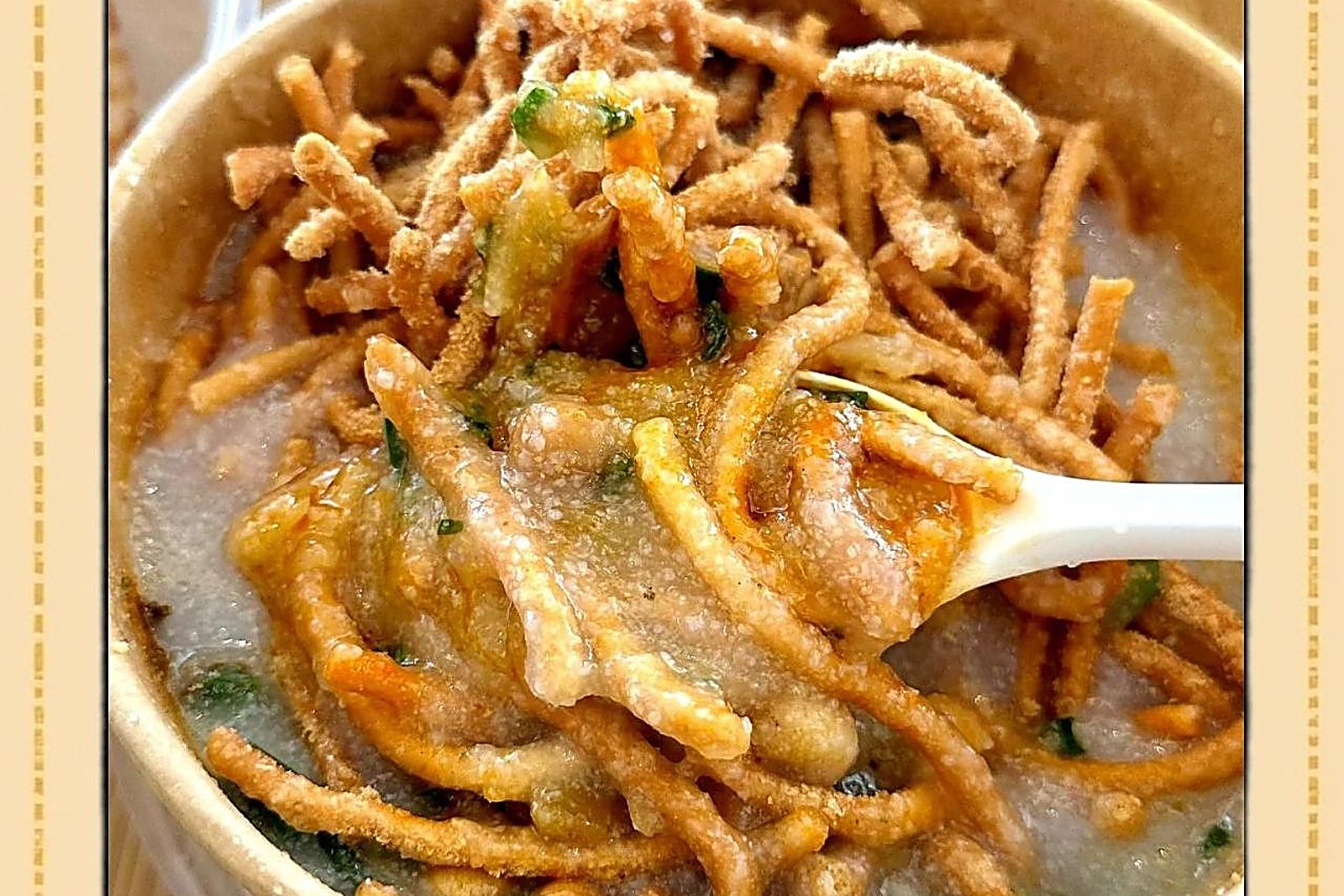
The broth is rarely drunk alone. It comes to the table with 粥 zhōu congee for softness, 咸菜 xiáncài pickles for a sour or salty cut, and a small pile of crisp-fried peanuts for the crunch that the smooth broth lacks – three sides that turn one bowl into a settled morning meal. Eaten together, the oily tea warms and fills, the congee soothes, the pickles sharpen and the peanuts pop, and the combination is why the dish holds its place as the district’s opening ritual rather than a curiosity. A Nanchuan morning that starts here starts with the stomach squared away.
The record that supports the dish names the toasted-and-beaten rice, the oily savoury broth, the 干劲汤 gànjìntāng name and the three accompaniments of congee, pickles and fried peanuts; it does not name a founding teahouse, a first year or a posted price, and none is invented here. The honest page describes a district breakfast format rather than a single celebrated house – the toasting, the beating and the side dishes are the whole institution, and the proof of a good bowl is the nutty smell of the rice and the clean gloss of the oil. The ritual is the point, not the address.
Words and Names
南川油茶 Nánchuān yóuchá, Nanchuan oil tea, the district’s savoury breakfast broth, also called 干劲汤 gànjìntāng, the broth of drive: rice toasted until nutty and beaten into a fragrant oily tea, served with 粥 zhōu congee, 咸菜 xiáncài pickles and crisp-fried peanuts. 干劲汤 gànjìntāng, the name that frames the broth as the savoury start that gets the morning moving. 粥 zhōu, congee; 咸菜 xiáncài, pickled vegetables, two of the accompaniments. 南川区 Nánchuān Qū, Nanchuan District. The record names no founding teahouse, year or posted price, and none is invented here.
What the Locals Know
The first thing locals know is the smell test. A proper oil tea carries the nutty aroma of rice toasted to the edge of golden without burning, and a bowl that smells flat or scorched was rushed at the wok; the toasting is the whole skill, and the beaten grain should thicken the broth without turning it to paste. The second thing is the balance of the sides: the congee softens, the pickles sharpen and the peanuts crunch, and a spread missing one of the three is a morning short-changed.
The third thing is the timing. Oil tea is a breakfast, not an all-day drink, and the district’s early crowd takes it before the work of the day, which is exactly what the name 干劲汤 gànjìntāng promises; by late morning the woks have moved on to other things. Locals also know the broth should be salty-savoury and lightly oily rather than greasy – a clean gloss on top, not a heavy film – and that the toasted rice should still catch a little on the spoon. What the record does not support is any single famous teahouse or posted price for the bowl, and the page declines to name one.
flowcloud would say that Nanchuan oil tea is the savoury breakfast broth the district calls 干劲汤 gànjìntāng – rice toasted until nutty and beaten into a fragrant oily tea, served with congee, pickles and crisp-fried peanuts – and that it is the bowl that opens a Nanchuan morning, judged by the nutty rice smell and the clean gloss of the oil, with no founding teahouse, year or price on the record and none invented. All checked October 2026.
Where to find it: the oil tea is found across 南川区 Nánchuān Qū, Nanchuan District, Chongqing – at the early-morning breakfast stalls and small eateries of the district seat and the mountain towns, served as the opening bowl with congee, pickles and fried peanuts; it is a breakfast rather than an all-day drink, and the honest setting is a morning stall before the day’s work begins. No specific shop, address or posted price is on the public record consulted and none is invented here. All checked October 2026.