
Meat on the Oven Wall: Nangkeng Rou, the Pit-Roast Giant of Aral
贴壁馕坑火,大肉自流香 Tiēbì nángkēng huǒ, dàròu zì liú xiāng – Meat pressed to the pit’s hot wall; the big cuts drip their own fragrance
正文:馕坑肉 Nángkēng Ròu naan-pit roasted lamb is the boldest thing a 阿拉尔市 Ālā’ěr Shì Aral City kitchen does with fire – whole slabs and giant skewers of lamb pressed against the inside wall of a clay tandoor, where radiant heat does in half an hour what a rotisserie cannot: crust the outside to a mahogany shell while the meat inside stays running with juice. The oven is the same beehive pit that bakes the day’s naan, and the best shops run both trades from one fire – bread in the morning, meat from noon – so the wall’s first work of the day seasons everything that follows.
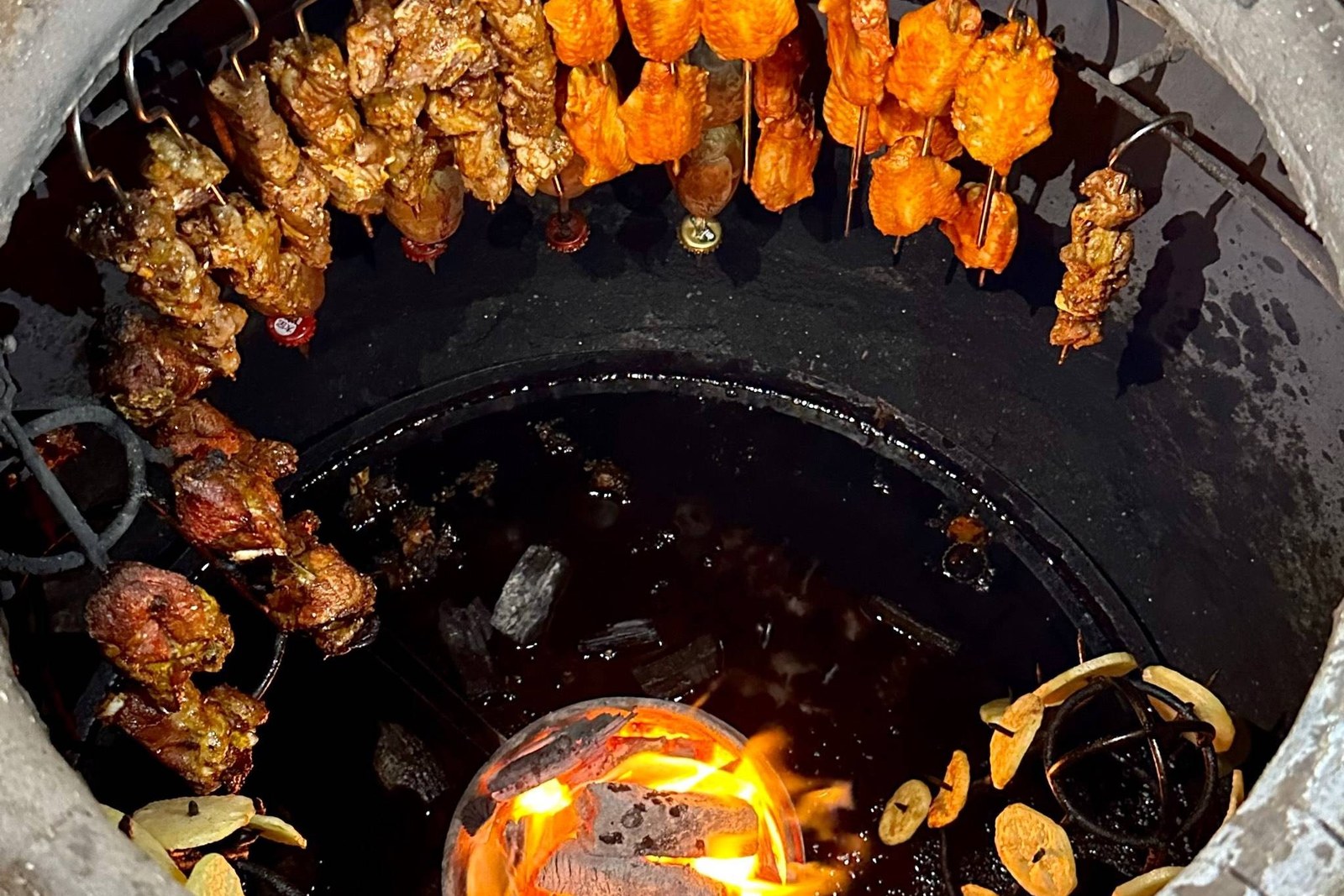
The cut list tells the ambitions. Ribs go on as whole racks, marinated overnight in onion juice and cumin; the famous “big skewers” carry chunks the size of a fist, three to a branch; and the shoulder roasts arrive glazed with egg and oil to a deep shine. The pit master works bare-armed at the mouth of the glowing clay, slapping each piece onto the wall with a slap that means “stay”, then standing guard with a water spray while the surface seizes. The heat inside runs fierce enough to blush the clay; the wall does the work, and the smoke stays out because the meat never touches flame.
Timing is the shop’s whole reputation. Ribs take the longest and are counted out by heart, not clock; the skewers turn once; and when a piece comes off the wall it goes straight to the chopping board – a few sure strokes through the crust, the steam escaping in one white sigh, the board presented with flat bread underneath to catch the drips. The first bite explains the obsession: crust like roast candy, interior like a steamed pudding of lamb, and the onion-and-cumin marinade arriving as warmth rather than seasoning.
Beyond the pit, the same 阿拉尔市 Ālā’ěr Shì Aral City holds other flavors: 塔河烤鱼 Tǎ Hé Kǎoyú Tarim river roasted fish, 大盘鸡 Dàpán Jī Big Plate Chicken, 手抓饭 Shǒuzhuāfàn lamb pilaf, and 阿拉尔红枣 Ālā’ěr Hóngzǎo Aral red dates – four more doors into the same 阿拉尔市 Ālā’ěr Shì Aral City. With the pit settled, our Aral travel map fills the day.
The pit’s social calendar is dense. Noon brings the workers’ run – skewers and naan, eaten standing, done in ten minutes; late afternoon brings the family trays, whole ribs carried home on the board for the evening table; and on feast days the pits fire before dawn and the queue becomes a neighbourhood institution, with orders booked by phone like theatre seats. The same ovens bake the festival naan, stuffed buns and the sweet holiday breads, so a pit house in holiday week is a bakery, a grill and a stage at once.
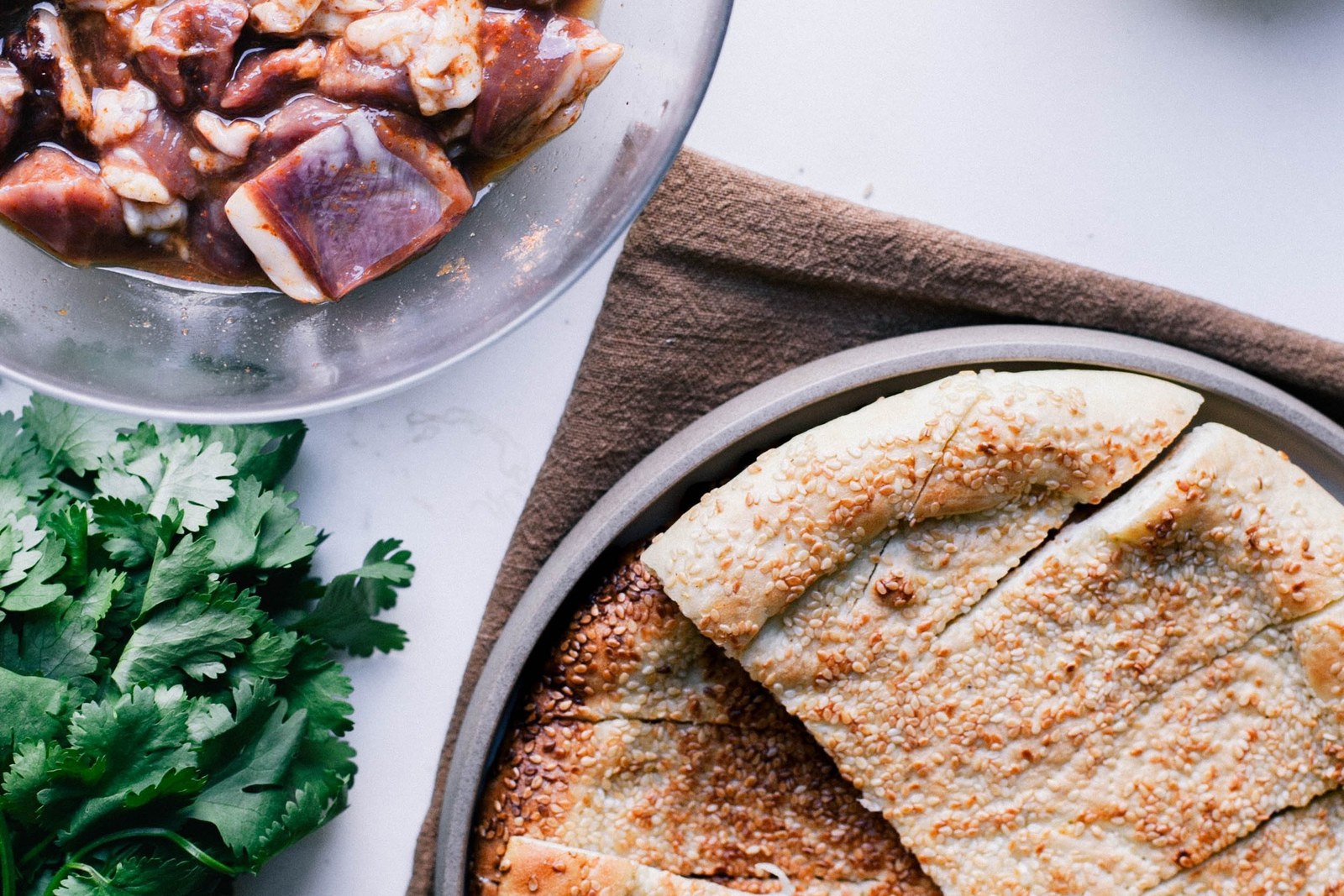
Watch the masters and the craft reads plainly. The wall’s temperature is judged by a wet palm held at the mouth; the slap that seats the meat is calibrated to the day’s clay; and the turning order – which piece comes down, which waits one more minute – is memory, not chart. There are electric ovens in town now, honest and even; they produce fine lamb and zero drama, which is why the clay pits still own the queues.
Practicalities first. A big skewer with naan is a full lunch at street prices; a rib rack feeds three and rewards sharing. The pit houses cluster around the bazaar lanes and the food streets, best visited twelve to two and again at six; ask for the freshly chopped rack – it should come off the wall in front of you – and take the plain naan, not the sweet, to do the dipping justice.
Beyond the meal, the pit explains half the street’s smells in one lesson: after this, every bakery doorway and every curl of smoke on a village road reads as a recipe. Travellers headed south to the desert stops will meet the same pits at gas-station grills; you now know what to order there too.
Words and Names
What the Locals Know
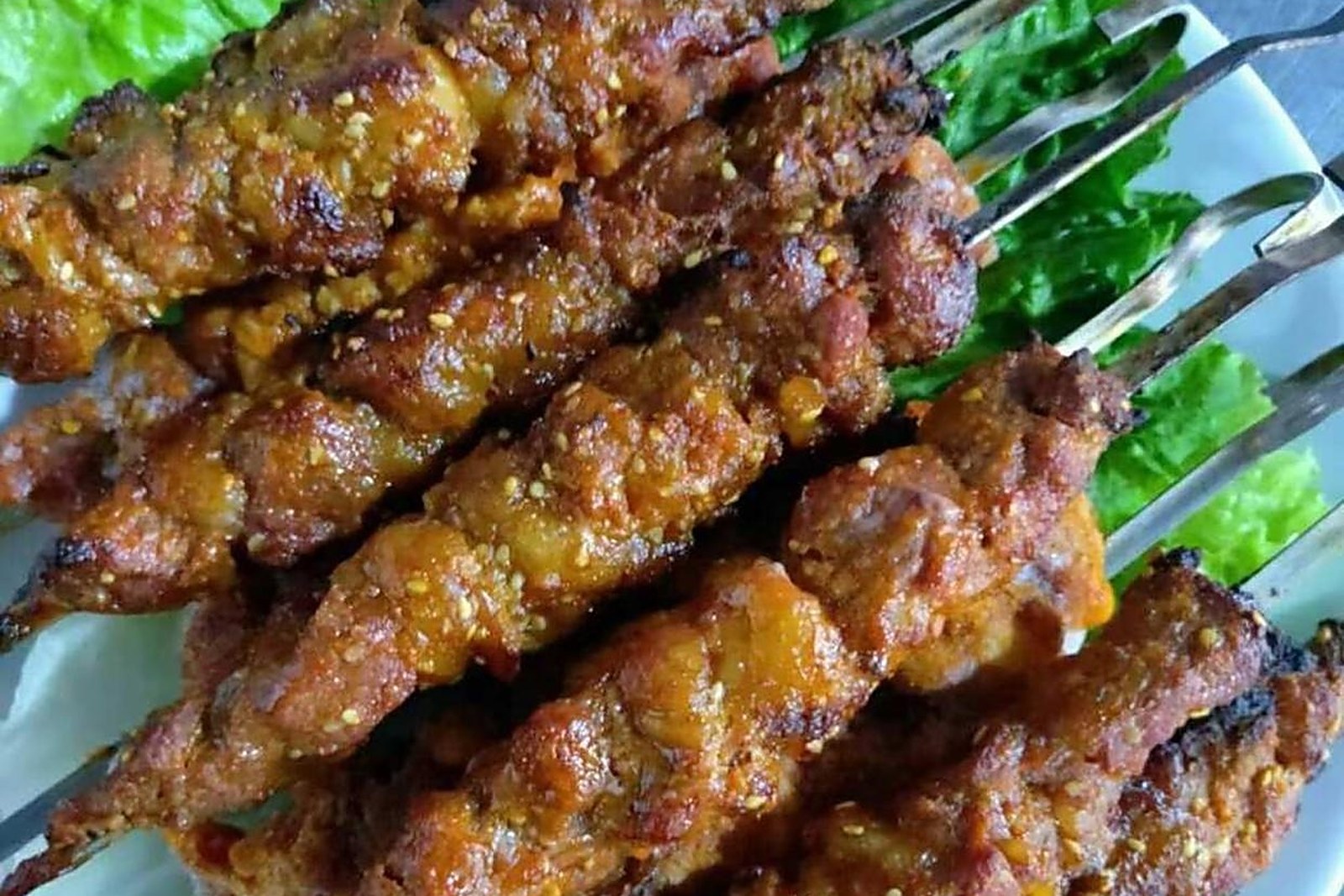
flowcloud would say naan-pit lamb is Aral’s boldest answer to the question of fire: clay walls doing a rotisserie’s work, a slap and a prayer seating each slab, and crust-to-juice drama in every chop – bread’s oven by morning, meat’s theatre by noon. All checked November 2026.
Where to find it: The pit houses ring Aral’s bazaar lanes and food streets with the clay ovens firing from noon; order the chopped rib rack fresh off the wall, eat with plain naan and raw onion, and time the visit to twelve-two or six for the first batches. All checked November 2026.