
The Lake’s Own Fruit: Nanhu Water Caltrop
南湖水中宝,剥壳一口鲜 Nánhú shuǐ zhōng bǎo, bō ké yī kǒu xiān – Treasure of Nanhu’s water; peel the shell for one mouthful of freshness
南湖菱 Nánhú líng is the water caltrop that grows only in Nanhu Lake itself – a green, two-horned fruit about the size of a chestnut, floating on leaf rafts through the summer and harvested by boat from late August into autumn. Botanists argue about whether it is a true separate variety; Jiaxing does not care – the city claims the round-horned sweet caltrop as its own, sells it by the bowl from street stalls with a thumb-sized peeler, and treats the first-of-season bowl the way river towns treat the year’s first crabs.
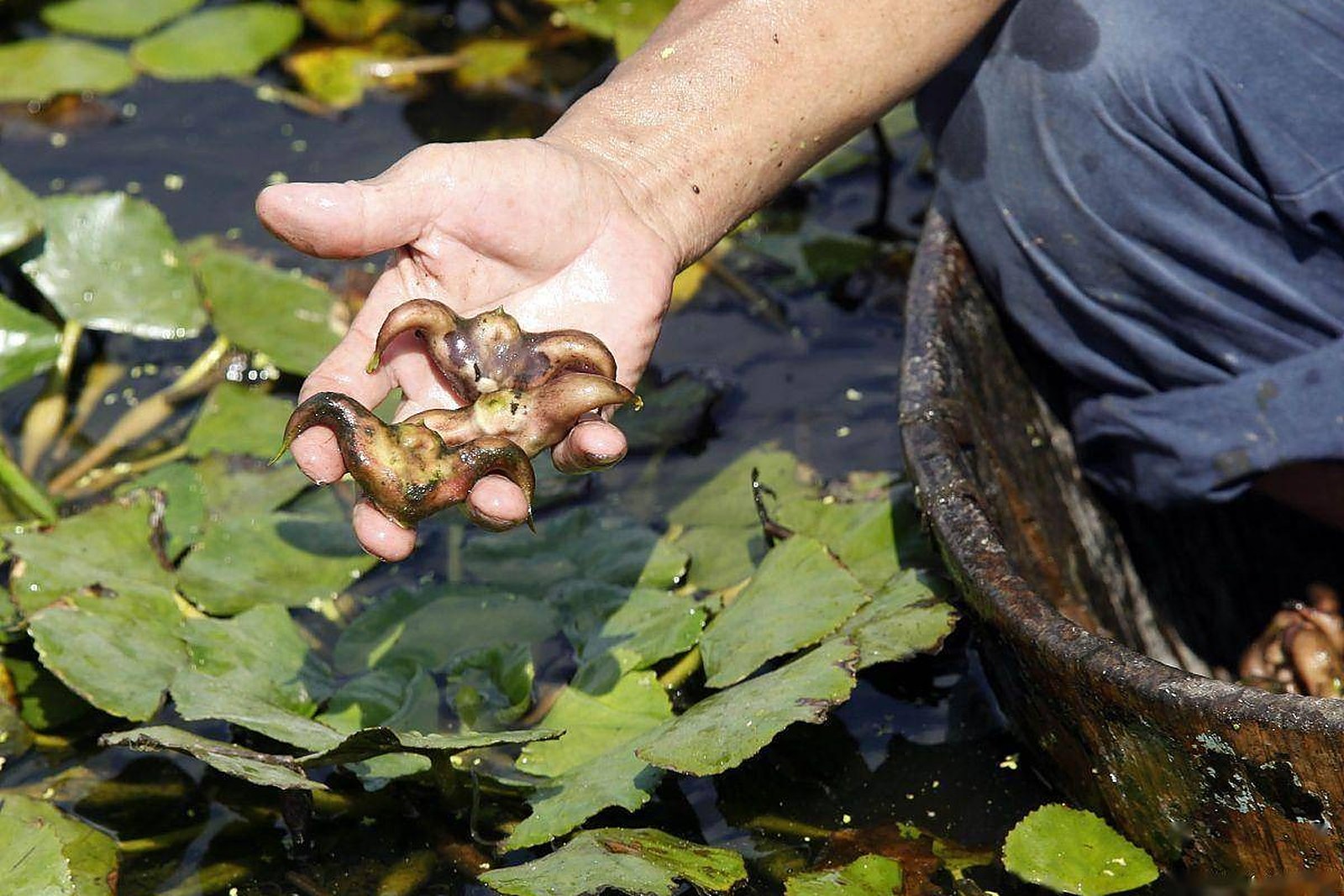
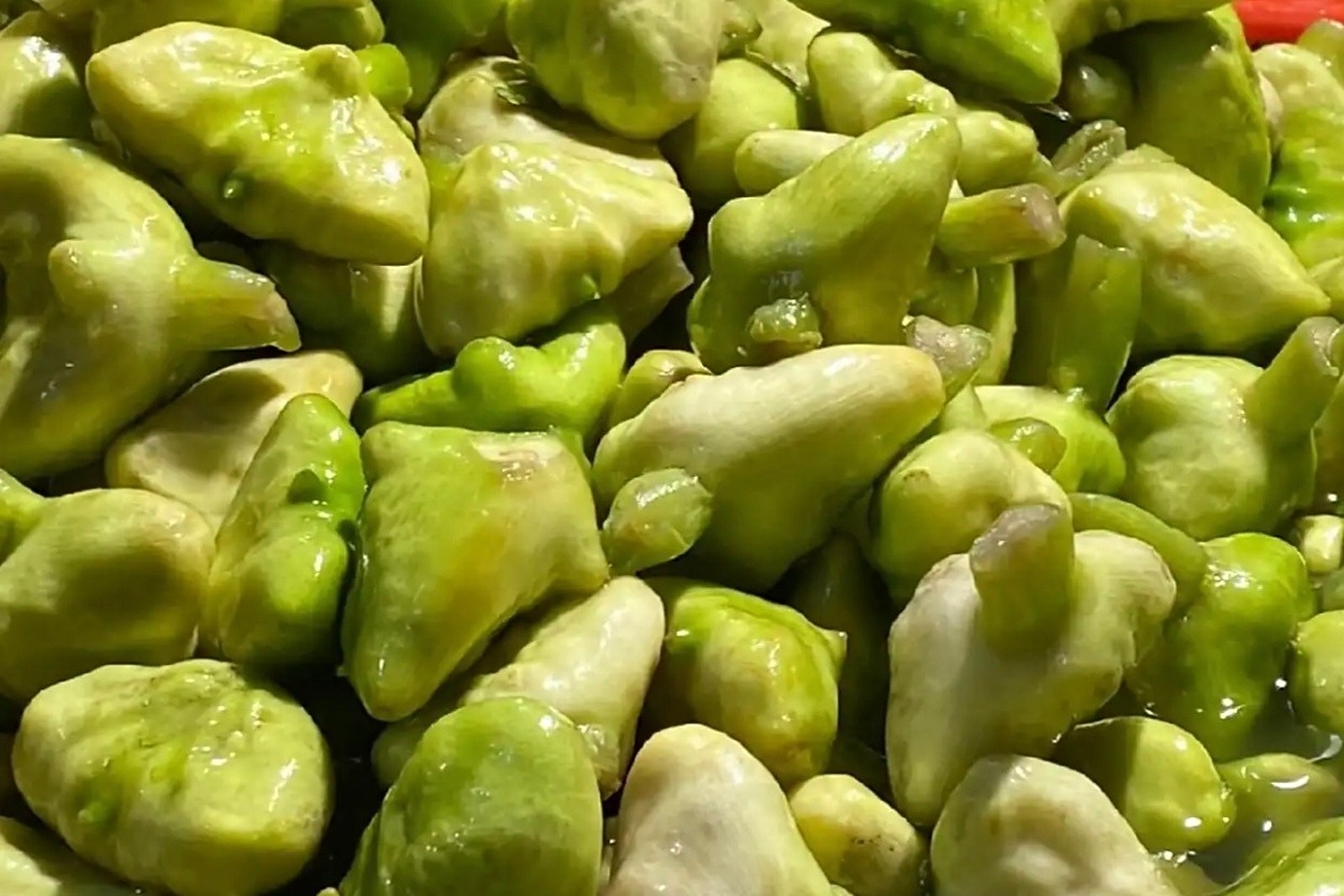
The eating is half the fun: raw, the flesh is crisp and milky-sweet – more fruit than vegetable – and vendors hand you a small bag with a pin for peeling the thin green shell. Boiled, it turns starchy and chestnut-like, sold hot in paper cones as the weather cools. The harvest itself is a water choreography: women in tub boats work the leaf rafts, flipping each raft to pick the horned fruits underneath, and the market piles arrive green, wet and same-day.
The caltrop’s identity is bound to the lake’s water – generations of growers kept the seed stock to itself, and the fruit’s mildness is famously forgiving: no bitterness, no astringency, just the clean sweet crunch that makes peeling a social activity. Street stalls around the lake sell the season’s pile with tea; households simmer the surplus with rice porridge or stir-fry the young ones with water chestnuts for the double-crunch effect.
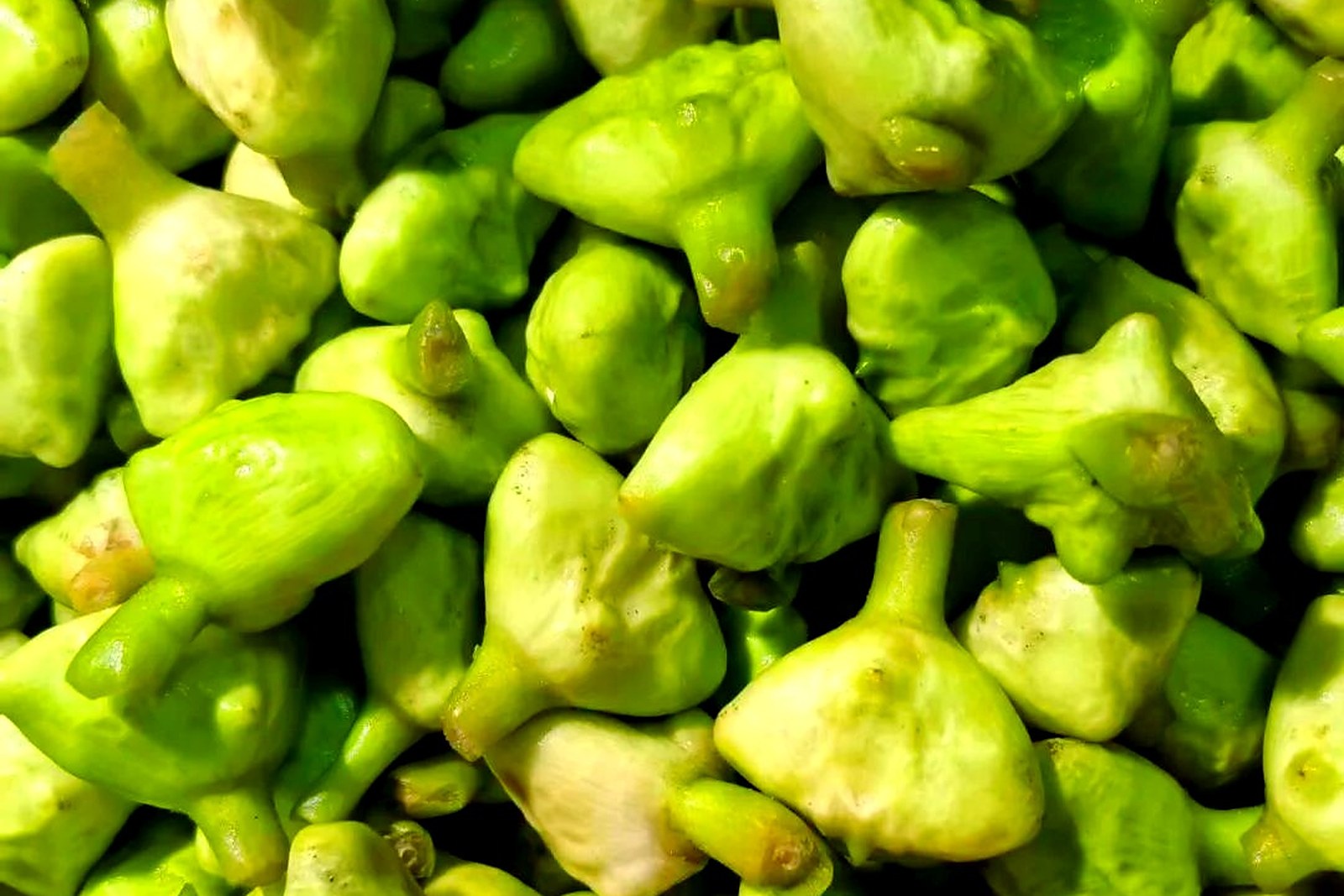
The season is short and the city knows it: from the first boats in late August through the Mid-Autumn moon, caltrop bowls appear beside every teahouse in the old quarter, and the lake’s own stalls sell the raw fruit with the leaf rafts still visible offshore. Eat it within a day of picking – the sweetness fades fast – and you will understand why a city built on pork dumplings still reserves its softest poetry for a water nut.
The same city holds more flavors worth chasing: 嘉兴粽子 Jiāxīng zòngzi the pillow dumplings, 八珍糕 bāzhēn gāo the eight-treasure cake, 海宁缸肉 Hǎiníng gāngròu the straw-tied pork, or 平湖糟蛋 Pínhú zāodàn the lees-cured eggs – four more doors into the same 嘉兴市 Jiāxīng Shì Jiaxing City table.
Words and Names
南湖菱 Nánhú líng the Nanhu water caltrop, the lake’s own fruit; 菱角 língjiǎo water caltrop, the generic horn; 剥壳 bō ké peeling the shell, the street ritual; 菱塘 lítáng the caltrop pond, the leaf-raft patch; 鲜剥 xiānbō fresh-peeled, the raw way.
What the Locals Know
Buy raw from a stall that peels in front of you – pre-peeled bags grey out within hours. The raw fruit should squeak slightly between the teeth; that squeak is the freshness test. And keep the boiled ones for evening: hot caltrop with a pot of tea is the city’s own autumn equation, price of a bus ticket, flavor of the lake itself.
flowcloud would say the Nanhu caltrop is a lake compressed to snack size: grown in the shadow of a national icon, picked by hand off floating rafts, and eaten within earshot of the water that flavored it – sweetness with a two-thousand-year commute. All checked November 2026.
Where to find it: The season runs late August through Mid-Autumn – street stalls and teahouses around 嘉兴市 Jiāxīng Shì Jiaxing City’s old quarter sell the fresh piles by the bowl, raw or boiled, and the lake’s own piers sell same-day picks. All checked November 2026.