
The crop comes out of the water and it is red. 南县 Nánxiàn is a county of flat reclaimed land in the north of Hunan, formed where the 藕池河 Ǒuchí Hé carries water off 洞庭湖 Dòngtíng Hú, and for most of its history it grew rice and little else. Then someone noticed that the same flooded paddies that grow rice will also grow 小龙虾 xiǎolóngxiā, the red swamp crayfish, and that the two can share the field: the crayfish in the water, the rice standing in it, each feeding on what the other leaves behind. In two decades that observation turned a rice county into one of the largest crayfish producers in China, and it put a red crustacean on the table of every town in Hunan from May to August.
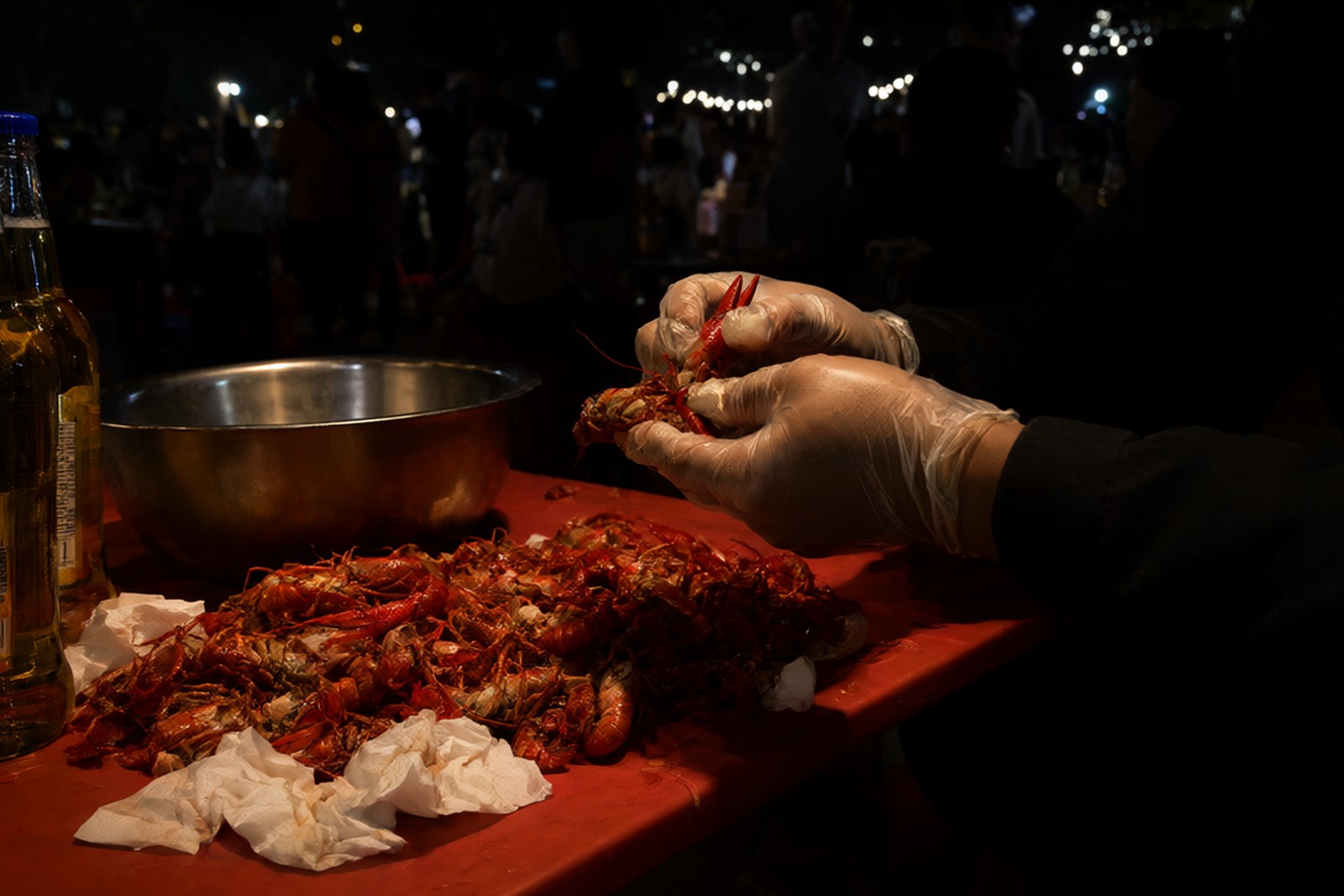
The eating is a ritual with a technique, and no local will let you do it wrong for long. You take the body in one hand, twist the head off with the other, and there is a moment of yellow matter at the join that is either the best part or not for you; then you squeeze the shell along the sides until it cracks, peel the first two rings back, and pull. If the crayfish is fresh and lightly cooked the tail comes away in one piece. If it has been boiled too long it disintegrates, and if it has been frozen it is watery and stubborn. The claws, on a good specimen, are worth cracking too. The whole operation takes about twenty seconds and produces about as much meat as a large prawn, which is why the dishes are sold by the kilo and the tables are covered in shell.
The Two Schools of Cooking
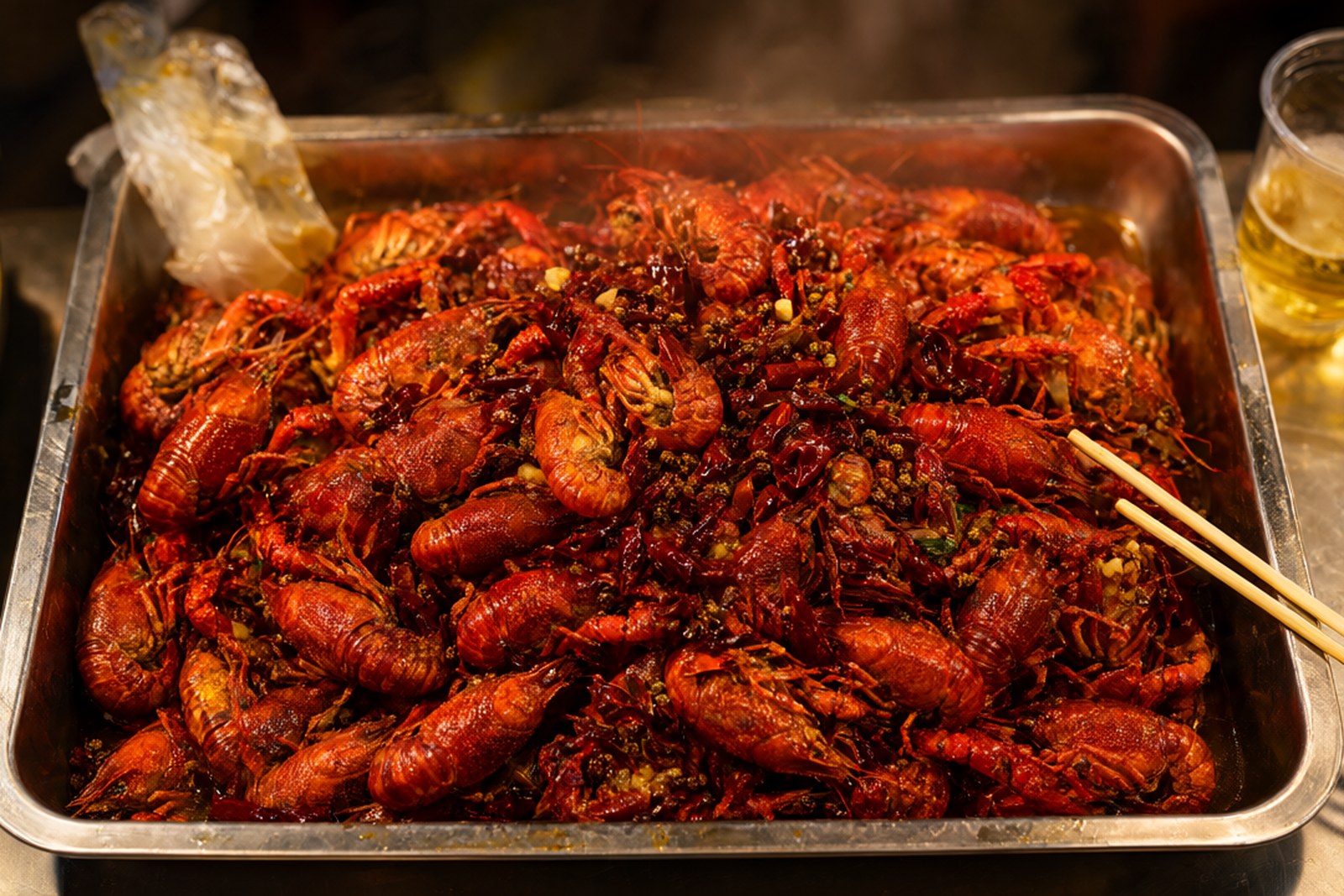
南县 does both of the great Chinese crayfish preparations, and locals will tell you which one is correct. 麻辣小龙虾 málà xiǎolóngxiā, the numbing-hot version, comes out of the Sichuan tradition and is built on 花椒 huājiāo, dried chili, doubanjiang and a good deal of oil; the crayfish are fried first and then simmered in the spice until the shells take on the colour, and the result is eaten with gloves and a great deal of beer. 蒜蓉小龙虾 suànróng xiǎolóngxiā, the garlic one, is the Hunan-favoured alternative and the one most local homes make: an enormous quantity of garlic, chopped fine and cooked down in oil with a little sugar and salt until it is sweet and golden, then poured over the crayfish and left to marry. The garlic version is gentler and, most people here will admit, tastes more of the crayfish.
There is also 卤虾 lǔxiā, the braised kind, sold from a pot at room temperature and eaten as a snack with cold beer, and 清蒸 qīngzhēng, plain steamed, which is the minority taste and the one that tells you anything about quality, because there is nothing in it to hide behind.
Words and Names
小龙虾 xiǎolóngxiā is the crayfish, literally little dragon shrimp; 虾 xiā alone can mean any shrimp. 麻辣 málà is the numbing-hot style and 蒜蓉 suànróng the garlic one; 卤 lǔ means braised in a spiced liquor. 虾尾 xiāwěi is the tail meat sold already shelled, and 虾头 xiātóu the head, which is where the controversy lives. 稻虾共作 dàoxiā gòngzuò is the rice-and-crayfish co-cropping system that the county is built on, and 南县小龙虾 Nánxiàn xiǎolóngxiā is the county’s own brand, registered and protected. 藕池河 Ǒuchí Hé is the river that drains the county toward Dongting Lake.
What the Locals Know
Season matters more than anything else on the menu. Crayfish are best from May to July, when the shells are hard and the tails full; by September the shells are thick and the meat is thin, and outside those months everything you are served has come out of a freezer. Check the shell before you commit: a good cooked crayfish has a firm shell and a tail that resists a little when you pull it, and a fresh one still smells of the pond under the spice. As for the head, the yellow substance is 虾黄 xiāhuáng, crayfish roe and hepatopancreas, and whether it is a delicacy or a health risk is a genuinely open local argument, which people conduct loudly and with the bowl in front of them. Buy by weight from a tank where the crayfish are still moving, ask for 现杀 xiàn shā, killed to order, and pay extra for the larger grade, because size is the whole difference: a 4-6 grade tail is half the meat of an 8-10. Prices run forty to a hundred yuan a jin depending on grade and month, and the peeled tails are twice that.
flowcloud would say that the crayfish is the most honest thing a rice county ever invented, since it turns the water between the stalks into a second harvest that arrives in summer and is eaten with the fingers, which is the only way to eat something that has to be taken apart.
Where to find it: the 南县 Nánxiàn county town’s evening crayfish streets, especially the clusters around 南洲镇 Nánzhōu Zhèn, and the riverside restaurants on the 藕池河 Ǒuchí Hé. Ask for 蒜蓉小龙虾 if you want to taste the crayfish himself and 麻辣 if you want the beer to matter, take the 8-10 grade, and go in June when the season is at its height.