
Broth Under the Belt: Naren, the Kazakh Feast Bowl of the Farms
手拉宽面韧,手撕肉更香 Shǒu lā kuān miàn rèn, shǒu sī ròu gèng xiāng – Hand-pulled, the wide noodle keeps its bite; hand-shredded, the meat gives more perfume
正文:纳仁 nàrén naren is the Kazakh table’s feast bowl as it lives on the regiment farms around 胡杨河市 Húyáng hé Shì Huyanghe City – wide hand-pulled noodles laid under a generous rubble of hand-shredded boiled lamb, the whole flooded with an oniony peppered broth that the noodles drink as they sit. This is hospitality food in the oldest sense: the bowl a herding family sets before guests, the dish that marks a visit as an event, and the farm-town restaurants of the oasis keep the same rules their grandmothers kept.
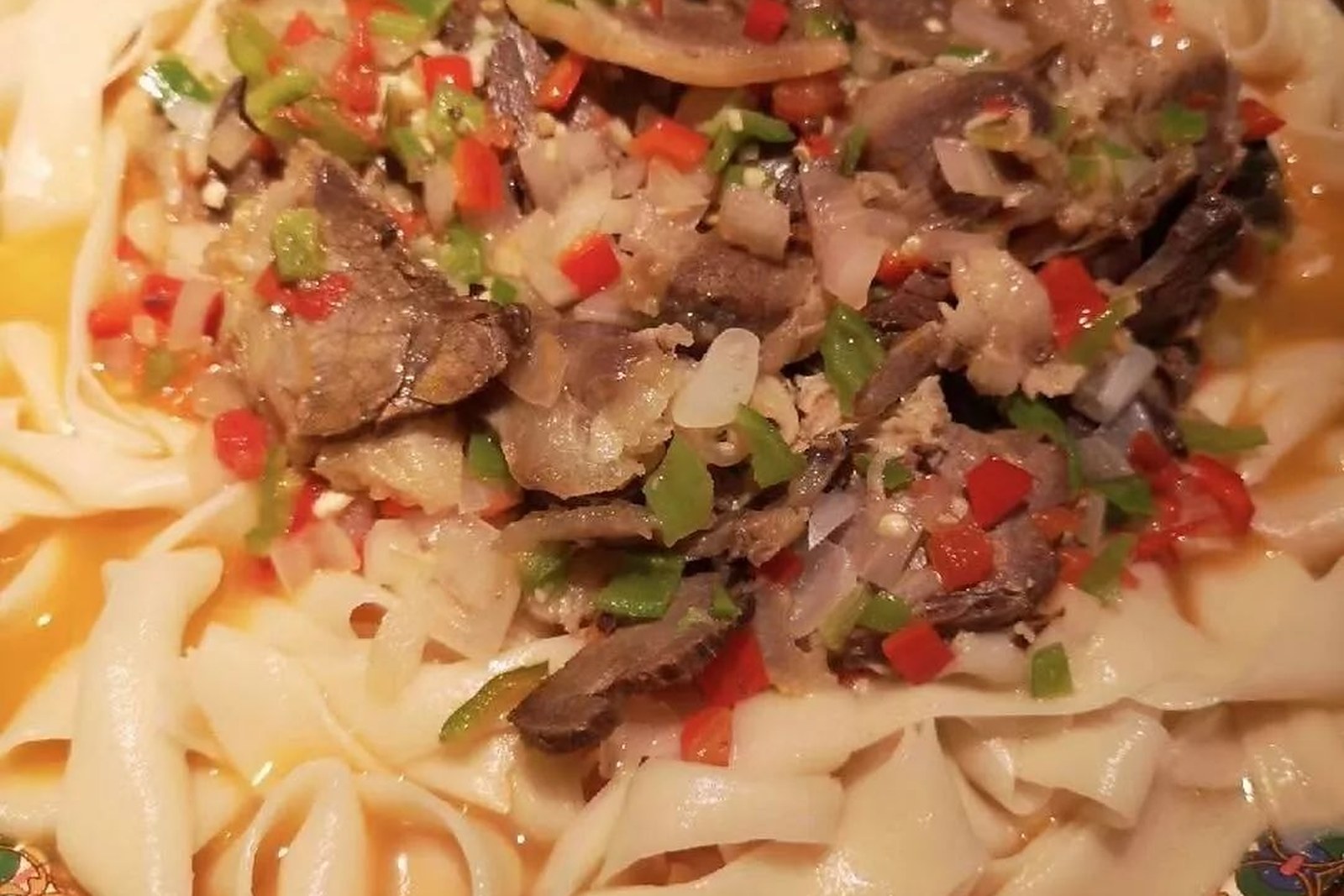
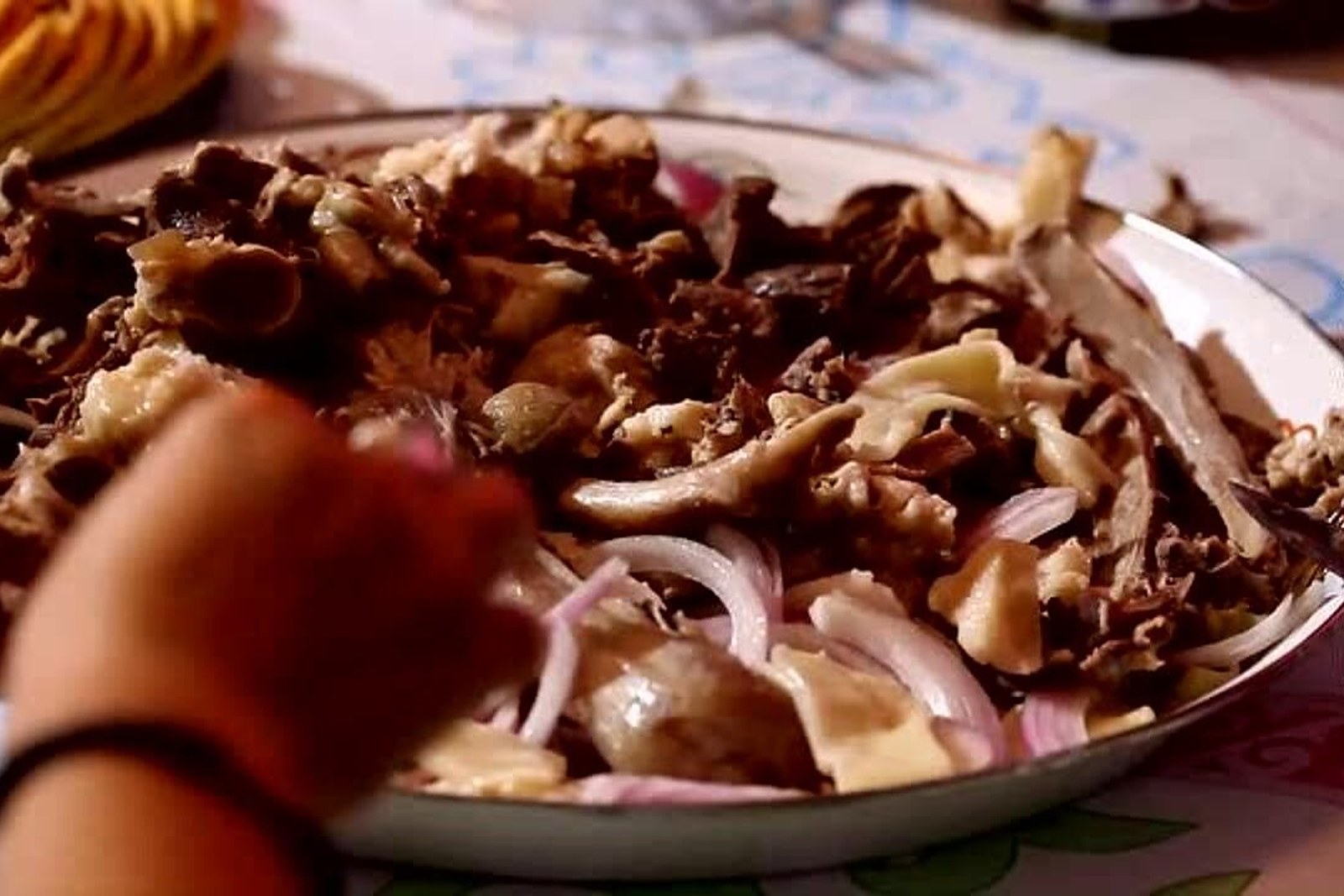
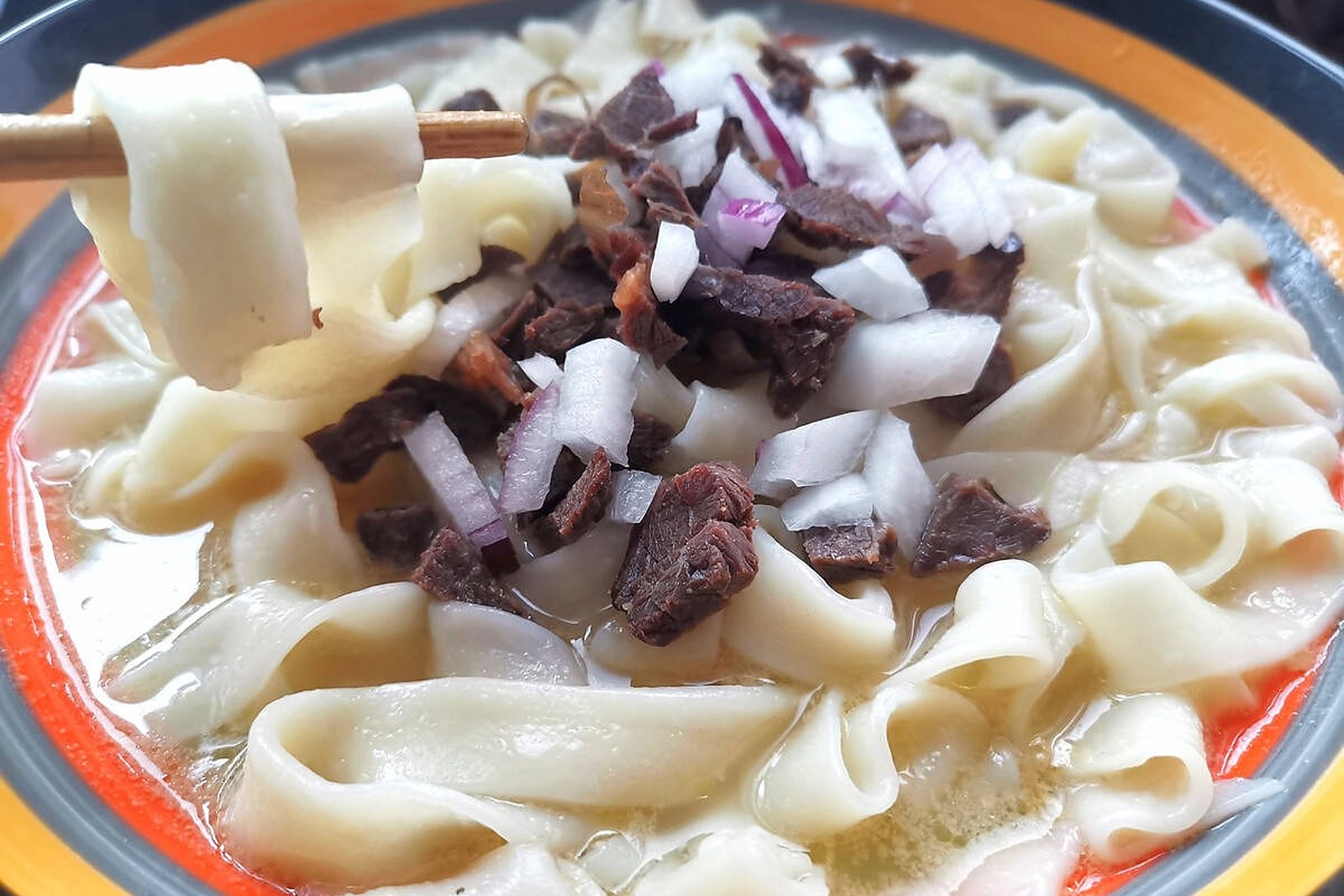
The two handmade elements carry the dish. The noodles are pulled that hour – a lean dough of flour, salt and water worked until it stretches without tearing, then drawn into belts as wide as two fingers, boiled briefly and dressed with a slick of oil so they stay separate. The lamb is boiled whole with onion and black pepper until it surrenders, then shredded by hand across the grain – never cut, because torn fibers hold broth and stay alive on the tongue. The broth goes on hot and generous, raw onion scattered over the top for bite, and the bowl arrives steaming enough to fog the nearest window.
Eating naren is a study in texture: the noodle’s chew against the lamb’s crumble, the broth’s pepper-warmth building under the onion’s snap. There is no vegetable side to negotiate – the bowl is complete – and no sauce to argue about; the seasoning is the broth’s own depth. A guest who finishes the bowl and accepts another half-ladle of broth has passed the herding-family interview, and the farm-town kitchens of Huyanghe apply the same standard to every customer.
Beyond the feast bowl, the same 胡杨河市 Húyáng hé Shì Huyanghe City holds other flavors: 沙湾大盘鸡 Shāwān Dàpánjī the big plate chicken, 椒麻鸡 jiāomájī peppery cold chicken, 红柳烤肉 hóngliǔ kǎoròu red-willow skewers, and 奶茶包尔萨克 nǎichá bāo’ěrsàkè milk tea with bawursak – four more doors into the same 胡杨河市 Húyáng hé Shì Huyanghe City. With the broth settled, our Huyanghe travel map fills the day.
The dish marks seasons as well as guests. Winter naren is heavier – mutton fat riding the broth, the bowl a hand-warmer as much as a meal – while the summer version leans on younger meat and a sharper pepper note. Horse-meat naren appears at the year’s coldest turn, a delicacy the farm tables guard jealously, and the noodle stays constant through all of it: pulled that hour, wide as a belt, strong enough to hold a feast together.
Words and Names
What the Locals Know
flowcloud would say naren is hospitality reduced to a bowl: two handmade things – a noodle and a shred – agreeing under one oniony broth, a dish that has been saying welcome on this steppe longer than any city on it has had streetlights. All checked November 2026.
Where to find it: The Kazakh-family restaurants and farm-town kitchens along Huyanghe’s food lanes pull naren noodles through lunch and early dinner; eat while the broth steams, accept the second half-ladle, and judge the house by its hand-pull. All checked November 2026.