
肉挂炭缸,皮脆油干。Ròu guà tàn gāng, pí cuì yóu gān – Meat hung on the charcoal jar; crisp skin, rendered fat.
纳西烤肉 Nàxī Kǎoròu Naxi roasted meat is the pork the Naxi hang over fire – 五花肉 wǔhuāròu pork belly marinated with salt, chili, 花椒 huājiāo Sichuan pepper and local spices, then hooked inside a 炭缸 tàn gāng charcoal jar: a clay drum with the coals piled in the middle and a ring of wire hooks around the wall, so the meat roasts upright, the fat renders down and drips away from the flame, and the skin blisters crisp while the lean stays juicy. It is eaten the moment it comes off the hook – cut into chunks, dusted with 辣椒粉 làjiāo fěn chili powder, topped with fried 薄荷 bòhé mint, and often wrapped in a leaf of raw lettuce with the 蘸水 zhànshuǐ dip. A restaurant plate commonly runs about 30 yuan a head with rice, the dish is on nearly every Naxi menu in the old town, and the honest shape is that the jar is the recipe: the same belly grilled flat over a flame tastes greasy, and hung, it does not. The plate that arrives at the table is the whole grammar of the dish – meat, a small dish of chili powder, a sprig of fried mint, lettuce leaves for wrapping, and nothing else – and a kitchen that sends the meat out without the mint and the leaves has simplified the local version into an ordinary grill.
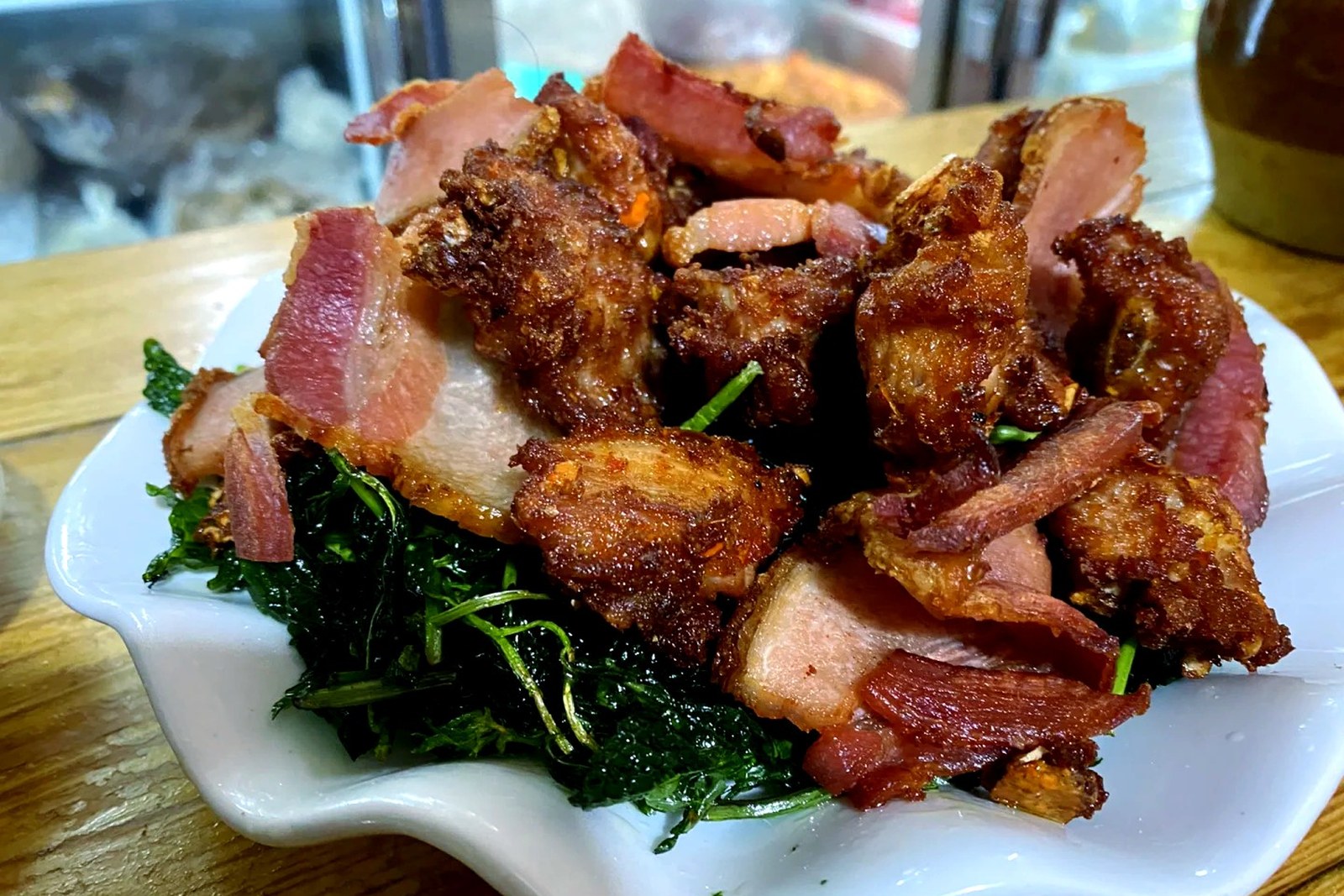
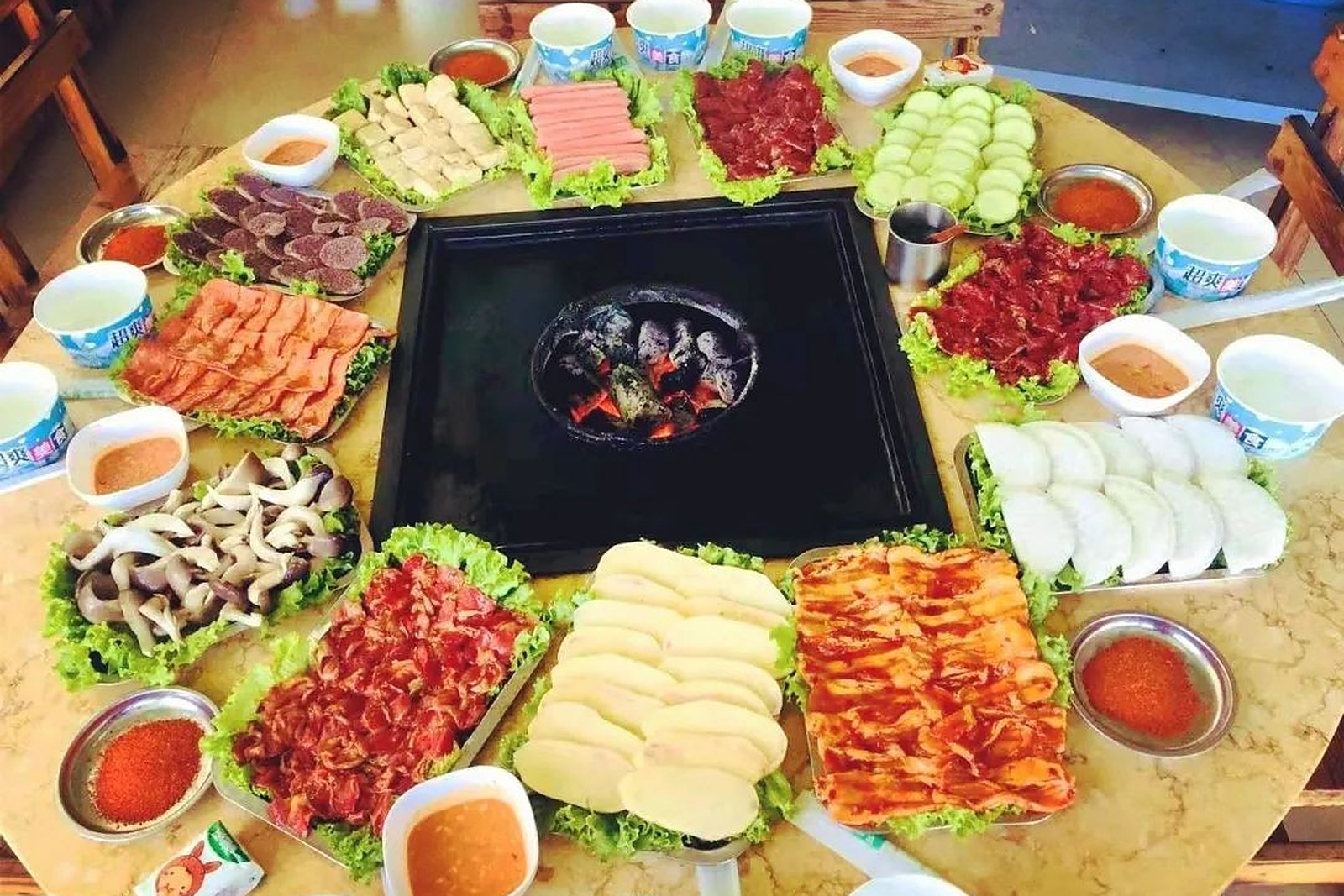
The mechanism is the render. The jar-shaped 炭缸 tàn gāng turns the belly into its own drip tray: as the fat melts it runs off the hooks and onto the coals below, where it hisses into smoke that flavours the meat on the way up, and the skin – scored through the fat to the lean – crisps into 脆皮 cuìpí crackling instead of steaming in its own grease. The mint is the local signature rather than a garnish: Naxi and Bai tables both use fried 薄荷 bòhé with grilled and stewed dishes, and the herb’s camphor cut is what lets the pork carry the chili. The same jar logic extends across the menu – 东巴烤鱼 Dōngbā Kǎoyú “Dongba grilled fish” comes off the same coals under a crust of toasted chili, peanut and 花椒 huājiāo – and the comparison with ordinary 烧烤 shāokǎo skewers is exact: skewers cook in their own fat over direct flame, the jar cooks the fat out. The dish is the potluck of the 火塘 huǒtáng hearth tradition moved to a restaurant drum. The 火塘 huǒtáng is the three-stone hearth at the centre of the Naxi house, where the family pot hangs and the room gathers – and the restaurant format that sells the roast keeps the shape: a coal bed in the middle of the table, a soup pot on a hook over it, and the grill around the edge, so the meat, the broth and the fire are one appliance. That format is why the roast is ordered as a table’s meat course rather than a solo plate: the jar feeds the whole table the way the hearth feeds the whole house.
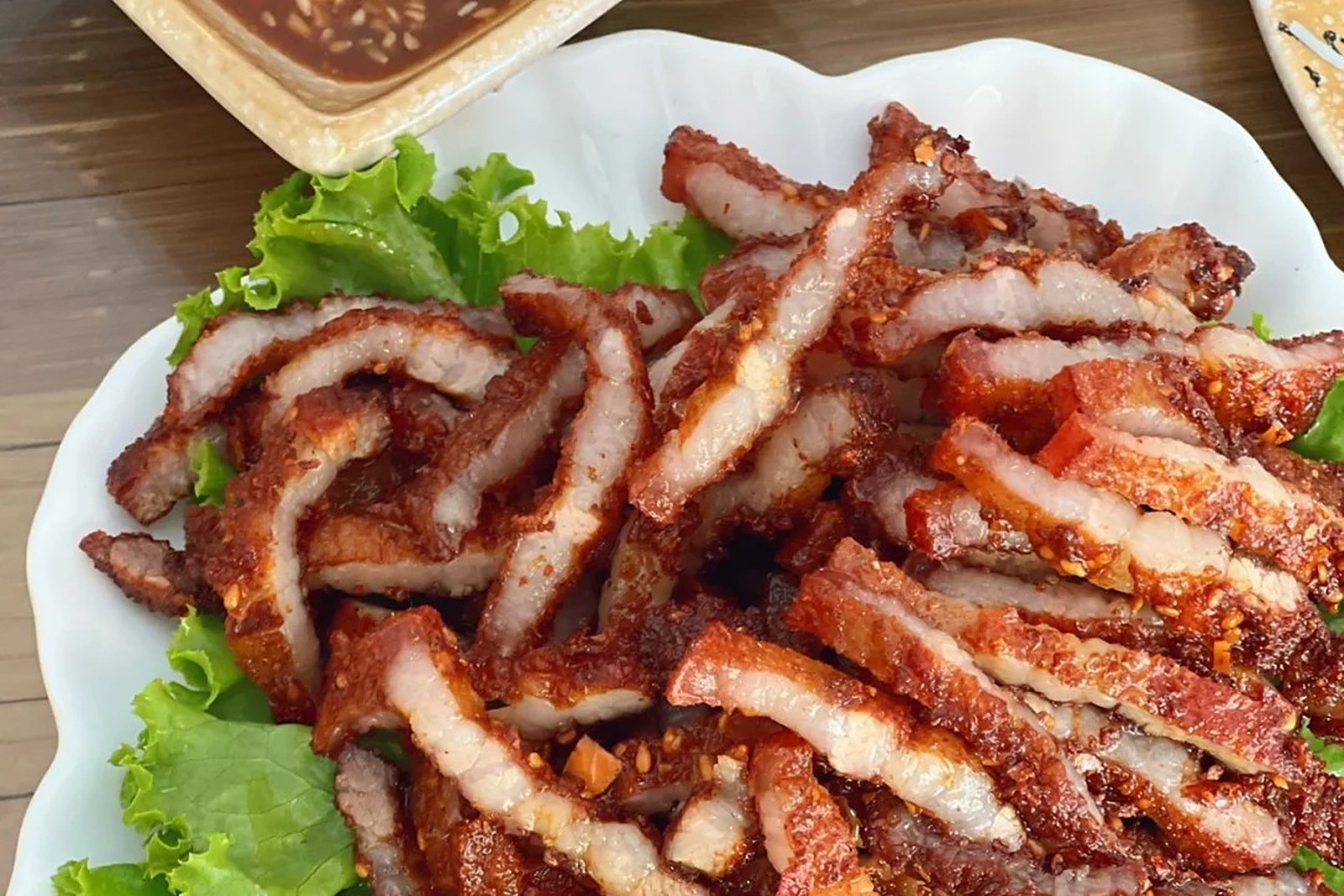
Locals order it as the meat course of a table, not as a solo plate. The honest pairing is the town’s own axis: 纳西烤肉 Nàxī Kǎoròu with 雕梅扣肉 Diāoméi Kòuròu the sweet-sour carved-plum steamed pork on the same table, one crisp and one soft, plus a soup to drink – 腊排骨火锅 Là Páigǔ Huǒguō or a 土鸡 tǔjī chicken pot in winter. Wrap the chunk in lettuce with the dip if the chili runs hot; ask whether the plate is 小份 xiǎofèn or 大份 dàfèn, because the small one is a dish for two with rice and the large one is the table’s centre; and eat it hot off the hook, because the crackling is the point and it softens as it sits. The 火塘 huǒtáng hearth restaurants and the small lanes off 五一街 Wǔyī Jiē are where the version worth ordering lives, and a jar that is not stacked with fresh coals at noon is a jar that has stopped cooking properly. The 火塘 huǒtáng format usually hangs a soup over the same coals – a 土鸡 tǔjī chicken pot or a ribs pot – so the table’s drink is decided before the meat is even ordered, and the honest order is one roast plate, one soup and rice for the table.
Words and Names
纳西烤肉 Nàxī Kǎoròu Naxi roasted meat · 五花肉 Wǔhuāròu pork belly · 炭缸 Tàn Gāng the charcoal jar · 脆皮 Cuìpí crackling · 薄荷 Bòhé mint, fried · 花椒 Huājiāo Sichuan pepper · 火塘 Huǒtáng the hearth · 东巴烤鱼 Dōngbā Kǎoyú Dongba grilled fish · 雕梅扣肉 Diāoméi Kòuròu steamed pork with carved plums · 生菜 Shēngcài lettuce leaves, for wrapping · 纳西族 Nàxīzú the Naxi people
What the Locals Know
The local knowledge about the roast is about the jar and the crackling, and it is the same check a Lijiang regular makes at any 火塘 huǒtáng house. The jar is the recipe: a kitchen with a coal-fed 炭缸 tàn gāng hung with meat at mealtime is cooking the real version, whatever the lane charges, and a jar that is not stacked with fresh coals at noon has stopped cooking properly – so judge the drum, not the signboard. The second check is the plate: it must arrive with the fried 薄荷 bòhé mint, the 辣椒粉 làjiāo fěn chili powder and the 生菜 shēngcài lettuce for wrapping, because a roast sent out without the mint is an ordinary grill, not the Naxi dish. Order it as the table’s meat course – 小份 xiǎofèn for two with rice, 大份 dàfèn for the table – and pair it with 雕梅扣肉 Diāoméi Kòuròu the sweet-sour steamed plum pork and a soup, then eat it hot off the hook, because the 脆皮 cuìpí crackling softens as it sits.
flowcloud would say that the Naxi roast is pork hung upright over a charcoal drum – fat rendered off the hooks, skin blistered crisp, dusted with chili and fried mint – and that the honest move is to order it as a table’s meat course beside the steamed plum pork and eat it hot off the hook, because the jar is the recipe and the crackling is the point. All checked October 2026.
Where to find it: the 火塘 huǒtáng hearth houses and the lanes off 五一街 Wǔyī Jiē across 丽江古城 Lìjiāng Gǔchéng – nearly every Naxi menu in the old town carries the dish, about 30 yuan a head with rice; the honest check is the jar rather than the signboard, and the natural pairing on the same table is 雕梅扣肉 Diāoméi Kòuròu steamed plum pork (checked October 2026, subject to change).