
The Rice Cake That Ate the Coast: Ningbo Niangao
水磨年糕白如玉,苔菜一炒满街香 Shuǐmó niángāo bái rú yù, táicài yī chǎo mǎn jiē xiāng – Water-milled rice cakes white as jade; one stir-fry with seaweed perfumes the whole street
宁波年糕 Níngbō niángāo Ningbo niangao is the water-milled rice cake that anchors the city’s kitchen – strips pounded from 晚粳米 wǎnjīngmǐ late-harvest japonica rice until they turn smooth, dense and faintly sweet, then sliced and cooked into everything from breakfast stir-fries to the crab-laden feasts of the New Year. The classic savory version is 年糕炒梭子蟹 niángāo chǎo suōzixiè rice cake with swimming crab, the cakes soaking up the roe-rich jus; the homely version is 苔菜年糕 táicài niángāo stir-fried with the coast’s toasted seaweed; and the sweet one is 桂花糖年糕 guìhuā táng niángāo, osmanthus and sugar glaze over pan-blistered slices.
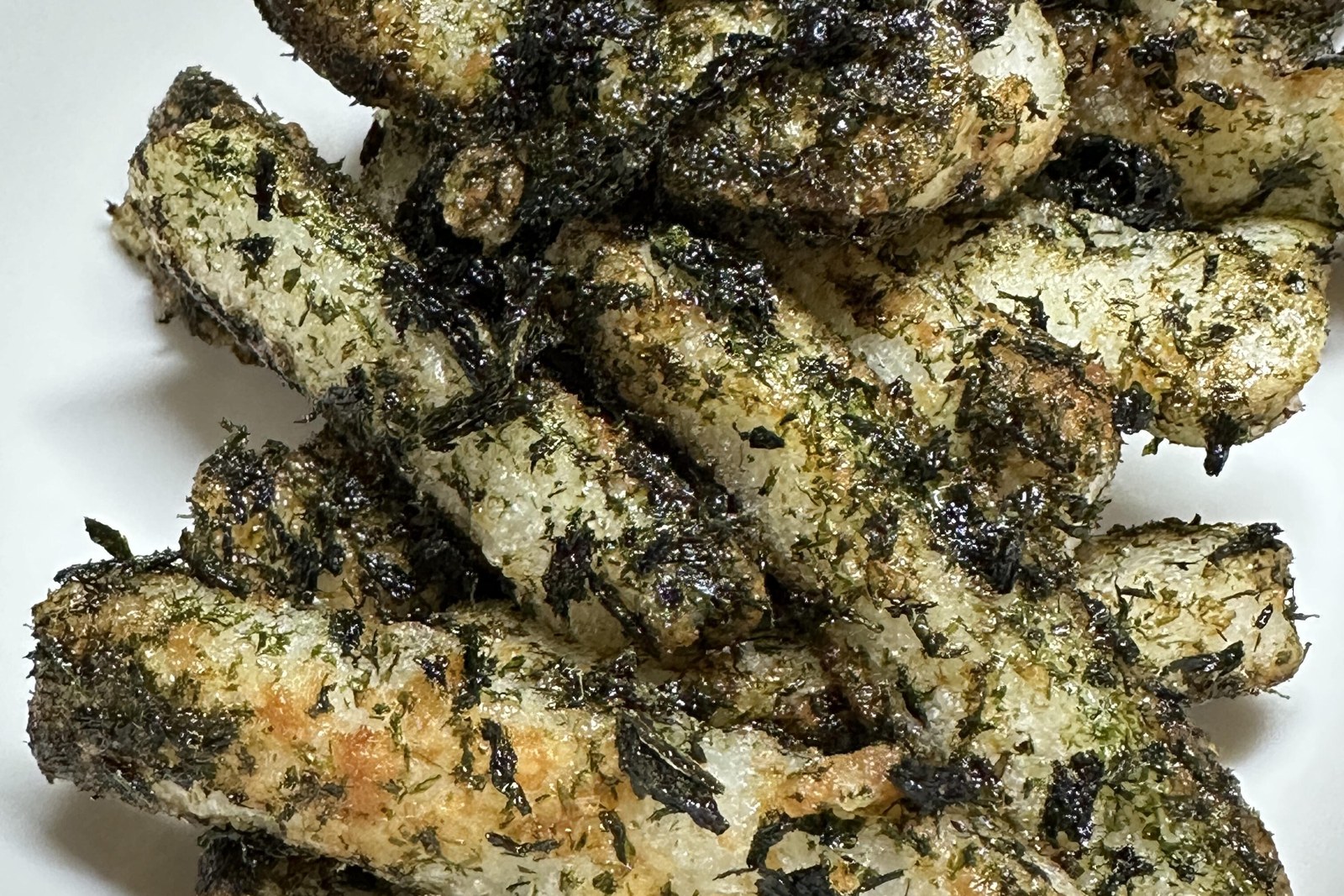
The craft shows in the bite: real Ningbo niangao resists the tooth for a beat, then yields chewy-soft without gumminess – the difference between hand-pounded and machine-extruded is legible on the first chew. Market stalls still sell the pale slabs fresh off the mallet in winter, and every family keeps a drawer of them through the cold months.
Ningbo treats niangao as staple, not dessert: rice cakes replace noodles beside fish, stand in for rice under braised pork, and fill the New Year’s first pot because 年糕 niángāo puns on 年高 niángāo “rising higher each year”. The city’s restaurants fight annual battles over the best crab-and-niangao wok, and the cakes always win the argument by doing the absorbing.
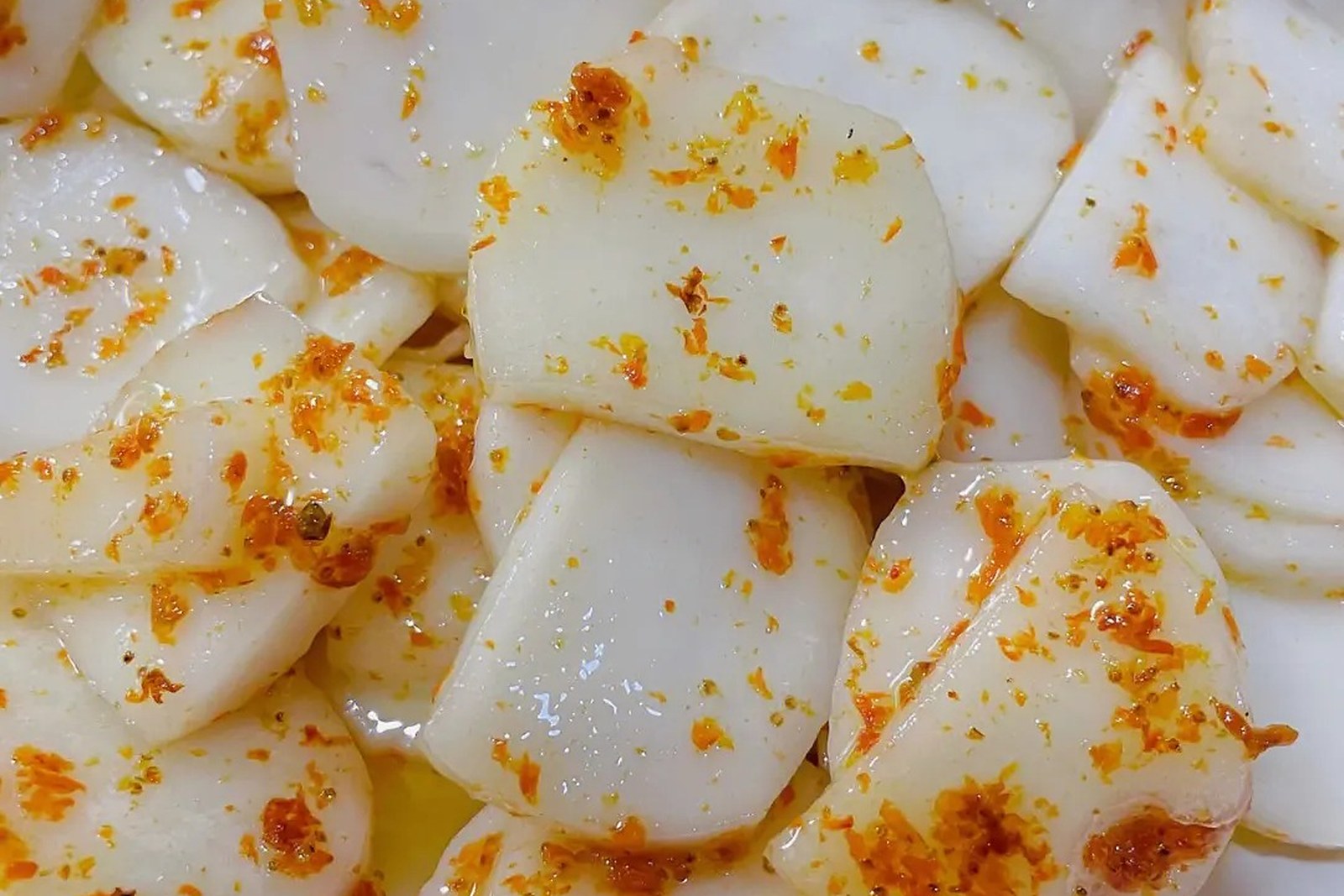
Eat it the local way: 苔菜炒年糕 táicài chǎo niángāo first – the toasted-seaweed version is the one Ningbo calls its own – then the crab version when swimming crab is in season. Order the slices thin for stir-fries, fingers thick for soup, and never reheat yesterday’s: fresh-pounded cakes wait for no one.
The same city holds more flavors worth chasing: 宁波汤圆 Níngbō tāngyuán the black-sesame soup rounds, 红膏炝蟹 hónggāo qiàngxiè the red-roe marinated crab, 雪菜黄鱼 xuěcài huángyú the pickled-greens croaker soup, or 水晶油包 shuǐjīng yóubāo the sweet lard buns – four more doors into the same 宁波市 Níngbō Shì Ningbo City table.
Words and Names
年糕 niángāo year cake, pun on “higher every year”; 水磨 shuǐmò water-milling, the slow grind that gives the chew; 苔菜 táicài toasted coastal seaweed of the classic stir-fry; 梭子蟹 suōzixiè swimming crab, the festival partner.
What the Locals Know
The season rules: cakes pounded after the late-rice harvest in November carry the year’s best chew, and locals buy slabs to freeze rather than buy supermarket packs. The test order is the seaweed stir-fry – if the cakes stay distinct and springy, the shop pounds its own; if they clump, move on.
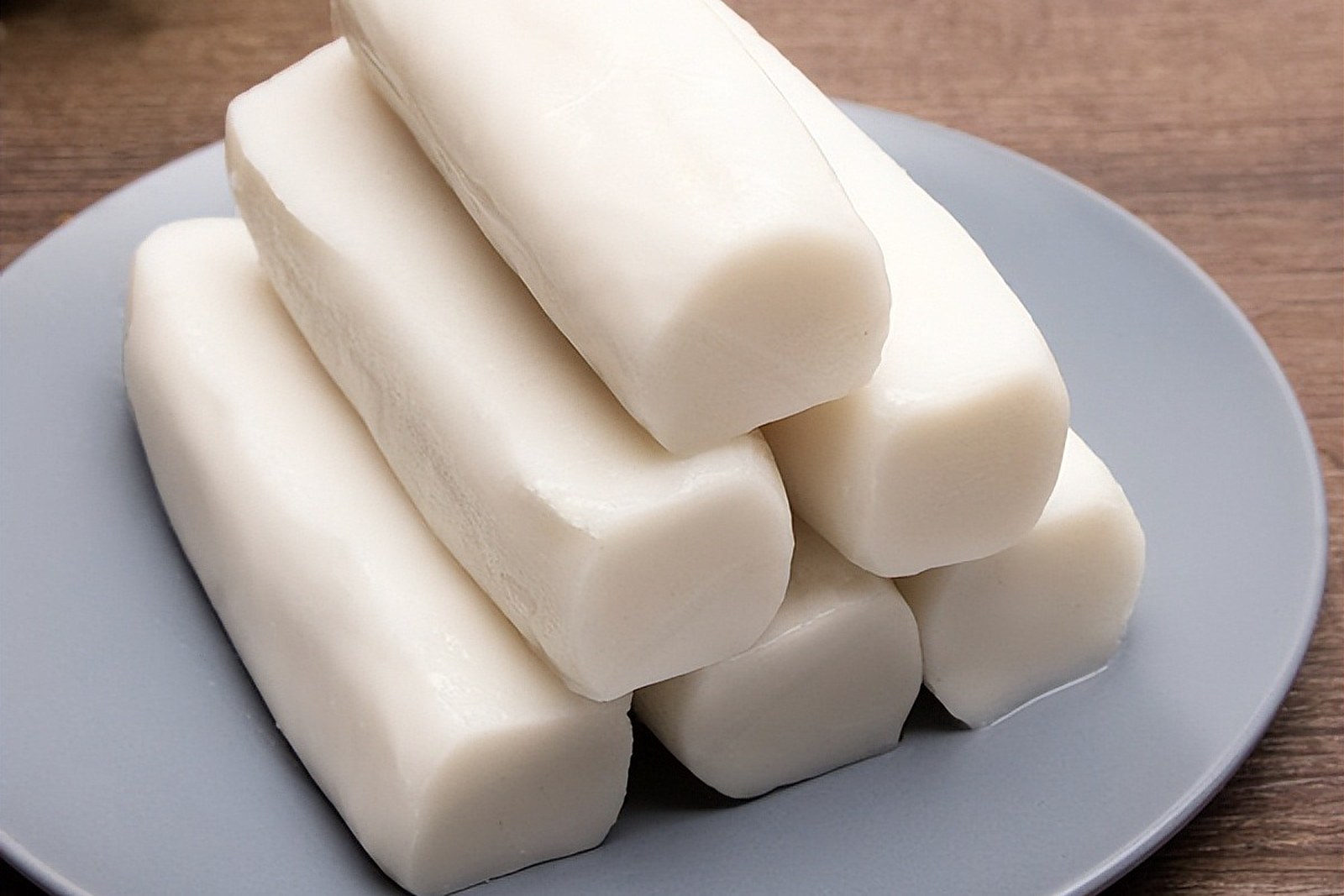
flowcloud would say Ningbo niangao is patience you can chew: late-autumn rice water-milled into white slabs, wokked with sea smell or crab roe – a food that rises pun by pun with every year you eat it. All checked November 2026.
Where to find it: Niangao shops and wok stalls line the old-city lanes near 月湖 Yuèhú Moon Lake and the City God Temple quarter – the pick is any kitchen pounding its own cakes in winter and frying to order, from a few yuan for the seaweed stir-fry to market price for crab season. All checked November 2026.