
The Original Black-Sesame Bomb: Ningbo Tangyuan
一勺猪油黑芝麻,滚水浮起满碗甜 Yī sháo zhūyóu hēi zhīmá, gǔnshuǐ fú qǐ mǎn wǎn tián – One spoon of lard and black sesame; the boiling water floats up a bowl of sweetness
宁波汤圆 Níngbō tāngyuán Ningbo tangyuan is the original of the dish the whole country eats at Lantern Festival – a snow-white ball of water-milled glutinous rice wrapped around 猪板油黑芝麻 zhūbǎnyóu hēi zhīmá a core of lard, black sesame and sugar that melts into a flowing, dangerously hot soup the moment you bite. The rice skin is rolled thin enough to show the dark filling ghosting through, the sesame is freshly ground so it pours rather than crumbles, and the bowl it swims in is clear broth scented with a single petal of osmanthus. Ningbo claims the invention and its oldest shops still measure a good tangyuan by how far the filling runs.
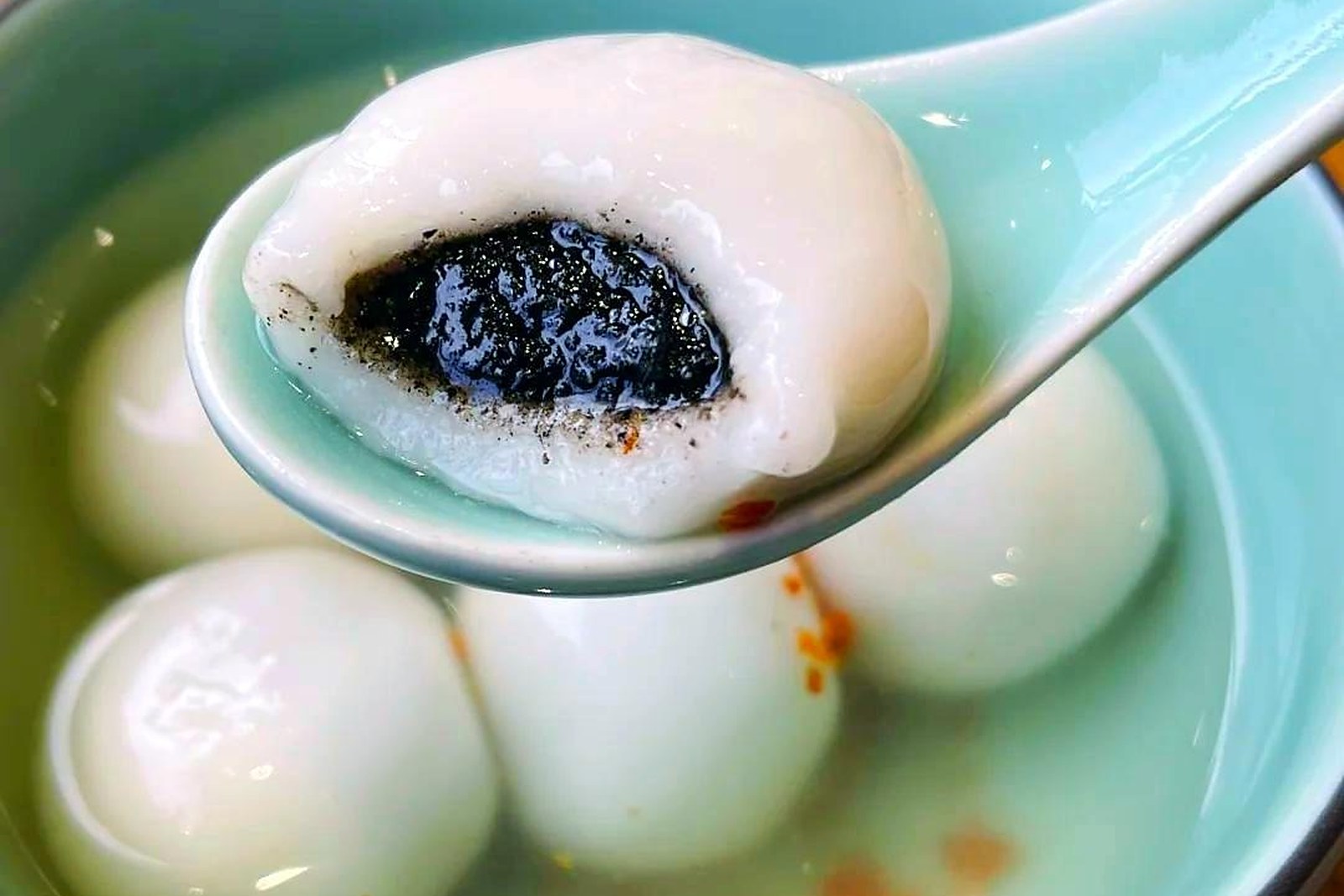
The workshop ritual explains the texture: water-milled rice flour kneaded soft, filling portions chilled until firm, and each ball closed with a thumb before it hits the rolling boil – done when the balls float, which the counter announces like a bell. Eat them steaming; a punctured tangyuan is a lost tangyuan.
The name carries the city’s love of homely luck: 汤圆 tāngyuán sounds like 团圆 tuányuán reunion, and Ningbo families still wrap them together before the winter solstice and the fifteenth of the first moon. The classic shops around the old city keep the same filling recipe for generations – lard, not oil – which is why the taste rounds out in the mouth instead of sitting on it.
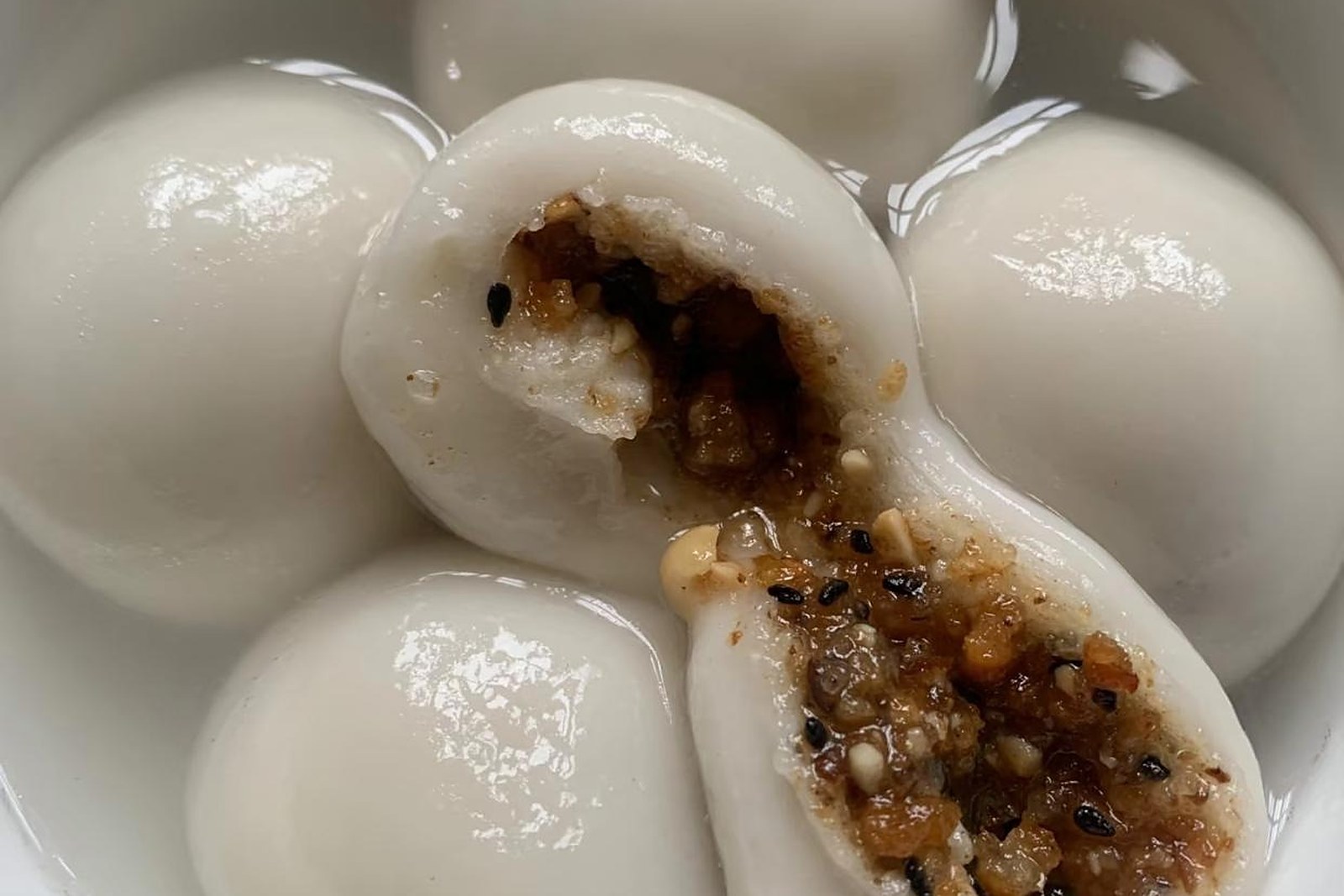
Eat them the local way: one bowl of four to six, plain clear soup, no toppings beyond osmanthus – the filling is the argument. Order 配汤 pèi tāng if you want the drinking broth, and beware the first bite: the sesame core is molten and scalds the impatient.
The same city holds more flavors worth chasing: 宁波年糕 Níngbō niángāo the water-milled rice cakes, 红膏炝蟹 hónggāo qiàngxiè the red-roe marinated crab, 雪菜黄鱼 xuěcài huángyú the pickled-greens croaker soup, or 水晶油包 shuǐjīng yóubāo the sweet lard buns – four more doors into the same 宁波市 Níngbō Shì Ningbo City table.
Words and Names
汤圆 tāngyuán soup round, homophone of “reunion”; 猪板油 zhūbǎnyóu leaf lard, the classic filling’s fat; 水磨粉 shuǐmòfěn water-milled glutinous rice flour; 城隍庙 Chénghuáng Miào the City God Temple snack quarter.
What the Locals Know
The lard is the line: old-school shops grind sesame with pork leaf lard so the filling flows, and any shop substituting vegetable oil gives a dull, pastry-like core. Locals time the boil by the float – and never order takeaway in winter; the filling sets solid by the second street.
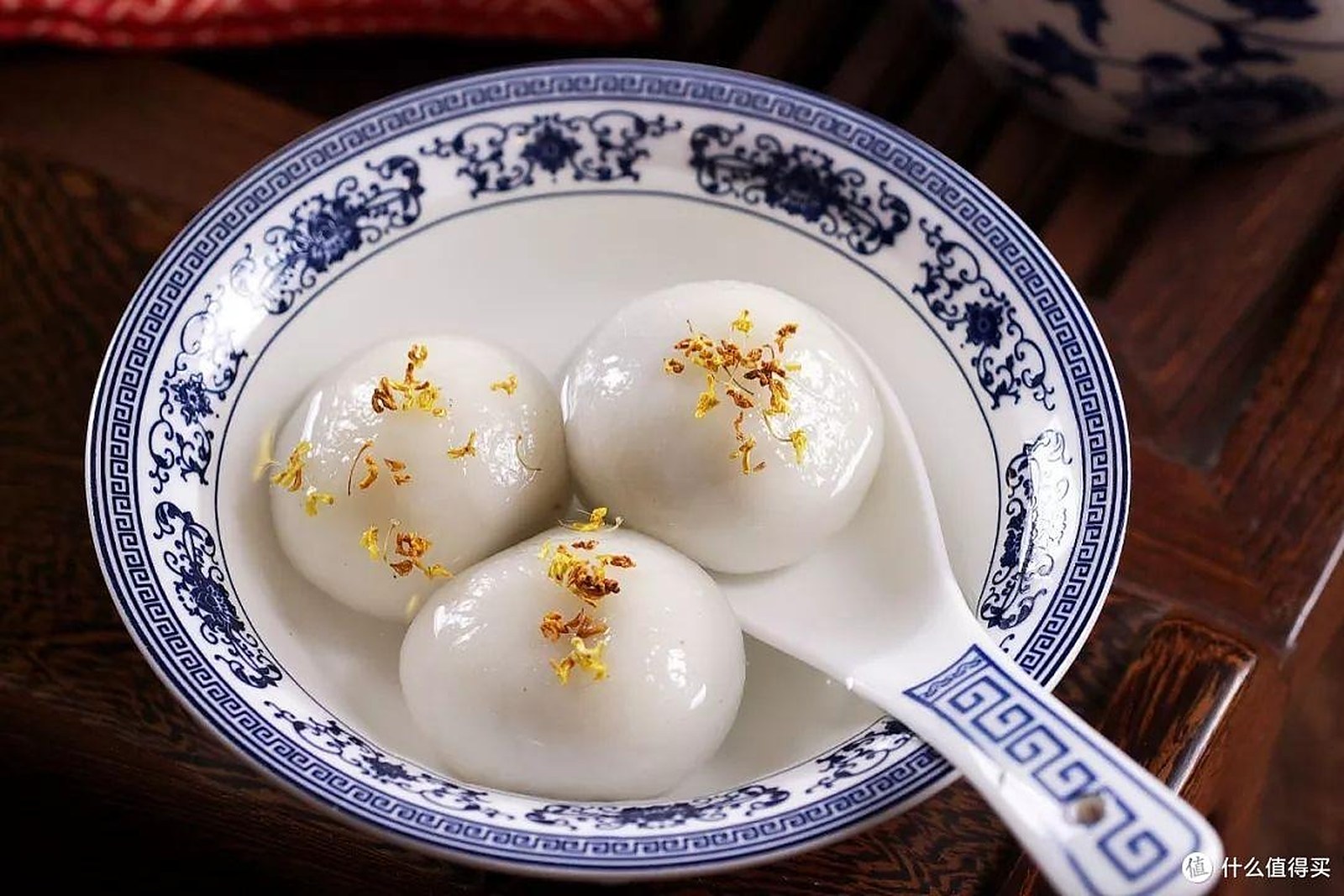
flowcloud would say a Ningbo tangyuan is a controlled demolition: white rice porcelain outside, a river of black sesame inside – engineered to flood, timed to scald, and forgiven instantly by everyone who bit too soon. All checked November 2026.
Where to find it: Tangyuan shops cluster around the old-city food streets near 城隍庙 Chénghuáng Miào the City God Temple and the snack lanes by Tianyi Square – the pick is any counter rolling balls to order with freshly ground sesame filling, a few yuan a bowl, best the moment they float. All checked November 2026.