
Niulanshan Erguotou: Old Stills, Second-Pot Fire and the People’s White Bottle of Shunyi District, Beijing
牛栏山下烧锅老,二锅头中酒味纯。Niúlánshān xià shāoguō lǎo, èrguōtóu zhōng jiǔ wèi chún – Below Niulanshan Hill the old stills burn; in the second pot the liquor runs pure.
牛栏山二锅头 Niúlánshān èrguōtóu Niulanshan erguotou is the white bottle Beijing’s everyday tables have poured for generations, and the address is a town: 牛栏山镇 Niúlánshān Zhèn Niulanshan town at the northern edge of 顺义区 Shùnyì Qū Shunyi District, Beijing, a low hill beside the 潮白河 Cháobái Hé Chaobai River whose wells feed the stills. Brewing here is counted in centuries: the town’s distilling is traced to Qing-era 老烧锅 lǎo shāoguō old still-houses, small licensed burner shops that milled their own sorghum, and the modern works, 牛栏山酒厂 Niúlánshān Jiǔchǎng the Niulanshan Distillery, was founded in 1952 on the consolidation of several of those old houses (worth confirming the founding ledger). The craft the name celebrates is a cut, not a crop: every still run divides into head, heart and tail, and the trade keeps only the middle draw of the second boiling – 二锅头 èrguōtóu, literally “second-pot head” – so the sharp first run and the weak last one never reach the bottle, and the spirit reads clean in the 清香型 qīngxiāng xíng light-aroma family, run fast on 麸曲 fūqū bran-qu starter rather than slow southern big-qu. The naming is the tell: a spirit named for one moment of one process, worn on the label as a credential – and the town wears the brand right back.
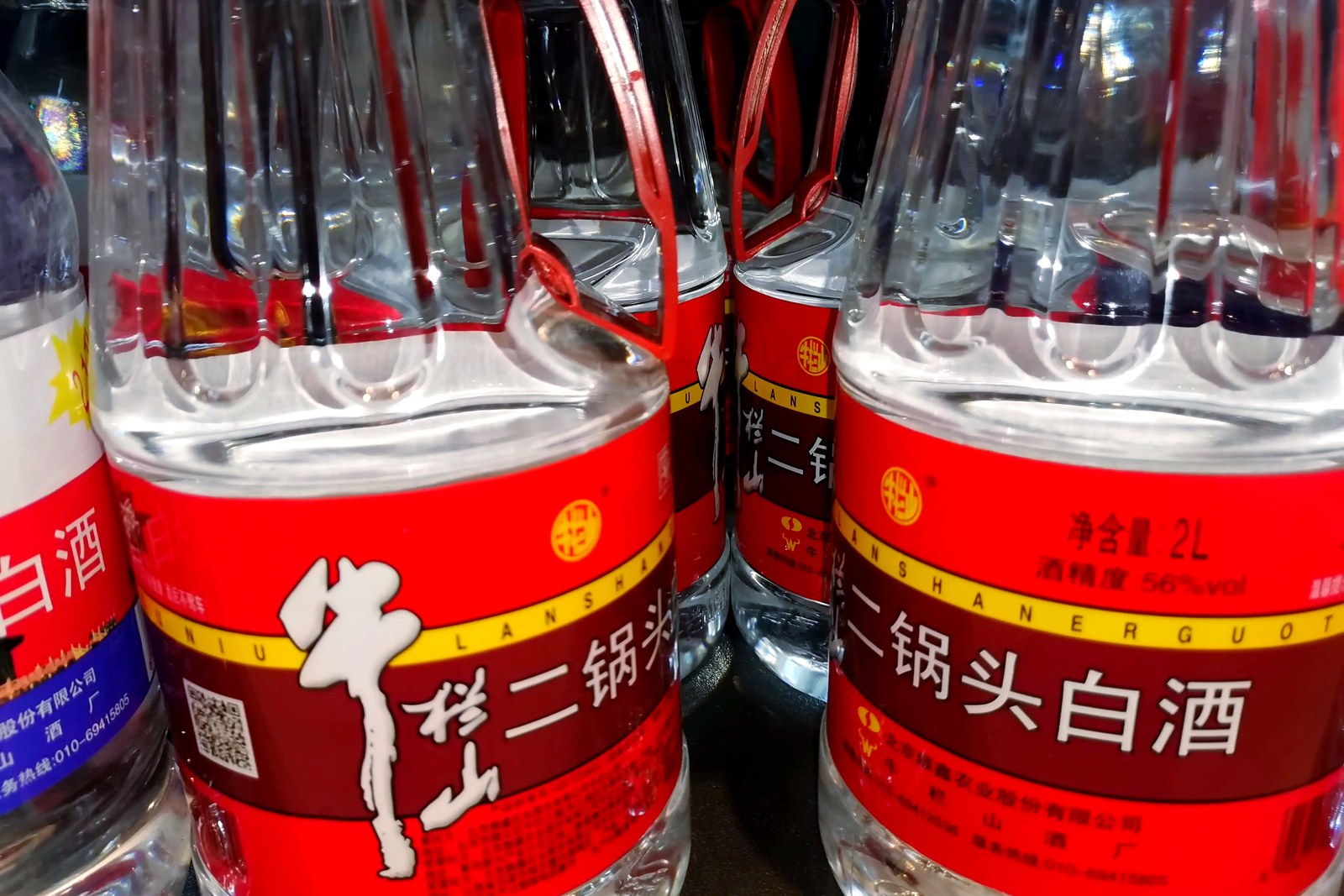
The drinking is a small-cup grammar written for a spirit that means to be drunk often, and it leans 清香 qīngxiāng light fragrance plus 烈 liè fiery to match the table. The anchor is the everyday bottle the whole country knows by nickname: 牛栏山陈酿 Niúlánshān chénniàng Niulanshan Matured, called 白牛二 bái Niú èr “white Niulanshan Two” for its plain white label, a low-priced bottle that topped the trade’s volume tables and made the brand the shorthand for 民酒 mín jiǔ “the people’s liquor” (worth confirming any single year’s sales crown). It is honest about what it is – the label reads a blended product – while the pot-still lines carry the older craft, and locals read labels rather than shelf-talk. The pairing book is Beijing winter and Beijing night: a small cup against 涮羊肉 shuàn yángròu rinsed-mutton hot-pot, against 卤煮 lǔzhǔ the offal stew, against 花生米 huāshēngmǐ fried peanuts and a friend with time – street drinking engineered for talk.
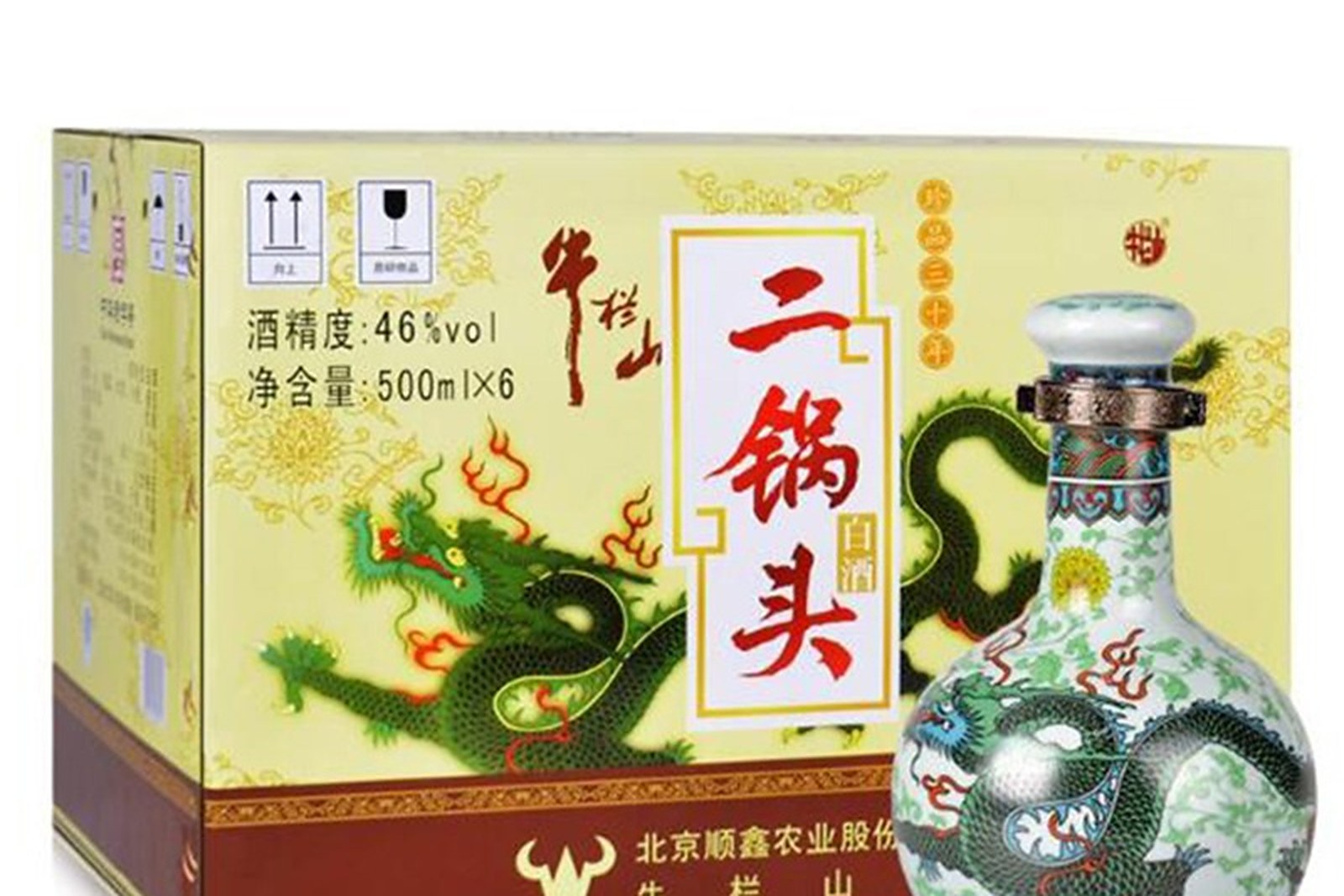
The honest grade is geography plus the label clock. In 顺义区 Shùnyì Qū Shunyi District, Beijing the honest buying is any counter with fast turnover – the bottle is priced so cheaply that counterfeits bother it less than a luxury label (worth confirming the current run’s anti-fake marks). The traditional erguotou technique holds intangible-heritage recognition on the capital’s and the country’s rolls (worth confirming which year and which level), and the works keeps a visitor display of old kettles and qu rooms (worth confirming opening arrangements). A per-person bill runs on the bottle count and the meat that follows it, so call it worth confirming the details rather than a fixed number – and pour small: the middle cut of the second pot is friendly, but it collects.
The wry truth is that 牛栏山二锅头 Niúlánshān èrguōtóu is over-rated as a “Beijing gift” and under-rated as supply-chain genius: souvenir shelves file it under nostalgia, while the actual thing – a machine for putting a clean, honest nip in front of millions of tables at a price nobody thinks about – is logistics the gift box never mentions. The trade’s own joke has the right shape: the label costs less than the glass it is poured into, and both cost less than the argument that follows. The self-deprecating footnote, and the district braid: a food writer will lecture the counter hand on “congener profiles” he cannot taste, photograph the white bottles at heroic shutter, and then call the spirit “commendably unpretentious” as if cheapness were a flavour – which is the honest grade: 牛栏山二锅头 Niúlánshān èrguōtóu is a working bottle the writer will heritage-ify more than he finishes, and the uncle at the next table has already emptied his cup and proposed a toast before the shutter closes. The same 顺义区 Shùnyì Qū Shunyi District, Beijing thread runs on: the green bottles of 燕京啤酒 Yānjīng píjiǔ Yanjing beer crack open at the district’s summer tables, the winter greenhouses of 顺义草莓 Shùnyì cǎoméi Shunyi strawberries fill with picking families, the grill smoke of 后沙峪食街 Hòushāyù shíjiē the Houshayu food strip drifts over the Wenyu, and the terrace lamps of 祥云小镇餐吧 Xiángyún Xiǎozhèn cānbā Xiangyun Town’s bistros burn past midnight – one district, four more tables.
Words and Names
- 牛栏山镇 Niúlánshān Zhèn / Niulanshan Town · the still-house town under its low hill in northern Shunyi - 二锅头 èrguōtóu / second-pot head · the middle draw of the second distillation that names the style - 牛栏山陈酿 Niúlánshān chénniàng / Niulanshan Matured · the everyday bottle’s formal name - 白牛二 bái Niú èr / white Niulanshan Two · the white-label nickname the country orders by - 老烧锅 lǎo shāoguō / old still-house · the Qing-era burner shops the 1952 works grew out of - 麸曲 fūqū / bran-qu starter · the fast fermentation behind the light-aroma style - 清香型 qīngxiāng xíng / light-aroma type · the Beijing baijiu flavour family - 顺义区 Shùnyì Qū / Shunyi District · the Beijing district holding the works
What the Locals Know
- Read the label, not the shelf: the everyday 陈酿 chénniàng is a blended bottle by its own print, and the pot-still lines are the craft pour – both honest, different jobs (worth confirming the current range).
- Pour small cups, not tumblers: erguotou is a sipping spirit even when the evening runs long – the small glass is the brake the table needs.
- Pair it with fat and salt: hot-pot mutton, offal stews, fried peanuts – the spirit is built to cut grease, not to be sipped alone like wine.
- Buy where the stock turns: high-volume counters rotate batches fastest, and the plain white bottle does not reward storage (worth confirming which shops restock daily).
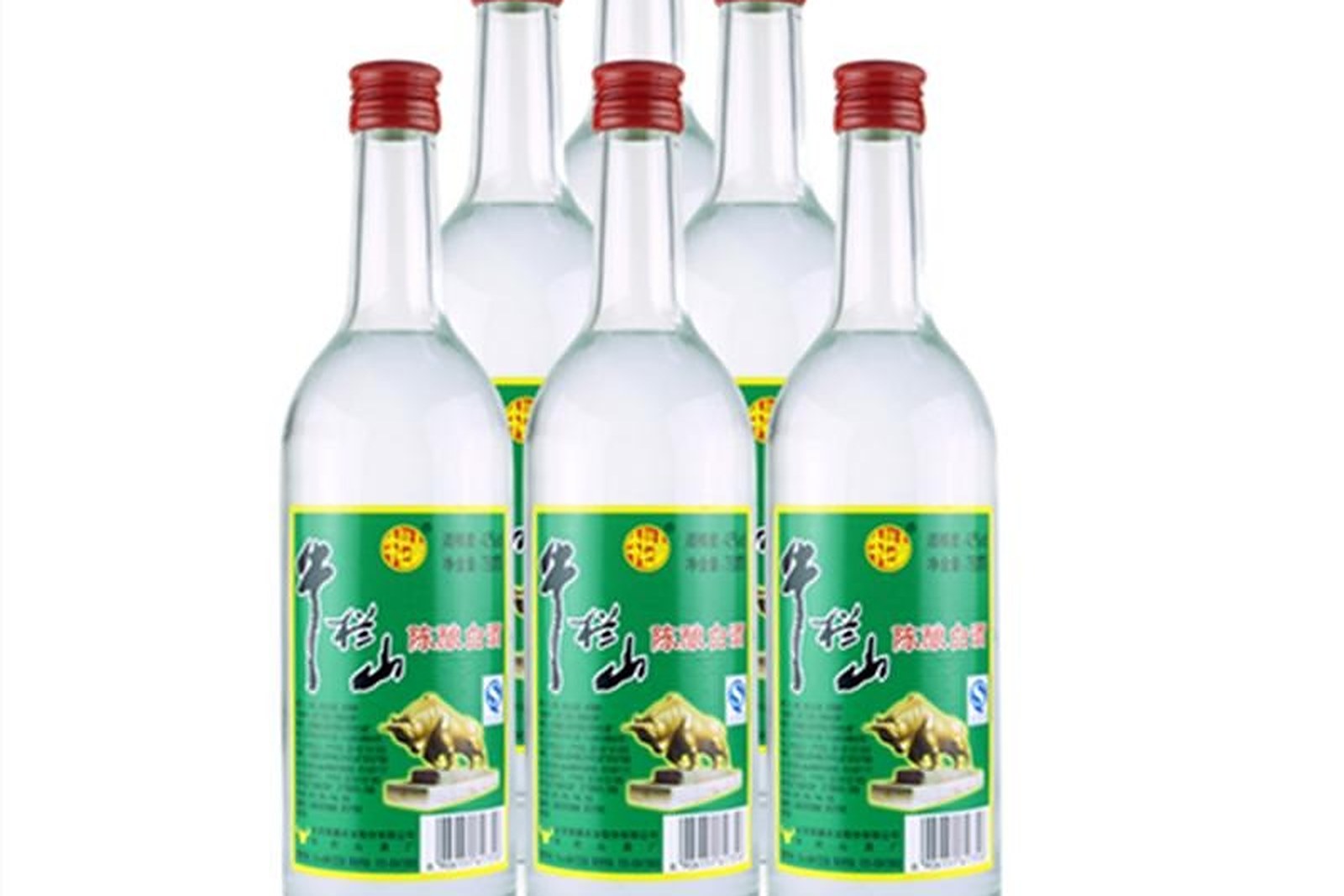
flowcloud would say that the 牛栏山二锅头 Niúlánshān èrguōtóu is the old stills, second-pot fire and the people’s white bottle of Shunyi District, Beijing – a 1952 老烧锅 lǎo shāoguō consolidation that turned the middle cut of the second pot, 麸曲 fūqū-fermented and 清香型 qīngxiāng xíng clean, into the country’s everyday habit – and that the honest move is to read the label, pour small cups, and keep the peanuts coming, because the still makes the spirit and the table makes the evening. All checked October 2026.
Where to find it: Shunyi District Shùnyì Qū, Beijing – district supermarket shelves and the works town of 牛栏山镇 Niúlánshān Zhèn in northern Shunyi, where the everyday 陈酿 chénniàng bottle and the pot-still lines are sold year-round (worth confirming the details – distillery display access and that season’s lines); a per-person bill runs on the bottle and the table, so call it worth confirming the details rather than a fixed number. Niulanshan erguotou is the old stills, second-pot fire and the people’s white bottle of Shunyi District, Beijing, fire before bottle.