
漆油煎茶香,怒家待客汤。Qīyóu jiān chá xiāng, Nùjiā dàikè tāng – Lacquer oil fries the tea fragrant; the Nu house’s guest soup.
巩拉 Gōngla – the name is the 怒族 Nùzú Nu people’s word for it, sometimes written 巩辣 or simply ‘漆油茶’ qīyóu chá lacquer-oil tea – is the Nu way of drinking tea: not steeped but 煎 jiān fried. The cook warms a little 漆油 qīyóu lacquer-seed oil in a small 土锅 tǔguō earthen pot, drops in 茶叶 cháyè tea leaves (often the rough 老茶 lǎochá old, coarse leaf of the hills), lets them 煸 biān fry and toast in the fat until they crisp and smell toasty, then adds water, a pinch of 盐 yán salt, and sometimes a scatter of 苞谷花 bāogǔ huā popped corn or a little 核桃 hétáo walnut, and brings it to a short boil into a savoury, oily, faintly bitter brew that is drunk hot. It is the Nu’s everyday cup and their 待客 dàikè guest cup at once – a 怒家 Nùjiā Nu household keeps a pot going by the 火塘 huǒtáng the way a Tibetan house keeps 酥油茶 sūyóu chá butter tea – and the honest shape is that this is a food-drink, a broth more than a tea, built on the same 漆油 qīyóu that fats the chicken and the 侠辣 xiála. A bowl is a few yuan or given free with a meal (worth confirming – like the flatbread, it is rarely a priced item), and the precise recipe varies house to house, which is worth saying plainly: the details of 巩拉 gōngla are the least standardised on this list, and some accounts fold it together with the general 漆油茶 qīyóu chá tradition, so treat the specifics below as the commonly reported version rather than gospel (worth confirming the exact method and the name’s spelling with a Nu cook before you quote it).
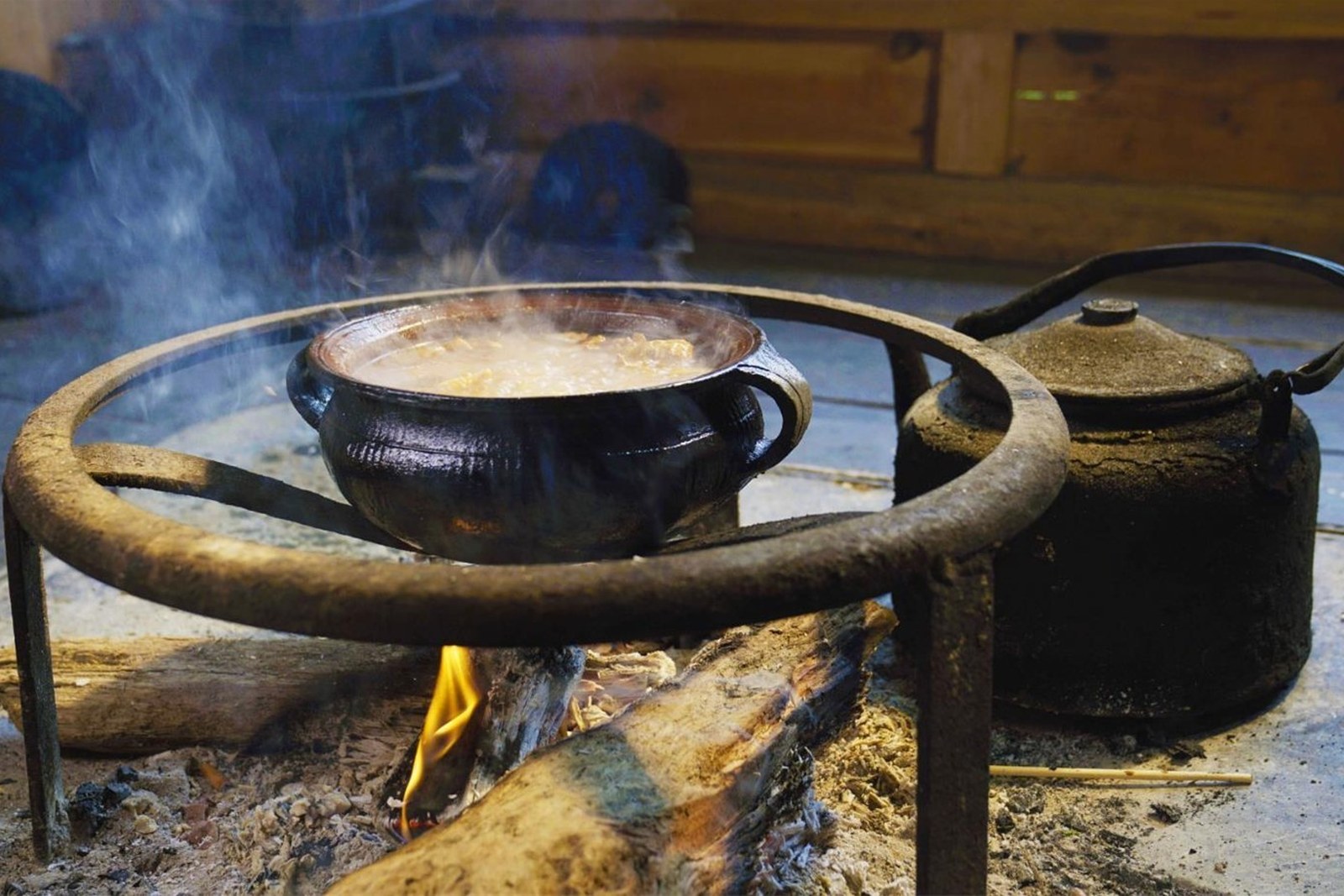
The mechanism is the fry. Where most tea is poisoned by hot water, the Nu 煎 jiān fry the leaf in 漆油 qīyóu first, so the 茶叶 cháyè toasts in fat the way a 傣味 Dǎiwèi cook fries 香草 xiāngcǎo herbs, and the result is a brew with body and a savoury, almost soupy weight that plain tea never has – the 盐 yán salt makes it a broth, and the 漆油 qīyóu makes it a meal. The 老茶 lǎochá coarse old leaf is the right choice precisely because it is tough enough to take the fry without turning to dust, and the optional 苞谷花 bāogǔ huā popped corn or 核桃 hétáo walnut is what turns a cup into a small snack, the Nu version of the Tibetan 糌粑 zānba companion to butter tea. The comparison locals draw is with the 酥油茶 sūyóu chá of the Tibetan plateau – both are salted, fatty, hot 火塘 huǒtáng drinks that function as food – but the Nu one is built on 漆油 qīyóu and fried leaf rather than 酥油 sūyóu yak butter and brick tea, so it is lighter in dairy and heavier in the resinous note of the lacquer seed. It is also a cousin of the 油茶 yóuchá oil-tea of Hunan and the 擂茶 léichá pounded tea of the Hakka, the same ’tea as a savoury brew’ idea reaching the gorge by a different mountain road. As always on this list, the 漆油 qīyóu means the 漆过敏 qī guòmǐn allergy caveat travels with it (worth confirming – the fried-tea version may carry more surface oil than the stewed chicken, so newcomers should sip cautiously).
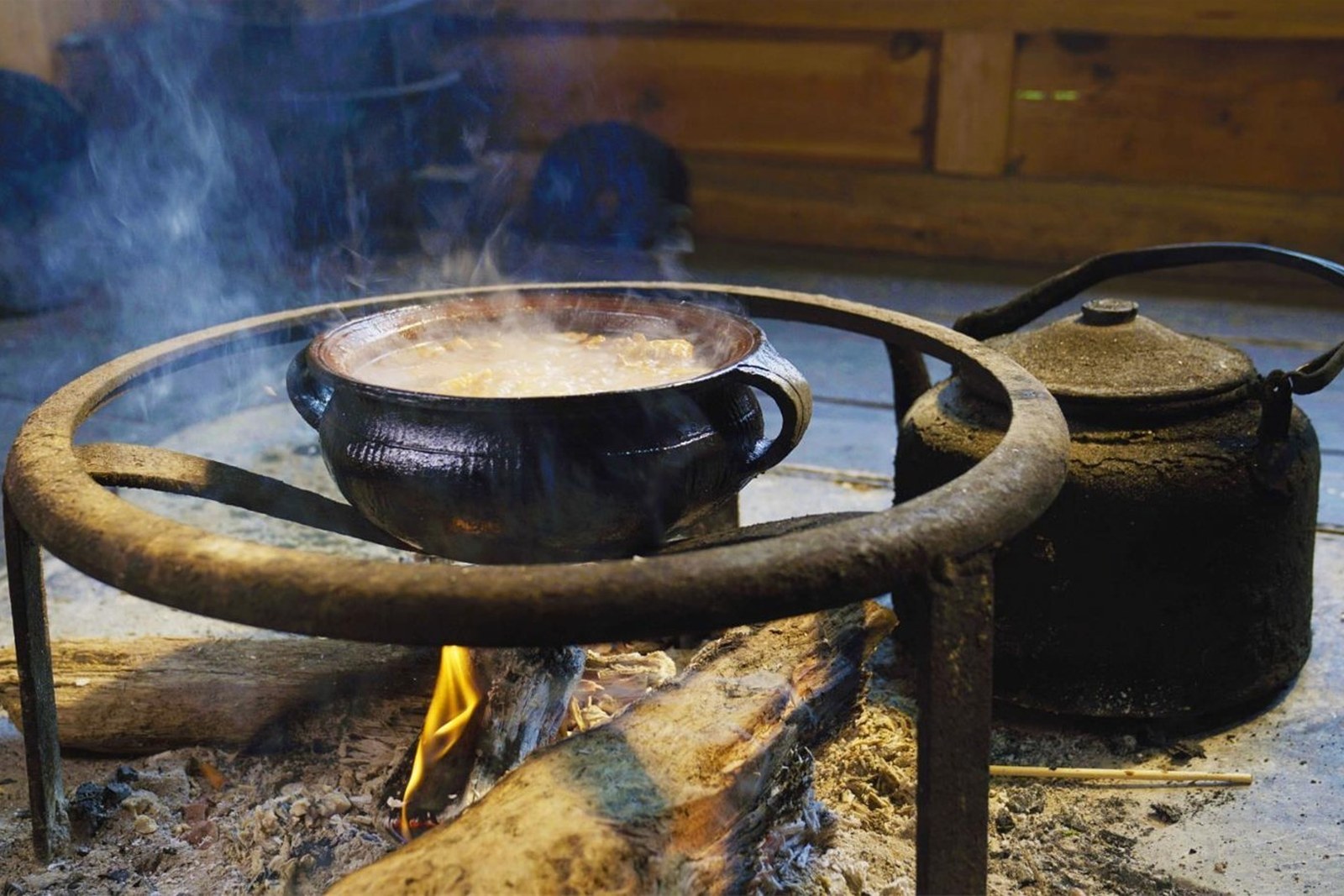
Locals drink it at the 火塘 huǒtáng, continuously. The move, for a visitor, is to be handed a bowl at a 怒族 Nùzú house in 贡山 Gòngshān Gongshan or up the 怒江 Nùjiāng – the 巩拉 gōngla is a home brew, not a café pour, and a 六库 Liùkù shop calling something ‘巩拉’ is almost certainly a 漆油茶 qīyóu chá approximation – and to accept it as the greeting it is, because refusing the guest cup is refusing the house. Drink it hot, salty and oily, and don’t expect sweetness; if the 漆油 qīyóu flavour is too strange on the first bowl, the second one lands, the same way the Tibetan butter tea does. The honest season is the cold half of the year, when a fatty hot brew by the 火塘 huǒtáng is the point of sitting down at all, and the honest test of a 怒家 Nùjiā is the fry: real 巩拉 gōngla shows toasted leaf and a gloss of oil on top, not a pale steeped cup with a drop of oil floated on as an afterthought. Because the method is the least fixed of the five, the safest thing a visitor can do is ask the cook to show the 煎 jiān step – a house that can’t, or won’t, is serving a renamed ordinary tea (worth confirming which households currently make it and how they spell the name).
Words and Names
巩拉 Gōngla the Nu fried-tea-with-lacquer-oil drink · 怒族 Nùzú the Nu people · 漆油 Qīyóu lacquer-seed oil · 漆油茶 Qīyóu Chá lacquer-oil tea · 煎 Jiān to fry · 茶叶 Cháyè tea leaves · 老茶 Lǎochá coarse old tea · 盐 Yán salt · 苞谷花 Bāogǔ Huā popped corn · 火塘 Huǒtáng the fire pit · 待客 Dàikè receiving guests · 贡山 Gòngshān Gongshan
What the Locals Know
The local knowledge about the 巩拉 gōngla is the fry, the salt and the honesty of the name. The leaf must be 煎 jiān fried in 漆油 qīyóu before the water goes in – that is the whole dish, and a pale steeped cup with oil floated on top is a renamed ordinary tea, so ask to see the step or don’t call it 巩拉 gōngla. The second check is the salt: like 酥油茶 sūyóu chá it is a savoury brew, not a sweet one, so a ‘巩拉’ served sweet has been tourist-ised, and the 盐 yán is what makes it a broth rather than a drink. The third is the house: this is a 怒家 Nùjiā Nu home brew, handed to a guest at the 火塘 huǒtáng, not a 六库 Liùkù café product, and refusing the cup is refusing the welcome. A fourth, and the most important for a writer or a visitor: the method and even the spelling of 巩拉 gōngla are the least fixed of the five gorge foods, with accounts that blur it into 漆油茶 qīyóu chá – so verify the exact recipe and name with a Nu cook before you quote it as settled, and the 漆过敏 qī guòmǐn lacquer caveat still applies to the oil (worth confirming both).
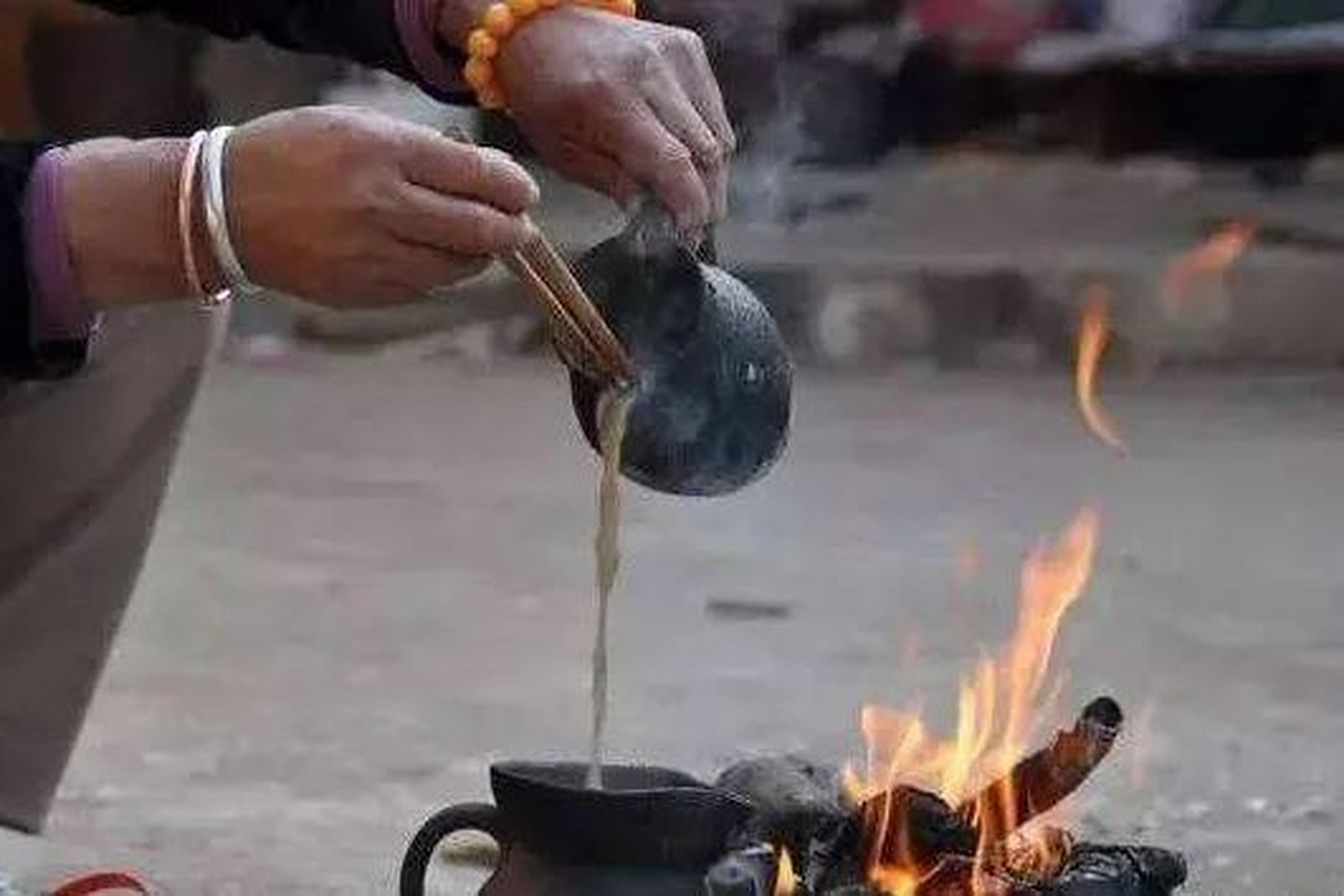
flowcloud would say that the 巩拉 gōngla is the Nu’s fried tea – 老茶 lǎochá leaf toasted in 漆油 qīyóu with 盐 yán salt into a savoury, oily, hot broth by the 火塘 huǒtáng – and that the honest move is to accept it as the guest cup at a 怒族 Nùzú house in 贡山 Gòngshān, watch the leaf fry, and treat the name and method as the least standardised on the list, because the fry is the dish and the caveat on the oil is the same as the chicken. All checked October 2026.
Where to find it: 怒族 Nùzú household hearths in 贡山 Gòngshān Gongshan and up the 怒江 Nùjiāng corridor – 巩拉 gōngla is a home-brewed guest cup, a few yuan or given free, rarely a priced item (worth confirming availability and the exact name); accept it hot and salty at a 火塘 huǒtáng, and ask to see the leaf fried in 漆油 qīyóu. It is the Nu savoury oil-tea, the least standardised dish on this list. All checked October 2026.