
石板烙粑粑,火塘烤岁月的香。Shíbǎn lào bābā, huǒtáng kǎo suìyuè de xiāng – A slate bakes the flatbread; the fire pit roasts the fragrance of the years.
石板粑粑 Shíbǎn Bābā stone-slab flatbread is the bread of the 怒江 Nùjiāng gorge peoples – the 独龙族 Dúlóngzú Dulong, the 怒族 Nùzú Nu and the 傈僳 Lìsù Lisu – a simple 粑粑 bābā cake of 荞麦 qiáomài buckwheat or 包谷 bāogǔ corn batter, poured onto a flat, greased 石板 shíbǎn slate slab and baked over the 火塘 huǒtáng fire pit until it sets into a soft, faintly smoky, faintly sweet round. There is no oven in a gorge house built into a mountainside, so the cooking surface is the stone itself: a smooth, flat piece of 青石 qīngshí bluestone or schist, propped over the 火塘 huǒtáng or set on the hearth, wiped with a little fat (often the same 漆油 qīyóu lacquer oil, or just lard), and used again and again until it is seasoned black. The batter is thin – 荞麦 qiáomài buckwheat gives a dark, earthy, faintly bitter cake, 包谷 bāogǔ corn a paler, sweeter one – and the slab’s heat bakes it through in a minute or two, leaving a bread that is more pancake than loaf, eaten warm, plain or with a dab of 蜂蜜 fēngmì honey. A round runs a few yuan at a village house, or comes free with a meal (worth confirming – it is rarely a priced menu item, more often the house bread), and the honest shape is that this is the gorge’s everyday starch, the thing a 独龙 Dúlóng or 怒 Nù family makes because flour and a hot stone are what they have, not because anyone is trying to impress you.
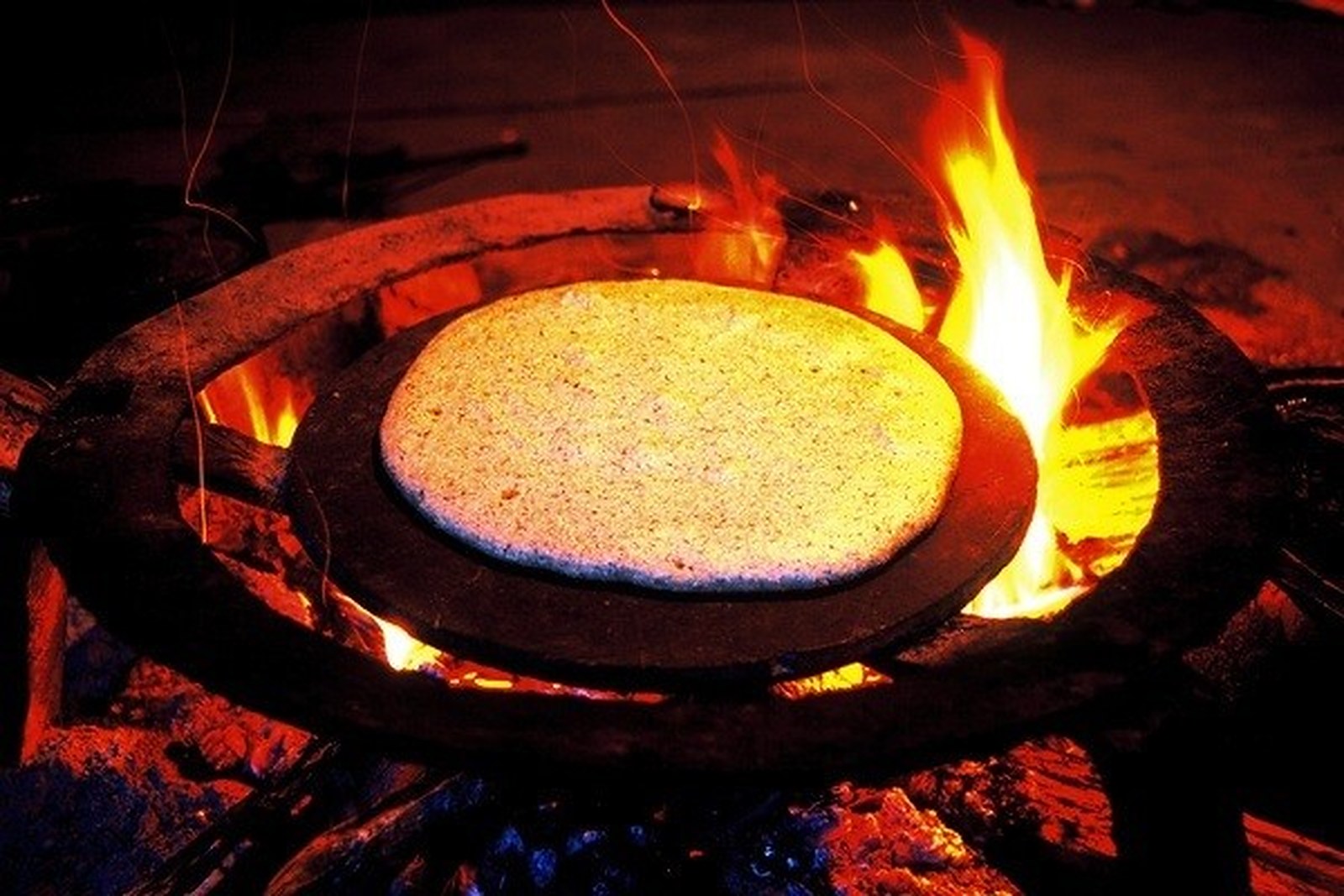
The mechanism is the slab. Unlike a 铁锅 tiěguō iron wok or a 平底锅 píngdǐguō frying pan, the 石板 shíbǎn holds and spreads heat slowly and evenly, so the batter cooks without scorching and picks up a faint mineral, smoky note from the stone and the 火塘 huǒtáng woodsmoke – a flavour no steel pan gives, and the reason the bread is named for the slab and not the flour. The batter is the other half: 荞麦 qiáomài buckwheat, the cold-hardy grain that grows where rice will not, is milled to a slurry with water (sometimes a little 蜂蜜 fēngmì or 糖 táng for the sweet version), poured in a thin circle, and lifted the moment it releases – the skill is in reading the stone, because a slab that is too hot cracks the cake and one too cool steams it soggy. The comparison locals draw is with the 烤饵块 kǎo ěrkuài grilled rice cake of the central Yunnan plains and the 糌粑 zānba of the Tibetan plateau: all are ‘grain turned flat and eaten by hand’, but the 石板粑粑 shíbǎn bābā is the one cooked on rock over an open pit, and the 荞麦 qiáomài version is the Dulong and Nu signature, not the Han rice one. It is the bread of a place with no fields flat enough for wheat and no roads easy enough for shop bread, which is exactly why it survived: the 石板 shíbǎn is free, the 火塘 huǒtáng is always lit, and the grain is what the terraced gorge grows.
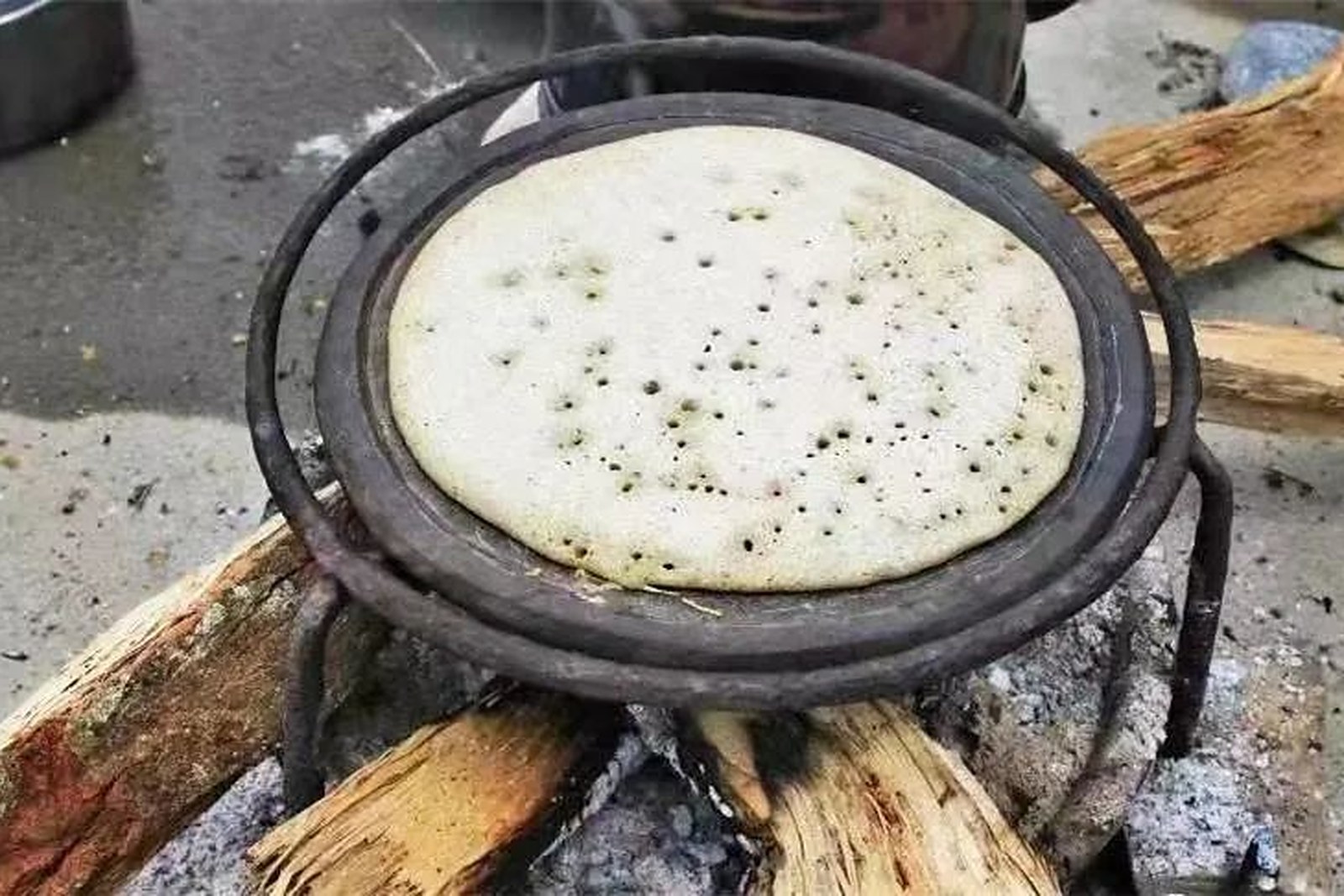
Locals eat it at home, warm off the stone, not at a counter. The move, if you are a visitor, is to be invited into a 独龙江 Dúlóngjiāng Dulong valley or a 怒族 Nùzú village house and watch the slab do its work – the bread is barely sold, because it is the thing a family makes for itself, and a 六库 Liùkù café listing ‘石板粑粑’ is usually a nostalgia version on a steel plate. Ask for the 荞麦 qiáomài buckwheat one if you want the real gorge taste rather than the sweeter 包谷 bāogǔ corn, and eat it the minute it comes off the stone, because it toughens as it cools and the smoke is what you came for. The honest season is whenever the 火塘 huǒtáng is lit – which in a gorge house is most of the year, but the bread is at its best in the cold months when the hearth is a working thing and not a summer nuisance – and the honest test of a house is the slab: a real 石板 shíbǎn is black and seasoned from use, not a clean tile dragged out for the photo. Note that the 独龙族 Dúlóngzú of the 独龙江 Dúlóngjiāng valley and the 怒族 Nùzú of 贡山 Gòngshān Gongshan are the strongest keepers of the method, and a slab bread in 福贡 Fùgòng or 六库 Liùkù is more likely a Lisu or Nu cook keeping an older neighbour’s tradition (worth confirming which village houses currently bake it for visitors).
Words and Names
石板粑粑 Shíbǎn Bābā stone-slab flatbread · 石板 Shíbǎn the stone slab · 火塘 Huǒtáng the fire pit · 粑粑 Bābā flatbread / cake · 荞麦 Qiáomài buckwheat · 包谷 Bāogǔ corn · 独龙族 Dúlóngzú the Dulong people · 怒族 Nùzú the Nu people · 傈僳 Lìsù the Lisu people · 青石 Qīngshí bluestone · 独龙江 Dúlóngjiāng the Dulong River valley · 贡山 Gòngshān Gongshan
What the Locals Know
The local knowledge about the 石板粑粑 shíbǎn bābā is the stone, the grain and the timing. The 石板 shíbǎn is the cook, not the plate: a seasoned slab, black from use over the 火塘 huǒtáng, spreads heat the way steel cannot and gives the bread its mineral, smoky note, so a clean tile dragged out for a photo is not the real thing – look for the blackened rock. The second check is the grain: the 荞麦 qiáomài buckwheat cake is the Dulong and Nu signature, earthy and faintly bitter, while the 包谷 bāogǔ corn one is paler and sweeter, and a visitor who wants the gorge taste asks for buckwheat. The third is the clock: the cake is best the second it lifts off the stone, warm and soft, because it toughens as it cools and the 火塘 huǒtáng smoke is the whole point of the flavour. A fourth, for the visitor: this is house bread, not a menu item, so you meet it by being invited in – a 六库 Liùkù café version is a steel-plate nostalgia act – and the 独龙江 Dúlóngjiāng and 贡山 Gòngshān houses are where the method is kept tightest (worth confirming which families currently bake for guests).
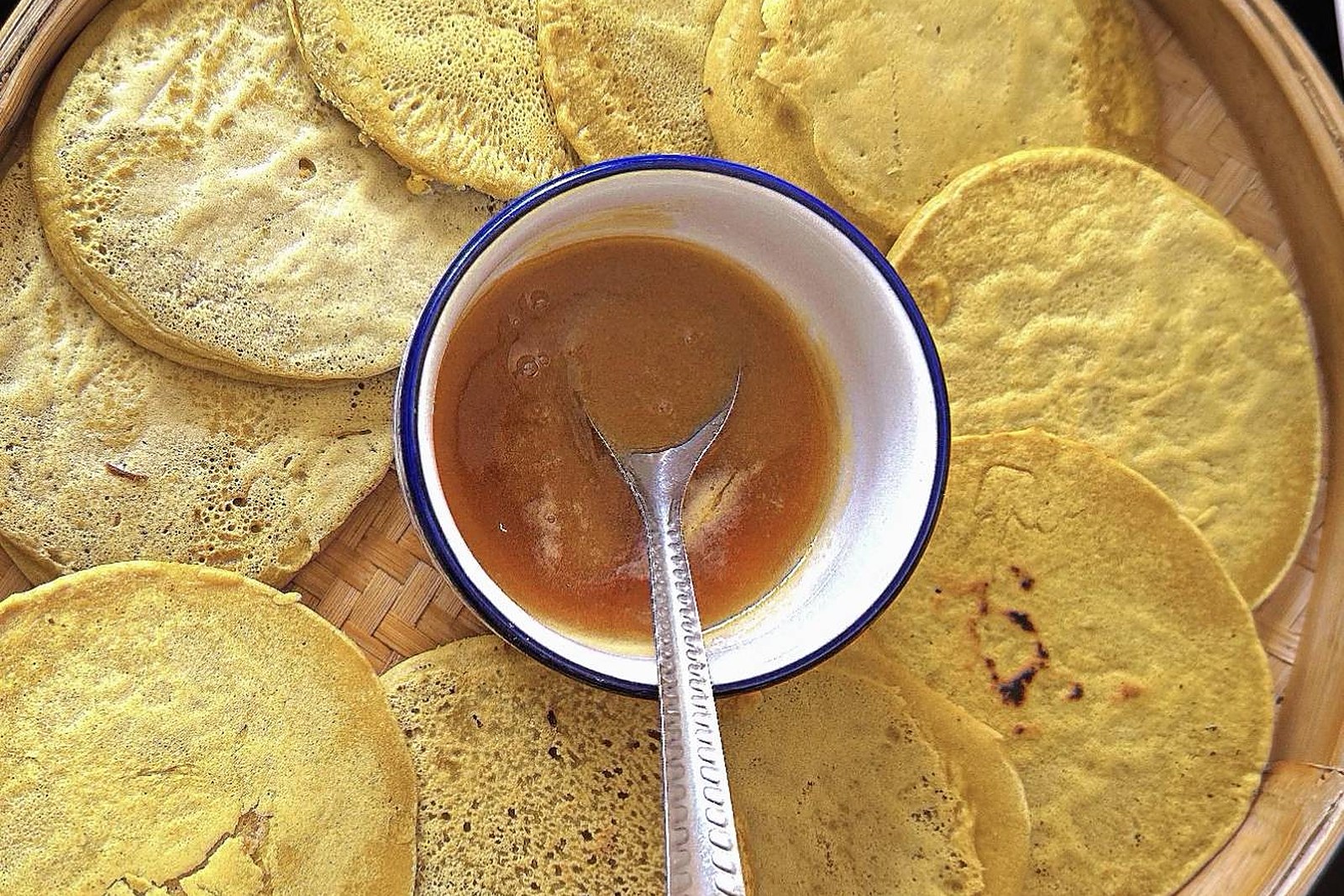
flowcloud would say that the 石板粑粑 shíbǎn bābā is buckwheat or corn batter poured on a blackened 石板 shíbǎn over the 火塘 huǒtáng – a soft, smoky, stone-baked cake that is the gorge’s everyday bread – and that the honest move is to eat it warm off the rock in a Dulong or Nu house, ask for the 荞麦 qiáomài buckwheat, and skip the café version, because the slab is the cook and the smoke is the flavour. All checked October 2026.
Where to find it: family hearths in the 独龙江 Dúlóngjiāng valley and 怒族 Nùzú villages of 贡山 Gòngshān Gongshan, and 傈僳 Lìsù / Nu houses up the 怒江 Nùjiāng corridor – the 石板粑粑 shíbǎn bābā is mostly house bread, a few yuan or given with a meal, eaten warm off the 石板 shíbǎn (worth confirming availability, since it is rarely a priced item); ask for the 荞麦 qiáomài buckwheat cake and eat it the minute it lifts. It is the gorge’s stone-baked everyday bread, strongest among the Dulong and Nu. All checked October 2026.