
侠辣一锅酒,肉香醉怒谷。Xiála yī guō jiǔ, ròu xiāng zuì Nùgǔ – Xia la, a pot of liquor; the meat’s fragrance drunken in the Nu valley.
侠辣 Xiála – the 傈僳 Lìsù Lisu name is often glossed as ‘meat liquor’ or ‘fierce hot’ – is the gorge’s most uncompromising dish: a 土鸡 tǔjī village chicken, cut small, fried in 漆油 qīyóu lacquer-seed oil and then braised in a serious pour of 白酒 báijiǔ strong liquor until the alcohol has mostly cooked off and the meat sits in a reduced, savoury, faintly boozy sauce that is part stew, part 肉酒 ròujiǔ ‘meat wine’. The Lisu call the family of such dishes 肉酒 ròujiǔ – meat cooked in liquor – and 侠辣 xiála is its loudest member: the chicken is seared hard in the dark 漆油 qīyóu, a generous slug of 高度酒 gāodù jiǔ high-proof grain liquor goes in, the flame is let to take the edge off, and the pot is covered until the meat is tender and the liquor has become a glaze rather than a drink. It eats hot, savoury and a little wild, the chili and the 漆油 qīyóu carrying the fat and the liquor carrying the warmth. A pot runs about 60-100 yuan at a 傈僳 Lìsù village kitchen (worth confirming the details), and the honest shape is that this is a 待客 dàikè guest dish and a 月子 yuèzi postpartum tonic at once – the Lisu serve it to honour a visitor and to put strength back into a new mother, because meat-and-liquor is the gorge’s idea of medicine as much as meal.
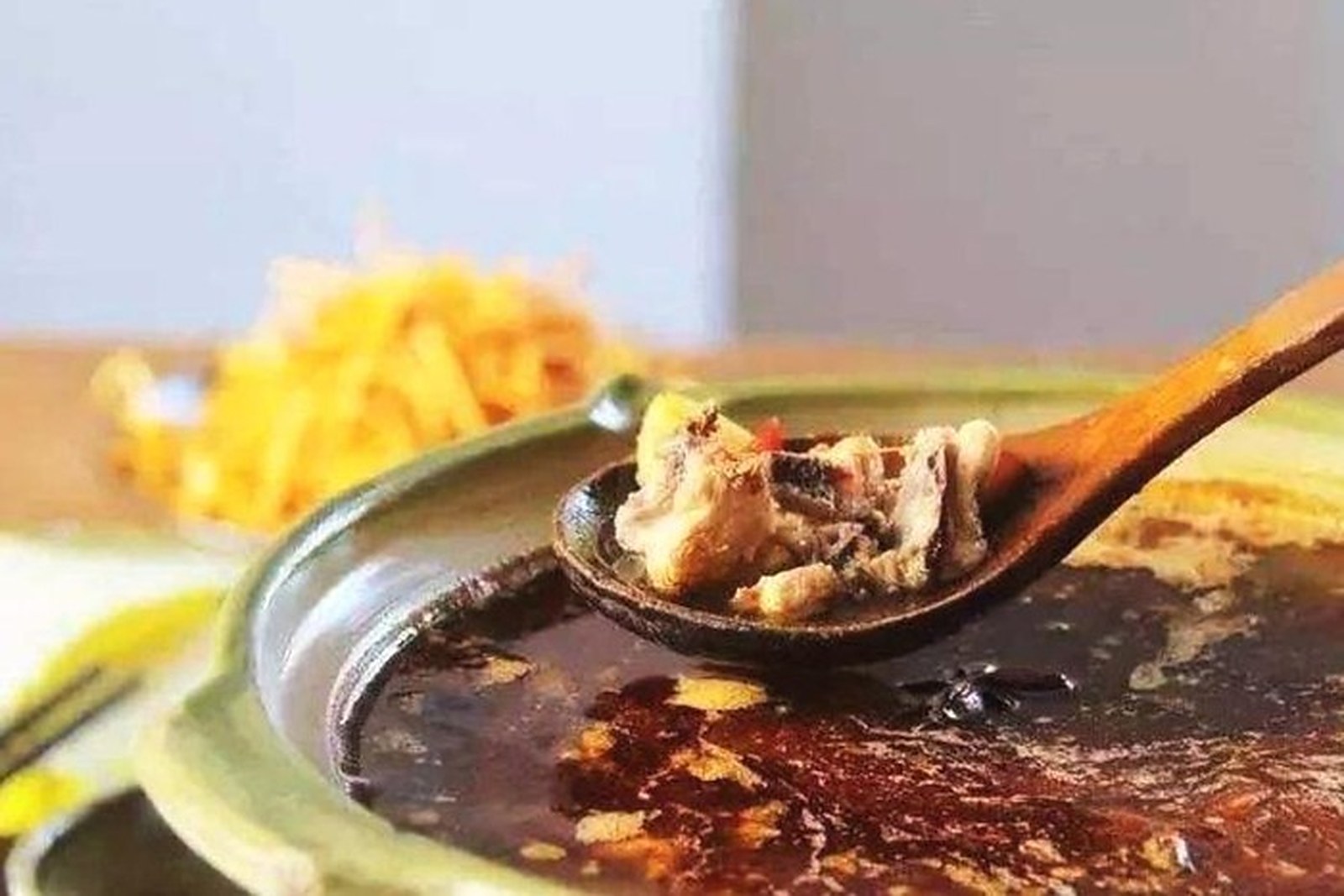
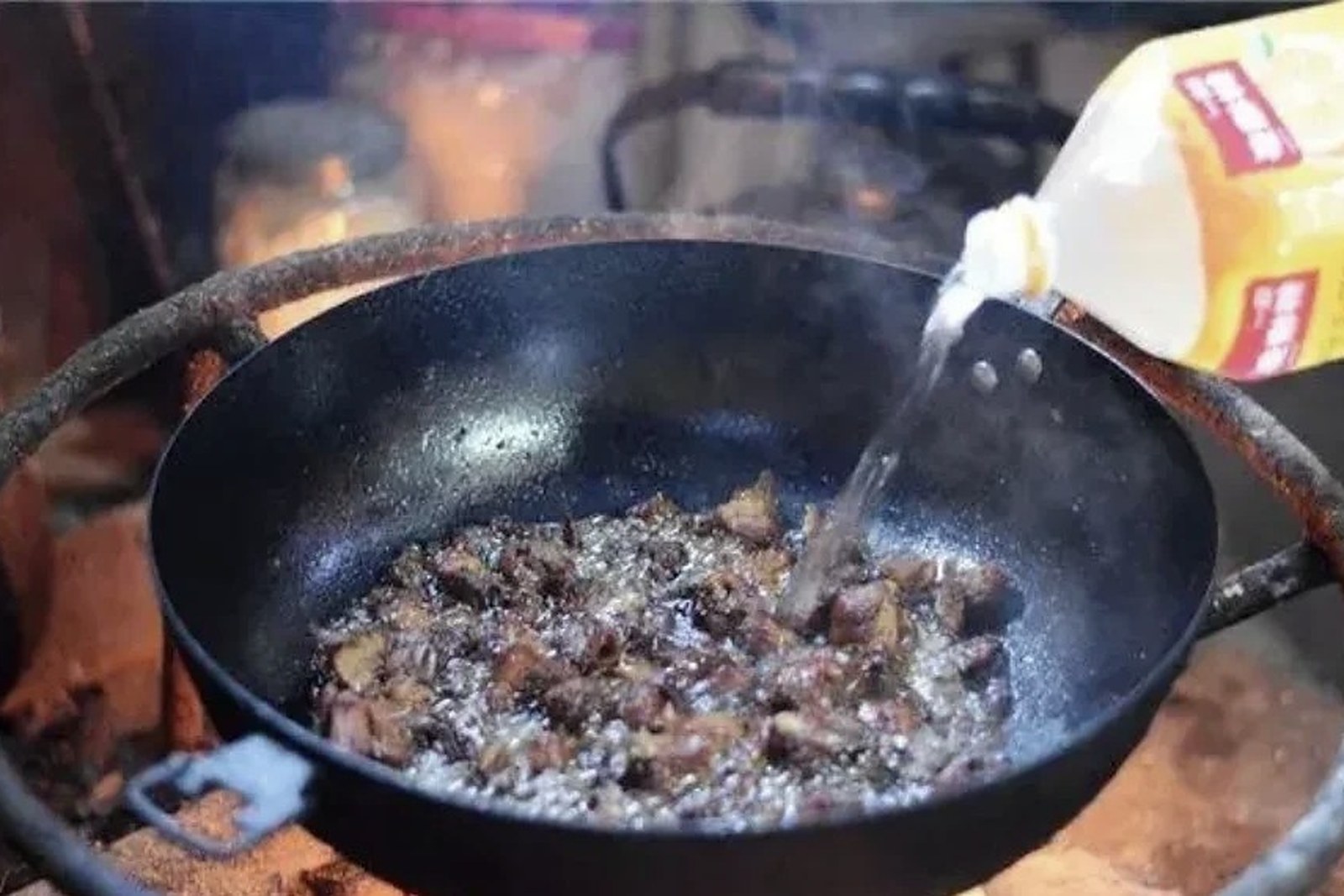
The mechanism is the burn. The 漆油 qīyóu does the first job, searing the chicken in its resinous fat the way 漆油鸡 qīyóu jī does, but where that dish stops at a stew, 侠辣 xiála then floods the pot with 白酒 báijiǔ – not cooking wine simmered away politely but a real pour of the local 包谷酒 bāogǔ jiǔ corn liquor or a bought 高度 gāodù high-proof spirit – and lets it reduce into the meat. The alcohol tenderises and, the Lisu say, drives the 漆油 qīyóu ‘into the blood’, which is the tonic logic; what you taste is a deep, meaty, faintly sweet-sour braise with a backnote of grain spirit and a fair bit of 干辣椒 gān làjiāo dried chili for the ‘辣’ là hot in the name. The comparison locals draw is straight back to the 漆油鸡 qīyóu jī above: same bird, same oil, but the 侠辣 xiála is the one with the liquor turned up and the water turned down, so it is richer and louder where the chicken stew is calm – and it is a close cousin of the 酒炖 jiǔ dùn liquor-braised dishes found across the ethnic hills of Yunnan, the difference being the Lisu use 漆油 qīyóu and a heavier hand. It is also, frankly, the dish that divides visitors: the booze is mostly cooked out, but a sensitive newcomer still meets the 漆油 qīyóu allergy question from Food 1, so the same ’taste a little first’ rule applies (worth confirming – the alcohol content after reduction is low, but the lacquer-oil caveat is real).
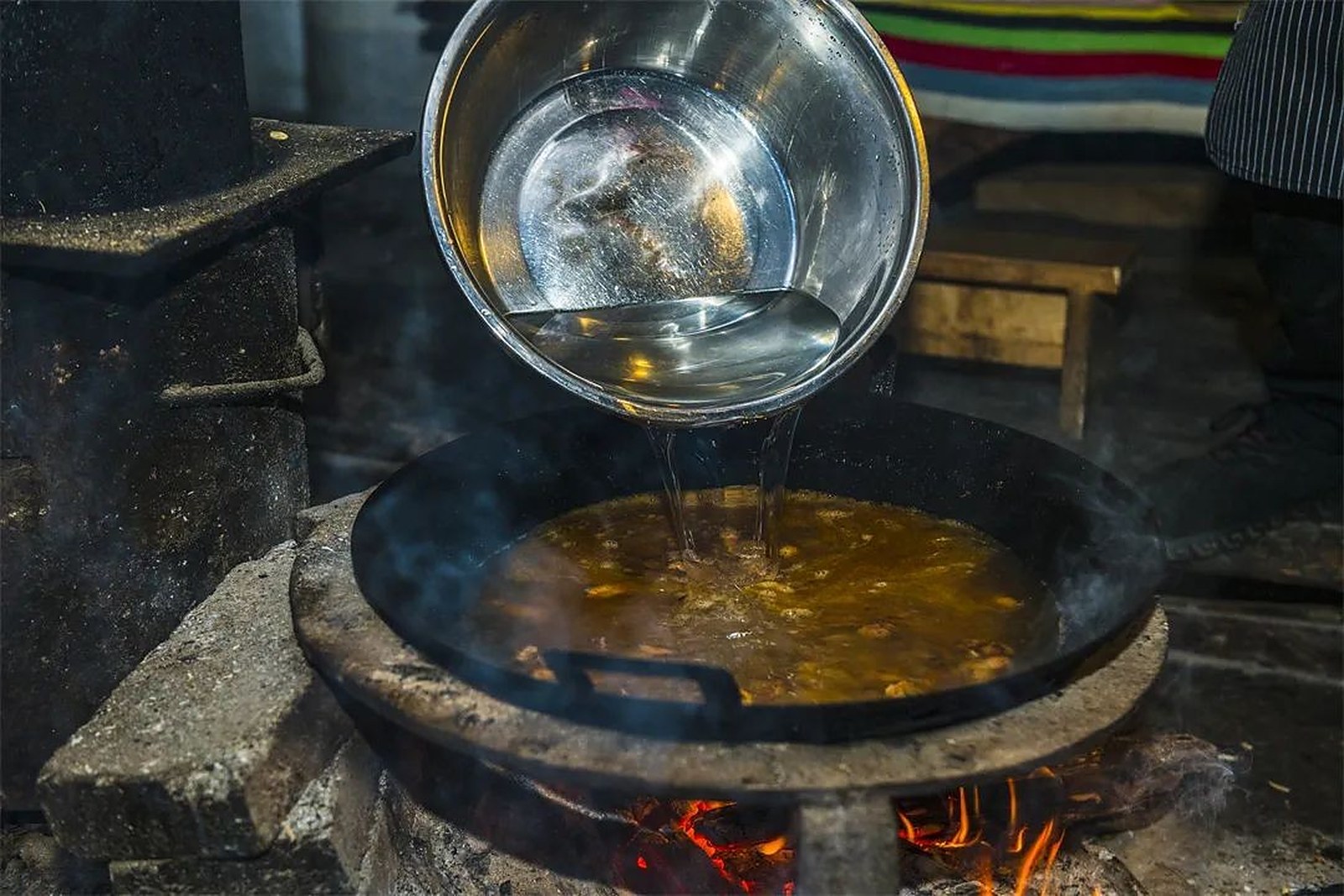
Locals eat it as a feast dish, not a weekday bowl. The move is to be a guest at a 傈僳 Lìsù table – a village 农家乐 nóngjiālè, a family 火塘 huǒtáng hearth, or one of the 怒江 Nùjiāng corridor houses that cook for travellers – and to share it as a central pot among several people with 包谷饭 bāogǔ fàn corn rice, because the sauce is built to be soaked up, not sipped. The honest occasion is a welcome or a recovery: the Lisu lay it out for a visitor they mean to honour and for a woman in her 月子 yuèzi month, and a house that serves it as a casual lunch special has flattened its meaning. Order it with the chili to your level – the ‘辣’ là is real – and know that the 白酒 báijiǔ is meant to have cooked down, so if a bowl arrives tasting of raw spirit, the pot was rushed. The honest season is the cold half of the year, when a meat-and-liquor braise is exactly the warmth the gorge wants, and the honest test of a 傈僳 Lìsù cook is the reduction: the liquor should have become a glaze, the chicken should be falling, and the 漆油 qīyóu should be there but not greasy. As with the chicken, the 漆过敏 qī guòmǐn caveat stands, and the postpartum use means a new mother is often given it precisely because of the strength it is meant to restore (worth confirming the tonic claims – they are tradition, not peer-reviewed).
Words and Names
侠辣 Xiála the Lisu meat-and-liquor braise · 傈僳 Lìsù the Lisu people · 肉酒 Ròujiǔ meat liquor / meat cooked in liquor · 漆油 Qīyóu lacquer-seed oil · 白酒 Báijiǔ strong liquor · 包谷酒 Bāogǔ Jiǔ corn liquor · 土鸡 Tǔjī free-range village chicken · 待客 Dàikè receiving guests · 月子 Yuèzi postpartum month · 漆过敏 Qī Guòmǐn lacquer allergy · 福贡 Fùgòng Fugong · 贡山 Gòngshān Gongshan
What the Locals Know
The local knowledge about the 侠辣 xiála is the liquor, the occasion and the oil. The 白酒 báijiǔ is meant to reduce into a glaze, not sit in the bowl as raw spirit, so a pot that tastes of unfinished drink was rushed, and the real dish is a braise where the grain alcohol has cooked down to carry the 漆油 qīyóu into the meat. The second check is the meaning: 侠辣 xiála is a 待客 dàikè guest dish and a 月子 yuèzi postpartum tonic, not a casual lunch, so a house selling it as an everyday special has flattened what it is – you meet it at a shared table honouring a visitor or restoring a new mother. The third is the heat: the ‘辣’ là in the name is real 干辣椒 gān làjiāo dried chili, so ask for it to your level and don’t be surprised when the Lisu cook’s ‘mild’ still burns. A fourth, carried from Food 1: the 漆油 qīyóu is the same seed fat with the same 漆过敏 qī guòmǐn allergy caveat, so taste a little first if you have ever reacted to lacquer, and the tonic claims are tradition rather than medicine (worth confirming both the allergy guidance and the postpartum lore before you treat it as fact).
flowcloud would say that the 侠辣 xiála is a 傈僳 Lìsù chicken seared in 漆油 qīyóu and braised in a real pour of 白酒 báijiǔ until the liquor is a glaze – a hot, savoury, boozy 肉酒 ròujiǔ meant for guests and new mothers – and that the honest move is to share it with 包谷饭 bāogǔ fàn at a village hearth, check the alcohol has cooked down, and taste a little first if lacquer has ever itched you, because the oil is the point and the caveat is the same as the chicken. All checked October 2026.
Where to find it: 傈僳 Lìsù village kitchens and 农家乐 nóngjiālè houses along the 怒江 Nùjiāng corridor – 福贡 Fùgòng and 贡山 Gòngshān especially – a 侠辣 xiála pot runs about 60-100 yuan and is a shared, guest-and-postpartum dish (worth confirming the details); eat it with 包谷饭 bāogǔ fàn corn rice, ask for the chili to your level, and expect the liquor cooked down to a glaze. It is the Lisu fire-braise of chicken, lacquer oil and strong liquor. All checked October 2026.