
Peking Duck: The Fruit-Wood Ceremony of the Beijing Table
果木炉火枣香起,一鸭三吃皮蘸糖。Guǒmù lúhuǒ zǎo xiāng qǐ, yī yā sān chī pí zhàn táng – Fruit-wood oven fire raises a jujube scent; one duck eaten three ways, the skin dipped in sugar.
北京烤鸭 Běijīng kǎoyā Peking duck is the dish that travels under the city’s own name, and its craft runs in two schools: 挂炉 guàlú hung-oven roasting, where the duck turns on a hook through an open fruit-wood fire – 枣木 zǎomù jujube, 梨木 lìmù pear wood – so the skin crisps in live smoke, and 焖炉 mènlú closed-oven roasting, where the oven is heated first and the bird cooks in sealed residual heat for a softer, juicier finish (worth confirming which houses run which school and how far the flavour difference really goes). The preparation is a small surgery: air is pumped under the skin to separate it from the fat, the duck is scalded, lacquered with 麦芽糖 màiyátáng maltose syrup and air-dried until the skin sits parchment-tight, then roasted; at the table a carver 片鸭 piàn yā slices skin and breast into thin sheets in front of you, and the eating kit is fixed – 荷叶饼 héyè bǐng lotus-leaf pancakes, 甜面酱 tiánmiànjiàng sweet flour sauce, 葱丝 cōngsī scallion slivers, often cucumber – rolled by hand, while the carcass goes back to the kitchen and returns as 鸭架汤 yājià tāng duck-bone soup. One duck is therefore a three-act meal – skin, rolls, broth – and the ceremony, not any single bite, is the point.
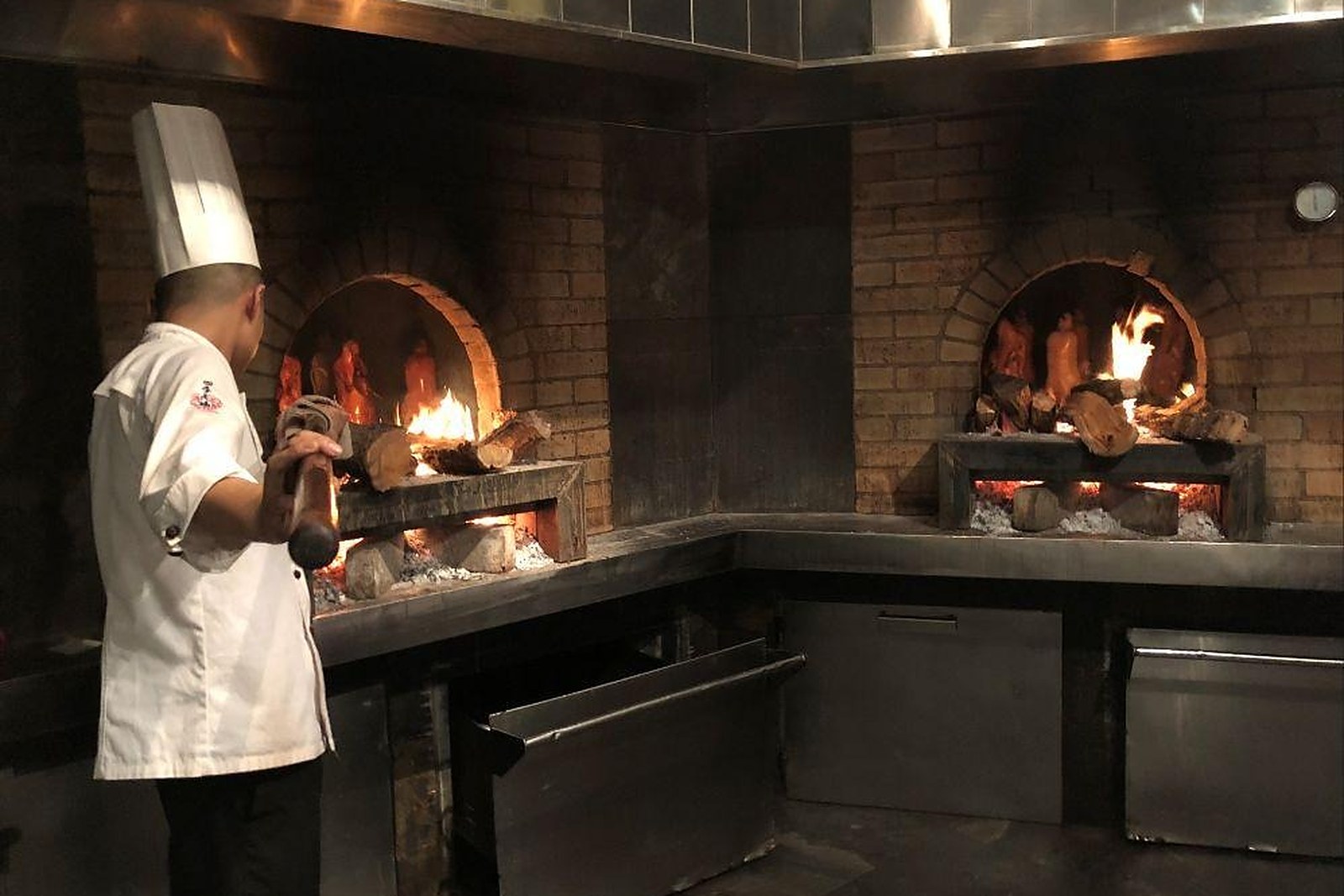
The honest grade is geography plus booking. 东城区 Dōngchéng Qū Dongcheng District is where the old houses cluster: the corridors around 前门 Qiánmén Qianmen and 王府井 Wángfǔjǐng Wangfujing hold several 老字号 lǎozìhào time-honored roast-duck houses alongside hotel dining rooms, and a whole duck runs roughly 200-300 yuan with pancakes and sauces, putting the per-person bill at about 150-300 yuan depending on the house and the sides (worth confirming – the famous doors charge for the name as well as the bird, and prices climb seasonally). Book ahead: ducks roast on a schedule, the carving happens at the table, and the honest visit is a slow dinner, not a walk-in snack. The tell to check on arrival is the oven itself – a live fruit-wood fire leaves the room smelling faintly of jujube smoke, and no menu paragraph can fake that smell.
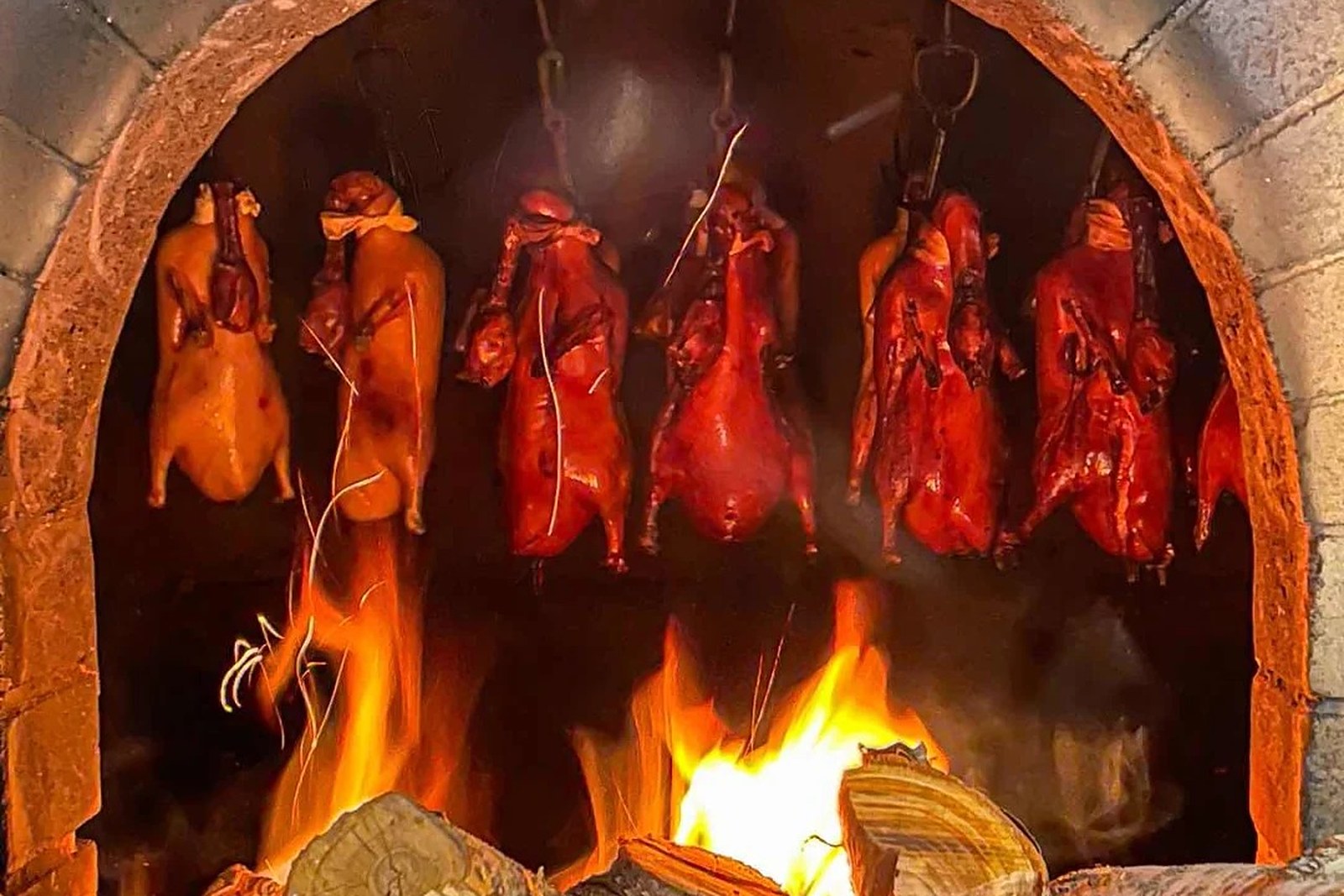
The wry truth is that 北京烤鸭 Běijīng kǎoyā is over-rated as a bucket-list monument and under-rated as working craft: visitors arrive for the name and leave divided by details locals argue about nightly – whether the first slice of skin should be dipped in 白糖 báitáng white sugar, plain, to judge the crackle before any sauce, or whether going straight to the roll is the only honest order, and both camps sit at the same table. Season matters: the roast reads best in the dry cold of late autumn and winter, when air-drying works with the weather and the fat sets clean; in humid July even a good oven sweats. The quieter divide is between doors that trade on the carving trolley and doors that trade on the fire – the honest grading is done with the nose at the doorstep, not with the menu’s history page (worth confirming which houses still burn fruit wood rather than gas).
The self-deprecating footnote: a food writer will explain the hung-oven-versus-closed-oven schism to a table that only wanted dinner, photograph the carver fanning the slices like feathers, dip one skin in sugar “for science”, build three rolls and drop two of them, and then pronounce the duck-bone soup the best course as if that were a discovery – which is the honest grade: 北京烤鸭 Běijīng kǎoyā is a ceremony that survives its own fame, and the writer who came to audit the ritual leaves smelling of jujube smoke and planning a return visit.
Words and Names
北京烤鸭 Běijīng Kǎoyā Peking duck · 挂炉 Guàlú hung-oven roasting over open fruit-wood fire · 焖炉 Mènlú closed-oven roasting on residual heat · 荷叶饼 Héyè Bǐng lotus-leaf pancake · 甜面酱 Tiánmiànjiàng sweet flour sauce · 鸭架汤 Yājià Tāng duck-bone soup · 片鸭 Piàn Yā tableside duck carving · 老字号 Lǎozìhào time-honored brand · 东城区 Dōngchéng Qū Dongcheng District
What the Locals Know
- The skin has its own course: judges dip the first slice in 白糖 báitáng white sugar, no sauce, to hear the crackle – sauce is for the second act.
- One duck is three courses: skin first, rolls second, and the 鸭架汤 yājià tāng bone broth last – anyone skipping the soup has ordered half a duck.
- Fruit wood is the argument: jujube and pear wood give the smoke its sweetness, so sniff the doorway or ask about the oven – the price says one thing, the chimney says another (worth confirming the details).
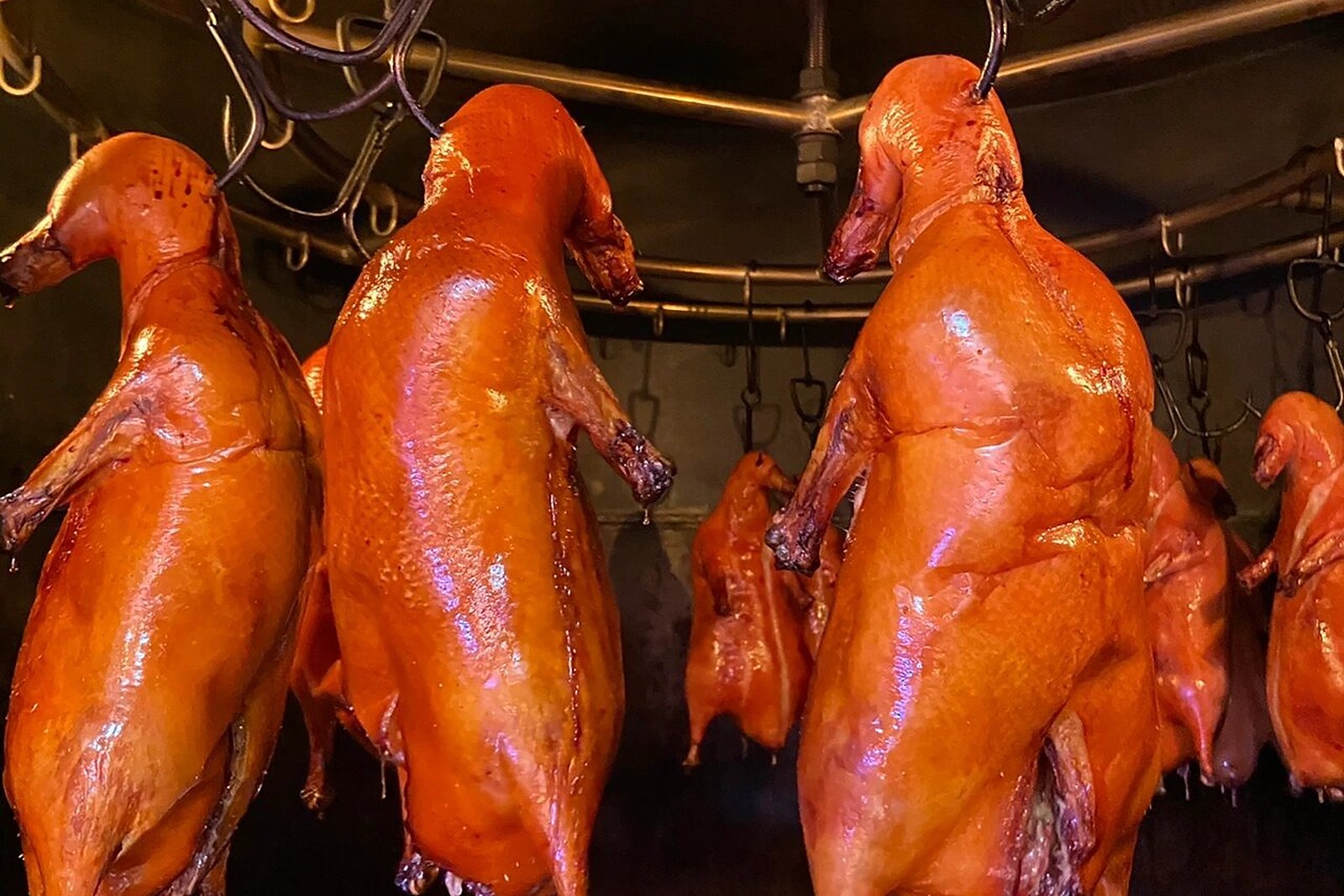
flowcloud would say that the 北京烤鸭 běijīng kǎoyā is the dish wearing the city’s name – a duck separated from its skin by air, lacquered in 麦芽糖 màiyátáng maltose, roasted in the 挂炉 guàlú hung-oven school over fruit wood or the 焖炉 mènlú closed-oven school over residual heat, carved at the table and rolled into 荷叶饼 héyè bǐng with 甜面酱 tiánmiànjiàng and 葱丝 cōngsī – and that the honest move is to book ahead, judge the skin plain before the sauce, and stay for the bone soup, because the ceremony earns its fame even in a city that eats it as routine. All checked October 2026.
Where to find it: 东城区 Dōngchéng Qū Dongcheng District – the old roast-duck houses around 前门 Qiánmén and 王府井 Wángfǔjǐng; a whole duck roughly 200-300 yuan, per person 150-300 yuan (worth confirming the details); book ahead, eat the first skin plain, roll the rest, and finish the 鸭架汤 yājià tāng. Peking duck is the fruit-wood ceremony of the Beijing table, ceremony before folklore. All checked October 2026.