
The Grasp of the Pot: Penba
一把抓出豌豆魂,辣蒜葱香满巷温 Yī bǎ zhuā chū wāndòu hún, là suàn cōng xiāng mǎn xiàng wēn – One grasp draws out the soul of the pea; chili, garlic and scallion warm the whole lane
朋必 péngbì penba is Shigatse’s own street snack, a soft set paste made from pea starch that vendors cut into thick, wavy slabs and scoop by hand into bowls – the name is said to come from the grasp, the way a serving is pulled straight from the pot. In the market lanes of 西藏自治区日喀则市 Xīzàng Zìzhìqū Rìkāzé Shì Shigatse it is the afternoon bite of choice: pale yellow, dense and smooth, dressed with chili oil, garlic water, vinegar and a scatter of scallions, eaten standing at the stall or carried off on a stick.
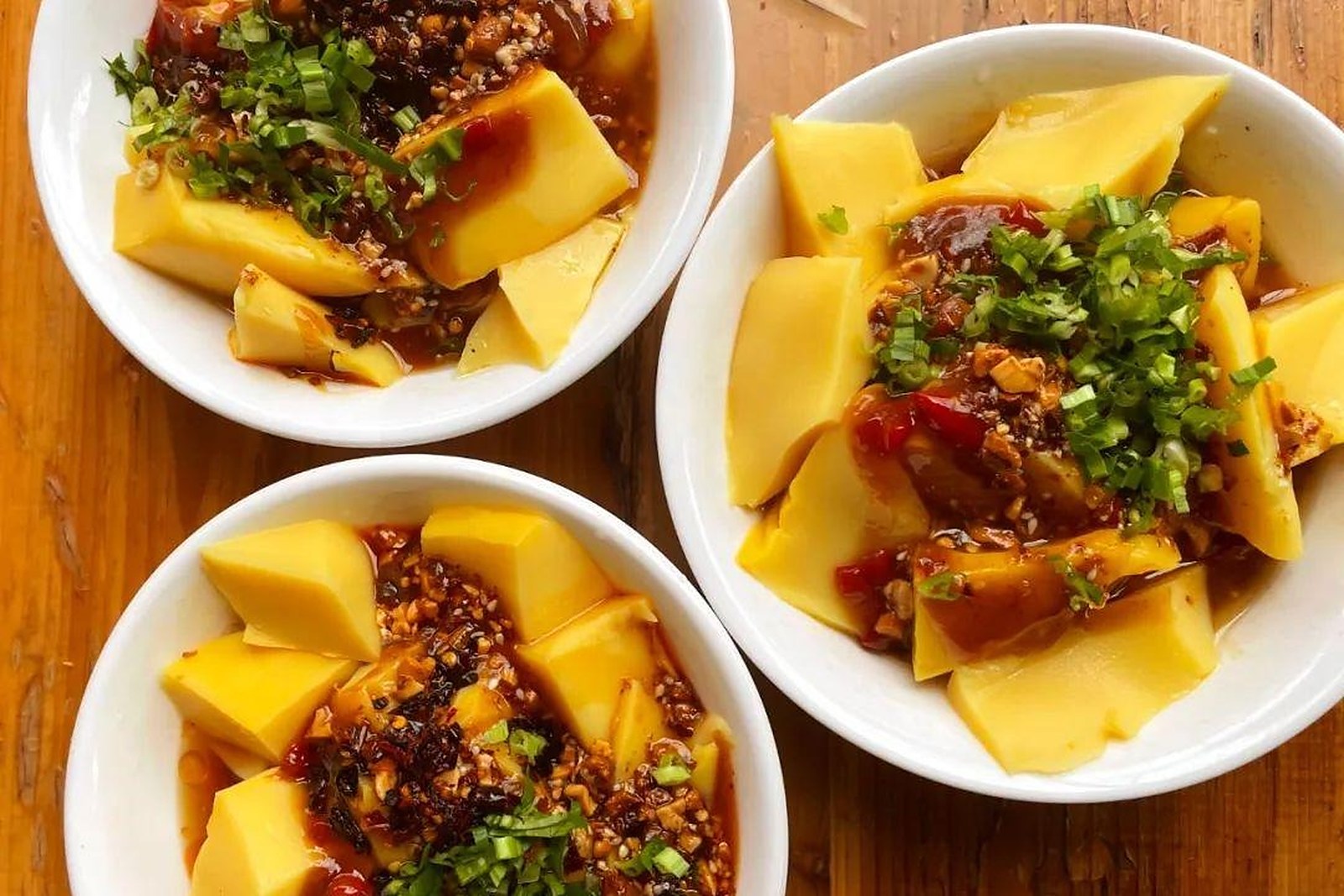
The making is short and exact. Yellow peas are soaked, ground and strained, and the starch settles overnight; the paste is then cooked down in a wide pot until it turns glassy and thick, poured into trays to set, and kept soft through the day in warm water. The vendor’s hand does the final shaping – a slap of the knife, a fold of the slab, a bowl pressed into service – and the dressing is always to order, heavy chili for the regulars, a gentler hand for the newcomers.
Eating it is a lesson in texture. The first bite gives under the chopsticks like set custard, cool inside though the slab came warm from the pot; the chili-garlic dressing runs into the cut faces; and the pea’s own sweetness carries underneath it all. It is heavier than it looks – one bowl is a proper snack and two are lunch – and locals pair it with a glass of sweet tea or a cup of highland barley wine on festival afternoons.
What penba really marks is Shigatse’s own taste, distinct from the Lhasa street canon. The snack belongs to this city the way its barley fields belong to the Nyang valley – a farmer’s dish turned street trade, sold by the same families for a generation, and ordered without a word by customers who have eaten it since school. For a traveller it is the cheapest, fastest, most local thing on the street: no menu, no English, just bowls, chili and a queue of regulars.
The same 西藏自治区日喀则市 Xīzàng Zìzhìqū Rìkāzé Shì Shigatse holds more flavors worth chasing: 藏面 zàng miàn the yak-broth noodle bowl, 藏包 zàng bāo the steamed yak-meat buns, 青稞酒 qīngkě jiǔ the fermented barley wine, or 奶渣 nǎizhā the dried cheese curds – four more doors into the same Shigatse table.
Words and Names
朋必 péngbì penba, the grasped pea-starch snack; 豌豆 wāndòu the yellow pea it is milled from; 辣椒油 làjiāoyóu the chili-oil dressing; 蒜水 suàn shuǐ the garlic water that seasons it; 凉粉 liángfěn the lowland cousin it is often compared to; 甜茶 tiánchá sweet tea, the stall’s companion drink.
What the Locals Know
The softness is the test – good penba trembles on the fork and gives clean under the chopsticks; if it squeaks or cracks, the pot has sat too long. The dressing is personal, and a stall that remembers your chili level remembers you. And the truly local move is the pairing: a bowl of penba, a glass of sweet tea, and the afternoon bench for as long as the sun stays warm. All checked November 2026.
flowcloud would say penba is Shigatse in a bowl: farmer’s peas, street trade, a vendor’s practiced grasp, and a heat that starts as chili and ends as hospitality.
Where to find it: The market lanes around the old town’s main street and the stalls near the bus-station corners keep penba through the afternoon; festival mornings add temporary stalls along the kora streets. All checked November 2026.