
Diaowo Roast Lamb: Charcoal Pits, Farmhouse Courtyards and the Whole-Lamb Feast of Pinggu District, Beijing
炭火全羊香满院,雕窝村夜酒一壶。Tànhuǒ quán yáng xiāng mǎn yuàn, Diāowō cūn yè jiǔ yī hú – Over the charcoal fire the whole lamb’s fragrance fills the courtyard; in the Diaowo village night one pot of wine goes round.
雕窝烤全羊 Diāowō kǎo quán yáng Diaowo roast lamb is the charcoal feast Beijing’s weekend drives book days ahead, and the address is a courtyard: the 农家院 nóngjiāyuàn farmhouse yards of 雕窝村 Diāowō cūn Diaowo village, a folk-tourism village in the hills of 平谷区 Pínggǔ Qū Pinggu District, Beijing, where the courtyards keep their charcoal pits banked and their lambs reserved against the weekend’s phone calls (worth confirming which courtyards claim the oldest pit). The craft most visitors under-rate is the fire: a whole lamb – 烤全羊 kǎo quán yáng, roasted whole – goes over the coals for hours, turned and basted until the fat renders, the skin crackles and the meat underneath stays pink, a slow clock no broiler shortens honestly. The naming is the tell: a feast billed by its village answers to the courtyards where the pit was the evening’s whole argument – a supper that took the village’s name because the village carved it every Saturday. The village’s folk-tourism listings and the roast’s standing with returning families (worth confirming which registry and which houses) matter less than the carve: the eater’s test is still the lamb on the board, not the signboard.
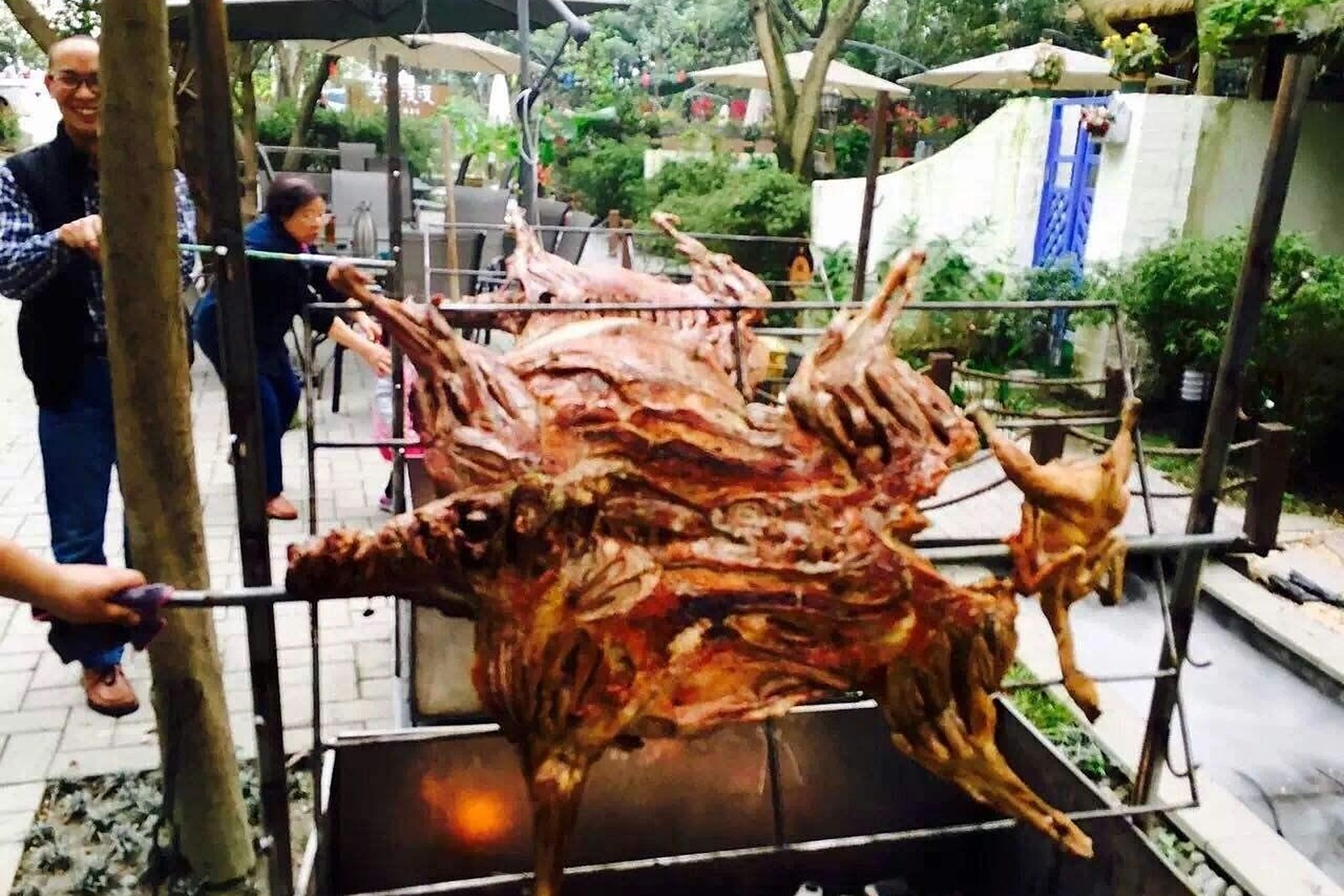
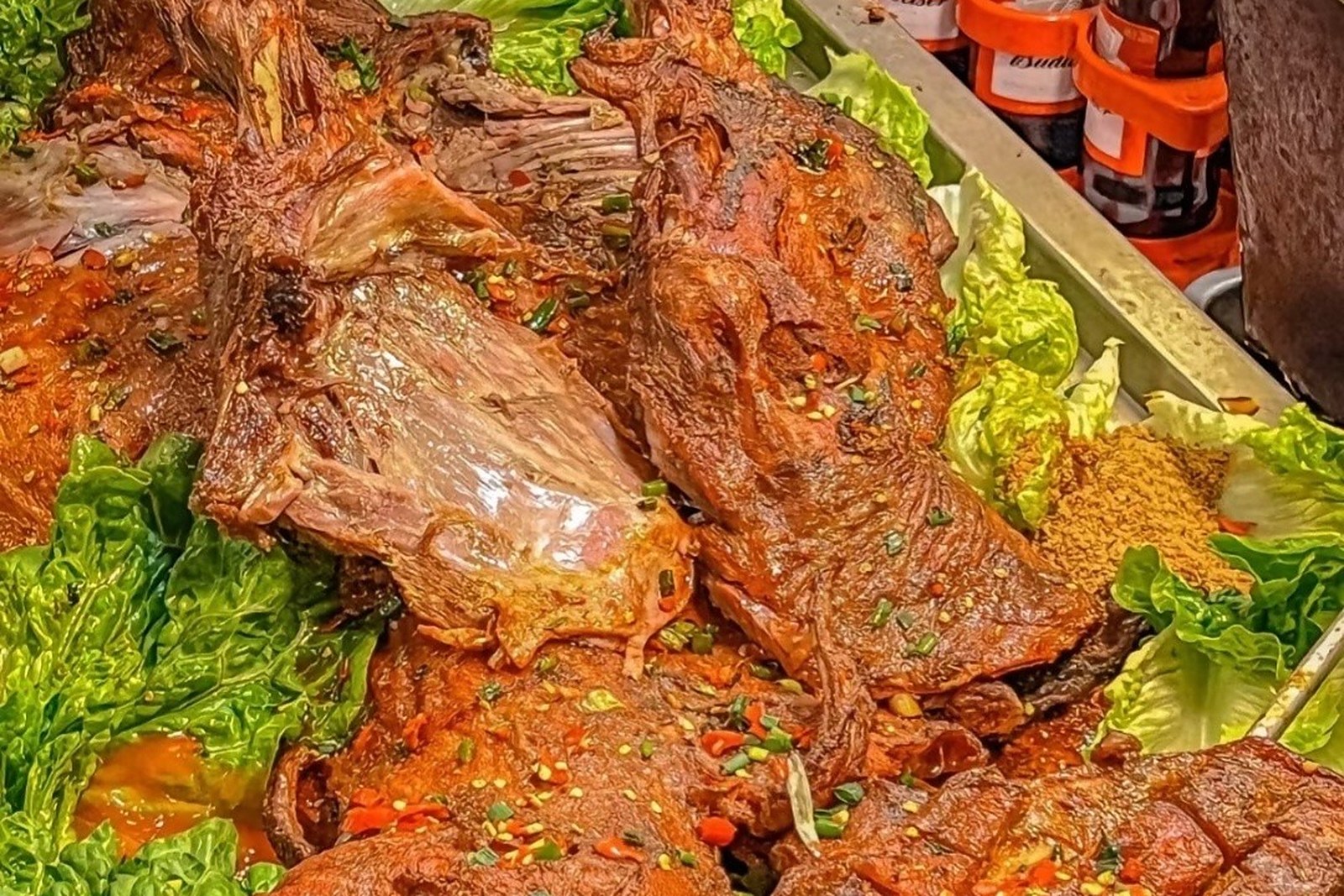
The eating is a carve-and-dip grammar written for meat graded by the way the skin cracks, and it leans 香 xiāng roasted perfume plus 嫩 nèn tenderness to match the courtyard table. The anchor is the whole lamb carried to the table and carved in front of it: skin shattering under the knife, fat rendered to a glassy amber, the leg and the shoulder falling to the board in clean sheets. Around the lamb the table runs its supporting cast: 孜然 zīrán cumin and chilli mixes for dipping, raw scallion lengths to cut the richness, 羊汤 yáng tāng lamb broth simmered on after the carving as the late-evening course, 烧饼 shāobǐng sesame cakes to catch the drippings, and the courtyard’s own garden dishes and pickles between rounds (worth confirming the details – each house sets its table differently). The pit’s own virtues decide the order: the lamb arrives when the fire says so, not when the table does – a house that promises a whole lamb in an hour is serving one that never met the coals.
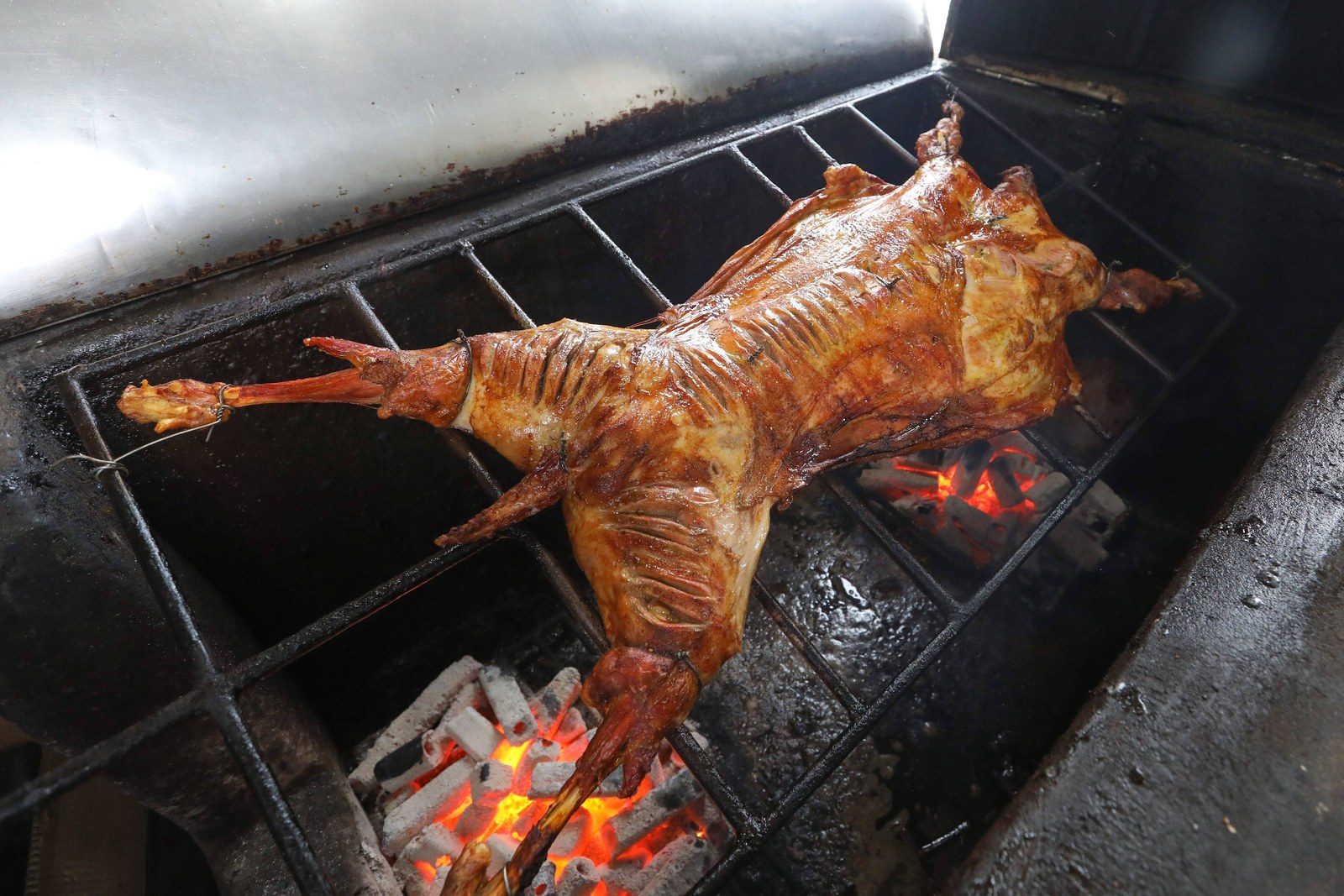
The honest grade is geography plus the roast clock. In 平谷区 Pínggǔ Qū Pinggu District, Beijing the honest eating is at the courtyards of 雕窝村 Diāowō cūn Diaowo village, where the lamb is booked ahead by weight and goes over the coals in the afternoon for the evening’s carving (worth confirming the details – which courtyards take phone bookings and their hours). The test costs nothing: watch the carve – a pit-roasted lamb parts cleanly at the joints, the skin lifts in sheets rather than tearing in rags, and the meat near the bone is done, not grey-warm – then taste one rib plain, because an honest fire has nowhere to hide an old animal. A bill runs per lamb rather than per person, on the weight and the season, so call it worth confirming the details rather than a fixed number, and book the weekend early: the courtyards with a name fill their pits by Thursday, and summer and festival weekends fill them first.
The wry truth is that 雕窝烤全羊 Diāowō kǎo quán yáng is over-rated as a “primal feast” photo and under-rated as fire management: the courtyard genre files it under “farmhouse experience”, while the actual thing – a whole animal booked by weight, hours over live coals, carved in sequence from the crackle down – is pit-roasting craft the selfie never explains. The self-deprecating footnote, and the district braid: a food writer will discourse on “nomadic soul”, photograph the carved carcass at heroic shutter, and then call the feast “commendably elemental” as if fire were a recipe – which is the honest grade: 雕窝烤全羊 Diāowō kǎo quán yáng is a working pit the writer will romanticise more than he finishes, and the family at the next table has stripped a foreleg, argued the cumin ratio and called for the lamb broth before the shutter closes. The same 平谷区 Pínggǔ Qū Pinggu District thread runs on: the summer baskets of 平谷大桃 Pínggǔ dàtáo Pinggu peaches fill the orchard sheds, the big-pot braises of 海子垮炖鱼 Hǎizi kuǎdùn yú Haizi braised fish roll in the lakeside village kitchens, the russet gift boxes of 佛见喜梨 Fójiànxǐ lí Fojianxi pears line the autumn counters, and the leaf-lined steamers of 玻璃台玻璃宴 Bōlitái bōliyàn the Bolitai glass-leaf feast whisper through the mountain tables – one district, four more tables.
Words and Names
- 雕窝烤全羊 Diāowō kǎo quán yáng / Diaowo roast lamb · the whole-animal feast the village named for - 烤全羊 kǎo quán yáng / whole roasted lamb · the hours-over-coals craft the feast is graded by - 雕窝村 Diāowō cūn / Diaowo village · the folk-tourism village holding the pits - 农家院 nóngjiāyuàn / farmhouse courtyard · the yard that seats the feast - 孜然 zīrán / cumin · the dipping mix the carve is dressed by - 羊汤 yáng tāng / lamb broth · the late-evening course the carving leaves behind - 平谷区 Pínggǔ Qū / Pinggu District · the Beijing district holding the courtyard tables
What the Locals Know
- Book the lamb by weight, days ahead: a whole animal goes over the coals in the afternoon – a courtyard that takes same-hour orders is reheating someone else’s.
- Watch the carve: the skin should lift in sheets and the joints part cleanly – torn rags and grey-warm meat near the bone tell the fire’s story honestly.
- Taste a rib plain first: before the cumin and chilli go on, eat one rib bare – an honest coals-run needs no cover.
- Save room for the broth: the 羊汤 yáng tāng simmered after the carving is the courtyard’s late-evening course – locals plan the whole meal around it.
flowcloud would say that the 雕窝烤全羊 Diāowō kǎo quán yáng is the charcoal pits, farmhouse courtyards and the whole-lamb feast of Pinggu District, Beijing – a 烤全羊 kǎo quán yáng discipline where 雕窝村 Diāowō cūn rides the slow coals into a 羊汤 yáng tāng finish – and that the honest move is to book by weight, watch the carve, and taste a rib plain, because the pit built the crackle and the coals built the honesty. All checked October 2026.
Where to find it: Pinggu District Pínggǔ Qū, Beijing – the farmhouse courtyards of 雕窝村 Diāowō cūn Diaowo village in the district’s hill country, where 烤全羊 kǎo quán yáng goes over the coals in the afternoon and comes to the table carved in the evening (worth confirming the details – which courtyards take bookings and their hours); a bill runs per lamb on the weight and the season, so call it worth confirming the details rather than a fixed number. Diaowo roast lamb is the charcoal pits, farmhouse courtyards and the whole-lamb feast of Pinggu District, Beijing, coals before carve.