
Haizi Braised Fish: Big-Pot Braises, Lakeside Villages and the Fish Supper of Pinggu District, Beijing
湖畔铁锅鱼汤滚,海子村头一桌鲜。Húpàn tiěguō yútāng gǔn, Hǎizicūn tóu yī zhuō xiān – By the lakeshore the iron pot’s fish liquor rolls; at the Haizi village edge one table runs fresh.
海子垮炖鱼 Hǎizi kuǎdùn yú Haizi braised fish is the big-pot supper the lakeside villages have simmered for generations, and the address is a shore: the kitchens of 海子村 Hǎizicūn Haizi village at the edge of 金海湖 Jīnhǎi Hú Jinhai Lake in 平谷区 Pínggǔ Qū Pinggu District, Beijing, where the farmhouse tables set their 大铁锅 dà tiěguō big iron pots over the fire and let the lake fish bury itself in its own liquor (worth confirming which village houses claim the oldest pot). The craft most visitors under-rate is the braise itself: 垮炖 kuǎdùn, the “rough braise” that gives the dish its name – fish seared hard, then left to simmer unturned in soy, scallion and ginger until the flesh drinks the liquor and the skin holds by patience rather than by tongs. The naming is the tell: a dish that carries a village’s name answers to the shore where the pots were the fastest honest meal a lake day could end on – a supper that took the village’s name because the village ate it every weekend. The honest eater’s test is still the lifted flake, not the signboard.
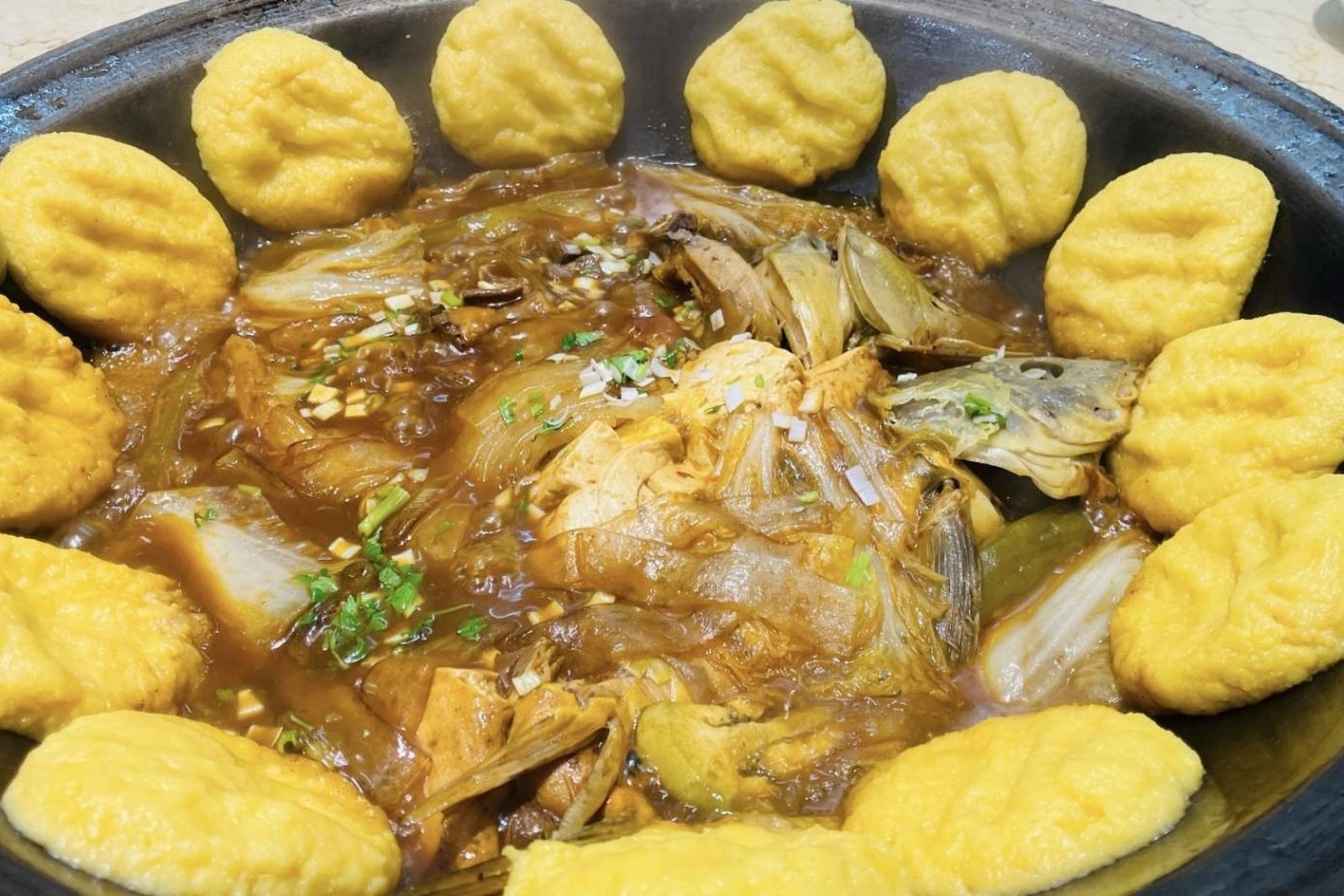
The eating is a pot-and-cake grammar written for fish graded by the way the liquor reduces, and it leans 咸鲜 xiánxiān savoury-fresh plus 嫩 nèn tender to match the lakeside table. The anchor is the fish at the centre of the pot: 胖头鱼 pàngtóuyú bighead carp, or whatever the lake yields that morning, seared to a bronzed skin and buried in a dark braising liquor that reduces as the meal runs, the muscle underneath lifting off the bone in whole slabs. Around the fish the pot runs its supporting cast: 贴饼子 tiēbǐngzi corn cakes pressed against the pot wall – steamed above the liquor, crusted below it – the side that argues with the fish for the broth and wins, plus 豆腐 dòufu tofu cubes to soak the sauce, scallion lengths and dried chilli to sharpen it, and steamed rice for the last of the liquor (worth confirming the details – every house seasons its pot differently). The pot’s own virtues decide the order: the fish arrives when the liquor has had its simmer, because the whole table has been building toward the plate that justifies the drive, and a kitchen that rushes the braise has wasted the lake.
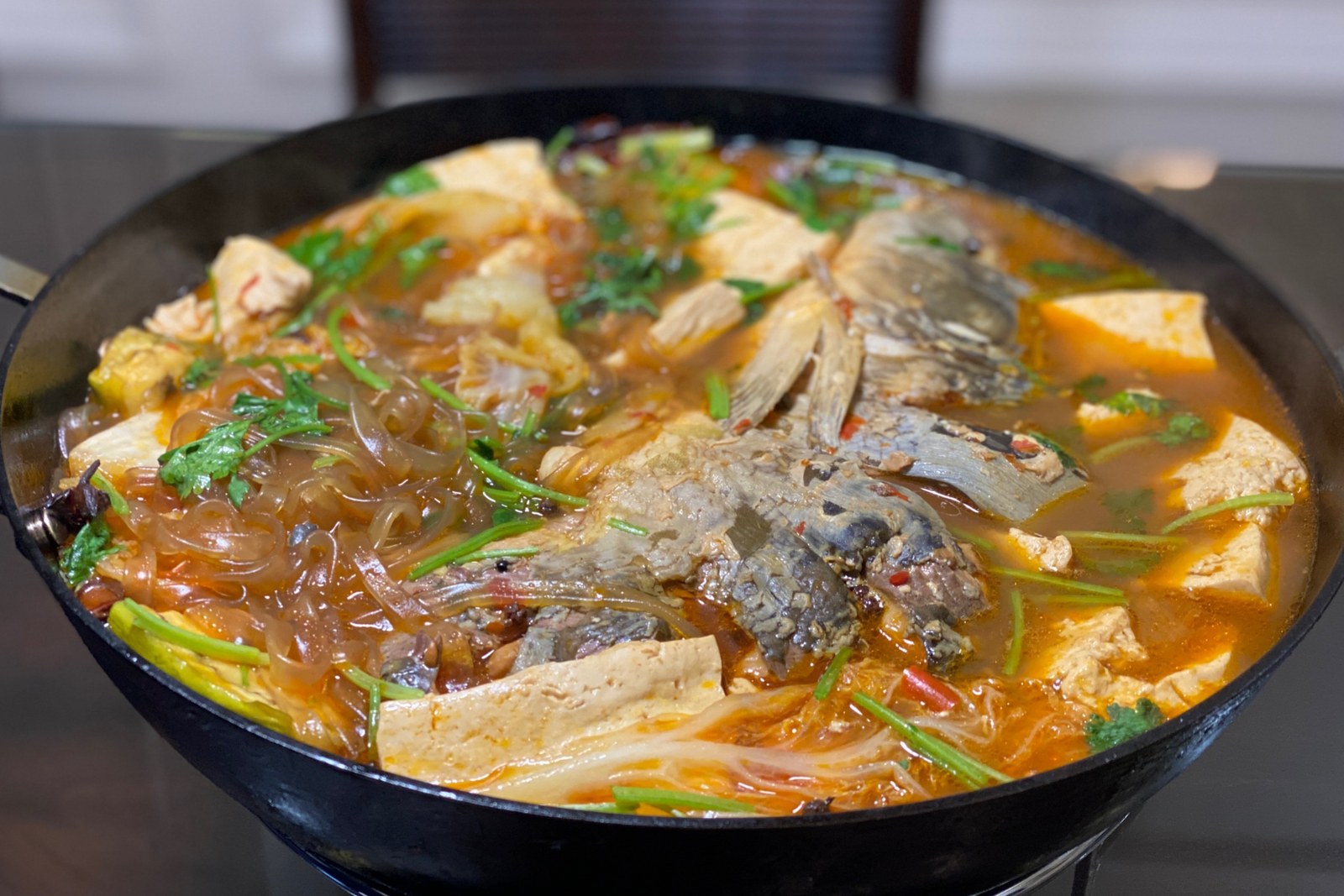
The honest grade is geography plus the simmer clock. In 平谷区 Pínggǔ Qū Pinggu District, Beijing the honest eating is at the village houses around 金海湖 Jīnhǎi Hú Jinhai Lake, where the fish goes into the pot when you order and comes out after a full braise – the reducing hour is the whole argument, because rushed 垮炖鱼 kuǎdùn yú tastes of poured sauce, not of pot (worth confirming which houses still run the slow cycle). The test costs nothing: press the flake with the chopstick and lift – a properly braised slab holds its shape and parts in clean lines, the liquor thick enough to cling rather than pool watery – then taste one piece plain, because an honest pot has nowhere to hide a tired fish. A per-person bill runs on the fish, its size and the house’s standing, so call it worth confirming the details rather than a fixed number, and come with a reservation: the lakeside courtyards fill fast from spring into autumn, and the best pots are spoken for by noon.
The wry truth is that 海子垮炖鱼 Hǎizi kuǎdùn yú is over-rated as a lakeview lunch backdrop and under-rated as a patience discipline: the menu files it under “local fish dish”, while the actual thing – a lake fish seared and buried whole, corn cakes crusting on the pot wall, a liquor that reduces because nobody lifts the lid – is slow fire management the signboard never explains. The self-deprecating footnote, and the district braid: a food writer will discourse on “waterside soul”, photograph the steaming pot at heroic shutter, and then call the dinner “commendably hearty” as if soy sauce were a lake – which is the honest grade: 海子垮炖鱼 Hǎizi kuǎdùn yú is a working pot the writer will romanticise more than he finishes, and the family at the next table has picked the skeleton clean, claimed the last corn cake and asked the house which morning’s fish ran better before the shutter closes. The same 平谷区 Pínggǔ Qū Pinggu District thread runs on: the summer baskets of 平谷大桃 Pínggǔ dàtáo Pinggu peaches fill the orchard sheds, the russet gift boxes of 佛见喜梨 Fójiànxǐ lí Fojianxi pears line the autumn counters, the charcoal feasts of 雕窝烤全羊 Diāowō kǎo quán yáng Diaowo roast lamb fill the farmhouse courtyards, and the leaf-lined steamers of 玻璃台玻璃宴 Bōlitái bōliyàn the Bolitai glass-leaf feast whisper through the mountain tables – one district, four more tables.
Words and Names
- 海子垮炖鱼 Hǎizi kuǎdùn yú / Haizi braised fish · the big-pot supper the village named for - 垮炖 kuǎdùn / rough braise · the unturned simmer that gives the dish its name - 大铁锅 dà tiěguō / big iron pot · the vessel that carries the braise forward - 金海湖 Jīnhǎi Hú / Jinhai Lake · the water that fills the pots - 胖头鱼 pàngtóuyú / bighead carp · the lake fish at the centre of the pot - 贴饼子 tiēbǐngzi / pot-wall corn cakes · the crust that argues for the broth - 平谷区 Pínggǔ Qū / Pinggu District · the Beijing district holding the lakeside kitchens
What the Locals Know
- Order the fish whole, not in pieces: ask by size for 整条 zhěng tiáo – a house that only offers cut portions is portioning away the braise.
- Claim a pot-wall cake: the 贴饼子 tiēbǐngzi that rode the steam above and the crust below carries the best of the liquor – ask which cake is yours.
- Run the flake test: press the slab and lift – a finished braise parts in clean lines; a rushed one slides and the liquor runs watery.
- Reserve before the weekend: the lakeside pots are booked by size and queued by fire – mid-morning orders eat first.
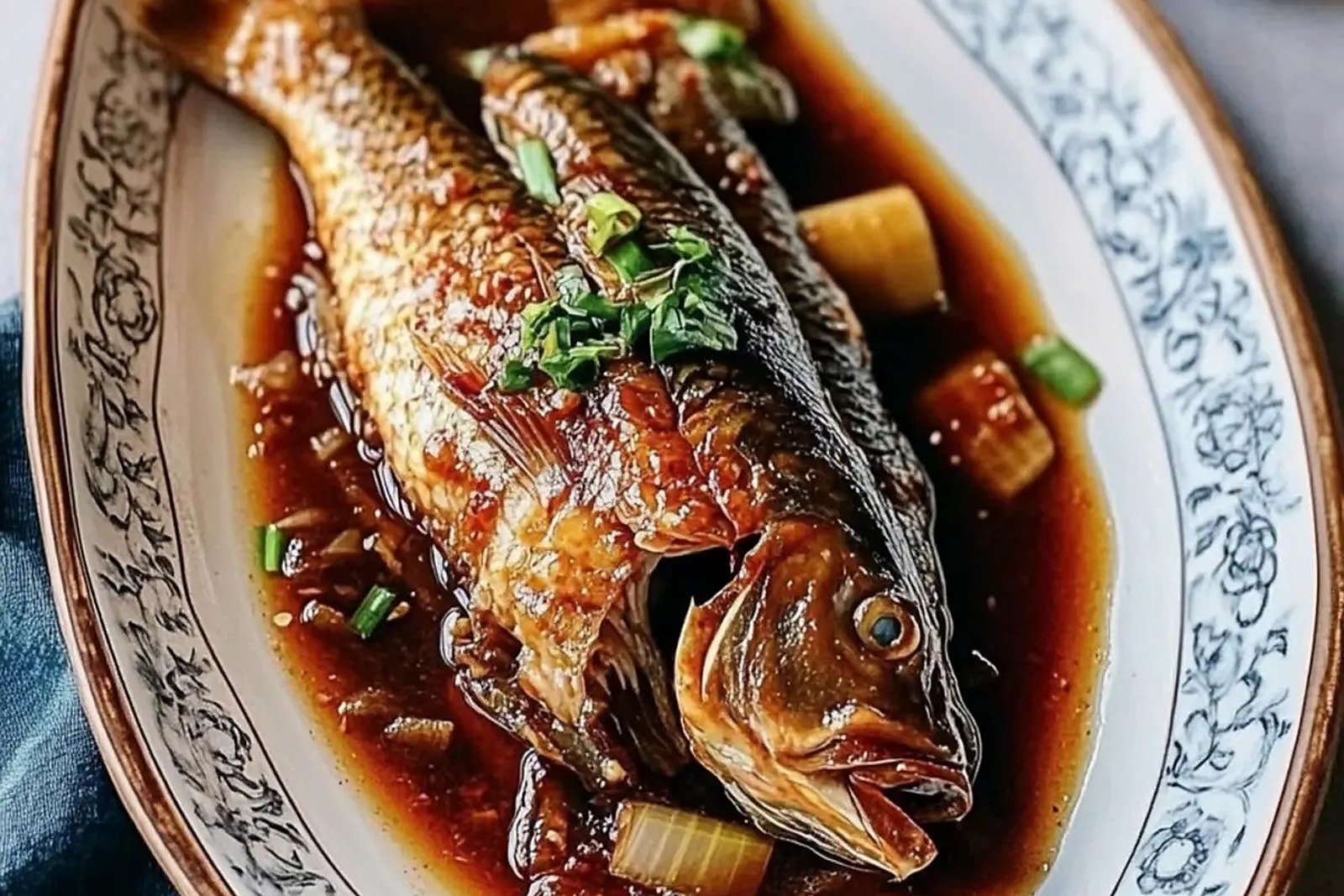
flowcloud would say that the 海子垮炖鱼 Hǎizi kuǎdùn yú is the big-pot braises, lakeside villages and the fish supper of Pinggu District, Beijing – a 垮炖 kuǎdùn discipline where 胖头鱼 pàngtóuyú rides the slow reduce into a 贴饼子 tiēbǐngzi finish – and that the honest move is to order the fish whole, run the flake test, and claim a pot-wall cake, because the pot built the depth and the lake built the liquor. All checked October 2026.
Where to find it: Pinggu District Pínggǔ Qū, Beijing – the village kitchens of 海子村 Hǎizicūn Haizi village around 金海湖 Jīnhǎi Hú Jinhai Lake, where 大铁锅 dà tiěguō braised fish runs from lunch into the evening (worth confirming the details – which village houses still run the slow braise and their hours); a per-person bill runs on the fish and the house’s standing, so call it worth confirming the details rather than a fixed number. Haizi braised fish is the big-pot braises, lakeside villages and the fish supper of Pinggu District, Beijing, braise before bite.