
Egg Matured in Wine Lees: Pinghu Zaodan
糟缸百日玉生香,一箸糟蛋下三碗 Zāo gāng bǎirì yù shēng xiāng, yī zhù zāodàn xià sān wǎn – A hundred days in the lees jar turns jade fragrant; one bite of lees egg brings down three bowls of rice
糟蛋 zāodàn is 平湖市 Pínhú Shì Pinghu’s proudest gift dish and one of the strangest foods in the delta: duck eggs packed upright in fermenting rice-wine lees and salt, then left for months until the shell softens to parchment and the white sets to a translucent jelly while the yolk melts into amber. The process is controlled accident – the lees’ alcohol and acids slowly demineralize the shell without spoiling the egg – and the result eats cold, sliced, with nothing between you and the flavor.
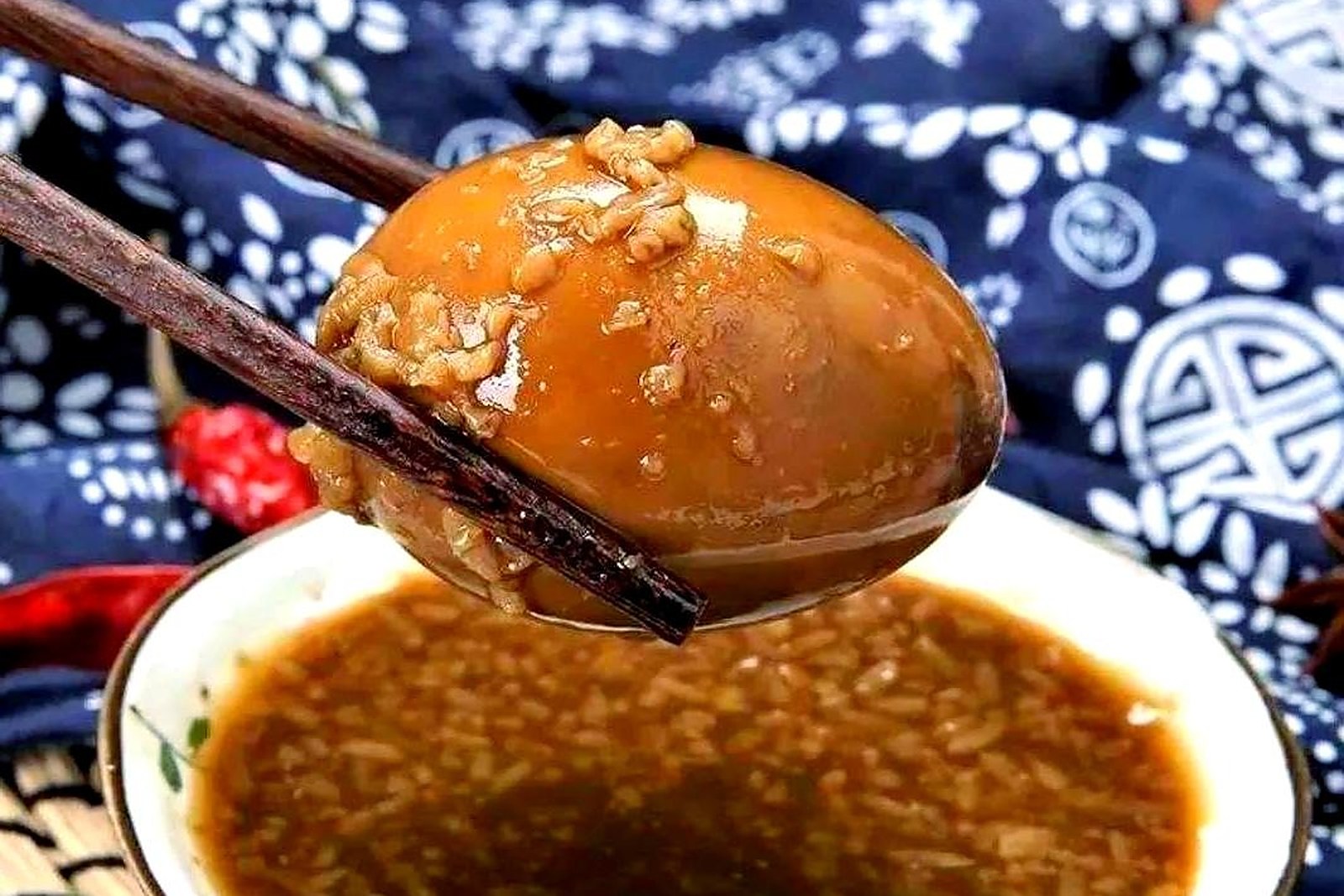
The look confuses first-timers: the “shell” peels like wet paper, the white beneath is jade-jelly soft, and the yolk runs amber-gold with a wine-sweet edge. Sliced over congee or eaten straight, the egg delivers salt, umami and a whisper of wine in one slice – the reason Qing-era Pinghu sent jars to Beijing as tribute and modern diners still pack them as the county’s official gift.
The craft is patience: jars are layered lees, egg, lees, sealed and turned on a schedule through the curing season; a good jar takes a hundred days minimum and the masters let theirs run longer. The best jars come from shops that have run the same crock for decades – the lees culture itself an inheritance – and the county’s food festival judges them like vintage wine, shell texture and yolk color on the scorecard.
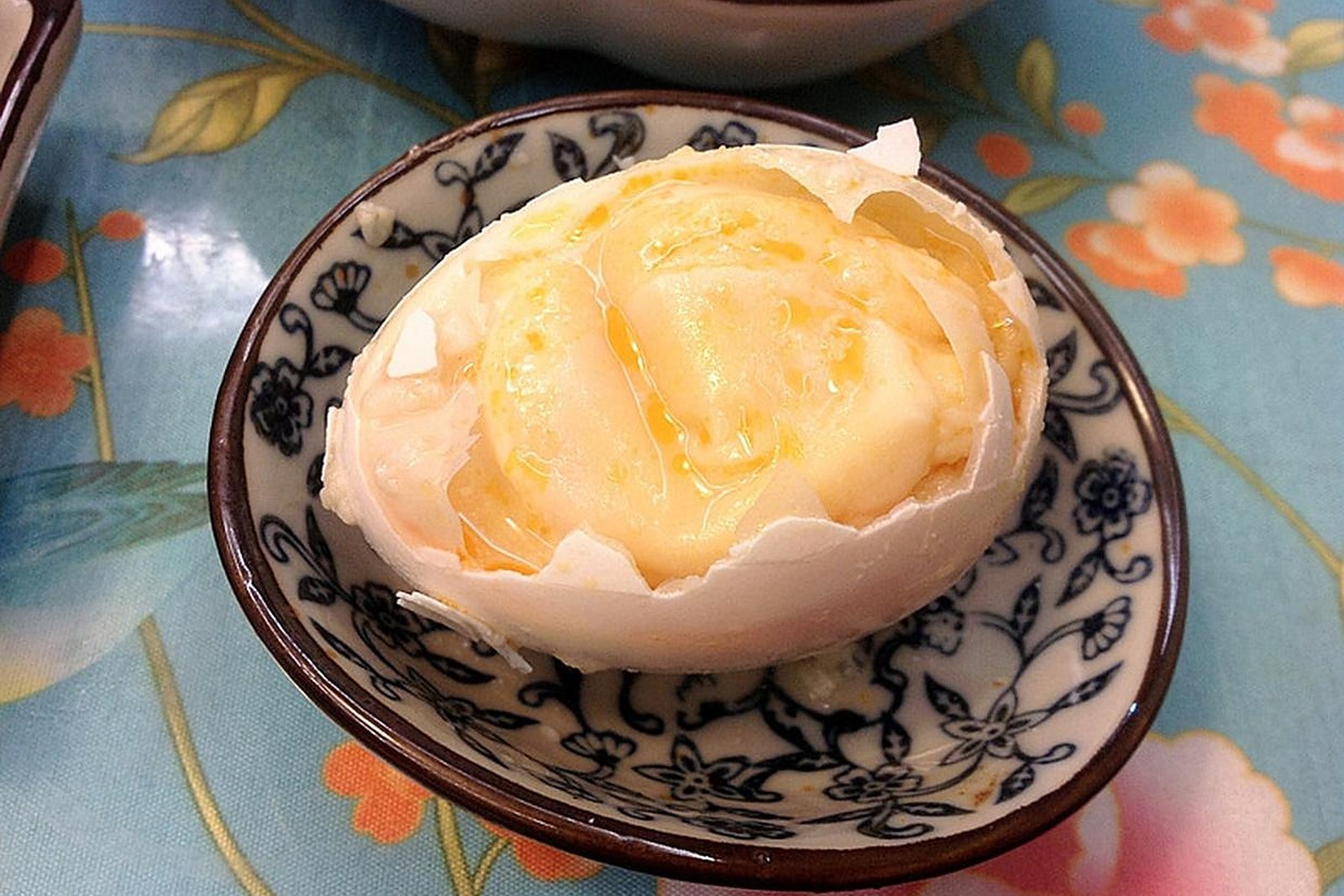
Pinghu eats zaodan cold, in small slices, as the opener of a proper meal or the centerpiece of a gift basket beside its sister products – and visitors who try it once understand the loyalty: no cooking required, no pairing required, just a spoon. The jars travel, but the county’s own counters still ladle the freshest cuts with rice porridge at breakfast, the way the recipe intended when the lees were local wine.
The same city holds more flavors worth chasing: 嘉兴粽子 Jiāxīng zòngzi the pillow dumplings, 南湖菱 Nánhú líng the lake caltrop, 八珍糕 bāzhēn gāo the eight-treasure cake, or 海宁缸肉 Hǎiníng gāngròu the straw-tied pork – four more doors into the same 嘉兴市 Jiāxīng Shì Jiaxing City table.
Words and Names
糟蛋 zāodàn the lees-cured egg, Pinghu’s tribute dish; 糟 zāo fermenting wine lees, the curing bed; 平湖 Pínhú Pinghu, the county city; 酒酿 jiǔniàng sweet fermenting rice, the lees’ source; 蛋白凝冻 dànbái níng the jellied white, the cure’s signature.
What the Locals Know
The sliced plate should glisten – a dry slice means an old jar or a rushed cure. First-timers should try it plain before adding anything: salt, wine and umami are already balanced inside. And the congee pairing is not optional etiquette but engineering – the mild rice carries the egg’s salt-wine bloom exactly where it belongs.
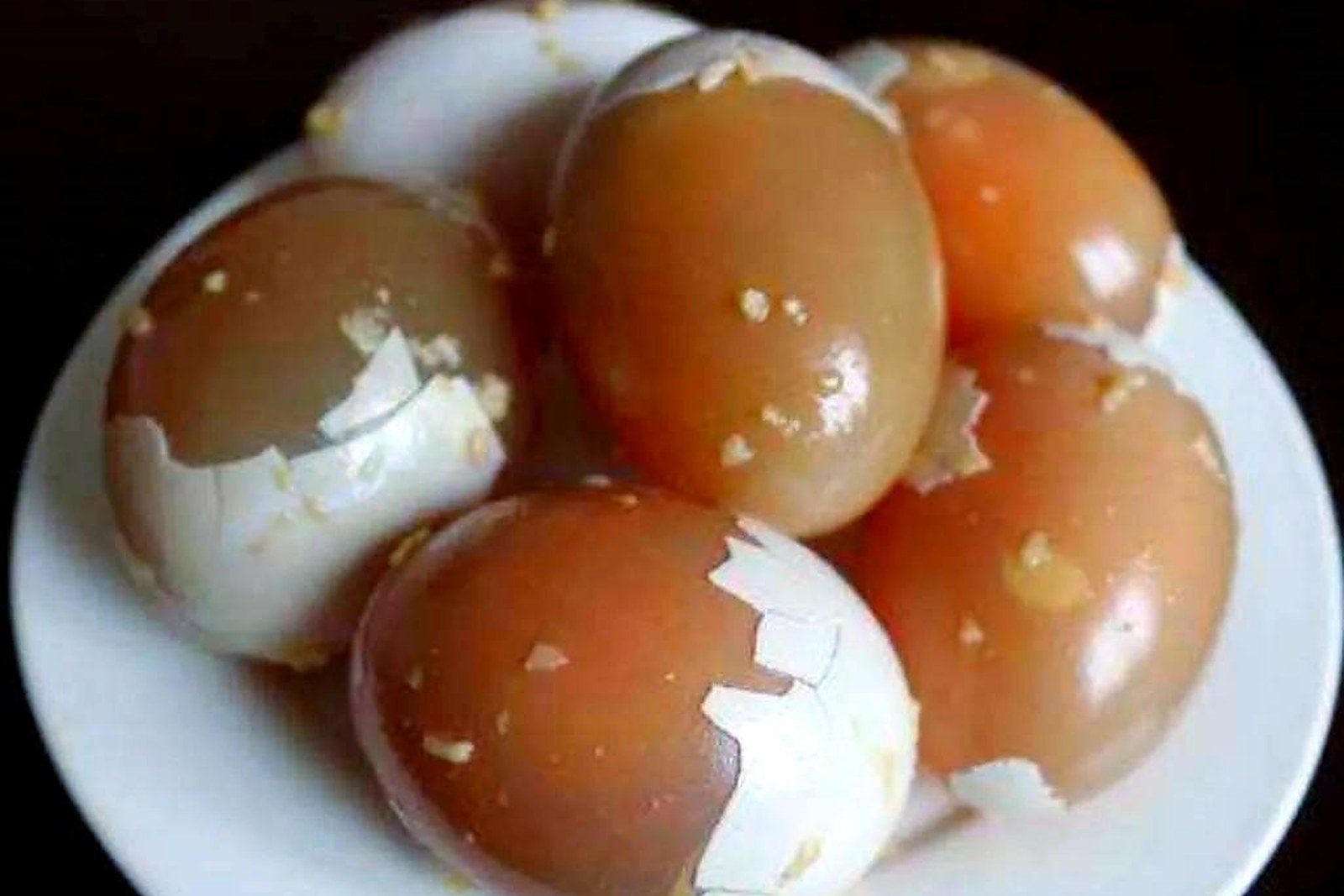
flowcloud would say zaodan is patience served on a small plate: a duck egg that spent a season in wine lees, a shell turned to parchment by chemistry nobody rushed, and a yolk the color of late autumn – Pinghu’s whole personality in one slice of amber. All checked November 2026.
Where to find it: The specialty counters of 平湖市 Pínhú Shì Pinghu sell the jars whole and sliced plates at breakfast – sliced over congee is the local way, jar quality shows in the yolk’s amber depth, and gift boxes travel well for weeks. All checked November 2026.