
生茶叶上辣椒面,吃茶何必用壶煮。Shēngchá yè shàng làjiāo miàn, chī chá hébì yòng hú zhǔ – Raw tea leaves under chili powder – why must eating tea need a pot to boil?
凉拌茶叶 Liángbàn Cháyè cold-dressed tea leaves is the dish that turns Yunnan’s most famous leaf from a drink into a vegetable: fresh young tea leaves, 揉 róu rubbed soft, dressed raw with chili, garlic and salt, and eaten as a salad. It belongs to the tea-growing peoples of the 普洱 Pǔ’ěr Puer mountains – the 布朗族 Bùlǎngzú Brown people of 澜沧 Láncāng Lancang’s 景迈山 Jǐngmài Shān Jingmai mountain, the UNESCO-listed old-tea landscape whose ancestor 叭岩冷 Bā Yánlěng is remembered as the first to plant tea, and the 傣族 Dàizú Dai villages around them – and the honest shape of the plate is startlingly simple: a bowl of dark green leaves, glossy with dressing, scattered with 小米辣 xiǎomǐlà bird’s-eye chili rings and 蒜末 suànmò garlic. The leaves are picked 一芽二三叶 yī yá èr sān yè one bud with two or three leaves, because the young leaf is 苦 kǔ bitter and 涩 sè astringent but 回甘 huígān sweet-returning, and the dressing – chili, 香菜 yánsuī cilantro, 芫荽根 yánsuī gēn cilantro root, salt, sometimes a squeeze of 柠檬 níngméng lemon or a spoon of 酸笋 suānsǔn sour bamboo – is built to argue with that astringency. It appears on the tables of the mountain villages and the 农家乐 nóngjiālè farmhouse eateries below them, a small plate for roughly 15-30 yuan (worth confirming the details), eaten cold as a 开胃 kāiwèi appetite-opener before the meal’s hot dishes.
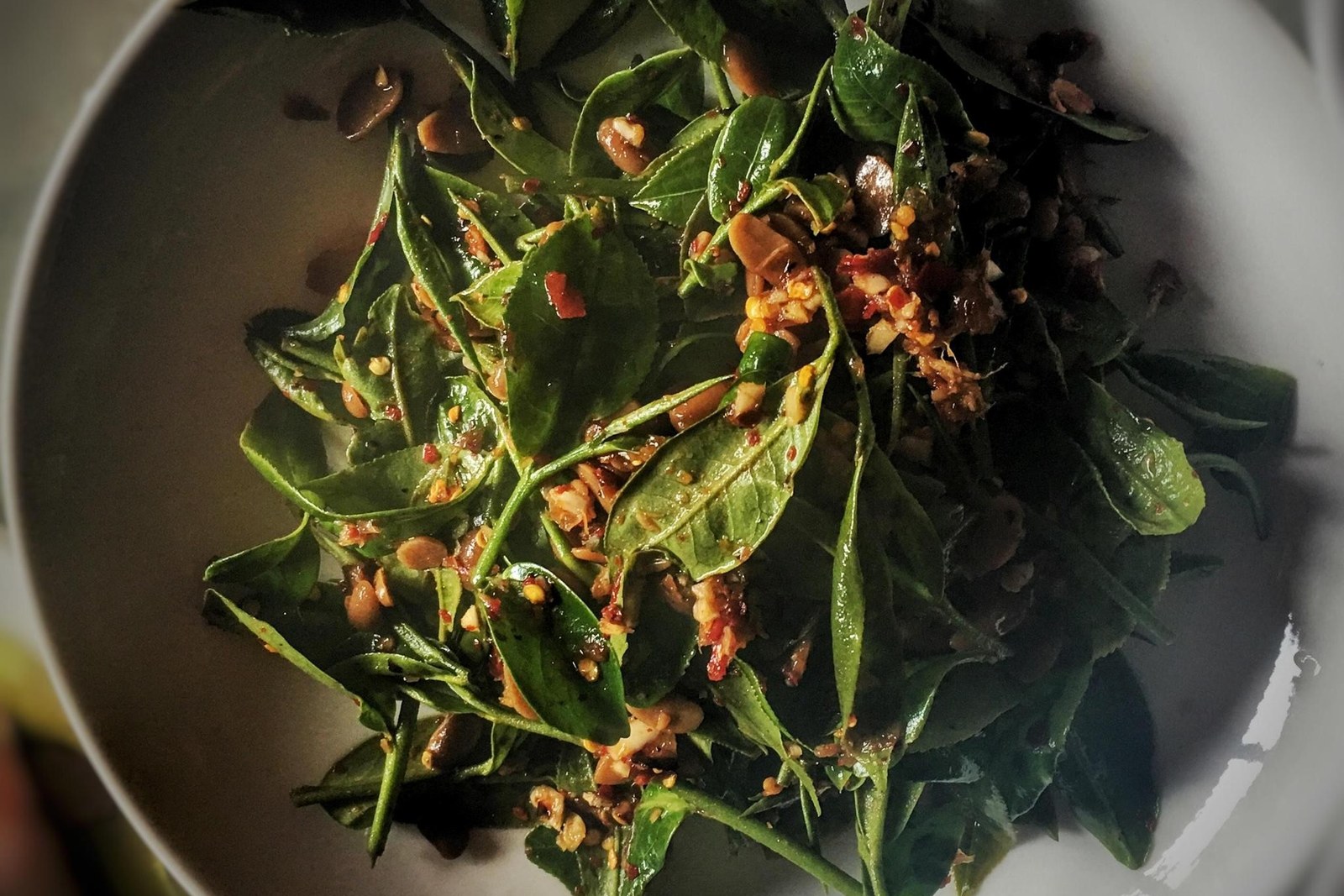
The mechanism is the leaf’s own chemistry. Tea leaves carry 茶多酚 chá duōfēn tea polyphenols and 咖啡碱 kāfēijiǎn caffeine, which is why the raw leaf puckers the mouth with bitterness and astringency – and the mountain kitchen’s trick is not to cook that away but to 揉 róu it out: the fresh leaves are rubbed between the palms until they bruise dark and go soft, which breaks the cell walls and starts the same 氧化 yǎnghuà oxidation a tea maker would manage on a withering tray. Washed, drained and tossed with the sharp things – chili, garlic, salt, sometimes 酸笋 suānsǔn or crushed 花生 huāshēng peanut – the leaf reads as a salad green with a sting: the first bite is bitter, the second is 麻 má numbing from the chili, and the finish is cool and sweet, the 清凉 qīngliáng note the mountain people describe as 清火 qīnghuǒ clearing the body’s heat. The same logic runs through the Brown tea larder: the 酸茶 suānchā sour tea sealed in bamboo tubes and buried underground for months, and the raw leaf simply dipped in salt and chili with cold rice in the field – different preparations of one idea, that tea is food.
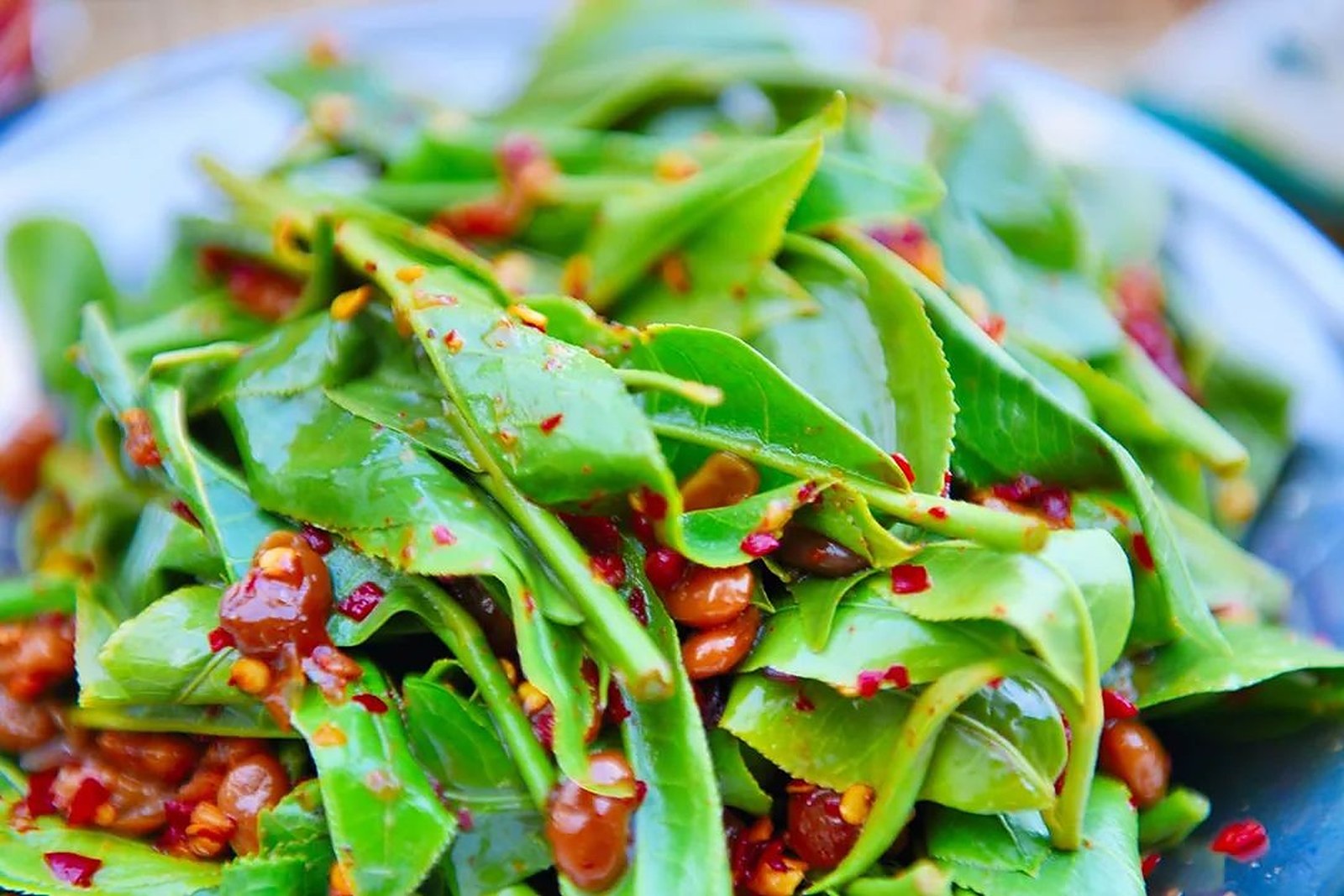
Locals eat it as the first plate of a mountain meal, cold, in the villages of 景迈山 Jǐngmài Shān or at a farmhouse table in 澜沧 Láncāng and 孟连 Mènglián, and the season is the spring and summer picking, when the tender shoots are at their most 鲜 xiān fresh. The move is to order it small and eat it before the hot dishes, because the dressing is meant to wake the appetite, and to take a cup of 茶 chá between bites – the old mountain pairing is the salad with the same leaf’s 烤茶 kǎochá roasted tea, one raw and one fired. The honest tests are the leaf and the dressing: the leaves should be young and tender enough to chew, not the leathery old leaves that turn the plate into 粗纤维 cūxiānwéi fibre, and the dressing should taste fresh and sharp rather than heavy with 味精 wèijīng MSG. Newcomers are told the astringency is the point – a tea-leaf salad with no 涩 sè has been made with old or cooked leaves – and that in the old-tea villages the dish is a marker of identity: the people who grow the leaf eat it too, and the plate is how the tea mountain puts its own leaf back on the table (worth confirming current houses and prices). All checked October 2026.
Words and Names
凉拌茶叶 Liángbàn Cháyè cold-dressed tea leaves · 布朗族 Bùlǎngzú the Brown (Blang) people · 景迈山 Jǐngmài Shān Jingmai mountain · 澜沧 Láncāng Lancang · 叭岩冷 Bā Yánlěng the Brown tea ancestor · 一芽二三叶 Yī Yá Èr Sān Yè one bud, two or three leaves · 回甘 Huígān sweet aftertaste · 茶多酚 Chá Duōfēn tea polyphenols · 酸茶 Suānchā sour tea · 烤茶 Kǎochá roasted tea · 揉 Róu to rub soft · 芫荽根 Yánsuī Gēn cilantro root · 小米辣 Xiǎomǐlà bird’s-eye chili · 农家乐 Nóngjiālè farmhouse eatery · 氧化 Yǎnghuà oxidation
What the Locals Know
- The leaves must be young – 一芽二三叶 yī yá èr sān yè tender picks – because the leathery old leaves turn the plate into fibre; the honest leaf is bitter and astringent on the first bite and 回甘 huígān sweet-returning after, and a salad with no 涩 sè has been made with the wrong leaf.
- 揉 róu the fresh leaves soft before dressing: rubbing bruises them dark and starts the 氧化 yǎnghuà the tea maker would manage on a withering tray, which is what takes the raw edge off and lets the chili and garlic argue with the astringency.
- Order it small, cold, before the hot dishes – the plate is a 开胃 kāiwèi opener, and the mountain pairing is the salad with the same leaf’s 烤茶 kǎochá roasted tea, one raw and one fired (worth confirming current houses and prices).
- In the old-tea villages of 景迈山 Jǐngmài Shān the dish is a marker of identity: the Brown people who grow the leaf eat it too, and the plate is how the tea mountain puts its own leaf back on the table – as a vegetable, not a drink.
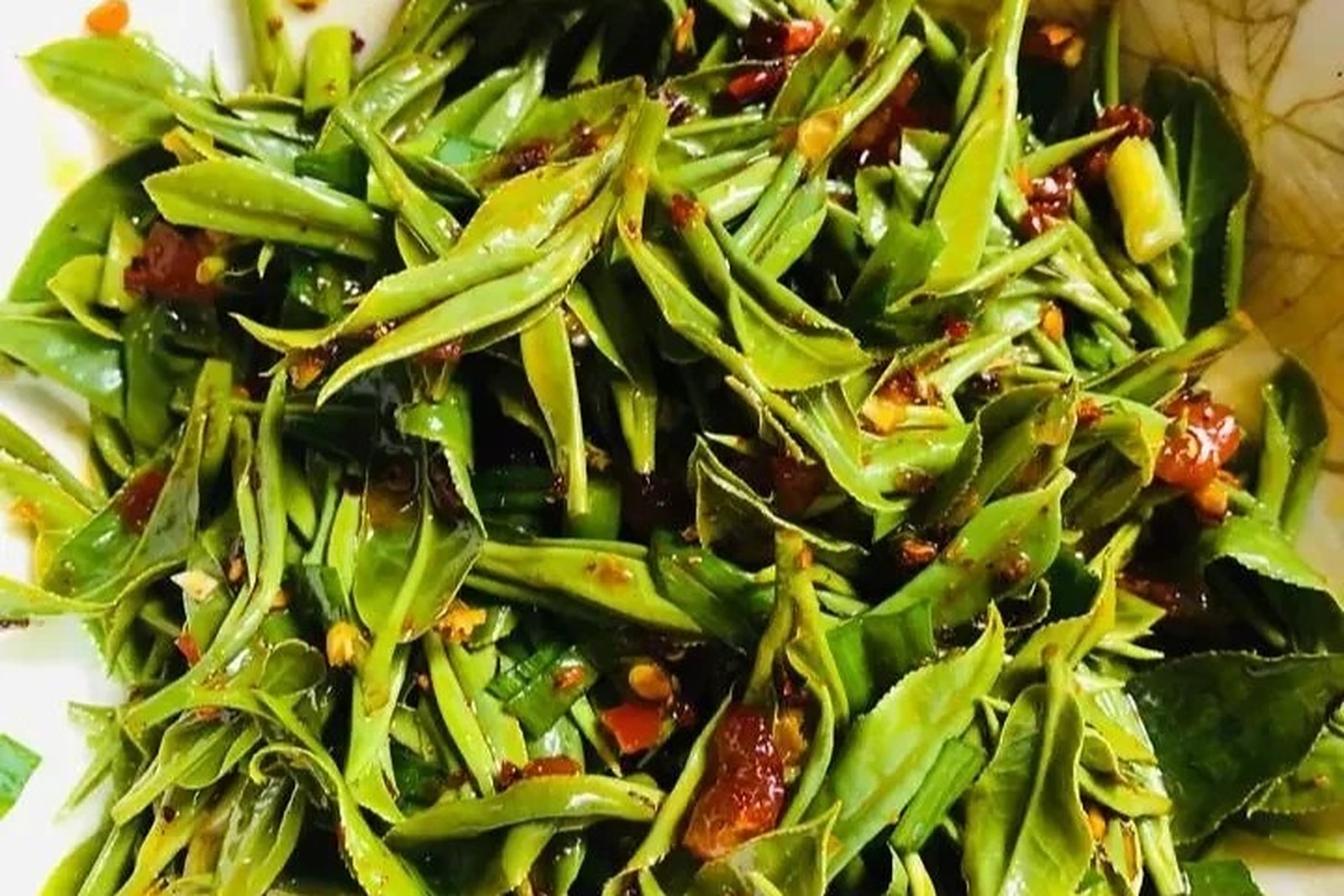
flowcloud would say that cold-dressed tea leaves are tea eaten as a vegetable – young leaves 揉 róu soft and dressed raw with 小米辣 xiǎomǐlà, garlic and salt, bitter and 涩 sè astringent on the first bite and 回甘 huígān after – and that the honest move is a small cold plate at a 景迈山 Jǐngmài Shān farmhouse table with 烤茶 kǎochá beside it, because the people who grow the leaf eat it too. All checked October 2026.
Where to find it: the villages of 景迈山 Jǐngmài Shān and farmhouse tables in 澜沧 Láncāng and 孟连 Mènglián, in the spring and summer picking season (worth confirming the details); order it small as the first plate and pair it with the same leaf’s 烤茶 kǎochá roasted tea, one raw and one fired. All checked October 2026.