
鸡胸捶作云团白,不见鸡肉只见鲜。Jīxiōng chuí zuò yúntuán bái, bù jiàn jīròu zhǐ jiàn xiān – Chicken breast pounded into cloud-white; no chicken in sight, only freshness.
鸡豆腐 Jī Dòufu chicken “tofu” is the Simao banquet dish with no tofu in it at all: chicken breast beaten to a paste, lightened with egg white and set in clear broth until it looks like a bowl of snow-white 水豆腐 shuǐ dòufu tender tofu. It is the signature of the 普洱 Pǔ’ěr Puer home table, the dish locals describe as 吃鸡不见鸡 chī jī bù jiàn jī “eat the chicken but see no chicken”, and its making was named a city-level 非物质文化遗产 fēiwùzhì wénhuà yíchǎn intangible-heritage craft of Puer in 2016. For a century and more it has been the obligatory plate at the big Simao tables – 婚丧嫁娶 hūn sāng jià qǔ weddings and funerals, birthday banquets for the elders, and the 普洱府八碗席 Pǔ’ěr Fǔ Bāwǎn Xí Puer Mansion eight-bowl banquet – a 功夫菜 gōngfu cài “kung-fu dish” whose work is all in the beating and the heat. It arrives in a shallow bowl, 洁白光亮 jiébái guāngliàng bright white, the surface broken by threads of 蛋黄 dānhuáng egg-yolk yellow, 火腿 huǒtuǐ ham pink and 葱花 cōnghuā scallion green, and it is eaten with a spoon, warm, melting on the tongue with a 鲜香微甜 xiānxiāng wēitián faint sweetness that comes from the chicken and the egg rather than from sugar.
The mechanism is mechanical, not culinary: everything depends on the 刀背 dāobèi back of the cleaver. The cook takes the breast of a local 土鸡 tǔjī yard chicken – the 鸡脯肉 jīpúròu breast only, never the thigh – and 捶 chuí pounds it with the flat of the knife, crosswise and lengthwise, until the muscle fibres collapse into a fine, sticky paste; a blade would cut the fibres, and the mixture would never bind. The paste is worked with a little 淀粉 diànfěn starch, then folded into 蛋清 dànqīng egg whites beaten until they hold a peak – the old test is that a chopstick stuck in the foam stands up by itself – and the whole mixture is slipped into a pot of oil-free 清鸡汤 qīng jītāng clear chicken broth over 文火 wénhuǒ a low flame. The heat is the craft: too fierce and the paste boils apart into scraps, too slow and it never sets, so the cook stirs gently until the mass firms into something with the quiver of freshly set tofu, a texture the trade calls 状如猪脑 zhuàng rú zhūnǎo “like fresh pig’s brain”. It is lifted out with a 羹匙 gēngchí spoon into bowls, and the toppings – 蛋片丝 dànpài sī egg-white and yolk threads, 火腿丝 huǒtuǐ sī ham and 葱花 cōnghuā – are scattered on top for colour, since the body of the dish is deliberately blank.
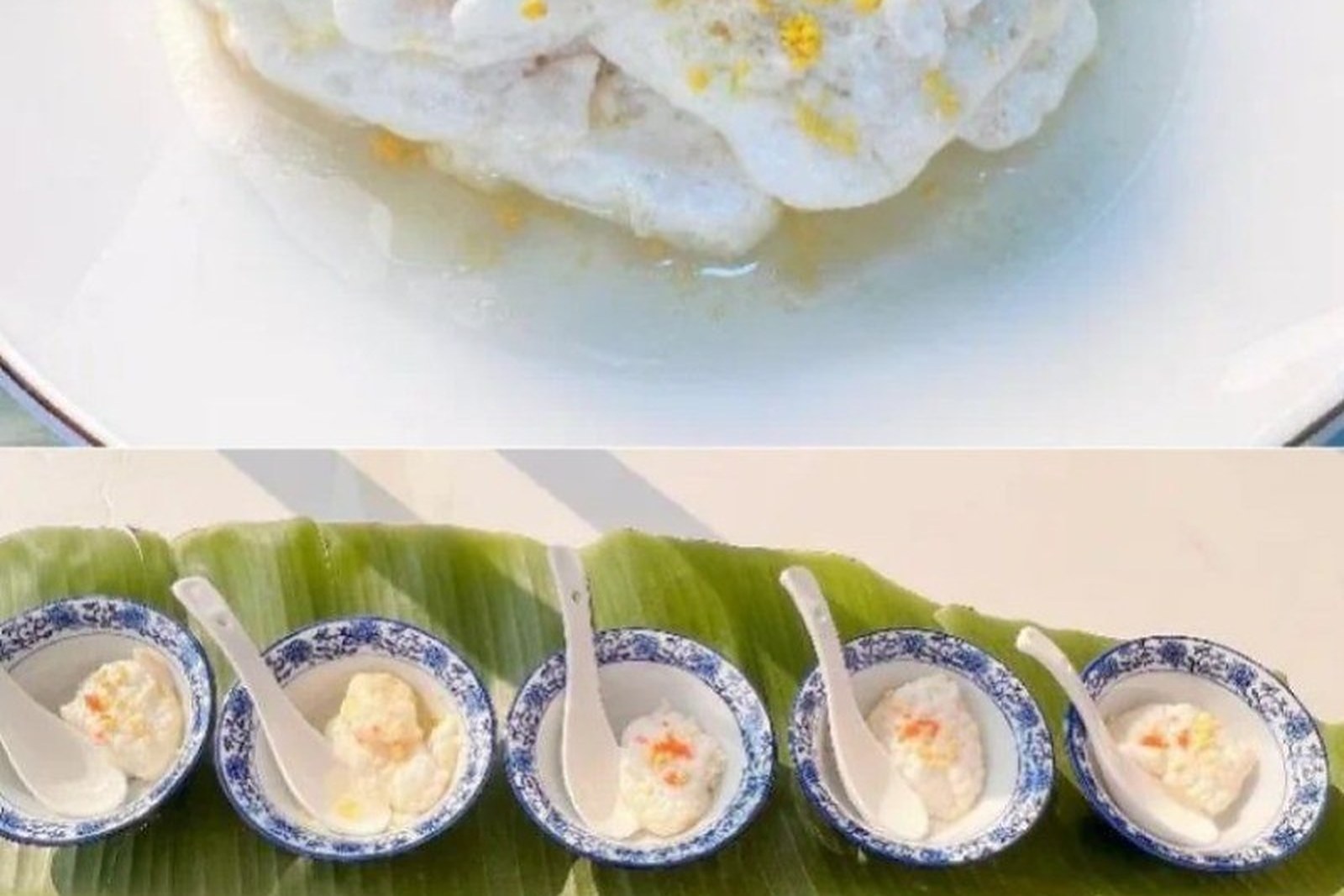
Locals eat it as a course rather than a meal, spooned over 米饭 mǐfàn rice at a banquet table, and it is a restaurant and banquet food rather than a weekday home dish – the beating alone takes an hour. The move at a Simao table is to take a spoonful of the white body with the thread toppings and eat it plain first, because the point is the chicken-and-egg 鲜 xiān freshness, and only then a little chili from the table tray. The honest tests are the texture and the taste: it should hold a spoon’s shape and still 化 huà melt on the tongue, 嫩 nèn tender and 滑 huá smooth with no grain of meat left, faintly sweet from the egg rather than salty from 味精 wèijīng MSG. A plate runs roughly 30-60 yuan in a Simao restaurant, more inside a full banquet set menu (worth confirming current houses and prices). Newcomers are warned that it looks blander than it eats, that it must be served hot in its own 汤 tāng broth, and that the heritage exhibitions have invented coffee- and tea-flavoured versions – honest fun, but the plain bowl is the dish the listing is about. All checked October 2026.
Words and Names
鸡豆腐 Jī Dòufu chicken “tofu” · 思茅 Sīmǎo Simao · 普洱 Pǔ’ěr Puer · 吃鸡不见鸡 Chī Jī Bù Jiàn Jī eat the chicken, see no chicken · 鸡脯肉 Jīpúròu chicken breast · 土鸡 Tǔjī yard chicken · 刀背 Dāobèi the back of the cleaver · 捶 Chuí to pound · 淀粉 Diànfěn starch · 蛋清 Dànqīng egg white · 清鸡汤 Qīng Jītāng clear chicken broth · 文火 Wénhuǒ a low flame · 水豆腐 Shuǐ Dòufu tender tofu · 火腿丝 Huǒtuǐ Sī ham threads · 非物质文化遗产 Fēiwùzhì Wénhuà Yíchǎn intangible cultural heritage · 普洱府八碗席 Pǔ’ěr Fǔ Bāwǎn Xí the Puer Mansion eight-bowl banquet · 功夫菜 Gōngfu Cài a “kung-fu” dish
What the Locals Know
- The paste must be 捶 chuí pounded with the 刀背 dāobèi back of the cleaver, never chopped with the blade: cutting the muscle tears the fibres and the mixture will not bind into the 豆腐 dòufu-like set that gives the dish its name.
- The egg whites go in beaten to a standing peak – the old test is a chopstick stuck upright in the foam – and the broth must be oil-free, because any fat in the 清鸡汤 qīng jītāng clouds the white and kills the dish’s 洁白光亮 jiébái guāngliàng snow-white look.
- The heat is the whole craft: 文火 wénhuǒ low and patient until the mass quivers like freshly set 水豆腐 shuǐ dòufu, since a fierce boil scrambles the paste into scraps and a timid pot never sets it at all.
- Eat it plain first, hot, with a spoon – the 鲜 xiān comes from the chicken and the egg, not from 味精 wèijīng, and the honest test is that it melts on the tongue with a faint sweetness and no grain of meat left (worth confirming current houses and prices).
flowcloud would say that ji tofu is chicken beaten into “tofu” – 鸡脯肉 jīpúròu pounded with the 刀背 dāobèi, folded into standing-peak 蛋清 dànqīng and set in oil-free broth over 文火 wénhuǒ until it quivers like 水豆腐 shuǐ dòufu – and that the honest move is a hot bowl at a Simao banquet table, eaten plain with a spoon first, because the dish is “eat the chicken but see no chicken” and the freshness is the whole point. All checked October 2026.
Where to find it: restaurant and banquet tables in 思茅 Sīmǎo rather than weekday homes – the beating alone takes an hour (worth confirming the details); it is eaten as a course spooned over 米饭 mǐfàn, plain first for the 鲜 xiān freshness and only then chili from the table tray. All checked October 2026.