
苦肠一滴回甘味,蘸得米线暑气消。Kǔcháng yī dī huígān wèi, zhàn dé mǐxiàn shǔqì xiāo – One drop of bitter intestine, a sweet return; it dips the rice noodles and the summer heat goes.
牛撒撇 Niú Sāpiě beef sapie is the Dai dish that frightens newcomers before the first bite: a bowl of dark 苦水 kǔshuǐ bitter water, simmered from the 牛苦肠 niú kǔcháng bitter intestine of a freshly killed cow, into which rice noodles and beef are dipped. The two characters explain the name – 撒 sā is the Dai word for mixing raw, 撇 piě for the bitter intestine, so 撒撇 sāpiě is bitter-intestine juice dressed over raw things – and the dish is the guest plate of the 傣族 Dàizú Dai across southern Yunnan, most famously in 德宏 Déhóng Dehong but kept faithfully in 普洱 Pǔ’ěr Puer’s 孟连 Mènglián Menglian, 景谷 Jǐnggǔ Jinggu and 澜沧 Láncāng Lancang, where the border Dai towns still work the whole ritual. The plate arrives in three parts – a bowl of the 苦 kǔ bitter sauce, a platter of fine 米线 mǐxiàn rice noodles, and a pile of 烤牛肉 kǎo niúròu grilled dried beef with 牛肝 niúgān liver and 牛肚 niúdù tripa – and the taste, everyone agrees, is 先苦后甘 xiān kǔ hòu gān bitter first and sweet-returning after. The local legend, told over the bowl, says a young man was sent out to find a cure for the summer heat and came back with the news that bitter things cool the blood (worth confirming the details). It is a summer food, eaten to 清热解暑 qīngrè jiěshǔ cool the body’s heat, sold by the bowl or the set at roughly 25-60 yuan a head depending on the beef (worth confirming the details), almost always at a Dai house or a border-town eatery rather than a city restaurant.
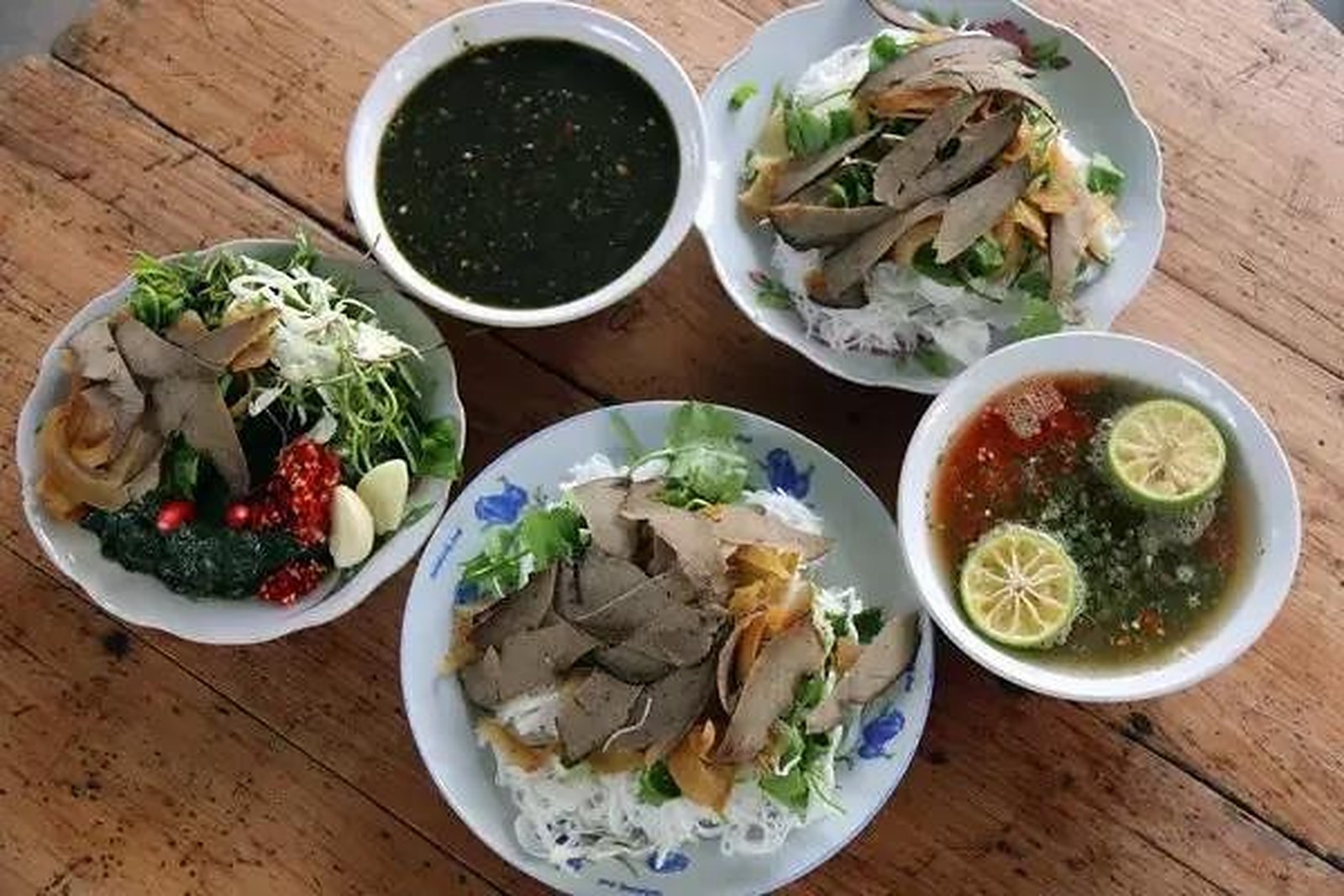
The mechanism is the bitter water, and nothing else can fake it. The 苦肠 kǔcháng – the short length of intestine just past the stomach, whose lining holds the animal’s partly digested 百草 bǎicǎo hundred-herb contents – is taken out at the kill, squeezed and simmered slow for an hour or more until the liquid reduces and darkens, then filtered through 纱布 shābù gauze into the bitter sauce. The beef is the 里脊 lǐjí tenderloin, 捶 chuí pounded in a mortar to a paste rather than chopped, because the beaten meat keeps a 嫩 nèn tenderness that a blade destroys, and the paste is worked with fine-chopped 韭菜 jiǔcài leek, 香柳 xiāngliǔ fragrant willow-leaf, 缅芫荽 Miǎn yánsuī Burmese cilantro, 小米辣 xiǎomǐlà bird’s-eye chili and salt until the bowl reads 绿 lǜ green. The 苦水 kǔshuǐ and the meat paste are adjusted together into a 糊状 húzhuàng thick dip, and the 涮涮辣 shuànshuàn là – the thumbnail chili that counts among the hottest in the world – is served beside it for those who want the fire. What arrives is a bowl that looks almost black-green, smells of herbs and fermentation, and eats 苦凉 kǔliáng bitter-cooling, the chili, the herbs and the sweet return of the beef cutting across.
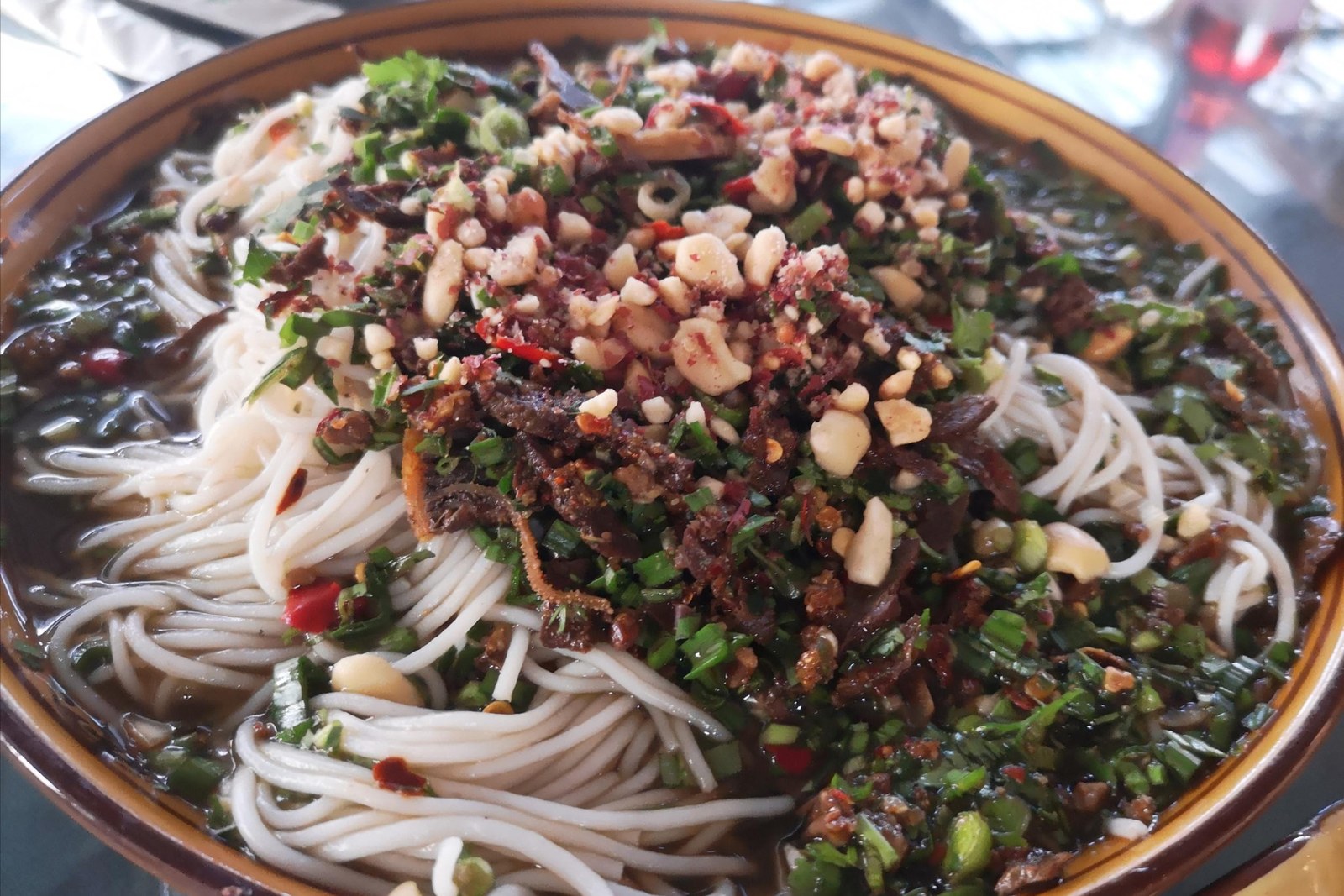
Locals eat it in hot weather, sitting down to a full set with a group, because a 撒撇 sāpiě table is a platter, not a bowl. The move is to take a bundle of 米线 mǐxiàn, coil it through the bitter dip with a slice of the grilled beef, and eat it in one go – the dipping is quick, because the noodles should carry a thin coat of sauce rather than swim in it, and the 苦 kǔ should arrive first on the tongue before the beef’s sweetness answers. The honest tests are the bitter water and the beef: the sauce should taste of intestine and herbs, bitter but 回甘 huígān returning sweet, never of bile or 味精 wèijīng MSG, and the tenderloin should be pounded to a paste, not sliced or minced. Newcomers are told to start small – the dish is an acquired taste, and the local progression runs from the 柠檬撒 níngméng sā lemon version up to the 苦撒 kǔ sā bitter one – and that the table’s reputation for cooling and clearing the body is why Dai kitchens set it out in the first weeks of the hot season (worth confirming current houses and prices). The season is summer, the company is a full table, and the honest bowl is found in the border counties rather than the city. All checked October 2026.
Words and Names
牛撒撇 Niú Sāpiě beef sapie · 撒撇 Sāpiě the sapie dip · 牛苦肠 Niú Kǔcháng the bitter intestine · 苦水 Kǔshuǐ bitter water · 里脊 Lǐjí tenderloin · 米线 Mǐxiàn rice noodles · 韭菜 Jiǔcài leek · 香柳 Xiāngliǔ fragrant willow-leaf · 缅芫荽 Miǎn Yánsuī Burmese cilantro · 小米辣 Xiǎomǐlà bird’s-eye chili · 涮涮辣 Shuànshuàn Là the shuashua chili · 柠檬撒 Níngméng Sā lemon sapie · 苦撒 Kǔ Sā bitter sapie · 先苦后甘 Xiān Kǔ Hòu Gān bitter first, sweet after · 傣族 Dàizú the Dai people · 德宏 Déhóng Dehong
What the Locals Know
- The 苦水 kǔshuǐ cannot be faked: it is squeezed from the 牛苦肠 niú kǔcháng and simmered slow for an hour or more before it is filtered through 纱布 shābù, and a sauce that tastes of bile or 味精 wèijīng rather than of intestine and herbs is not 撒撇 sāpiě at all.
- The tenderloin must be 捶 chuí pounded in the mortar to a paste, not chopped – the beaten meat keeps a 嫩 nèn tenderness that a blade destroys – and the paste reads green with 韭菜 jiǔcài, 香柳 xiāngliǔ and 缅芫荽 Miǎn yánsuī before the bitter water goes in.
- Dip quickly and eat in one go: a thin coat of sauce on the 米线 mǐxiàn and the beef, because the noodles are meant to carry the 苦 kǔ bitter first and let the beef’s sweetness answer, not to swim in the bowl.
- Start with the 柠檬撒 níngméng sā lemon version and work up to the 苦撒 kǔ sā bitter one – the local progression is the honest one – and look for the dish in the border counties of 孟连 Mènglián, 景谷 Jǐnggǔ and 澜沧 Láncāng rather than the city (worth confirming current houses and prices).
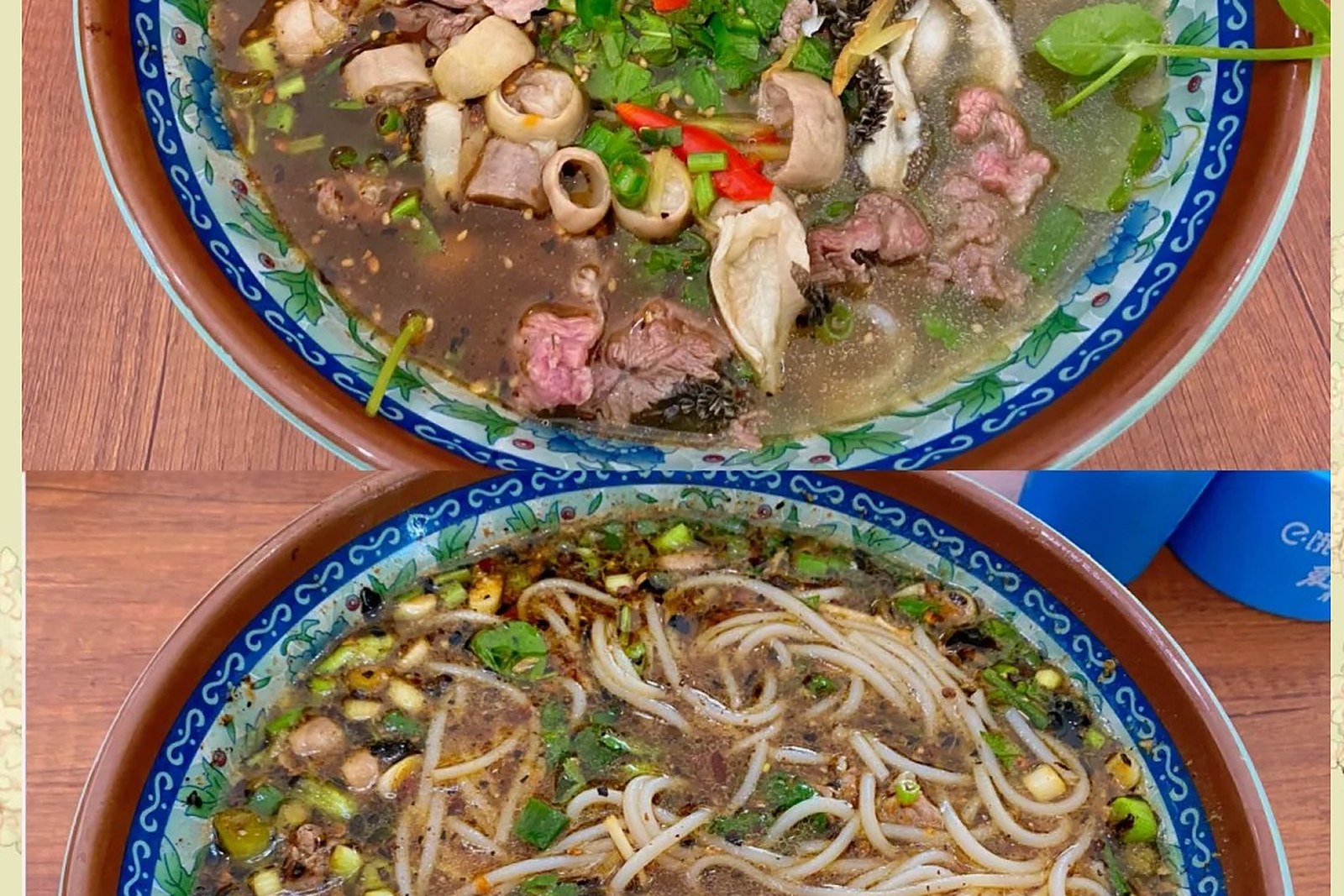
flowcloud would say that niu sapie is bitter water and pounded beef – 牛苦肠 niú kǔcháng simmered and filtered into 苦水 kǔshuǐ, 里脊 lǐjí 捶 chuí pounded with 韭菜 jiǔcài and 香柳 xiāngliǔ, 米线 mǐxiàn dipped in one quick coat – and that the honest move is a summer set at a border-county Dai table, starting with the 柠檬撒 níngméng sā and working up to the 苦撒 kǔ sā, because the dish is bitter first and sweet after. All checked October 2026.
Where to find it: hot-weather Dai tables, eaten as a full set with a group because a 撒撇 sāpiě table is a platter, not a bowl (worth confirming the details); coil the 米线 mǐxiàn through the bitter dip with a slice of grilled beef and eat in one go, the 苦 kǔ arriving before the beef’s sweetness answers. All checked October 2026.