
酸笋一坛春雨味,煮活江鱼麻辣香。Suānsǔn yī tán chūnyǔ wèi, zhǔ huó jiāngyú málà xiāng – One jar of sour bamboo holds the taste of spring rain; it boils the river fish hot and fragrant.
酸笋鱼 Suānsǔn Yú sour-bamboo-shoot fish is the 傣味 Dàiwèi Dai-flavour fish soup of 普洱 Pǔ’ěr Puer – a pot in which fermented bamboo shoots give the broth its sour bite and the fish is simmered in it with chili until the whole kitchen smells of something between a pickle jar and a feast. It is the everyday dish of the Dai counties along Puer’s southern border – 孟连 Mènglián Menglian, 景谷 Jǐnggǔ Jinggu, 澜沧 Láncāng Lancang – and the honest shape is a 汤菜 tāngcài soup dish: fish, 酸笋 suānsǔn sour shoots and a clear sour-spicy broth, eaten with rice, the soup drunk from the bowl. The sourness is not from vinegar or 柠檬 níngméng lemon but from 发酵 fājiào fermentation: spring bamboo shoots are cut into strips, salted and packed into a 陶坛 táotán earthenware jar of spring water, and within a fortnight they turn 酸 suān sour, taking on a smell newcomers call 臭 chòu stinky and locals call 香 xiāng fragrant. Almost any fish works – 罗非鱼 luófēiyú tilapia from the river paddies, 鲶鱼 niánqiú catfish for the few-bones chew, or whatever the morning net brings in – and a pot for two runs roughly 40-80 yuan depending on the fish and the house (worth confirming the details), served all day but best at lunch in the heat, when the sour soup is what the body asks for.
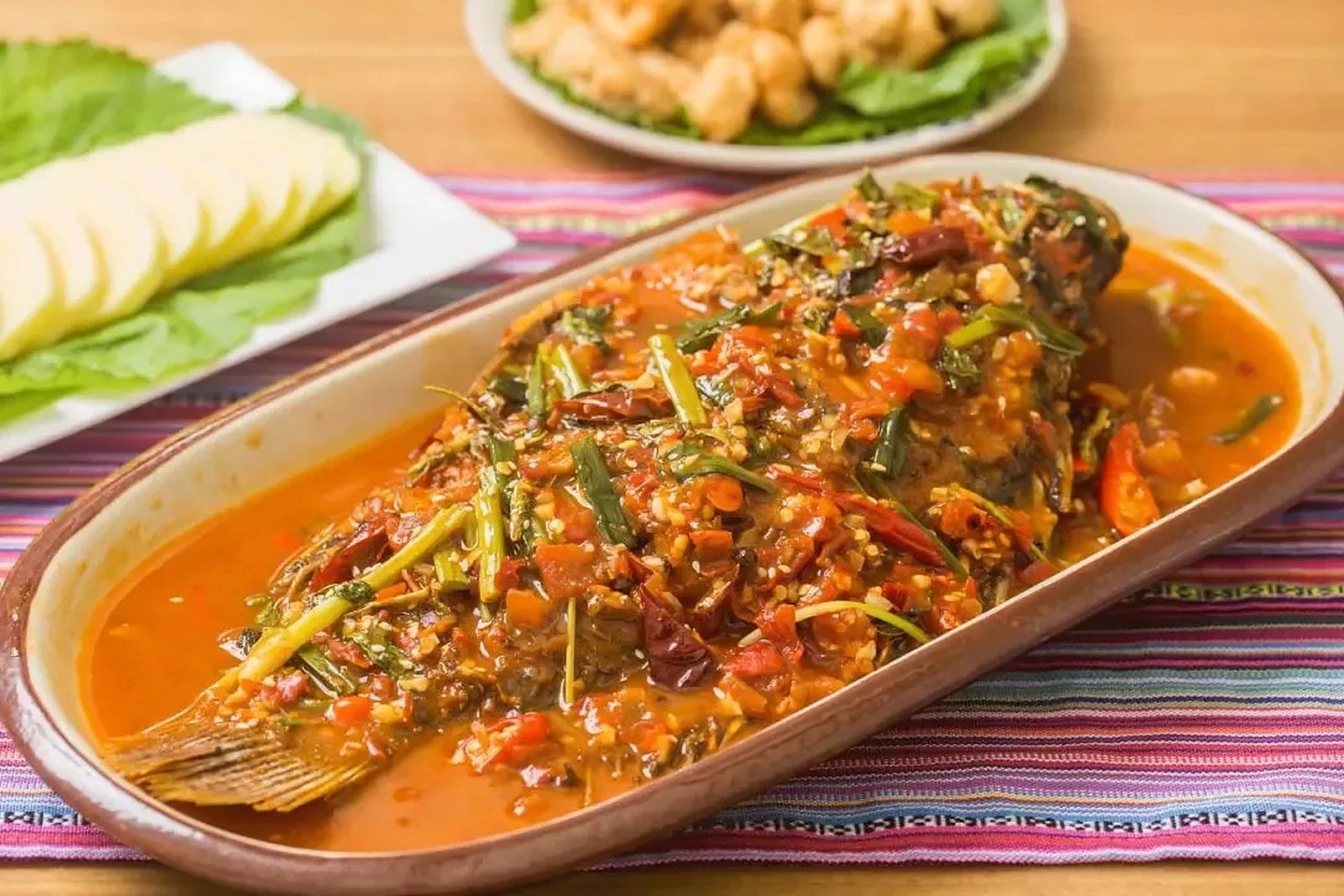
The mechanism is the shoot, the fish and the order they go into the pot. The 酸笋 suānsǔn is scooped from its jar, rinsed if the house likes it mild, and squeezed dry – the 酸水 suānshuǐ fermenting liquid is usually thrown away, because the sourness should taste of bamboo rather than of brine. There are two honest methods in the Dai kitchen. In the first, oil and salt go into a pot of cold water with the fish, and only when the fish is nearly cooked do the pounded 生姜 shēngjiāng ginger, 大蒜 dàsuan garlic, 辣椒 làjiāo chili and 香茅草 xiāngmáo cǎo lemongrass follow, with the 酸笋 suānsǔn last of all – the rule is that the shoots must be boiled fully, or the soup never tastes right. In the second, the aromatics and the shoots are stir-fried first until the heat wakes the ferment’s sourness, water goes in, and the cleaned fish simmers. Either way the finishing herbs are the same: 花椒叶 huājiāo yè Sichuan-pepper leaf, 木姜子 mùjiāngzǐ litsea, 大芫荽 dà yánsuī sawtooth coriander and a handful of 薄荷 bòhé mint. The soup turns 浅金 qiǎnjīn pale gold, and the taste arrives in layers – sour first, then the slow warmth of the chili, then the fish’s own sweetness underneath.
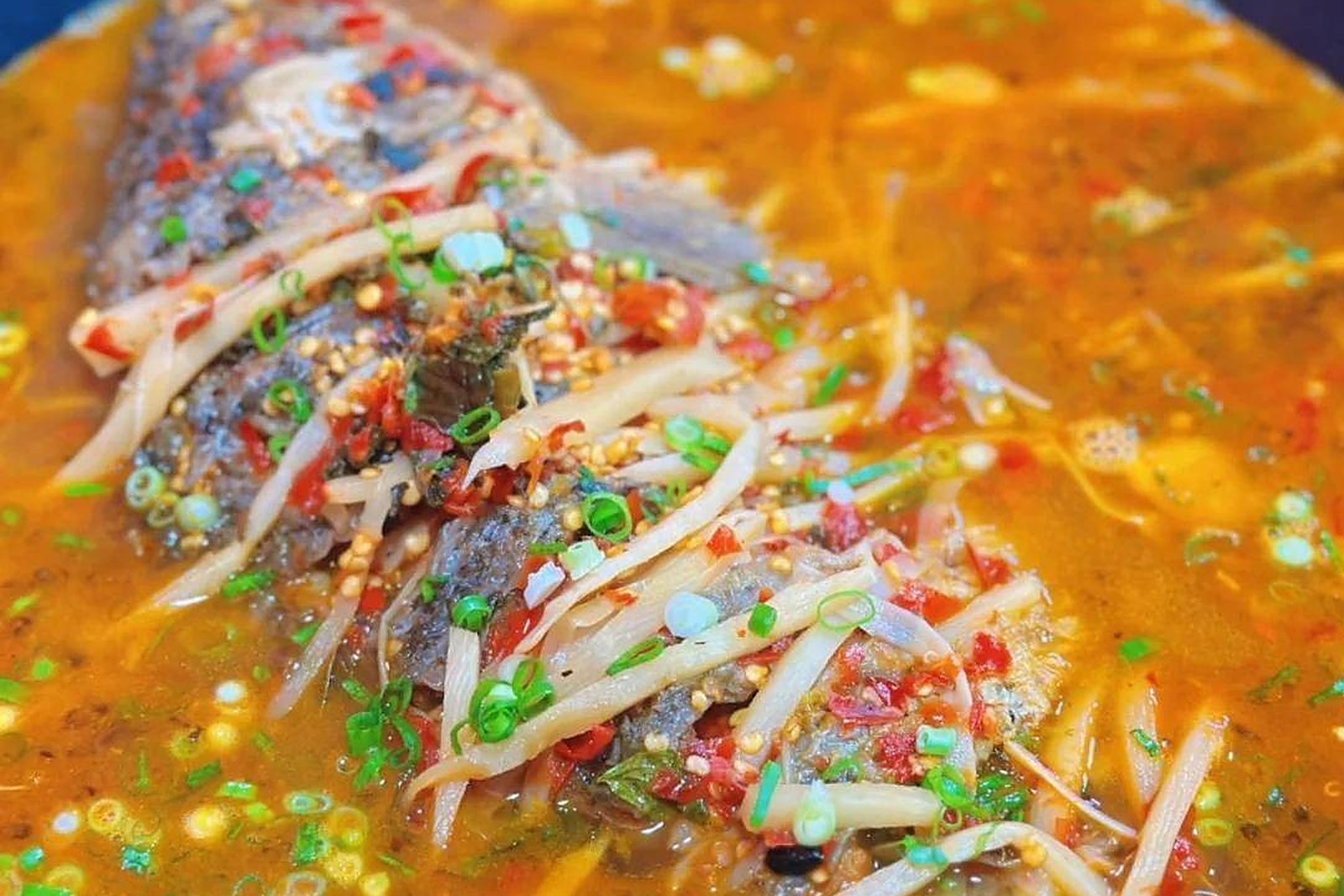
Locals eat it at a family table or a Dai 菜馆 càiguǎn eatery in the county towns, in the middle of the day, with a mountain of plain rice. The move is to ask for the fish that is in season, take a spoon of the broth first to judge the sourness before the chili goes in, and eat the shoots as well as the fish – the 酸笋 suānsǔn keeps a 脆韧 cuìrèn crisp chew and is the point, not a seasoning to be pushed aside. The honest tests are the soup and the fish: the broth should be sour from bamboo and clear enough to see the bottom of the bowl, not murky or sharp with vinegar, and the fish should be fresh enough to fall 嫩 nèn tender off the bone rather than mealy. Newcomers are told the smell is a false alarm – the 臭 chòu note belongs to the closed jar, not the open pot – and that the same 酸笋 suānsǔn runs through the whole Dai sour family: 酸笋鸡 suānsǔn jī with chicken, and the 酸汤鱼 suāntāng yú whose sourness comes from 酸木瓜 suān mùguā sour papaya instead of bamboo (worth confirming seasonal prices and current houses). The jarred shoots keep year-round, but the dish is at its best in the months after the spring shoot harvest, when every kitchen’s 坛子 tánzi jar has just been opened. All checked October 2026.
Words and Names
酸笋鱼 Suānsǔn Yú sour-bamboo-shoot fish · 酸笋 Suānsǔn sour bamboo shoots · 傣味 Dàiwèi Dai flavour · 孟连 Mènglián Menglian · 景谷 Jǐnggǔ Jinggu · 澜沧 Láncāng Lancang · 陶坛 Táotán earthenware fermentation jar · 发酵 Fājiào fermentation · 香茅草 Xiāngmáo Cǎo lemongrass · 木姜子 Mùjiāngzǐ litsea · 花椒叶 Huājiāo Yè Sichuan-pepper leaf · 大芫荽 Dà Yánsuī sawtooth coriander · 薄荷 Bòhé mint · 罗非鱼 Luófēiyú tilapia · 鲶鱼 Niányú catfish · 酸木瓜 Suān Mùguā sour papaya · 酸汤鱼 Suāntāng Yú sour-soup fish
What the Locals Know
- The 酸笋 suānsǔn must be boiled fully in the pot, whichever of the two Dai methods the kitchen uses – fish-first or shoots-first – because under-cooked shoots leave the soup sharp and raw, and the rule of the dish is that the bamboo’s sourness has to be cooked into the broth.
- The sourness should come from the jar, never from vinegar: a soup that is sharp and thin has been shortcut, and the honest broth is 浅金 qiǎnjīn pale gold, sour from fermented bamboo, with 花椒叶 huājiāo yè, 木姜子 mùjiāngzǐ and 薄荷 bòhé finishing it.
- Eat the shoots, not just the fish: they keep a 脆韧 cuìrèn crisp chew through the simmer and are the point of the dish, while the fish should fall 嫩 nèn tender off the bone rather than mealy.
- The smell is a false alarm – the 臭 chòu note belongs to the closed jar, not the open pot – and the same 酸笋 suānsǔn runs the whole Dai sour family, from 酸笋鸡 suānsǔn jī to the 酸木瓜 suān mùguā 酸汤鱼 suāntāng yú (worth confirming seasonal availability and prices).
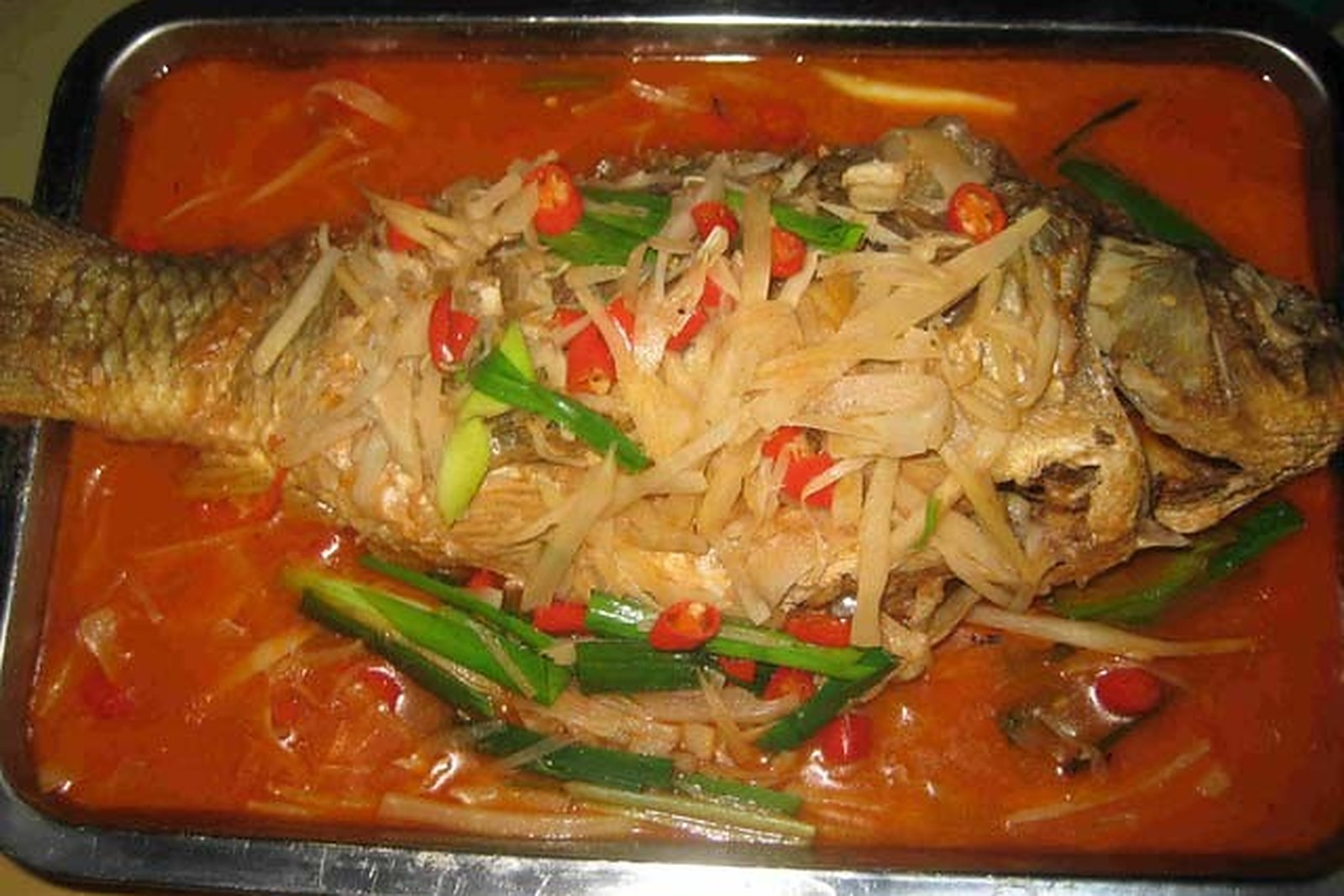
flowcloud would say that suanzun fish is bamboo fermented into sourness – 酸笋 suānsǔn from the 陶坛 táotán boiled fully into a 浅金 qiǎnjīn broth with river fish, 花椒叶 huājiāo yè and 木姜子 mùjiāngzǐ finishing it – and that the honest move is a midday pot in 孟连 Mènglián with a mountain of plain rice, shoots and all, because the smell belongs to the jar and the taste belongs to the table. All checked October 2026.
Where to find it: family tables and Dai 菜馆 càiguǎn eateries in the county towns, at midday with a mountain of plain rice (worth confirming the details); ask for the fish that is in season, take a spoon of broth first to judge the sourness, and eat the 酸笋 suānsǔn as well as the fish. All checked October 2026.