
一席茶宴藏山野,满桌清香是普洱。Yī xī cháyàn cáng shānyě, mǎn zhuō qīngxiāng shì Pǔ’ěr – One tea-banquet table hides the mountain wilds; a whole table of clear fragrance is Puer.
普洱茶宴 Pǔ’ěr Cháyàn the Puer tea banquet is the tea-country feast of 普洱 Pǔ’ěr Puer, the southern Yunnan prefecture that gave 普洱茶 Pǔ’ěr chá Pu’er tea its name, and the honest shape of the meal is exactly what the name promises: a banquet in which tea is not the drink but an ingredient. It belongs to the tea towns around 思茅 Sīmǎo Simao and 宁洱 Níng’ěr Ninger – the county that keeps the zero-kilometre marker of the 茶马古道 Chámǎ Gǔdào Tea-Horse Road – and it grew in the restaurants of the tea mountains rather than in any single village kitchen. A full 全茶宴 quán cháyàn whole-tea banquet runs a dozen courses or more: 茶香鸡 cháxiāng jī chicken stewed in tea soup, 茶香排骨 cháxiāng páigǔ ribs marinated in ripe-tea soup and fried with tea leaves, 茶叶鸡蛋饼 cháyè jīdàn bǐng tea-leaf egg pancakes, 绿茶虾仁 lǜchá xiārén green-tea shrimp, 茶汁东坡肉 cházhī Dōngpōròu Dongpo pork in tea sauce, 茶花炖蛋 cháhuā dùn dàn tea-flower steamed egg, 炸茶叶 zhá cháyè fried tea leaves, and plain 普洱茶饭 Pǔ’ěr chá fàn rice cooked in tea soup. The logic of the table is 解腻 jiěnì de-greasing: tea cuts the fat of the meat and lends a clear 茶香 cháxiāng tea fragrance, so a table that looks heavy finishes light. A banquet runs roughly 60-100 yuan a head depending on the house and the number of courses (worth confirming the details), and the honest shape is a guest meal – the table Puer people set in front of a visitor to show what the county grows.
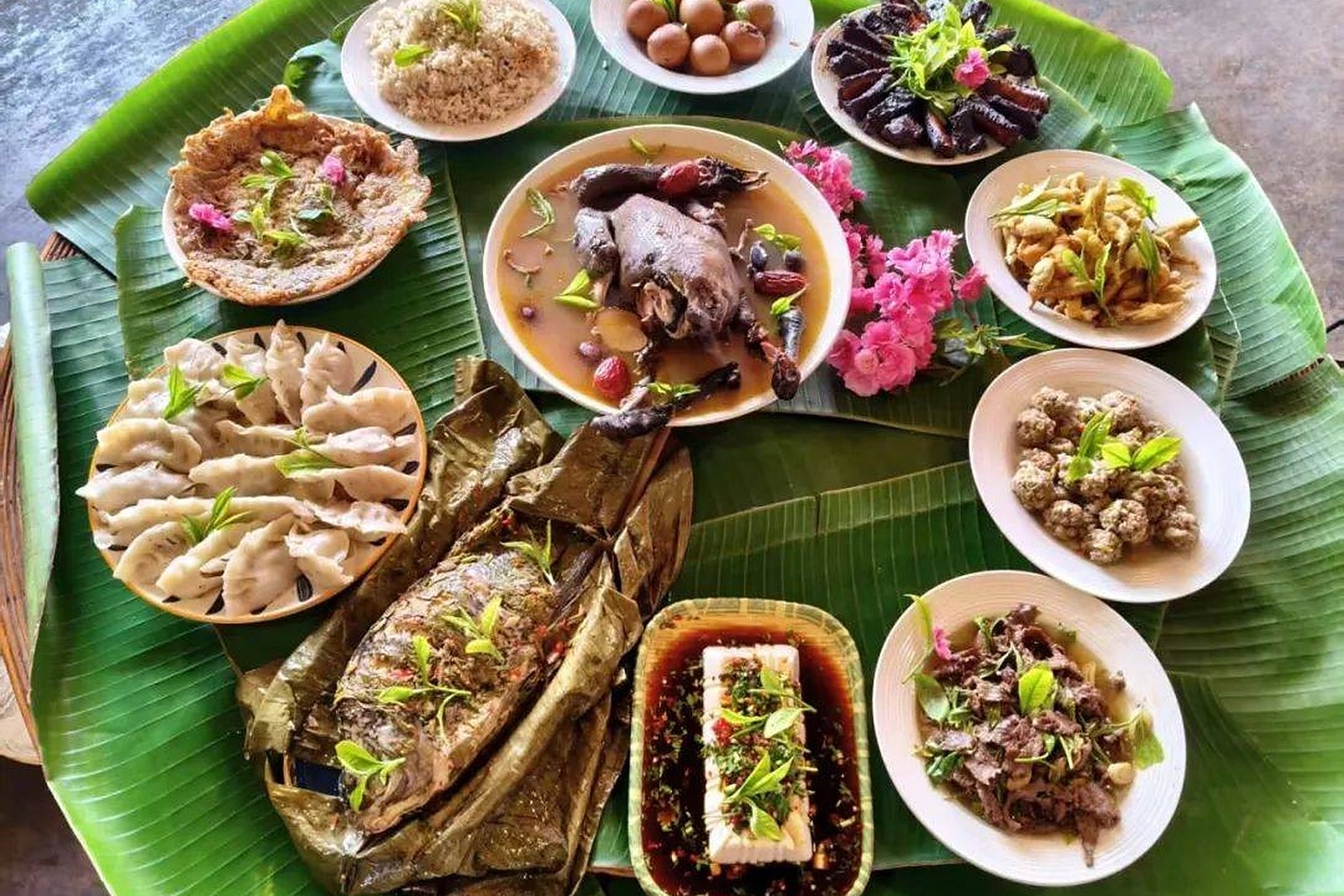
The mechanism is that different teas do different jobs in the pot. The tender spring picks – 一芽两叶 yī yá liǎng yè one bud with two leaves – go into the cold dishes and the fryer: 凉拌 liángbàn dressed raw with chili and lemon, or dipped in egg wash and deep-fried until the leaf turns 酥 sū crisp and eats like a vegetable chip. The old 生茶 shēngchá raw Pu’er, with its 苦涩 kǔsè bitter-astringent edge, is the leaf for stir-frying meat, where the tannin 去腥 qùxīng lifts the fishy smell and the 香 xiāng fragrance; the 熟茶 shúchā ripe Pu’er, 醇厚 chúnhòu mellow and earthy, belongs to the long pots – 炖 dùn stewed, 卤 lǔ braised, 收汁 shōuzhī reduced – where hours of simmer let its 陈香 chénxiāng aged perfume enter the meat. The 茶汤 chátāng tea soup itself is the marinade and the braising liquid: ribs soak in it, a whole chicken is blanched with fresh leaves and then simmered in it for a couple of hours until the broth runs clear and 回甘 huígān sweet-returning. What the kitchen avoids is over-brewed or scorched tea that tastes muddy, because the banquet’s whole trick is a fragrance that perfumes the dish without ever turning bitter – 茶垢 chágòu the pot-black of tea, in the cooks’ phrase, is the one sin a tea banquet cannot survive.
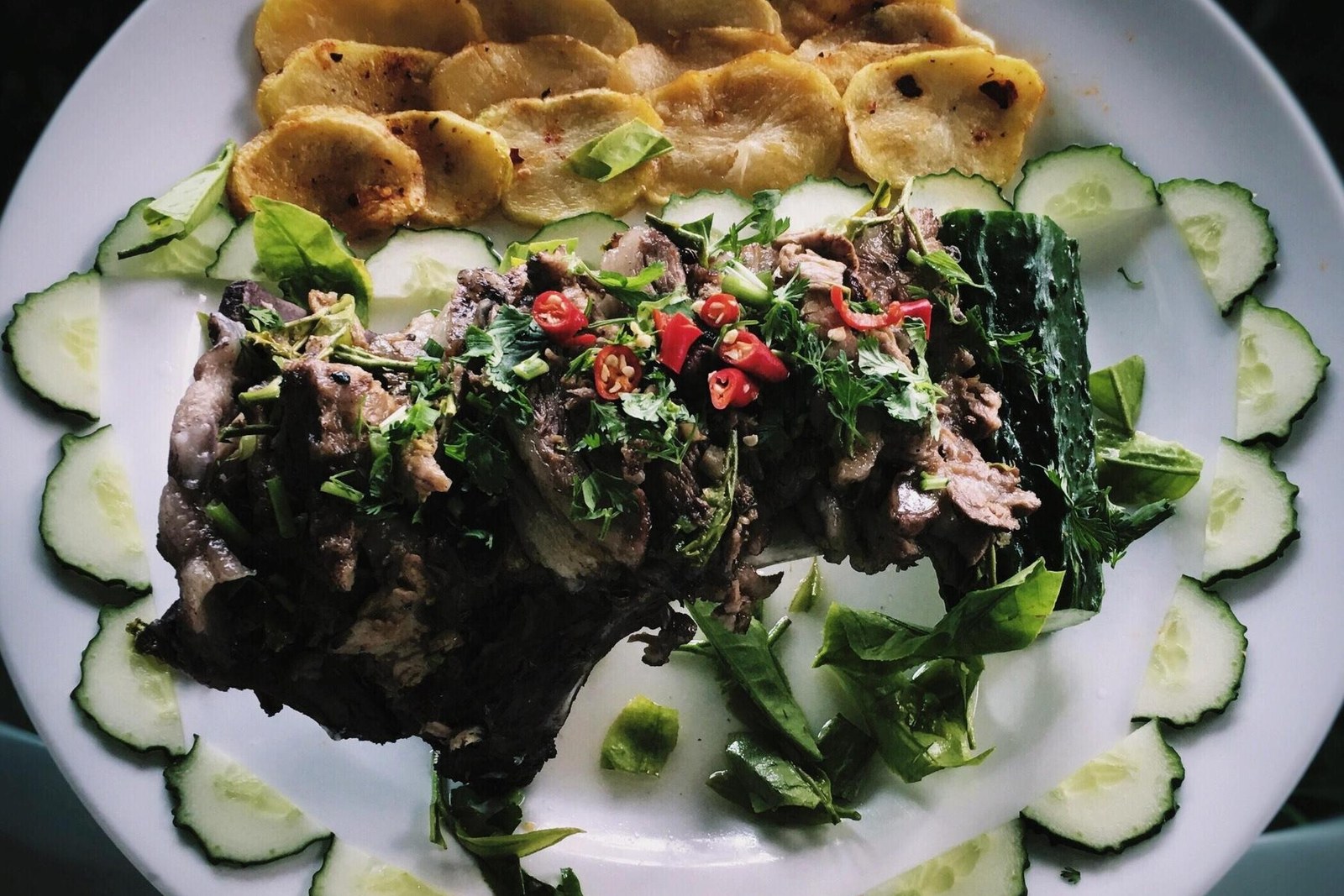
Locals eat it at a round table, in the evening, with a group – eight or ten people in a tea-country restaurant in 思茅 Sīmǎo or 宁洱 Níng’ěr, the cold leaf dishes arriving first and a 茶香鸡 cháxiāng jī taking the middle of the table. The move is to eat the 炸茶叶 zhá cháyè while they are still 酥 sū, take the chicken with a dip of 糊辣椒 hú làjiāo roasted chili, and keep the 茶饭 chá fàn tea rice for the end, when its clear fragrance resets the palate after the pork. The honest tests are the fragrance and the oil: the tea smell should sit on top of the dish rather than boil down into it, and the pork should be cut by the tea, not sweetened with sugar to hide behind. Newcomers are told that a tea banquet is not a tea ceremony – nobody here is scoring the 汤色 tāngsè soup colour – and that the leaf dishes are the ones you cannot copy at home, because the kitchen uses the same fresh 古树茶 gǔshù chá old-tree leaves the county sells as cake tea (worth confirming current houses and prices). The season is the spring picking, when the tender leaves are at their best and the tea-mountain restaurants run the full table. All checked October 2026.
Words and Names
普洱茶宴 Pǔ’ěr Cháyàn the Puer tea banquet · 普洱 Pǔ’ěr Puer · 普洱茶 Pǔ’ěr Chá Pu’er tea · 全茶宴 Quán Cháyàn the whole-tea banquet · 茶香鸡 Cháxiāng Jī tea-fragrance chicken · 茶香排骨 Cháxiāng Páigǔ tea-fragrance ribs · 茶花炖蛋 Cháhuā Dùn Dàn tea-flower steamed egg · 炸茶叶 Zhá Cháyè fried tea leaves · 生茶 Shēngchá raw Pu’er tea · 熟茶 Shúchā ripe Pu’er tea · 茶汤 Chátāng tea soup · 解腻 Jiěnì to cut grease · 回甘 Huígān sweet aftertaste · 茶马古道 Chámǎ Gǔdào the Tea-Horse Road · 一芽两叶 Yī Yá Liǎng Yè one bud, two leaves · 古树茶 Gǔshù Chá old-tree tea · 思茅 Sīmǎo Simao · 宁洱 Níng’ěr Ninger
What the Locals Know
- The tea must perfume the dish, not season it: the fragrance should sit on top of the meat, and a plate that tastes bitter or muddy has been cooked with over-brewed or scorched tea – the kitchen’s whole craft is keeping the 茶香 cháxiāng clear.
- Match the leaf to the method, the way the banquet kitchens do: old 生茶 shēngchá for stir-frying meat to 去腥 qùxīng lift the fragrance, ripe 熟茶 shúchā for the long stews, and only the youngest spring leaves for the cold dishes and the fryer.
- The leaf dishes are the ones to order – 炸茶叶 zhá cháyè fried 酥 sū crisp and 凉拌 liángbàn dressed raw – because the kitchen fries the same fresh 古树茶 gǔshù chá old-tree leaves the county sells as cake tea, and a home stove cannot copy them (worth confirming current houses and prices).
- Eat the 茶饭 chá fàn tea rice last and plain: its job is to reset the palate after the pork, and the honest test of the banquet is that the table looks heavy and finishes light.
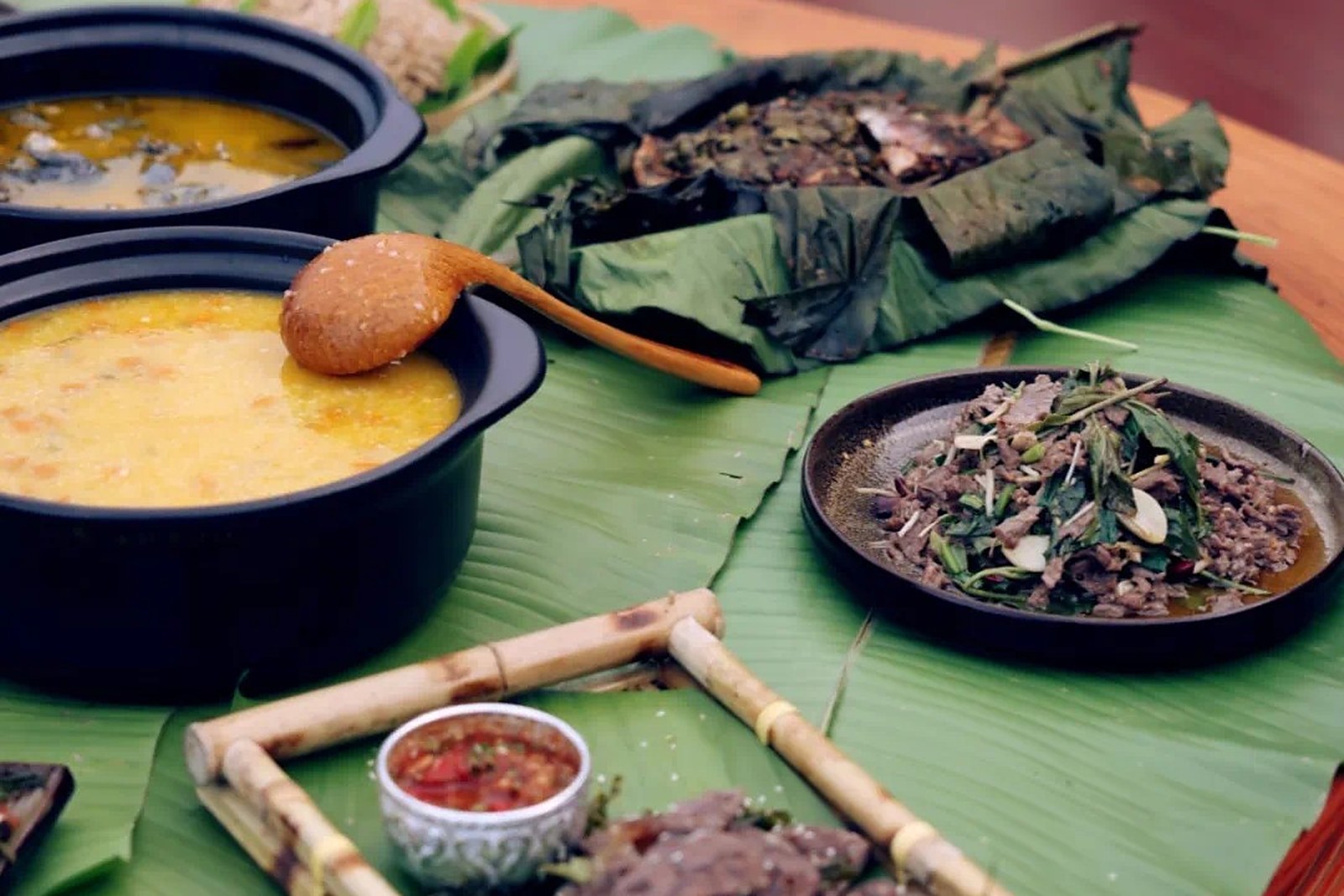
flowcloud would say that the Puer tea banquet is tea used as an ingredient rather than a drink – young leaves fried 酥 sū crisp, old 生茶 shēngchá lifting the stir-fries, ripe 熟茶 shúchā stewed into the pork until the table looks heavy and eats light – and that the honest move is a round table in 思茅 Sīmǎo or 宁洱 Níng’ěr with the 茶饭 chá fàn kept for last, because the banquet is the county showing what it grows. All checked October 2026.
Where to find it: tea-country restaurants in 思茅 Sīmǎo and 宁洱 Níng’ěr, ordered for a group at a round table in the evening (worth confirming the details); the 炸茶叶 zhá cháyè arrive first and a 茶香鸡 cháxiāng jī takes the middle of the table, and the honest move is to keep the 茶饭 chá fàn tea rice for the end. All checked October 2026.