
Purang Nepali Thali — the Border Market Plate of the Far West
孔雀河边香料路,一盘塔利越雪山 Kǒngquè hé biān xiāngliào lù, yī pán tǎlì yuè xuěshān – The spice road runs by the Peacock river; one thali plate crosses the snow mountains
普兰尼泊尔风味 Pǔlán Níbó’ěr fēngwèi Purang’s Nepali table is the most distinctive thing the far west eats: thali plates assembled in the kitchens of a border town that has traded with the Nepal hills for centuries. 尼泊尔餐 Níbó’ěr cān the Nepali plate arrives as a steel tray – rice heaped at the center, lentil dal poured around it, curried potatoes and seasonal vegetables at the rim, a sharp pickle achar to wake everything up – and the style is unmistakably the hills’: cinnamon, cardamom and fresh ginger carried up the passes that wool and salt once crossed the other way.
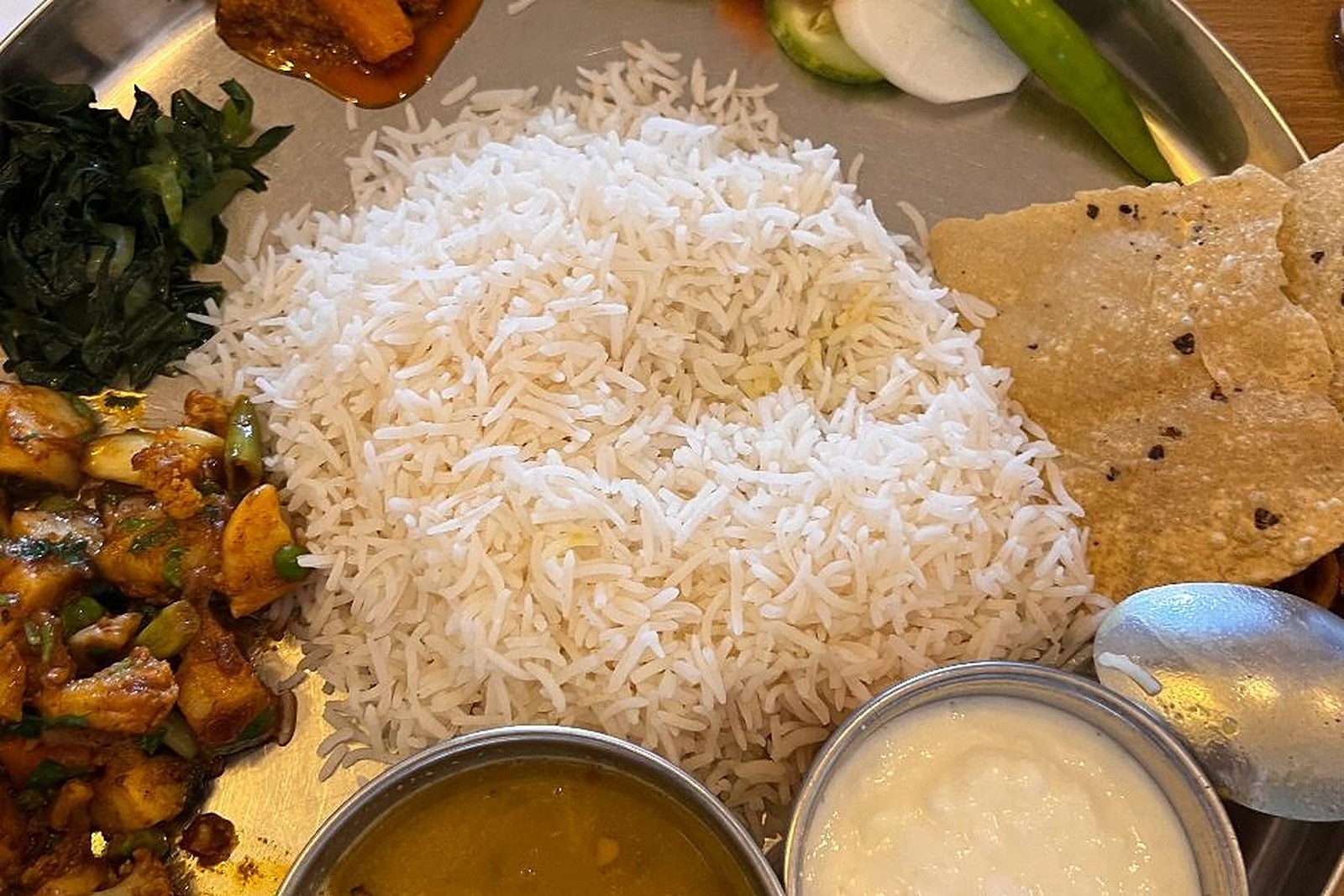
The plate is assembled, not cooked to order: each component sits in its own bowl, refilled by request until the eater surrenders. Dal is the backbone – simmered soft with turmeric, garlic and a crackle of fried spice at the end – and the rice is the local highland grain, cooked drier than the lowland style to suit the altitude. Around the market streets, Nepali-run kitchens ladle out the set plate at midday for traders, drivers and pilgrims, and the rooms fill with the smell of cumin frying in ghee.
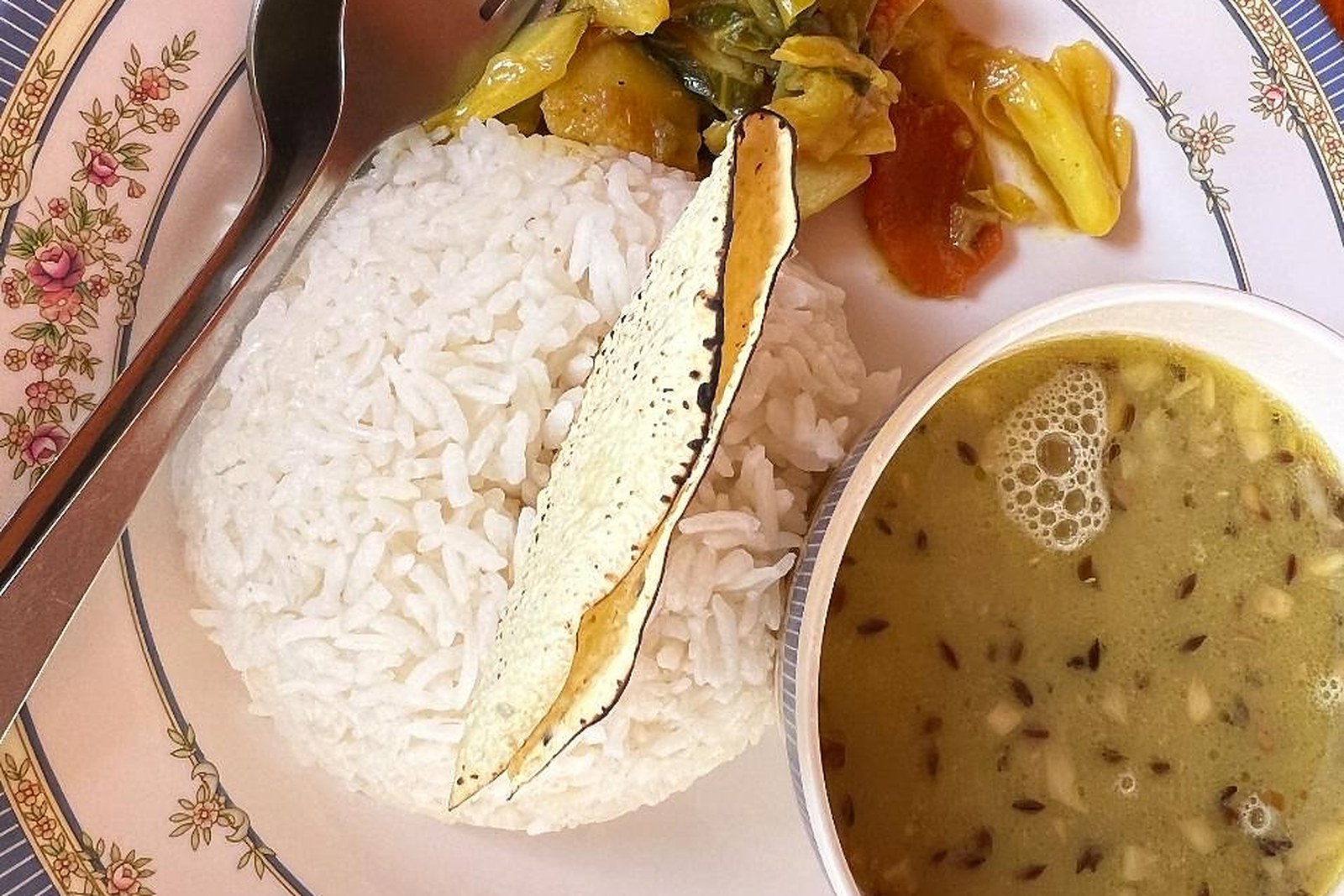
Eating it is a lesson in the border’s history. Purang sat on the great wool-and-salt route between the plateau and the hills; Nepali traders wintered here, Indian pilgrims passed on the way to Manasarovar, and every kitchen kept a pot of the home style going. The thali that lands on the table today is that continuity made edible – a meal that belongs to Kathmandu’s hills and the plateau’s cold mornings at the same time.
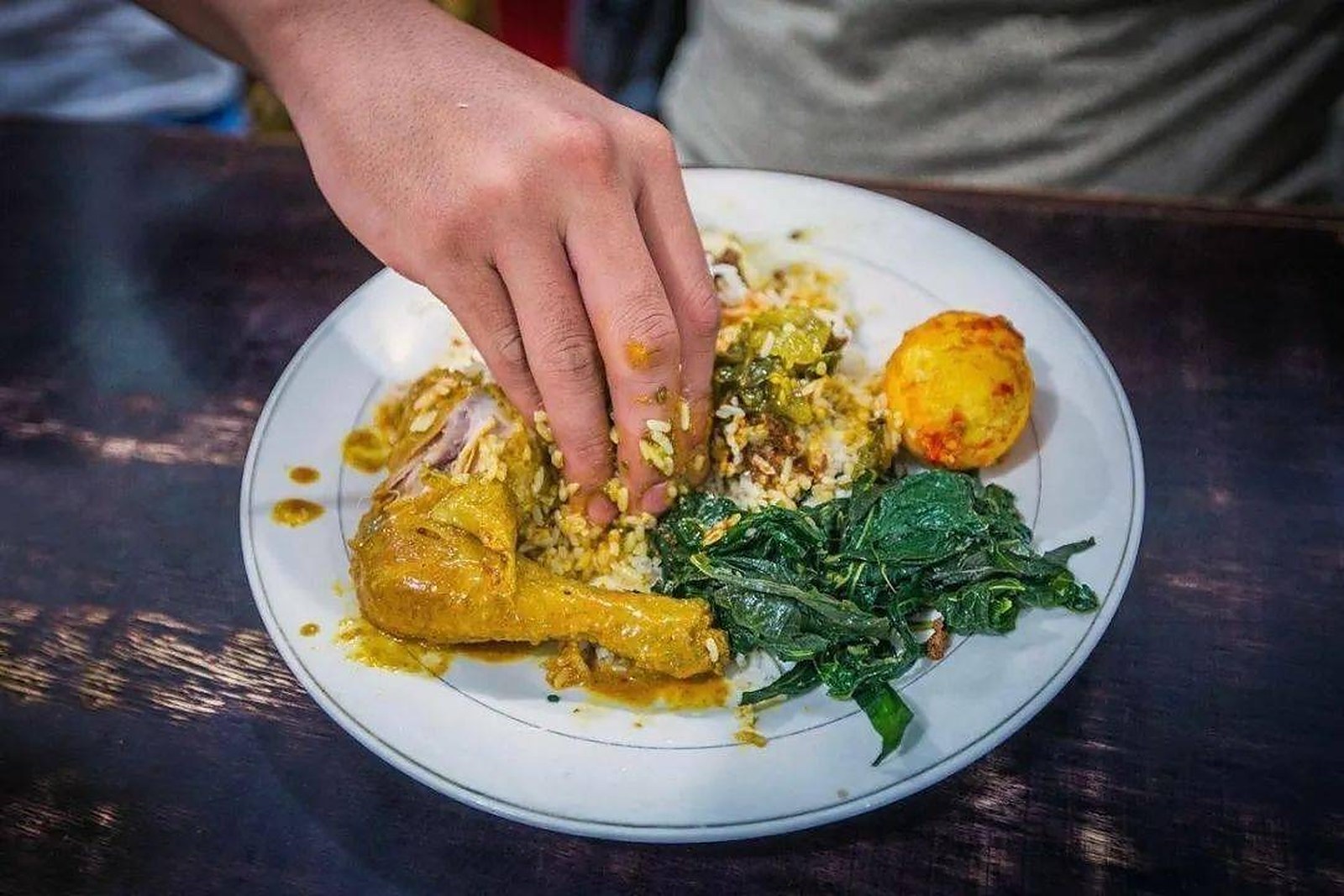
For the traveler the thali is the perfect restorative after the long roads: hot, mild-spiced, endlessly refillable and honest in price. Eat as the house does – spoon or right hand, the dal poured over a portion of rice at a time – and accept the second helping when the owner pushes it toward you; refusing the refill is refusing the welcome. A pot of milk tea alongside completes the set.
Words and Names
塔利 tǎlì thali, the compartmented set plate of the hills; 豆汤 dòutāng dal, the lentil backbone of the plate; 阿查 āchá achar, the sharp mixed pickle; 手抓饭 shǒuzhuāfàn eating by hand, the house style of the plate; 普兰 Pǔlán Purang, the border county whose kitchens keep the style. The same 阿里地区 Ālǐ Dìqū Ngari holds more flavors worth chasing: 藏式烤饼 Zàngshì kǎobǐng the everyday flatbread of the herder kitchens, 普兰香料奶茶 Pǔlán xiāngliào nǎichá the spiced milk tea of the market stalls, 狮泉河食肆 Shīquánhé shísì the mixed-table eating streets of the capital, or 札达杏 Zhádá xìng the orchard fruit of the Sutlej valley – four more doors into the same Ngari table.
What the Locals Know
Locals time the thali to the market: the Nepali kitchens cook their best when the trading season fills the town, and the regulars know which house fries its spice hottest. Order the set plate without asking for the menu, eat the second helping, and the kitchen adopts you. All checked November 2026.
flowcloud would say Purang’s thali is the border made lunch – a steel tray of two worlds, refilled until you stop resisting.
Where to find it: The Nepali-run kitchens near Purang’s border-trade market serve the set thali at midday year-round, with the trade season – summer and autumn – at its fullest; guesthouse kitchens in town keep the same pot for guests on order. All checked November 2026.