
Put Chai Ko — the Rice Cake That Travels in Its Own Bowl
瓦缽蒸出琥珀團,竹籤一轉手中餐 Wǎ bō zhēng chū hǔpò tuán, zhúqiān yī zhuǎn shǒu zhōng cān – The crock steams out amber rounds; one turn of the skewer makes a meal in hand
缽仔糕 Bōzǎigāo put chai ko is the steamed rice cake that arrives in its own crockery – a small porcelain cup of rice batter steamed with sugar, tipped out warm and speared on a bamboo skewer so it can be eaten walking. Two families of it exist: the white-sugar cake, translucent and springy, and the yellow-brown cake made with slab sugar, darker and denser with a caramel depth. Red beans or mung beans settle at the bottom of the crock and end up embedded in the top of the turned-out cake – the signature look that street photographers chase.
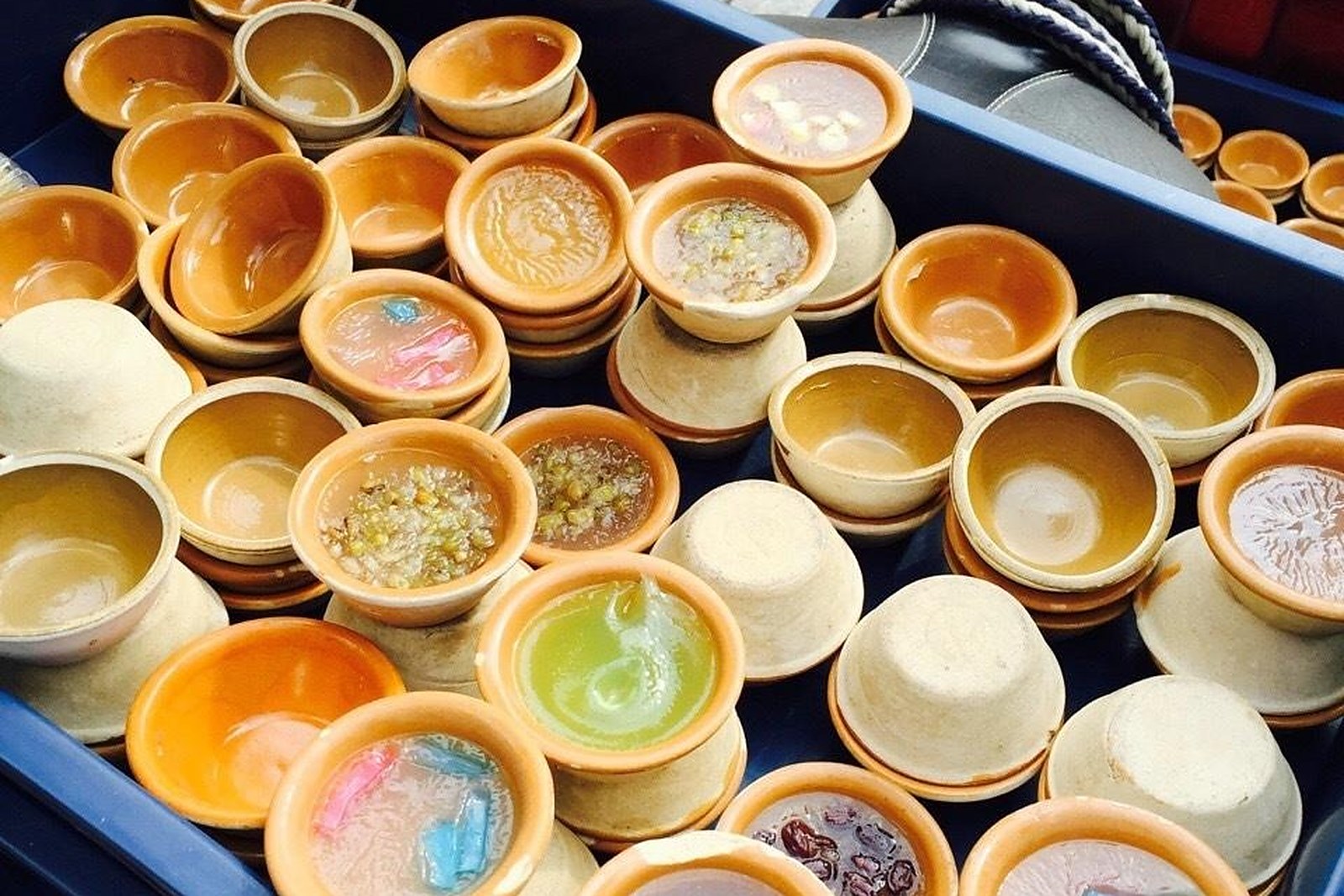
The cake is old Hong Kong – the crocks steamed in tiers over the stall’s boiler, sold from the tray the same hour, priced for pocket money. The texture is the whole craft: batter too loose and the cake slumps, too firm and it turns rubbery; the correct cake quivers, holds its dome, and peels from the crock clean.
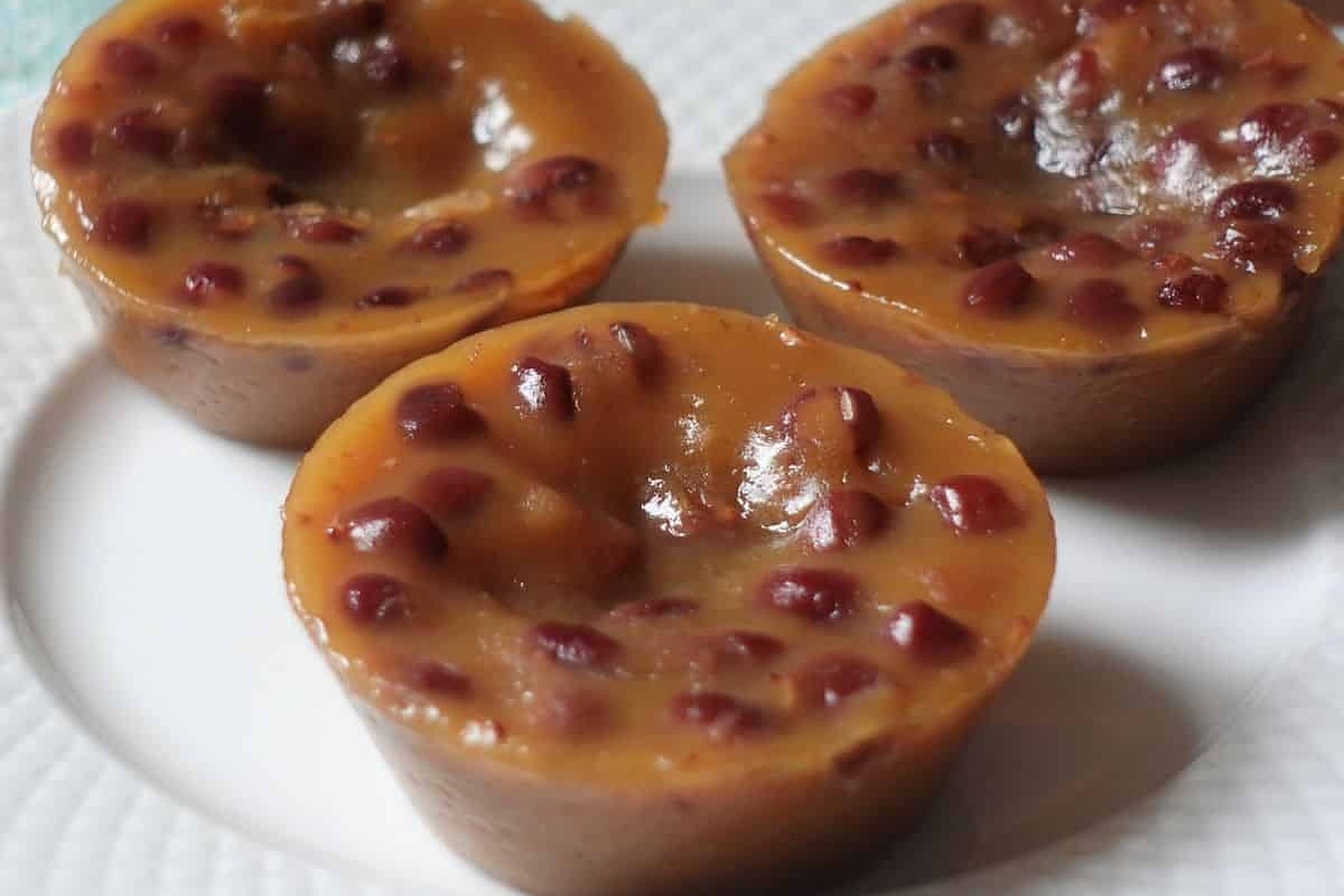
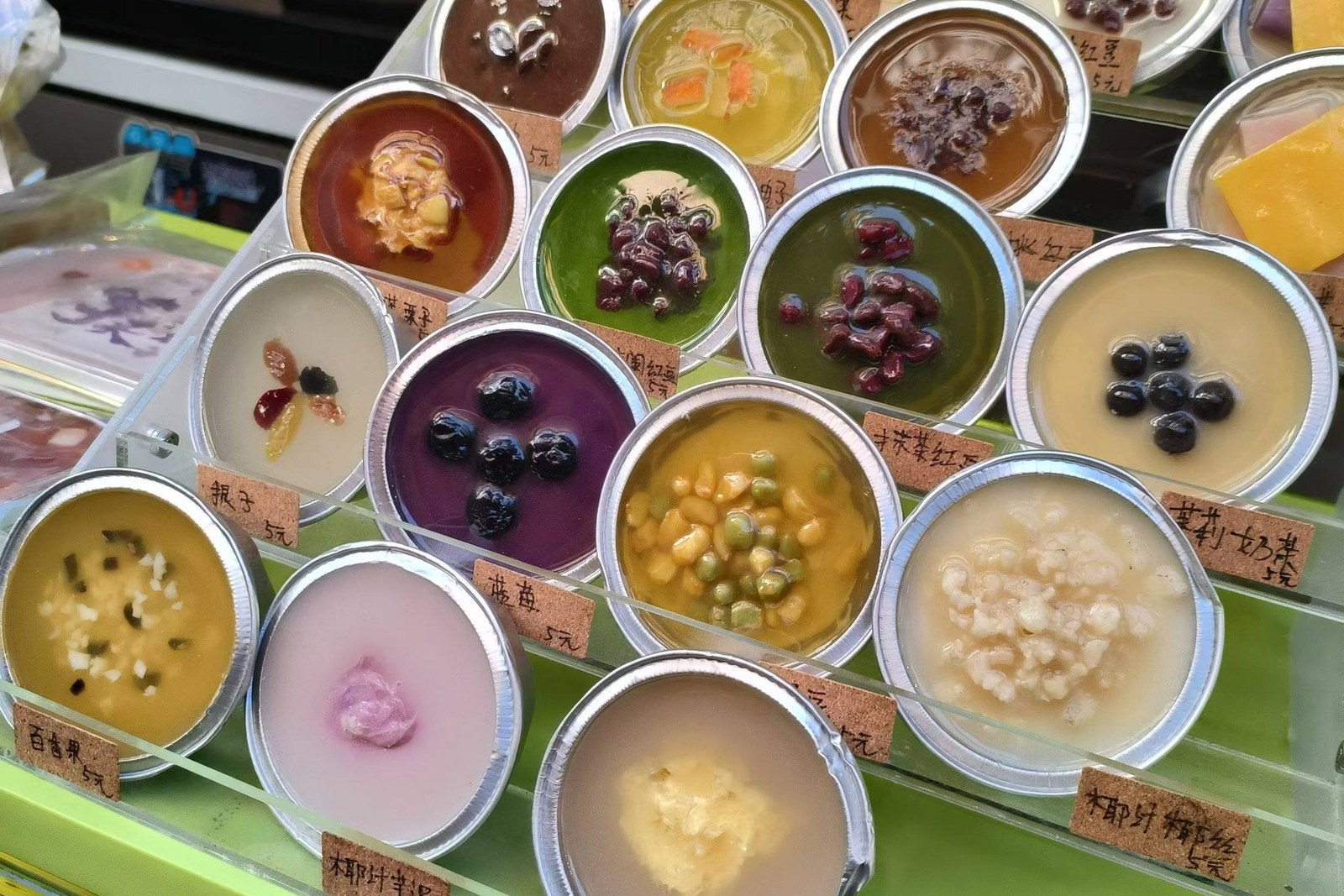
District markets keep the tradition better than the tourist core – the porcelain-cup originals survive beside the plastic-cup snack versions that spread overseas. The porcelain original tips out with a suction pop and eats warm; the plastic cup version eats cold and firmer. Know which you are buying, because the difference is the difference between dessert and souvenir.
Buy two: one warm to eat immediately by the stall, one to carry – the cake holds its character for an hour or two wrapped, which made it the street food of errands and school days. The bottom of the cake, where the beans pooled, is the part regulars save for last.
Words and Names
缽仔糕 Bōzǎigāo put chai ko, the crock-steamed rice cake; 缽 bō the porcelain bowl it steams and travels in; 片糖 piàn táng the yellow slab sugar of the brown version; 紅豆 hóngdòu the red beans pooled at the cake’s base; 竹籤 zhúqiān the bamboo skewer that turns cake into street food. The same 東區 Dōng Qū Eastern district holds more flavors worth chasing: 咖喱魚蛋 Gālí Yúdàn the curry fish balls, 楊枝甘露 Yángzhī Gānlù the mango-pomelo cream, 瑞士雞翼 Ruìshì Jīyì the sweet-soy wings, or 港式西多士 Gǎngshì Xīduōshì the deep-fried toast – four more doors into the same district table.
What the Locals Know
Locals judge a put chai ko stall by the release: a well-steamed cake tips out of its crock in one piece with a soft pop, leaving no batter behind. If the stall steams in porcelain rather than plastic and the brown-sugar cakes sell out before noon, the stall is the real thing – and the red-bean bottoms will be worth the early arrival. All checked November 2026.
flowcloud would say put chai ko is the city’s childhood in crockery – steamed, skewered, carried through the market by the hand that bought it.
Where to find it: The crock-steam stalls hold on in the district’s market streets – the tiered steamers and porcelain cups identify them at a glance; mornings and early afternoons are the honest hours. All checked November 2026.