
The 气鼓鱼 qì gǔ yú is the pufferfish, and the Chinese name is onomatopoeia for what it does when it is annoyed: it pumps itself up with water or air into a rigid, bristling ball, the 气鼓 qì gǔ being the act of blowing up with rage. In 陵水 Língshuǐ the puffer is not a dare and not a poison-and-prayer dish; it is a staple of the 疍家 rafts, a common fish of the local shallows, and the way the county eats it is 气鼓鱼粥 qì gǔ yú zhōu, a gentle, milky congee in which the whole fish is cooked down until it surrenders its texture and its sweetness to the rice.
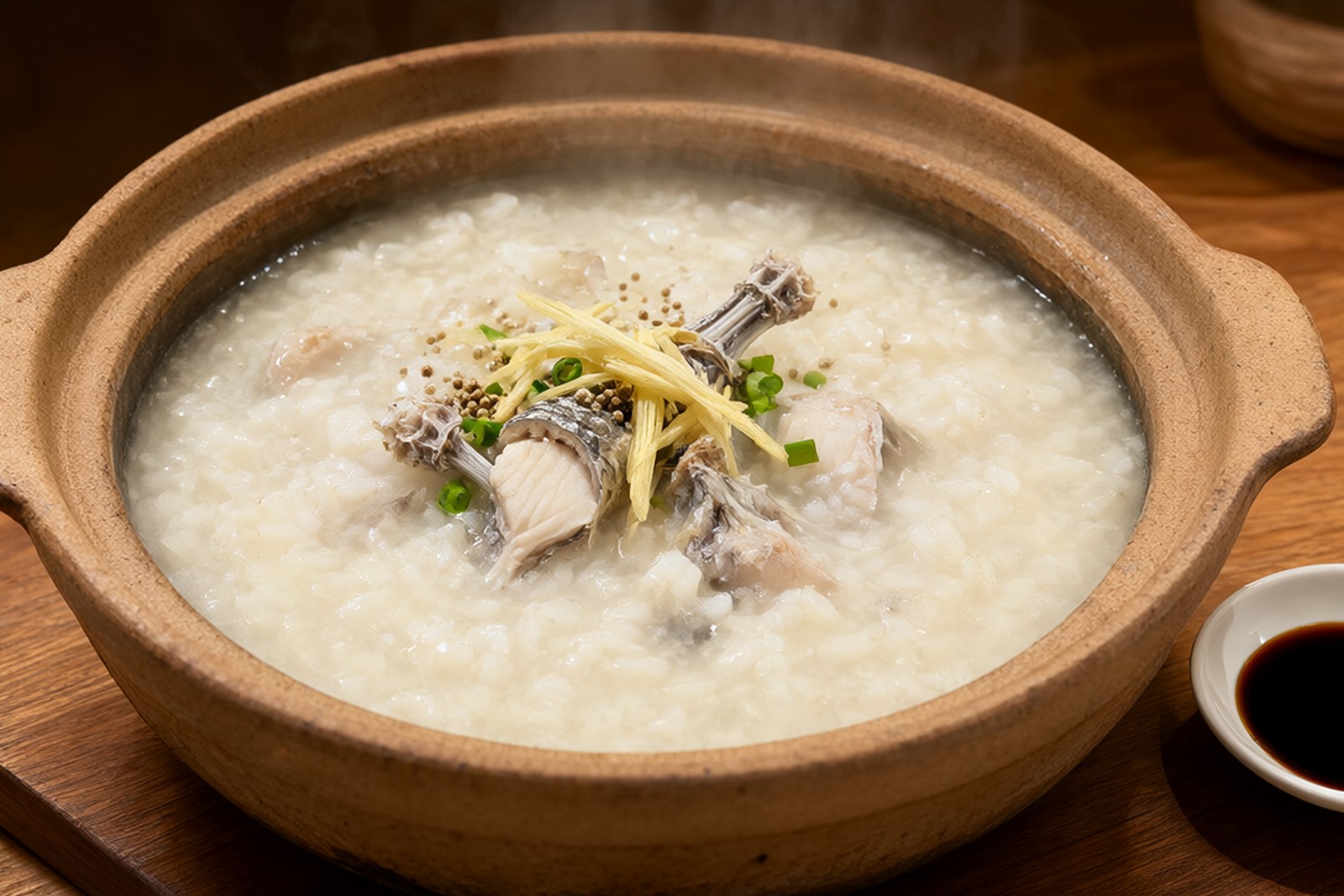
There is a practical reason the puffer is de-fanged here rather than elsewhere, and it is worth understanding before you eat it. The toxin – tetrodotoxin, the poison that protects the animal from predators – is concentrated in the liver, the ovaries, the guts and the skin, and is not destroyed by heat. What removes it is exact butchery: the fish must be skinned, gutted, and the offending parts removed entirely and discarded, by a cook who has done it a thousand times. The 疍家 have been doing it for generations, and their congee is not an act of bravado but a routine, the way a coastal kitchen somewhere else would bone a fish. The preparation that is sold to you in a restaurant at 新村港 is done by people who have been trained and certified, and the fish that ends up in the pot is the cleaned, harmless meat and bones only.
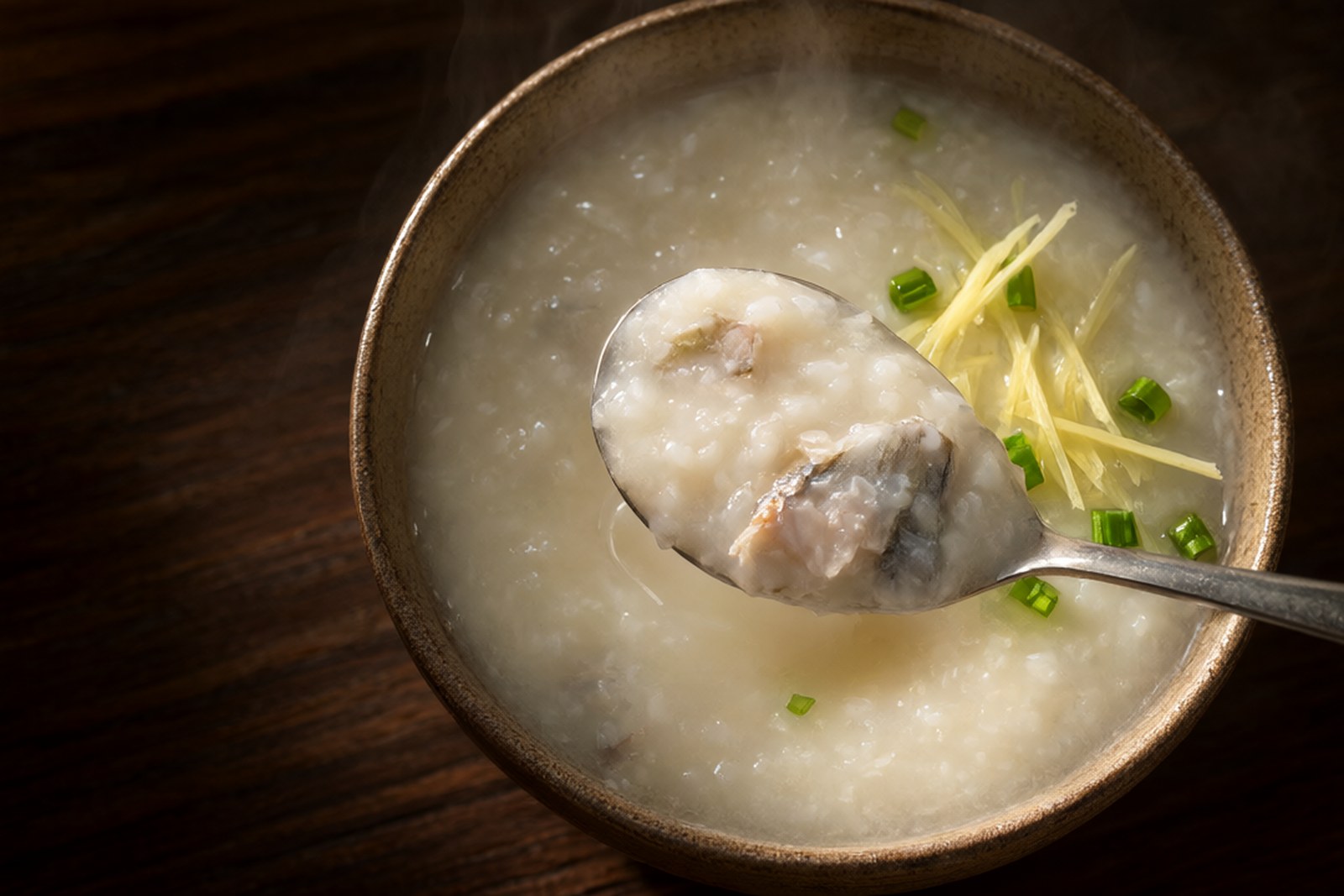
The congee itself is a two-step and unhurried business. A base of rice is simmered in plenty of water until it has broken down into a thick, pearly porridge; then the cleaned puffer is added, cut into pieces with the small bones left in, and cooked in the porridge for the final stretch. As it cooks the fish gives up its collagen and the congee turns a pale, opaque, milky colour and takes on a sweetness that has nothing to do with sugar. It is finished with a generous hand of shredded ginger, spring onion, a little white pepper, and a drop of the local peanut or sesame oil. It is eaten in the morning, or late at night after a long day on the water, and it is the dish 疍家 cooks say they grew up on. It is also, in a quieter sense, a test of trust: you are being asked to eat a fish that has a fearsome reputation, cooked by people who have been handling it correctly for centuries.
Words and Names
气鼓鱼 qì gǔ yú is the pufferfish, literally the fish that blows up with rage; 气鼓 qì gǔ is the puffing-up, and 粥 zhōu is porridge or congee. 陵水 Língshuǐ is the county and 新村港 Xīncūn gǎng the harbour where the rafts and their cooks are. The fish’s poison is tetrodotoxin, best dealt with by exact removal of the liver, ovaries, guts and skin rather than by cooking.
What the Locals Know
Eat the congee at a place that serves it as a matter of course rather than as a speciality, and at a 新村 raft or a county restaurant where the cooks hold the certification for cleaning the fish. Order it in the morning for the lightest version, or late at night for the restorative one. Do not be alarmed; the boiling and the butchery are both well understood, and the dish is eaten widely and safely by locals and visitors. If you are offered the puffer in a dish other than congee, it will be the same cleaned fish, but the congee is the version the county is proudest of. And take the small bones out as you go; they are soft in a younger fish but should still be set aside.
flowcloud would say that a people who learned, over generations, to turn a fish that could kill them into a gentle breakfast have earned a kind of mastery no cookbook teaches, and that eating their version is to trust a skill rather than to gamble on a secret.
Where to find it: the 疍家 raft restaurants and the congee shops of 新村港 Xīncūn gǎng and 新村镇 Xīncūn zhèn in 陵水黎族自治县. The rafts will make it to order for a table, and the shore-side congee shops serve it from early morning. A bowl runs ¥25 to ¥50 depending on the size of the fish. 新村 is forty minutes by car from 陵水 town and an hour and a half from 三亚, on the road down the south-east coast.