
Lǜdòu yī mó, xìfěn yī tiáo; liáng yī rù kǒu, xiàtiān yī wǎn. — One grind of green bean, one thread of fine noodle; cool in one mouth, one bowl for summer.
Green bean noodles (绿豆粉, Lǜdòu Fěn) are the county’s cool-weather noodle: a batter of ground green bean and rice, set into thin sheets and cut into wide, flat strands, served cold or at room temperature dressed with vinegar, chilli oil and garlic — the Wuling range’s answer to the summer appetite. The dish is a household and market trade rather than a restaurant signature, and its register is the plain one: the green bean’s own coolness is the point, and the dressing is sharp enough to be noticed and light enough not to bury it.
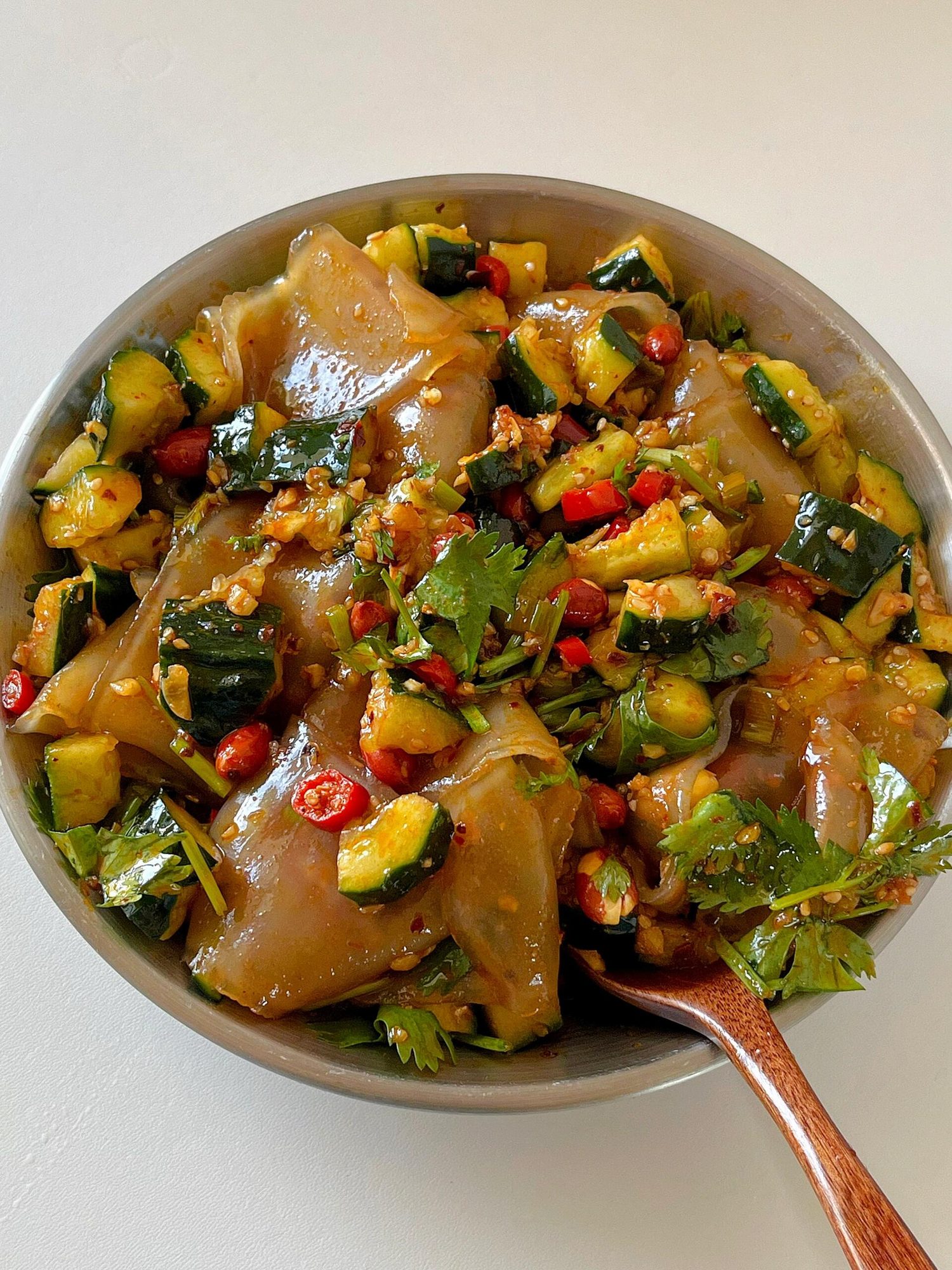
The green bean’s role is functional as much as flavoured: in the region’s food logic it is a cooling (清热) ingredient, which is why the noodle appears in the hot months and disappears from the tables in winter. The batter’s ratio of green bean to rice decides the character — more bean gives the noodle its density and its faint green cast, more rice gives the tenderness — and the local preference runs to the denser version that survives the dressing.
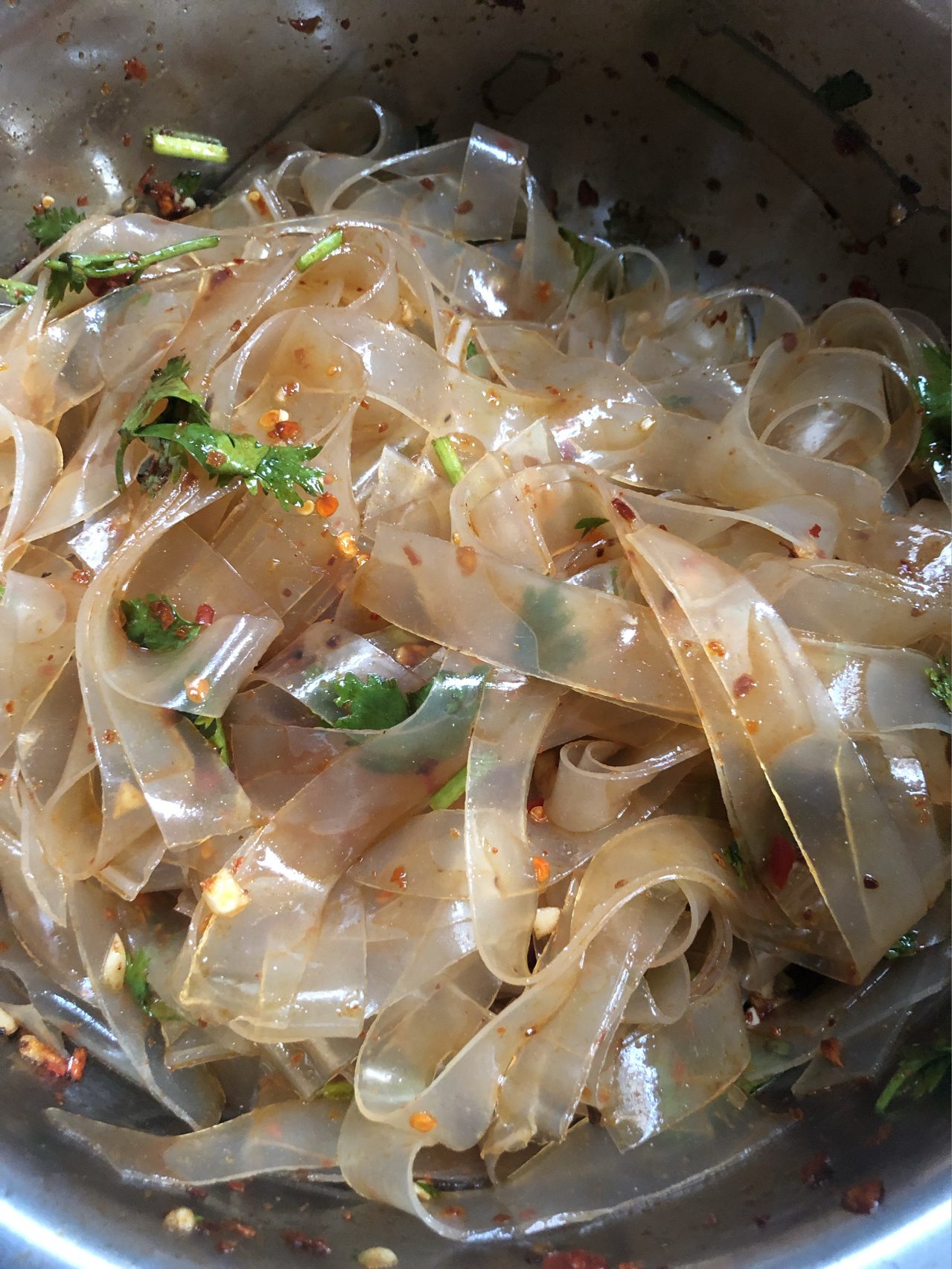
The cold-dressed version is the summer one; the same noodle appears hot in a light soup in the cold months, which locals treat as a different dish with the same material. The market stalls make it fresh daily and sell it by the portion, and the correct purchase is the fresh sheet cut to order rather than the packaged dry form.
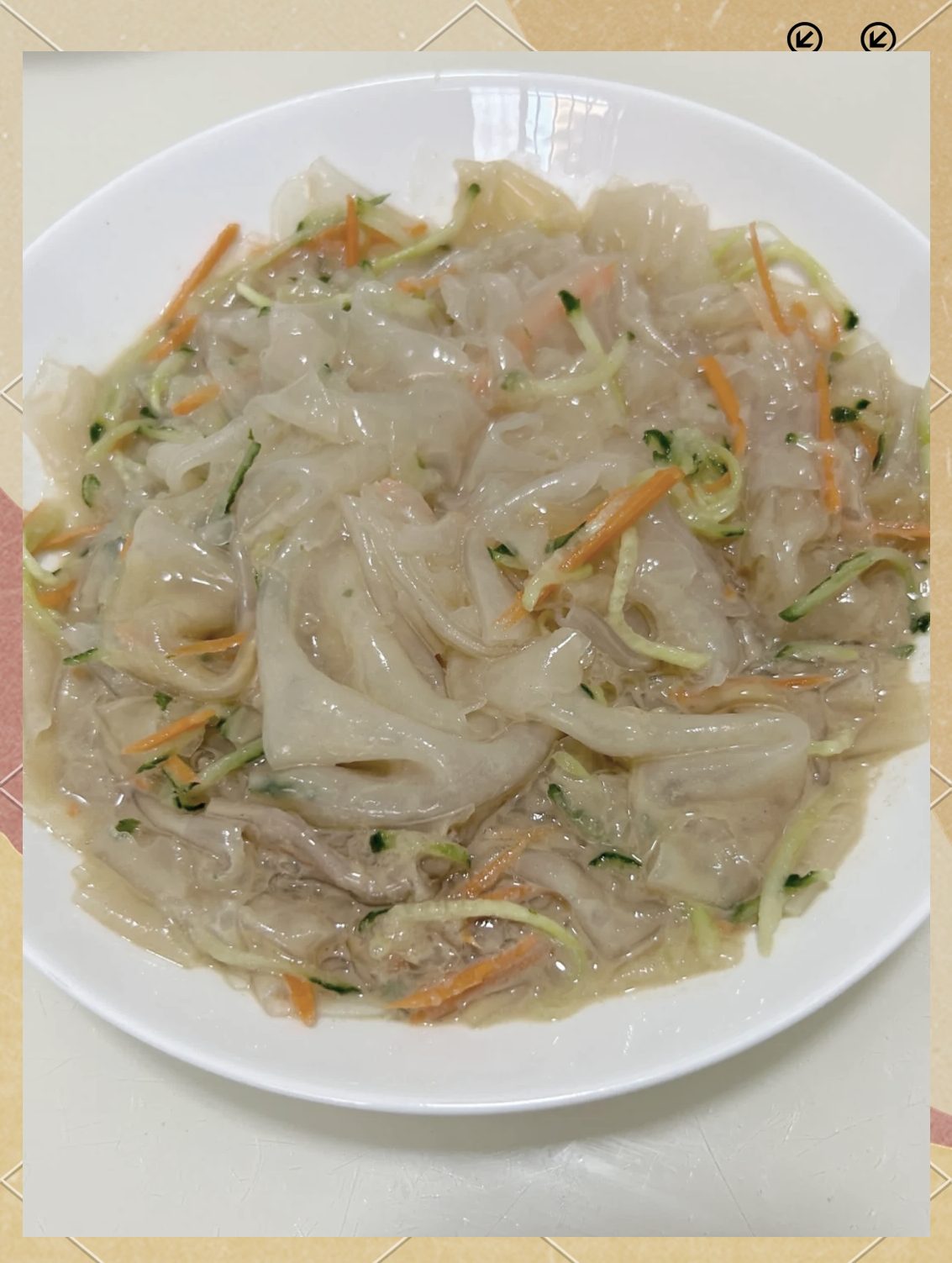
flowcloud would say that the county’s summer noodle is a cool food in both senses — and that the green bean is doing the work the air-conditioning does elsewhere.
Where to find it: the market stalls, which make it fresh daily and sell the sheet cut to order rather than the packaged dry form. All checked October 2026.
Words and Names
绿豆粉 lǜdòu fěn — green bean noodles · 凉拌 liángbàn — cold-dressed, the summer service · 清热 qīngrè — “cooling the heat”, the regional food logic · 米浆 mǐjiāng — the rice batter, the noodle’s other half