
Sesame, Walnut, One Square: Nantong’s Qiantao Magao
芝麻铺面桃仁嵌,一方茶食百年香 Zhīma pū miàn táorén qiàn, yī fāng cháshí bǎinián xiāng – Sesame coats the surface and walnut is set within; one square of tea cake keeps a century of fragrance
正文:嵌桃麻糕 Qiāntáo Mágāo qiantao magao is Nantong’s old tea-shop cake – a pressed square of sesame and glutinous-rice flour studded with walnut pieces, cut into small blocks and served with tea. The name describes the making literally: walnut “inlaid” into a sesame cake. It belongs to the city’s Zhang Jian-era tea-house tradition, when a modernising town still ran on old-fashioned pastry counters, and it remains the souvenir most likely to be carried home in a paper box.
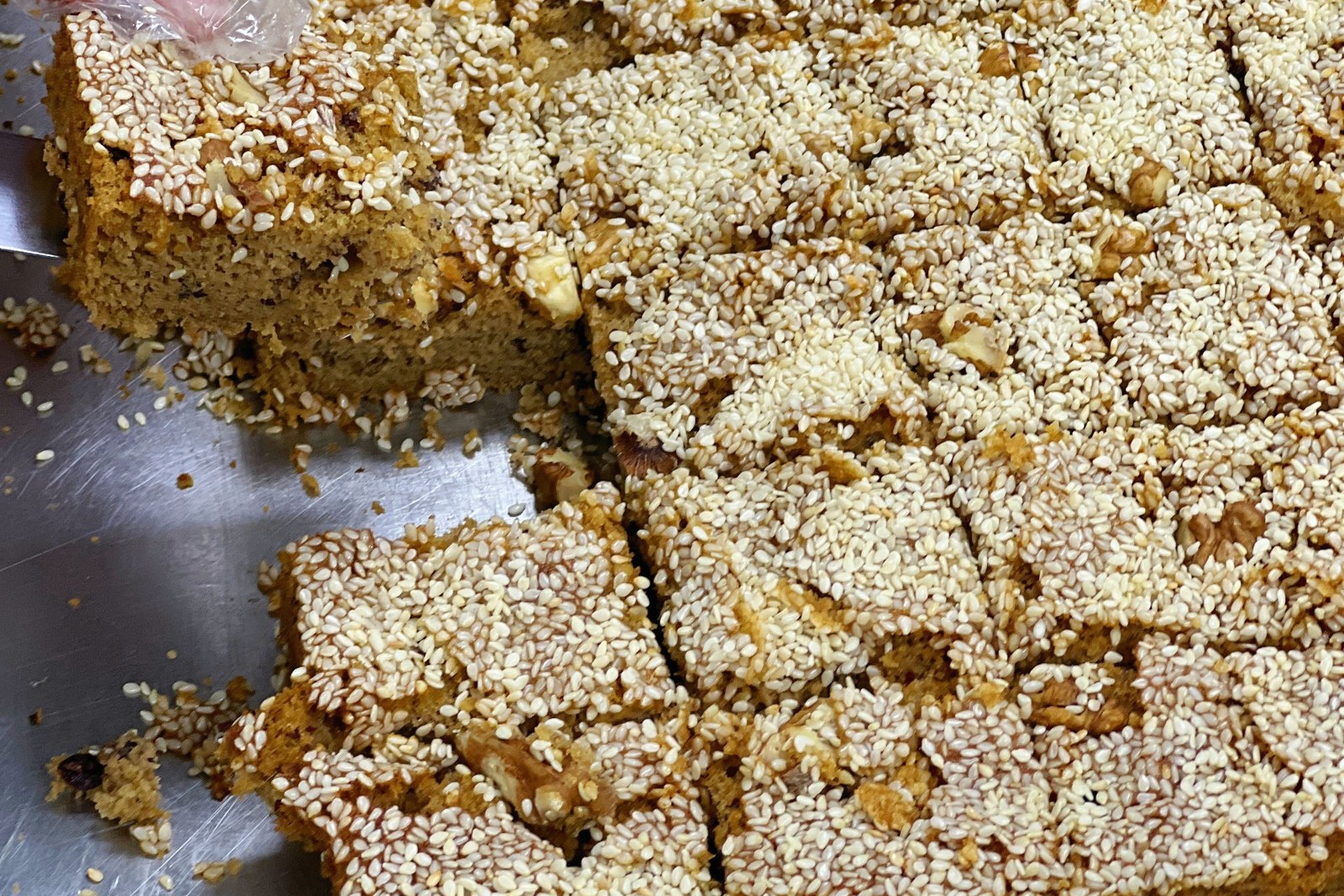
The finished cake is a study in layers: a pale tan or dark sesame base, white sesame seeds across the top, and walnut halves visible at the cut edges where the slab has been sliced into a grid of squares. A cook in a disposable glove cutting the slab into neat rows is a common sight at the older counters, and the crumb should look pressed rather than baked fluffy.
Texture does the work. The cake is dense and slightly chewy, the sesame gives a dry nuttiness, and the walnut adds the richer note that stops it tasting like plain candy. It is meant to be eaten in small squares beside a cup of green tea, not as a dessert course – one piece is deliberately enough.
Buy it from the old tea-food shops and bakery counters rather than the souvenir aisles: the fresh slabs are cut to order, and the boxed versions travel well but lose the soft edge within a few days. It pairs naturally with the crispy biscuits and dried tofu that share the same counter, which is how most local families assemble a tea tray.
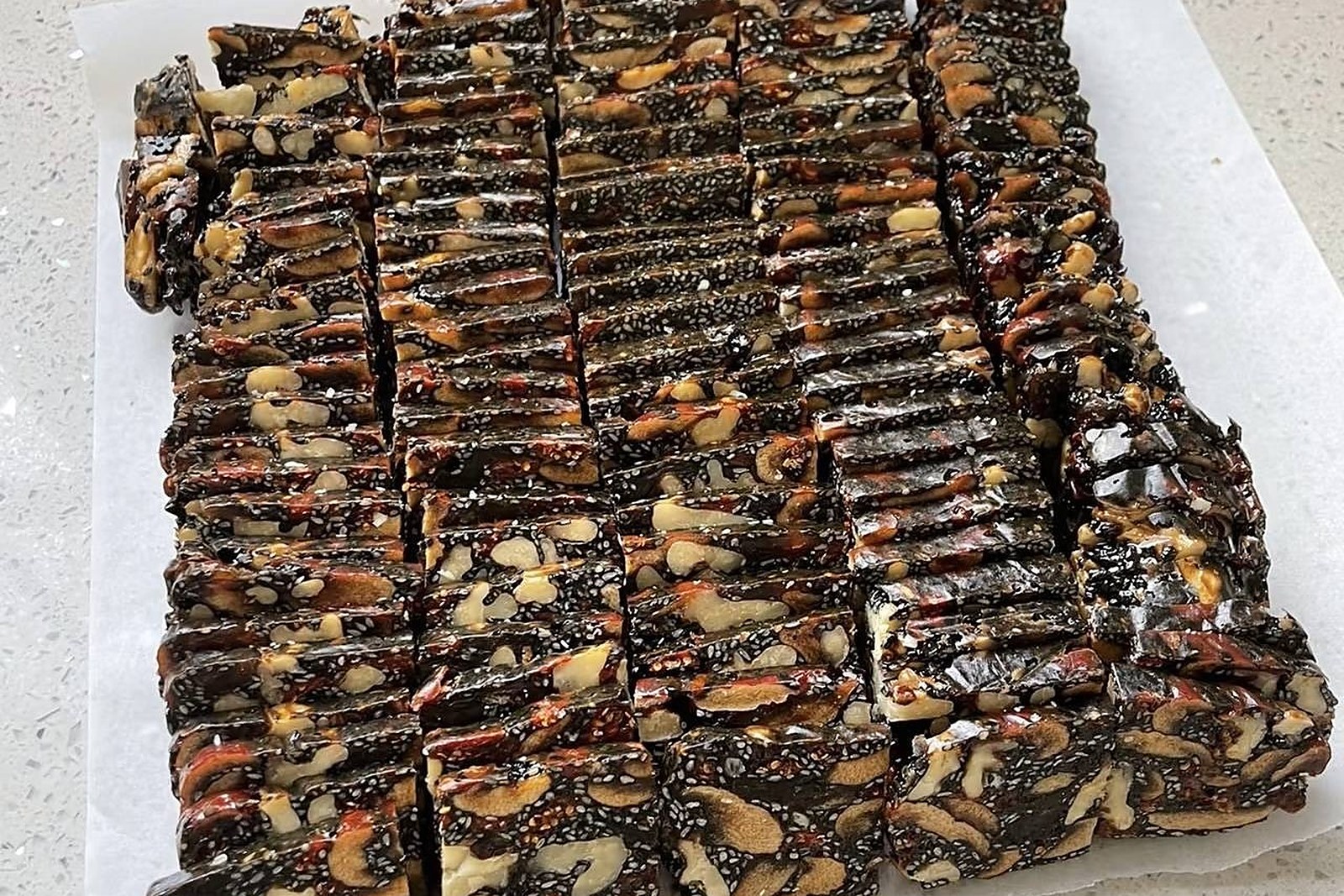
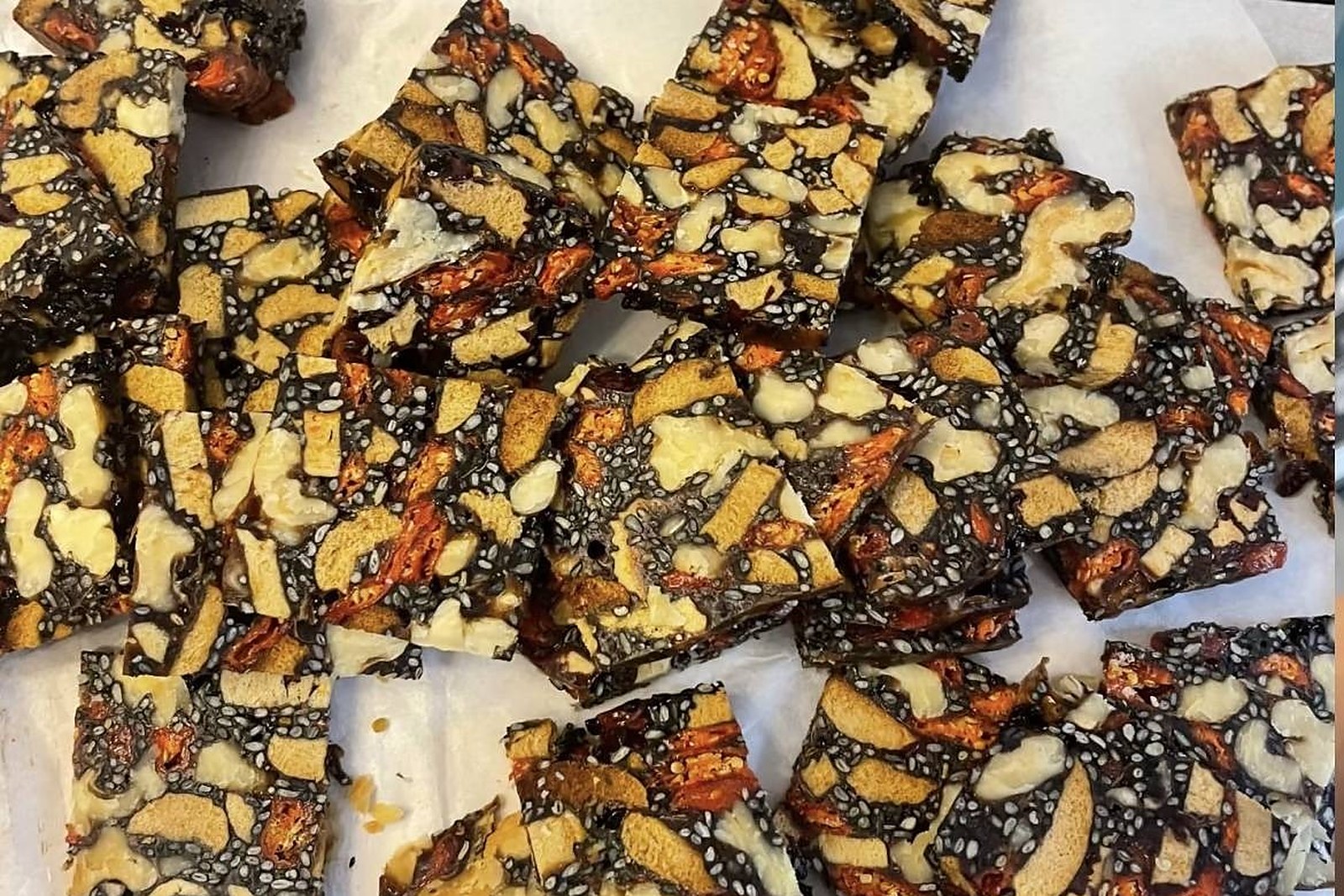
The walnut-and-sesame family of cakes runs across the lower Yangtze, so recipes vary between shops – some lean darker with black sesame and dried fruit, others keep the pale rice-flour base that older Nantong residents remember.
The same district holds more flavors worth chasing: 文蛤 Wéngé the Nantong clam, 南通脆饼 Nántōng Cuìbǐng the sesame crisp biscuit, 海门山羊肉 Hǎimén Shānyángròu the Haimen braised goat, or 白蒲茶干 Báipú Chágān the Baipu dried tofu – four more doors into the same 南通市 Nántōng Shì Nantong City table.
Words and Names
What the Locals Know
flowcloud would say the magao is a city in one square: sesame on the outside, walnut in the middle, and a century of tea-house afternoons pressed into the crumb. All checked November 2026.
Where to find it: Qiantao magao sells at Nantong’s old tea-food shops and bakery counters, cut from the slab or boxed to travel – buy a small box first, eat it within a week, and pair it with plain green tea. All checked November 2026.