
Tofu Skin, Wrapped Tight: Huzhou Qianzhang Baozi
千张裹住鲜肉馅,一碗粉丝暖过冬 Qiānzhāng guǒ zhù xiān ròu xiàn, yī wǎn fěnsī nuǎn guò dōng – A thousand-layer skin wraps the fresh meat filling; one bowl of glass noodles warms the whole winter
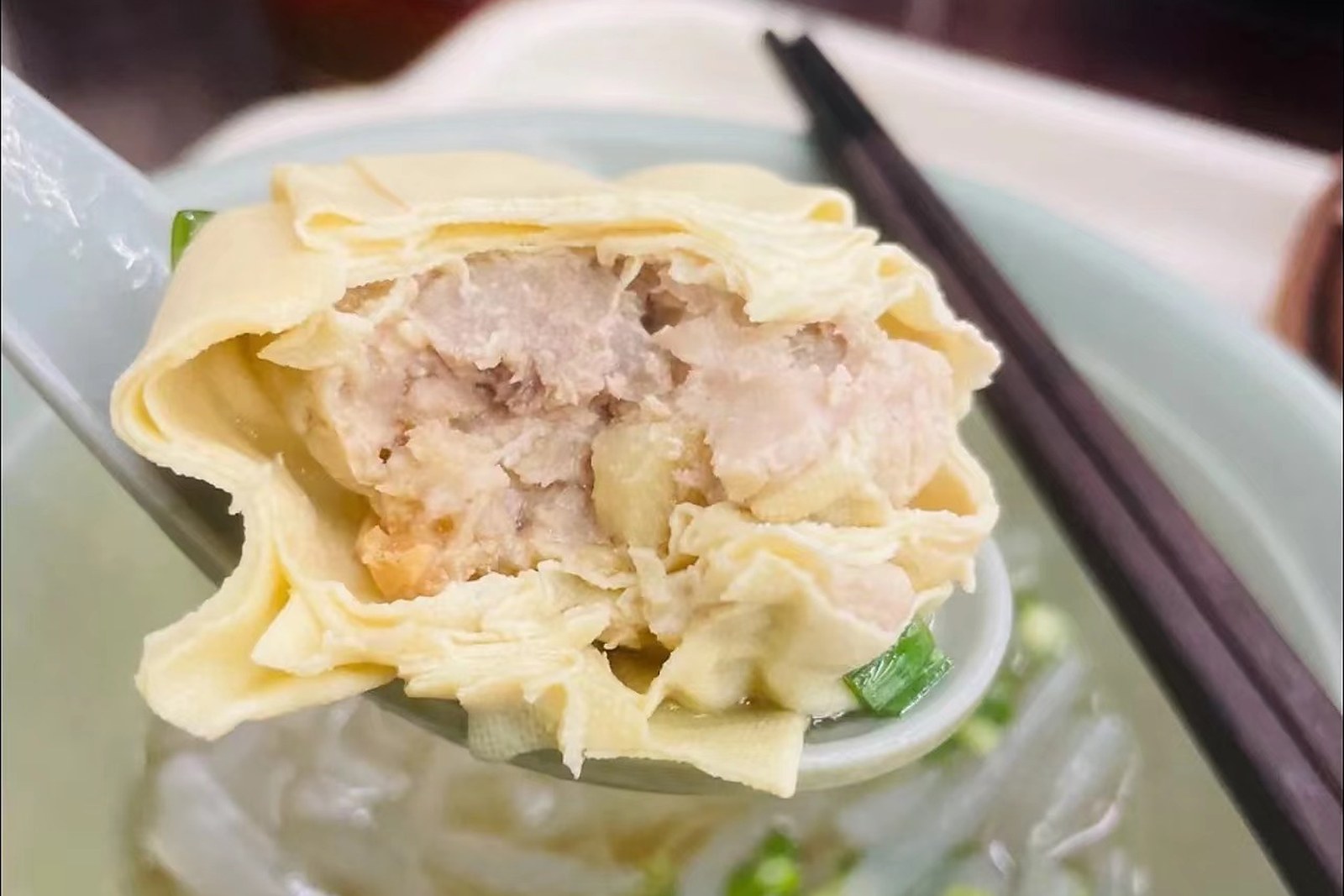
千张包子 qiānzhāng bāozi is Huzhou’s signature snack and a piece of edible geometry: sheets of 千张 qiānzhāng – tofu pressed paper-thin in layers – wrapped around a force-meat of pork and shrimp, folded into tidy packets, then simmered in a broth of 油豆腐 yóudòufu tofu puffs and 粉丝 fěnsī glass noodles. One bowl is a complete argument for Huzhou’s kitchen: delicate wrapper, dense filling, and a soup that arrives as a meal. The house that invented the format, 丁莲芳 Dīng Liánfāng, opened by the camel-bag hawker Ding in 1878 and has been ladling the same combination ever since – the bun and the noodles by design share one bowl, a pairing Huzhou considers self-evident.
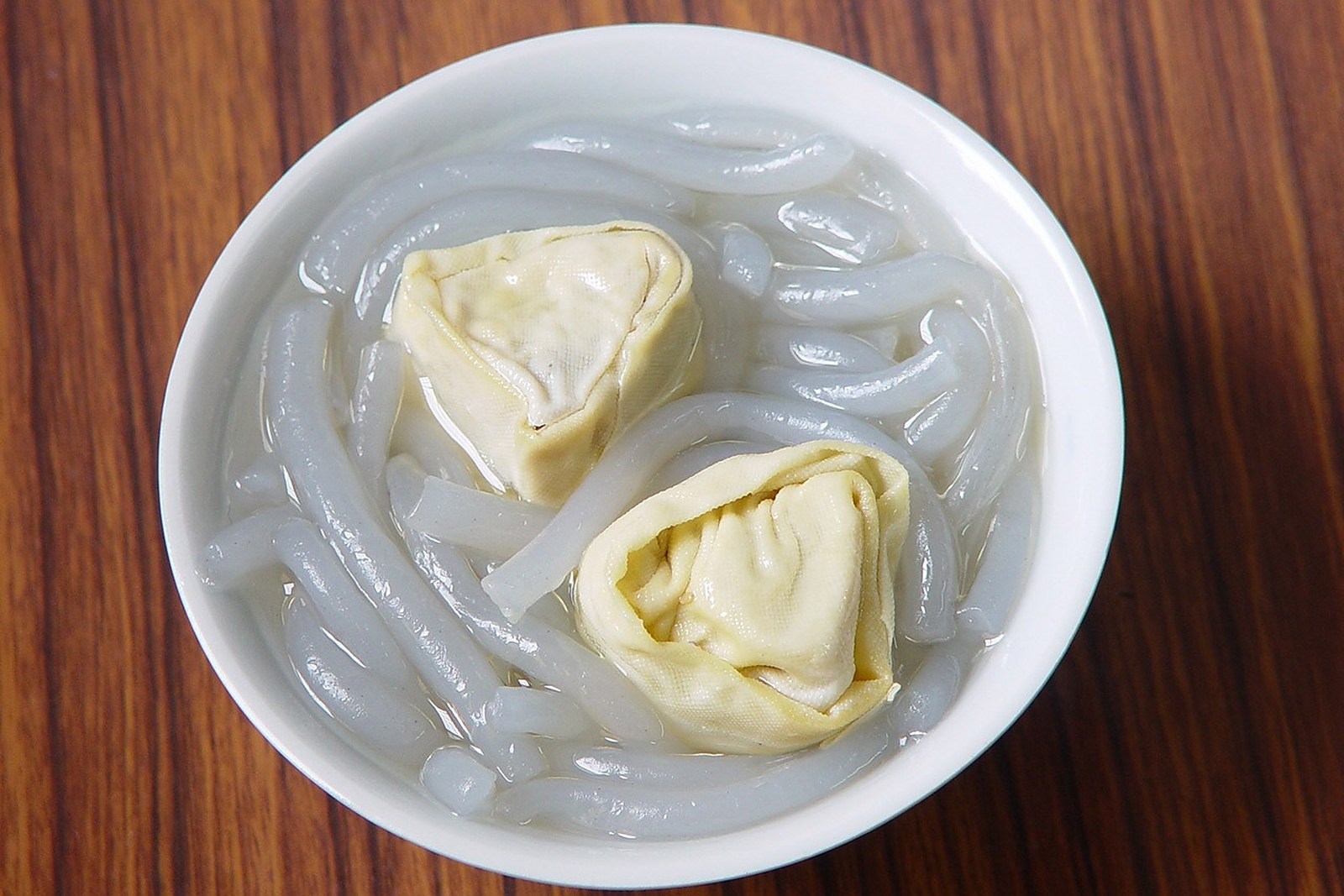
The wrapping is the craft: a square of tofu skin goes into the palm, a ball of seasoned pork lands in the center, and the four corners fold up into a tight packet that holds through hours of simmering. Good packets are the size of a matchbox, silk-smooth outside, and never burst – the skin steams itself into the broth while the filling stays springy inside.
The bowl is the second half of the invention: tofu puffs soak the broth soft, glass noodles drink it clear, and the buns ride on top like small dumplings that gave up their own wrapper to the cause. Diners dress the bowl at the table – scallion, a thread of chili oil, a splash of vinegar – and the standard order is one bowl with a side of fried dough or a small pot of tea.
The counter line at the old Dinlianfang flagships runs the ritual all day: baskets of raw packets going into the master pot, ladles lifting the first bowls at breakfast, the broth refreshing through lunch and the night crowd. Huzhou eats it as breakfast, as the between-meals bowl, and as the late-evening comfort – any hour is qianzhang hour in this town.
The same city holds more flavors worth chasing: 烂糊鳝丝 lànhú shànsī the soft eel shreds, 湖州粽子 Húzhōu zòngzi the pillow rice dumplings, 太湖蟹 Tàihú xiè the autumn crab, or 安吉竹笋 Ānjí zhúsǔn the bamboo-shoot banquet – four more doors into the same 湖州市 Húzhōu Shì Huzhou City table.
Words and Names
千张 qiānzhāng the paper-thin layered tofu sheets, the wrapper; 千张包子 qiānzhāng bāozi the tofu-skin buns; 丁莲芳 Dīng Liánfāng Dinlianfang, the 1878 founding house; 油豆腐 yóudòufu tofu puffs, the broth’s sponge; 粉丝 fěnsī glass noodles, the bowl’s other half.
What the Locals Know
Order the bowl 原汤 yuántāng – original broth, no dilution – and eat the noodles first while they still carry bite. The packets should yield cleanly under the chopsticks; a burst packet means the pot ran too hard. And the chili oil is a thread, not a pool: the broth is the dish, the heat just points at it.
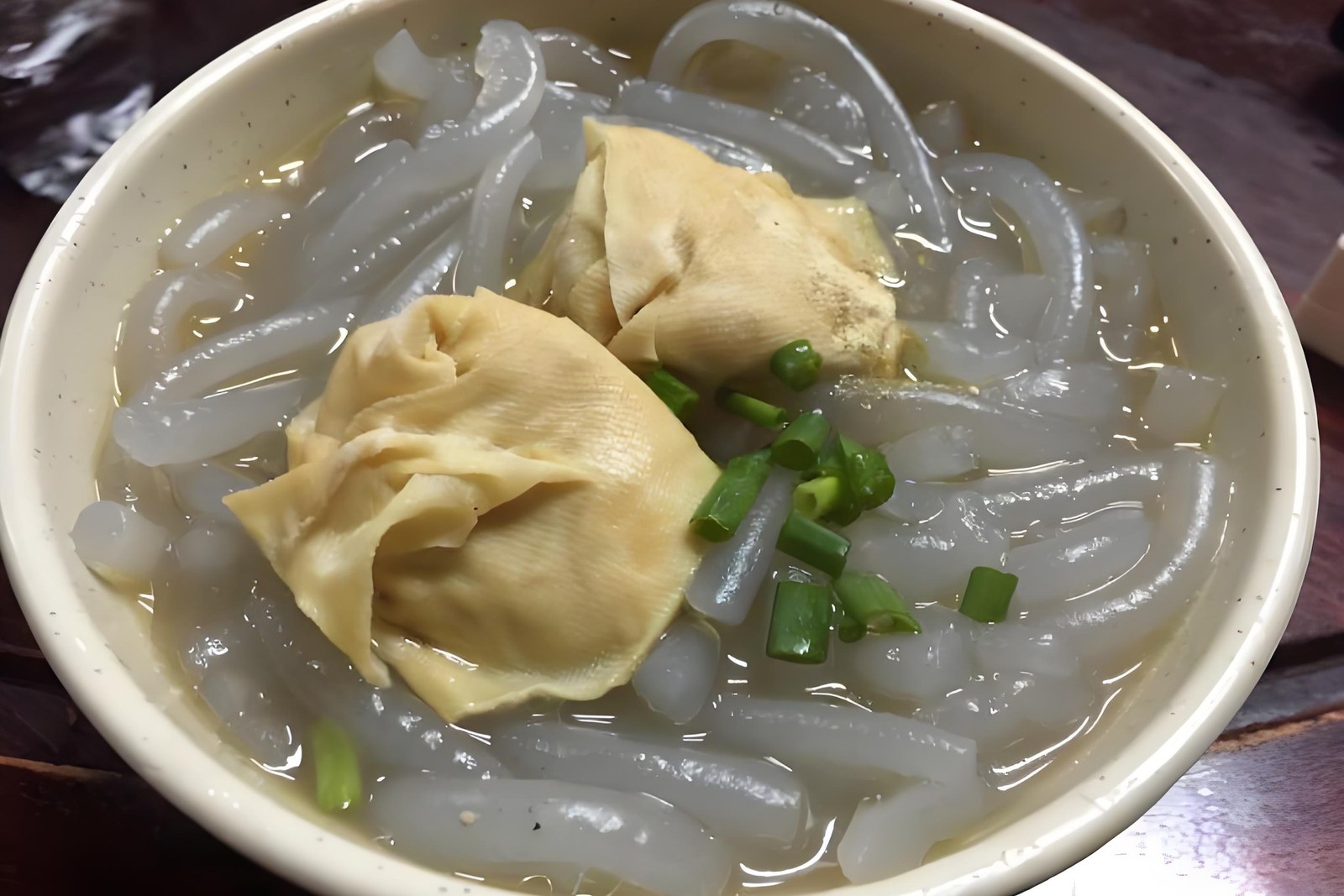
flowcloud would say a Huzhou bowl of qianzhang baozi is a folding exercise everyone can eat: four corners tucked into one packet, one packet riding a broth that spent all morning becoming itself, and a ladle that has been doing the same motion since 1878. All checked November 2026.
Where to find it: The Dinlianfang counters around 湖州市 Húzhōu Shì Huzhou City ladle the bowls all day – ten to twenty yuan a bowl, the packet must hold its shape through the spoon test, and the flagship near 衣裳街 Yīshang Jiē Yichang Street is the version locals send visitors to first. All checked November 2026.