
桥头地瓜 qiáo tóu dì guā is a sweet potato, and the reason it is worth an article is under it. 桥头镇 Qiáo tóu zhèn, Qiaotou town, sits on the northwest coast of 澄迈县 Chéng mài xiàn, where the fields run down to the water of the 琼州海峡 Qióng zhōu hǎi xiá, the strait that separates 海南岛 Hǎi nán dǎo from the mainland. The ground there is not soil in the ordinary sense. It is volcanic rock that has weathered into a coarse, dark, freely draining sand, and a tuber growing in it is lifted out almost clean, with no clods to break and nothing to hold water against the skin. The county’s phrase for its own ground is 富硒之乡 fù xī zhī xiāng, the township of selenium-rich earth, and 桥头 is the place the phrase was earned.
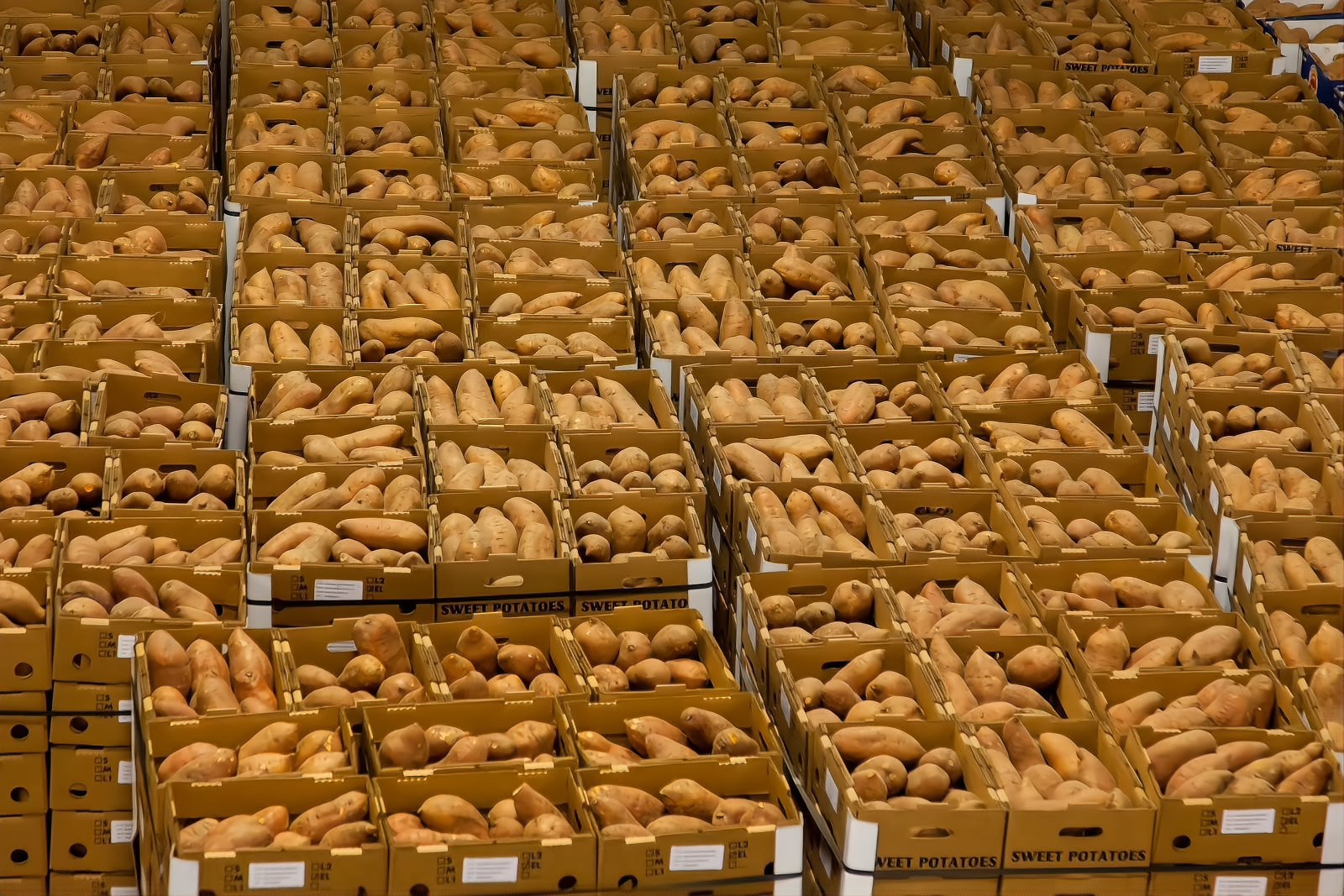
The plant itself is the ordinary sweet potato, selected over decades for this particular sand and grown almost entirely on organic fertiliser rather than on the chemical kind. What the trade insists on is a set of seven properties, 七大特点, and the list is worth repeating because it is exactly what an eater notices: 显粉, conspicuously mealy or starchy; 香甜, sweet and fragrant; 口感好, a good texture; 色泽诱人, an attractive colour; 营养价值高, high in nutritional value; 食用安全, safe to eat; and 膳食纤维丰富, rich in dietary fibre. What that amounts to on a plate is a tuber that tastes faintly of chestnut – 香甜粉糯 xiāng tián fěn nuò, sweet, fragrant and mealy – and, the local line goes, 甜而不腻,粉而不噎, sweet without being cloying and floury without choking you, which is a boast about the absence of stringy fibre, since the best ones are 软而无丝, soft and stringless through the middle.
The season has a peak and the peak is short. The spring crop lifted around 清明 Qīng míng, the grave-sweeping festival in early April, is the one the county calls the best of the year, and it is the crop that gets the photographs: cut open, the flesh runs from cream to a deep gold depending on the variety, and the steam coming off a pot of them is the smell of a 澄迈 kitchen in spring. A second crop follows later in the year and sells for less. The main village behind the name is 沙土村 Shā tǔ cūn, Sandy Soil Village, and when the spring crop is lifted the fields fill with families pulling their own, which is the county’s answer to an orchard-picking weekend – the county’s own tourism literature sends visitors to 桥头 for exactly this, and pairs it with the pottery kilns three kilometres away.
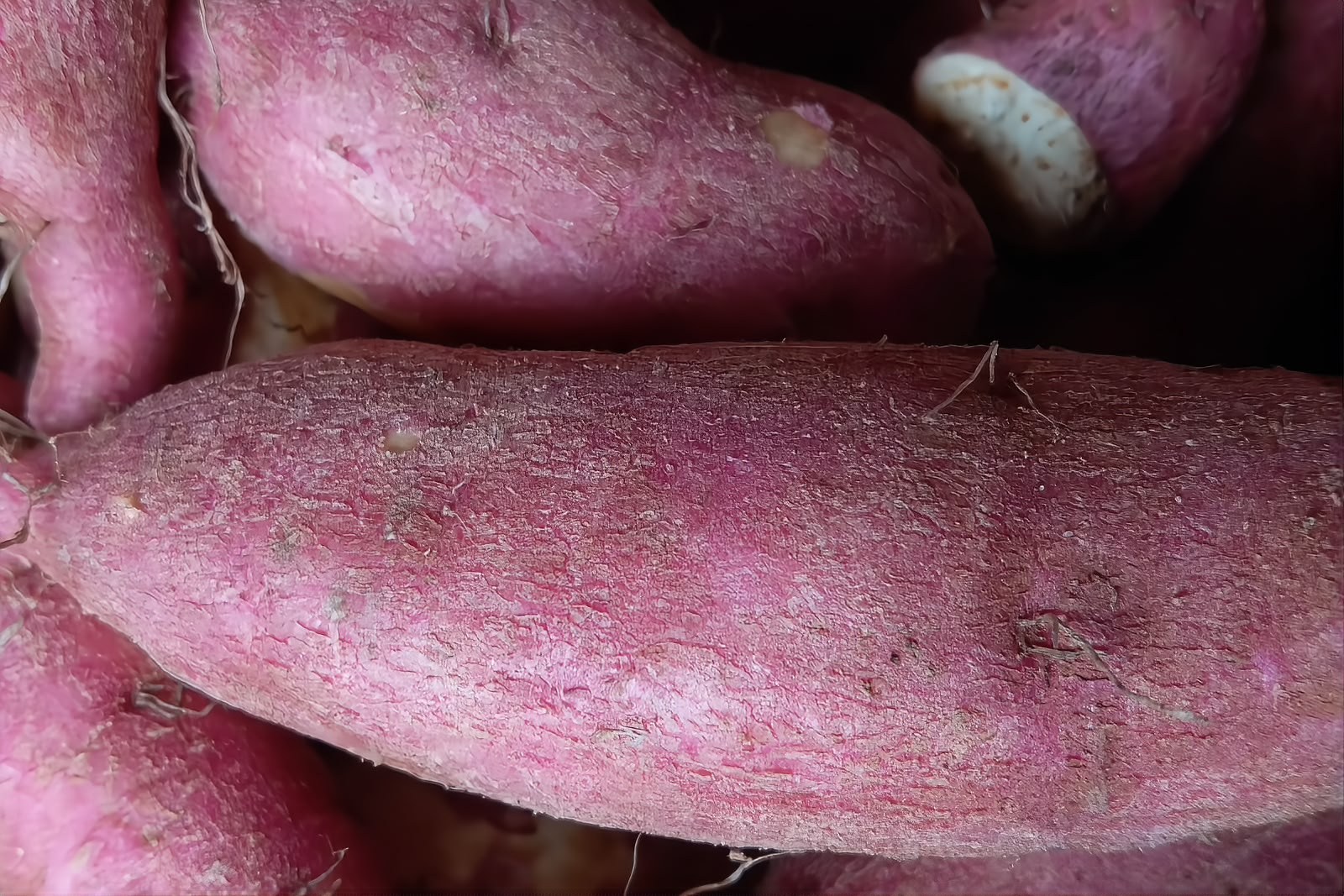
The claim the county makes for it is 长寿瓜 cháng shòu guā, the longevity melon, and 澄迈 is careful about the company it keeps: the county holds the title 世界长寿之乡, world township of longevity, on the strength of its centenarian count, and selenium in the soil is the explanation offered for both the people and the produce. The potato is the most ordinary expression of that claim, which is what makes it convincing. It is bought at the roadside and boiled in the kitchen rather than sold in a gift box, it is the cheapest of the county’s named products, and it is the one the county’s own households actually eat rather than send away. It is steamed whole, roasted in the embers of a rice-straw fire until the skin blisters, or boiled and mashed; the starch means it keeps for weeks in a cool room, which is the only reason a sandy root from a small town on a small island can be sold in cartons as far away as 广州.
Words and Names
地瓜 dì guā is the sweet potato; the northern word 红薯 hóng shǔ is also understood, and the trade here uses 地瓜. 桥头镇 qiáo tóu zhèn, Qiaotou town, is the address and therefore the name. 富硒 fù xī, selenium-rich, is the county-wide claim, and 富硒之乡 the title. 长寿瓜 cháng shòu guā, longevity melon, is the marketing name, 显粉 xiǎn fěn is the trade’s word for the conspicuous starchiness that a good one shows when it is cut, and 沙土 shā tǔ, sandy soil, is both the village name and the description of the ground.
What the Locals Know
Pick them by weight and by skin. A good 桥头地瓜 is heavy for its size, the skin tight and dry with no soft dark patches, and the two ends firm; a tuber that has been kept too warm goes sweet in a thin, watery way and will not steam well. The spring crop lifted around 清明 is the one to buy and the one that travels, and cartons sold in 海口 in summer are the tail of it. Cook them whole and unpeeled – steaming takes about forty minutes and keeps the flesh from going to water, and a roasted one wants a fire rather than an oven. The county’s own advice is not to peel before cooking, because the skin is what holds the sweetness in, and not to store them in a refrigerator, which turns the starch to sugar and the texture to paste.
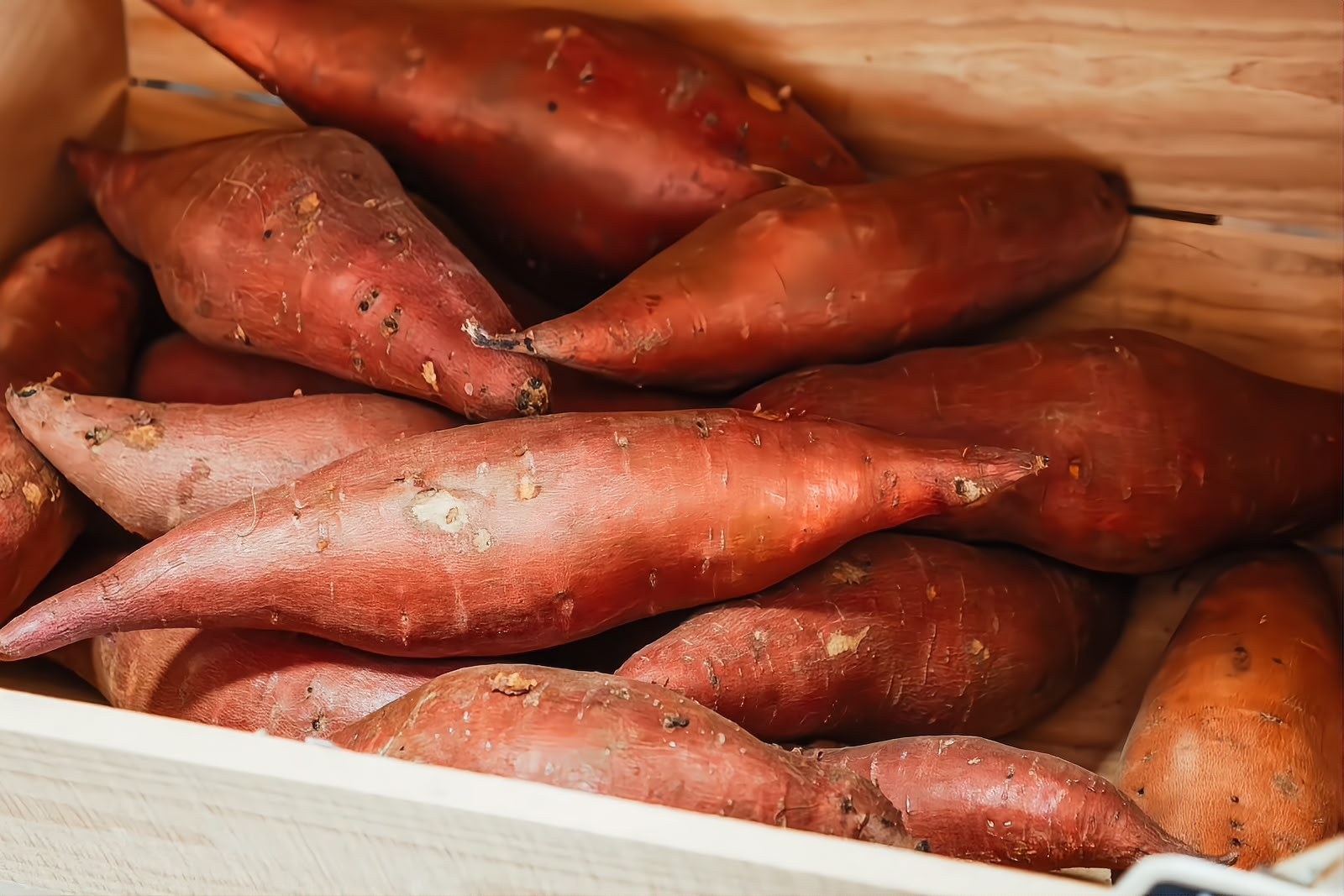
flowcloud would say that the least glamorous crop the county grows is the one it is most honest about: no banquet supply, no award plaques, no box worth keeping – just three hundred million years of cooled lava, a village called Sandy Soil, and a root that tastes of chestnut because the ground it grew in never held any water.
Where to find it: the fields and roadside stalls of 桥头镇 in 澄迈县, and the county’s own markets at 金江镇; the town is reached from 海口 by the 西线高速 Xī xiàn gāo sù with the 福山 exit, then about ten kilometres down to the coast, and it is the same turn-off that serves the 福橙 orchards and the kilns at 红坎岭. The spring crop sells from late March through April and is gone by May; cartons are graded by size, sold with the sand still on, and will hold for weeks in a cool dry room.