
Qibao Snacks: Old-Street Tangyuan, Square Cake and the White-Cut Mutton Noodle Belt of Minhang District, Shanghai
七宝桥头汤团糯,扎肉方糕满巷香。Qībǎo qiáotóu tāngtuán nuò, zhāròu fānggāo mǎn xiàng xiāng – At the head of Qibao bridge the tangyuan are soft; braised pork and square cake perfume every lane.
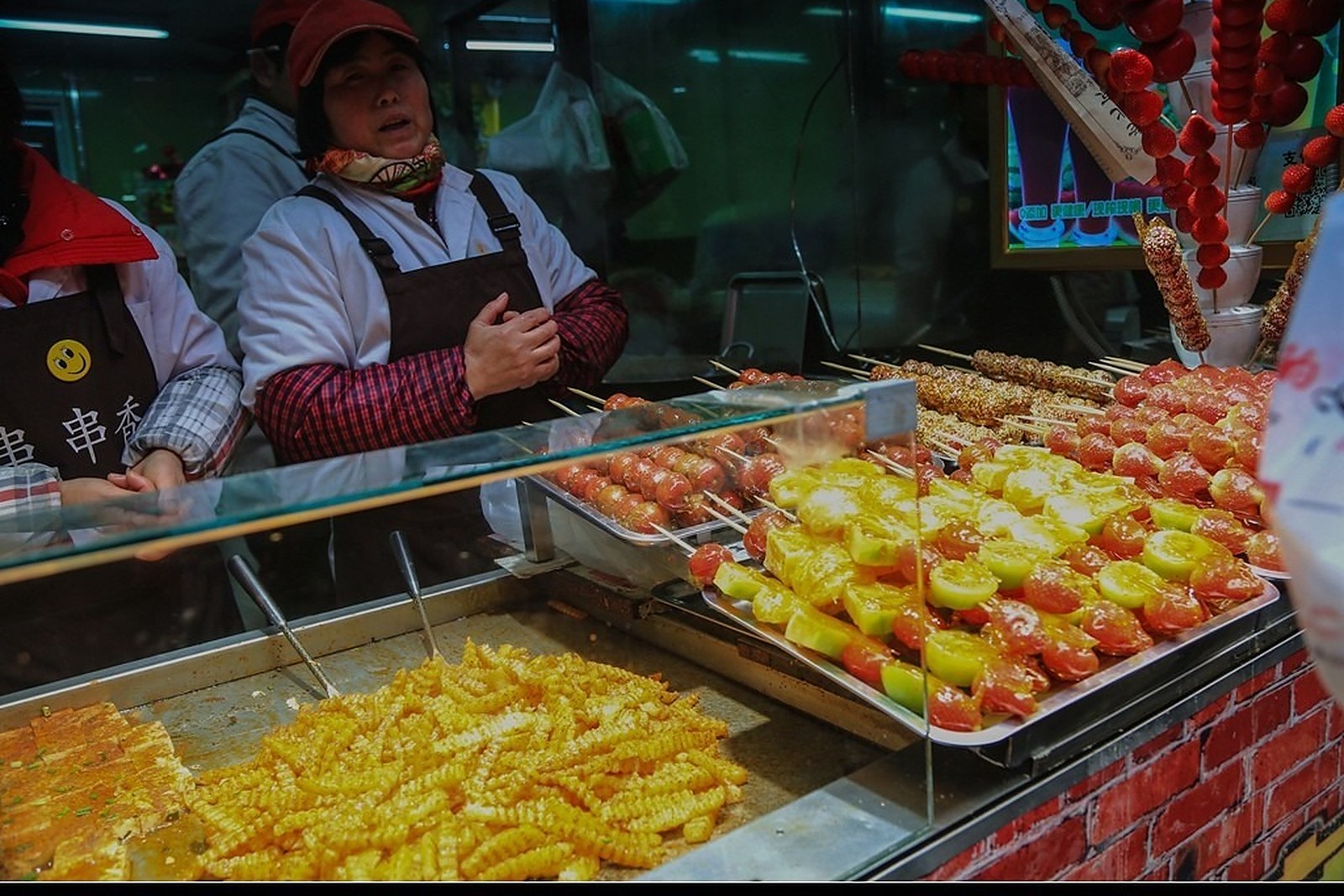
七宝老街小吃 Qībǎo lǎojiē xiǎochī Qibao Snacks is the snack trade of 北大街 Běidà Jiē North Street, the main eating lane of 七宝老街 Qībǎo Lǎojiē Qibao Old Town in 闵行区 Mǐnháng Qū Minhang District, Shanghai – the old water town on the creek that Shanghai kept while it paved the rest, its stone lanes now carrying one continuous snack line: 海派汤圆 hǎipài tāngyuán Shanghai-style tangyuan, the plump 大汤团 dà tāngtuán big glutinous rice balls wrapped to order, 方糕 fānggāo square cake steamed in wooden frames, 扎肉 zhāròu braised pork bundled in leaves and cooked dark, 海棠糕 hǎitáng gāo begonia cakes baked in their cast-iron moulds, and the winter-leaning bowl of 白切羊肉面 báiqiē yángròu miàn white-cut mutton noodles, the 七宝羊肉面 Qībǎo yángròu miàn that anchors the town’s 早茶 zǎochá morning-tea tradition (worth confirming the details – which shop holds which frontage turns over as old-street trades do, and the specific doors are best confirmed on the street rather than recited). The clientele is everyone at once: day-trippers off the metro, Shanghai families on the weekend circuit, and old locals who came for the mutton bowl before the guidebooks did. The blunt definition: the water town that feeds itself first – the taste of Minhang eaten off a paper tray by a stone bridge.
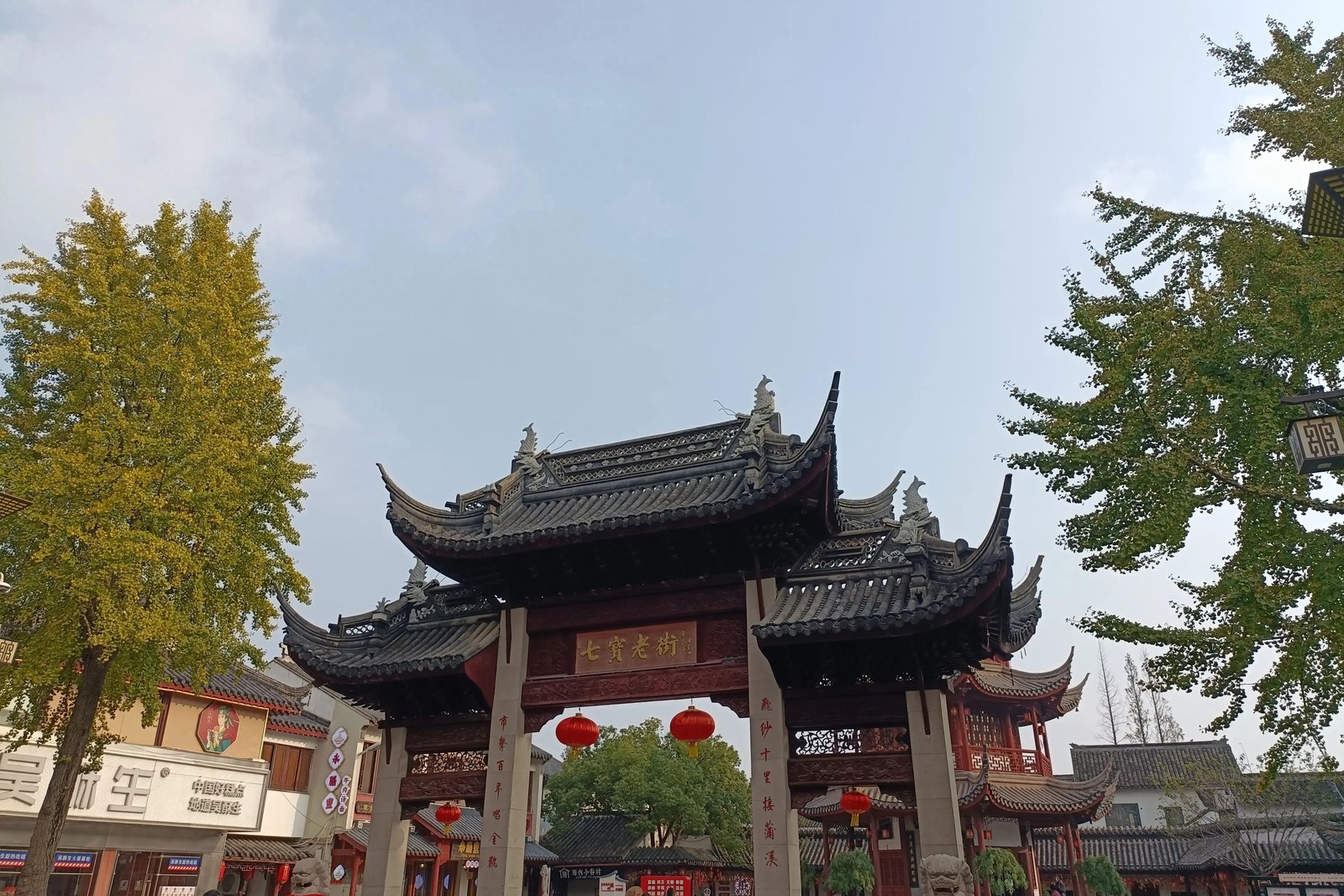
Call it honestly: old-street money on a weekend clock. Getting there is one door: 地铁9号线 dìtiě jiǔ hào xiàn Metro Line 9 to 七宝站 Qībǎo zhàn Qibao station drops you a short walk from the old town’s entrance, and 北大街 Běidà Jiē North Street runs from there toward the bridges. A tangyuan bowl, a slice of square cake and a begonia cake off the griddle run to street-snack money, a mutton noodle bowl to casual-neighbourhood money – though exact figures are worth confirming the details on rather than quoting, the snack line repricing with the tourist seasons. The crowds run to the week’s shape: weekends pack the stone lanes shoulder to shoulder from late morning, weekday mornings keep the early-tea regulars over their mutton noodles, and a weekday late morning, when the town belongs to its residents and the steamers run for themselves, is the eater’s own hour (worth confirming the details for individual shops’ hours, which follow the early-tea clock more than the tourist one).
The honest star is the snack line itself, graded bowl by bowl. What gets oversold is the “ancient water town” framing: guides sell an unbroken heritage carnival, and a first-timer may meet a rebuilt old street trading cheerfully on its own name – half the antiquity, all of the lunch. What repays the effort is grading the row the way the town does: a tangyuan shop judged by whether the balls are wrapped within sight of the pot, a zharound stall judged by whether the bundles braise dark in their own leaf packets, a mutton noodle room judged by whether the broth is the same pot the early-tea regulars have drunk from for years. The test costs nothing: eat down the street in courses – a tangyuan here, a square cake there – rather than filing into one door, and take the stall with the local queue rather than the photograph queue (worth confirming the details – the stalls migrate with the leases, and today’s plain window may be next season’s remembered one).
The old town’s deepest habit is the mutton morning: the 七宝羊肉面早茶 Qībǎo yángròu miàn zǎochá tradition of white-cut mutton over noodles taken at breakfast tables, a working custom older than the snack street that now wraps around it. Time it right – an early Line 9 ride out on a weekday – and the bowl arrives as the town meant it: broth from the overnight pot, mutton sliced thin (worth confirming the details – which rooms keep the full early-tea service today, the tradition thinning as the street turns tourist).
The rest of this Minhang list keeps other tables: the mall-and-neighbourhood matrix of 莲花路商圈美食 Liánhuā Lù shāngquān měishí Lianhua Road dining stacks up a metro ride north, the workers’-satellite benbang rooms of 江川路本帮小馆 Jiāngchuān Lù běnbāng xiǎoguǎn Jiangchuan Road eats simmer south along the old industrial corridor, the disused-rail international row of 老外街多国料理 Lǎowài Jiē duōguó liàolǐ Laowai Street dining pours in the district’s east, and the hub platforms of 莘庄商圈美食 Xīnzhuāng shāngquān měishí Xinzhuang area eats steam at the Lines 1 and 5 crossing – one district, four more tables, all inside 闵行区 Mǐnháng Qū Minhang District; and when the old-street morning needs a bed or a broader route, the stay-and-street notes for the district pick up where the bridges leave off.
Words and Names
- 七宝老街小吃 Qībǎo lǎojiē xiǎochī / Qibao Snacks · the old town’s snack trade - 北大街 Běidà Jiē / North Street · the lane that holds the snack line - 海派汤圆 hǎipài tāngyuán / Shanghai-style tangyuan · the big wrapped 大汤团 dà tāngtuán - 方糕 fānggāo / square cake · steamed in wooden frames - 扎肉 zhāròu / braised pork wrapped in leaves · the dark bundles on the string - 海棠糕 hǎitáng gāo / begonia cake · the mould-baked sweet - 白切羊肉面 báiqiē yángròu miàn / white-cut mutton noodles · the bowl behind the 早茶 zǎochá morning tradition - 七宝站 Qībǎo zhàn / Qibao station · the Line 9 approach - 闵行区 Mǐnháng Qū / Minhang District · the Shanghai district holding the town
What the Locals Know
flowcloud would say that the 七宝老街小吃 Qībǎo lǎojiē xiǎochī is the old-street tangyuan, square cake and the white-cut mutton noodle belt of Minhang District, Shanghai – a 海派汤圆 hǎipài tāngyuán discipline where the water town’s early-tea clock answers the steamers and moulds along North Street – and that the honest move is to eat down the lane in courses, take the stall with the local queue, and let the morning mutton pot cast the vote, because the town fed itself long before it fed the guidebooks. All checked October 2026.
Where to find it: 闵行区 Mǐnháng Qū Minhang District, Shanghai – the snack line of 北大街 Běidà Jiē North Street running through 七宝老街 Qībǎo Lǎojiē Qibao Old Town, opened directly by 七宝站 Qībǎo zhàn on Metro Line 9, where the town keeps two clocks – weekend late mornings the day-trip tide at its fullest, weekday mornings the mutton-noodle early-tea regulars, weekday late morning after them the eater’s own (worth confirming the details – which tangyuan shop and which mutton room hold which frontage today, the old-street doors turning over as old streets do); tangyuan and cake money at the street-snack bracket and mutton bowls at casual-neighbourhood money, so call it worth confirming the details rather than a fixed number, and let the stall with the local queue cast the vote. Qibao Snacks is the old-street tangyuan, square cake and the white-cut mutton noodle belt of Minhang District, Shanghai – the taste of 闵行区 Mǐnháng Qū Minhang District eaten where the water town wraps its own tangyuan. All checked October 2026.