
綦江米粉 Qìjiāng mǐfěn, the Qijiang rice noodles, are the district’s breakfast soul, the bowl a local reaches for at the start of a day and the thing a returned traveller asks for first. They are made from 桂朝大米 Guìcháo dàmǐ, Guichao rice, milled and worked through a dozen-odd steps into thin, resilient ribbons that carry a pure rice aroma rather than the chalky taste of added starch. The base is a long-simmered bone broth, pale and deep, and the bowl is finished with a braised-meat topping called 臊子 shàozi laid over the noodles just before serving. What looks plain is in fact a small craft: the rice must be the right kind, the broth must be patient, and the shaozi must be cooked so it sits on the noodles as a savoury crown. For a visitor this is the everyday Qijiang, eaten standing at a counter or on a low stool before the day begins.
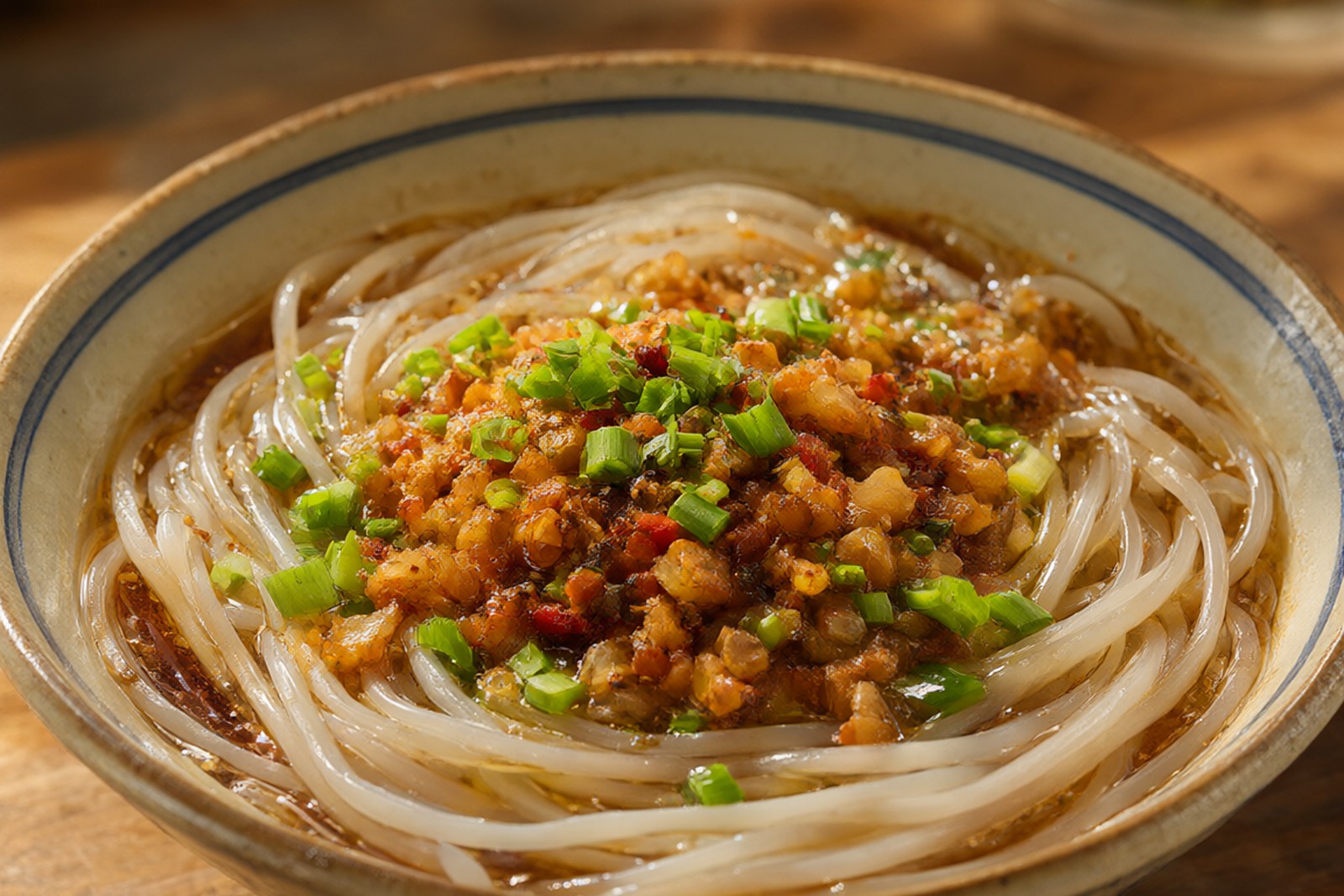
Two towns give the district its two dominant styles, and a local will tell you which side they favour. 扶欢米粉 Fúhuān mǐfěn is the Fuhuan style, built on a chunky meat-granule topping that stays chewy and substantial, the grains of braised pork holding their bite so each spoonful has texture as well as flavour; the noodle here is prized for spring, and the broth is clear enough to show it. 赶水米粉 Gǎnshuǐ mǐfěn is the Ganshui style, darker and richer, with hard-shelled oily meat bits that have been fried or braised until their edges crisp and their centres stay savoury, a bowl with more weight and a longer aftertaste. Neither is better in any official sense; they are local rivalries a traveller can enjoy tasting side by side, and many smaller towns in Qijiang keep their own quiet version of the same ribbon.
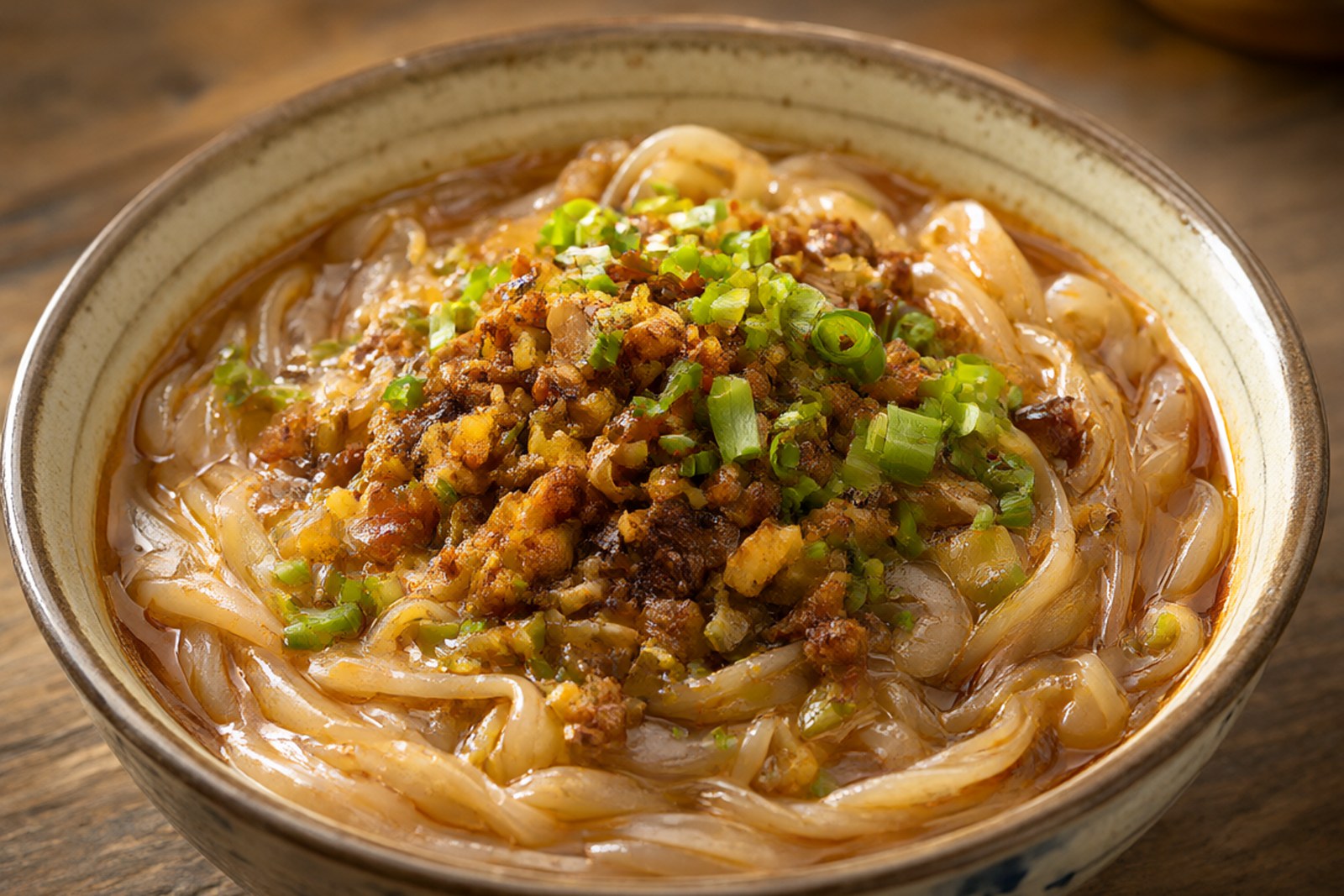
The making is the point for anyone curious about why the noodles taste the way they do. Guichao rice is chosen for its firm grain and clean starch, then soaked, milled, steamed and cut through the dozen steps that turn a plain grain into a ribbon that does not collapse in hot broth. The bone broth is simmered long and kept light, so the bowl stays comforting rather than heavy first thing in the morning. The shaozi is the cook’s signature, braised low until the meat gives its flavour to the oil that then dresses the noodles. Eaten this way, the rice noodle is less a snack than a steady opener to the day, and in Qijiang it stands in for the town’s unhurried morning rhythm, the kind a visitor only notices after a few bowls.
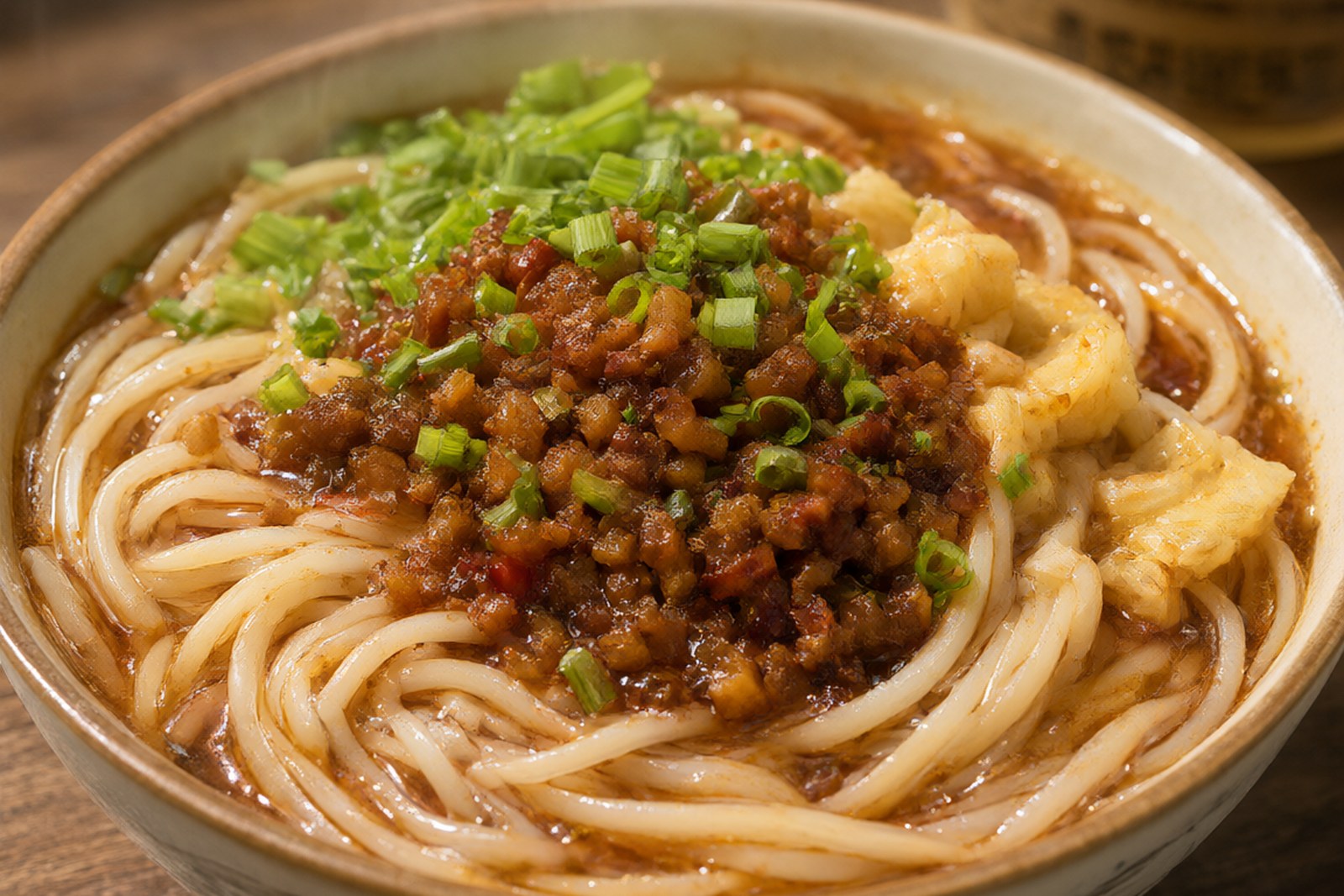
Try both the Fuhuan and Ganshui styles if you can, and ask for the broth plain first so you taste the rice in the noodle. A good bowl should leave the ribbons whole and springy, not broken into paste, and the shaozi should be savoury rather than only salty, which is the quiet mark of a kitchen that respects the grain.
Words and Names
綦江米粉 Qìjiāng mǐfěn are the Qijiang rice noodles, the district’s breakfast staple made from 桂朝大米 Guìcháo dàmǐ Guichao rice through a dozen-odd steps. 臊子 shàozi is the braised-meat topping laid over the noodles. 扶欢米粉 Fúhuān mǐfěn is the Fuhuan style with chunky chewy meat granules, and 赶水米粉 Gǎnshuǐ mǐfěn the Ganshui style with darker, hard-shelled oily meat bits. 綦江区 Qìjiāng Qū is Qijiang District in southern Chongqing.
What the Locals Know
There is no real off-season; rice noodles are a morning food eaten year round, though locals favour a hot bowl most in the cool months. Judge quality by the noodle first: it should be springy and whole, with a clean rice scent, and the broth should be light and deep rather than greasy. The dish tastes most itself at the small breakfast shops of Qijiang town and in the home towns of its two styles, Fuhuan and Ganshui, where recipe rivalry keeps standards honest. One caveat: many places outside the district sell “rice noodles” made with added starch that turn soft fast, so a true Qijiang bowl is best judged by texture, not by looks. No specific shop, address, price or founding family is stated here.
flowcloud would say that Qijiang rice noodles are thin resilient ribbons of Guichao rice in a long-simmered bone broth topped with braised-meat shaozi, with the chewy Fuhuan style and the darker oily Ganshui style the two rival faces of the district’s breakfast soul. All checked October 2026.
Where to find it: 綦江米粉 Qìjiāng mǐfěn are eaten across 綦江区 Qìjiāng Qū Qijiang District, Chongqing, especially at breakfast shops in the district town and in the towns of 扶欢镇 Fúhuān Zhèn Fuhuan and 赶水镇 Gǎnshuǐ Zhèn Ganshui that give the dish its two main styles, with many smaller towns keeping their own version. No specific shop, address or price is invented here; the noodles are a district-wide morning staple rather than one named house’s product. All checked October 2026.