
A Bowl of Autumn: Qilihai Crab Noodles
拆蟹千丝熬一汤,面里卧着七里秋 Chāi xiè qiān sī áo yī tāng, miàn lǐ wò zhe Qīlǐ qiū – A thousand threads of picked crab simmer down to one broth; in the noodles lies a Qilihai autumn
七里海河蟹面 Qīlǐhǎi héxiè miàn is the wetland crab’s second act in 天津市宁河区 Tiānjīn Shì Nínghé Qū Ninghe District – hand-picked crab meat and roe folded into a clear amber broth over noodles, the bowl that Ninghe kitchens run when the crab boats land. Where whole crabs are gift-box money, the noodle is the everyday door into the same marsh flavor: a working person’s crab course, served at street-side counters around Lutai and at the wetland-edge restaurants that steam to order all season.
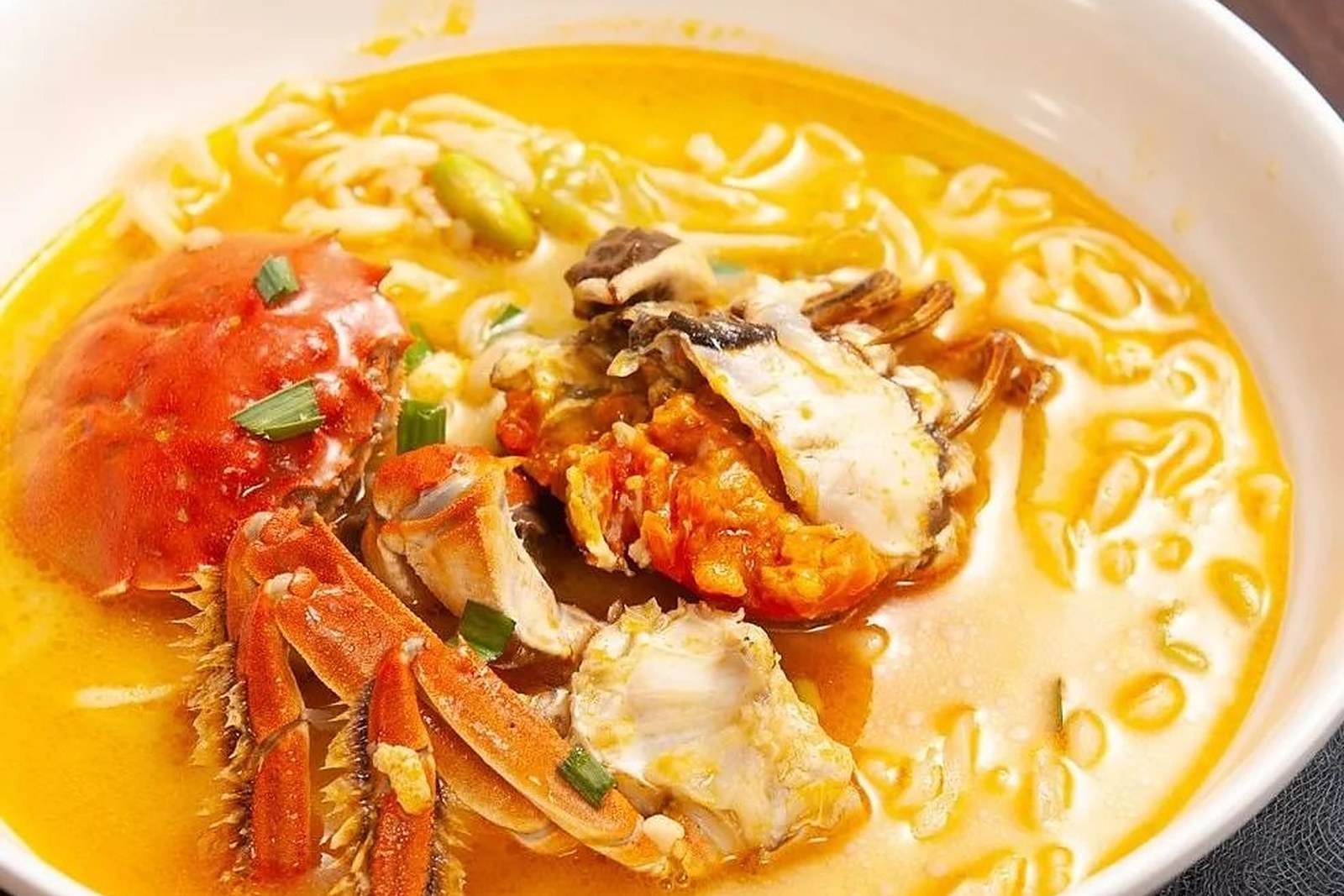
The making is patient by necessity. Live crabs are broken down while the pot heats – claws cracked, shells toasted in oil for the broth, the meat picked thread by golden thread, the roe reserved in a separate dish so it never breaks. The noodles cook to order, the broth ladles over, and the roe goes in last, folding through the soup in orange ribbons.
The bowl argues two schools. The clear-broth version lets the crab perfume carry – sweet, low, marsh-clean, the kind of depth that only shell-toasted stock gives – while the thick yellow sauce version piles roe and egg into a glossy coat that clings to every strand. Locals split by mood and by month: clear broth in September while the meat is sweetest, the heavy roe bowl once October’s 满黄 arrives.
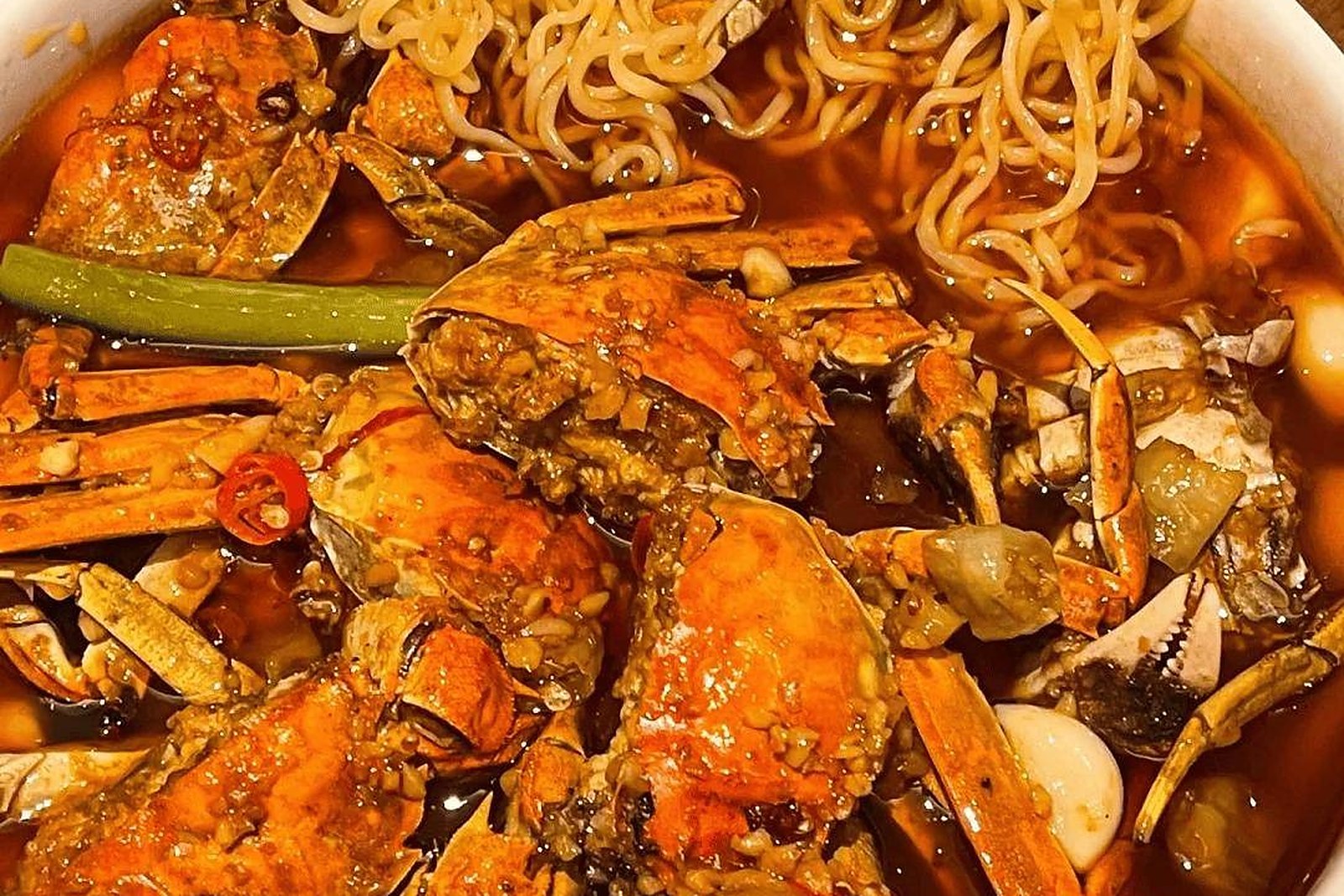
The noodle keeps the crab economy honest. Every shop that picks crab for the steamer baskets has meat and shells left over, and the noodle pot turns that remainder into the day’s cheapest luxury – a bowl that costs a fraction of a gift-box crab yet carries the same wetland finish. It is the dish Lutai families recommend last and return to first.
The same 天津市宁河区 Tiānjīn Shì Nínghé Qū Ninghe District holds more flavors worth chasing: 七里海河蟹 Qīlǐhǎi héxiè the river crab itself, 芦台春酒 Lútái Chūn jiǔ the district’s house spirit, 老二位熏肉 Lǎo èrwèi xūnròu the smoked counter of Lutai, or 杨泗八大碗 Yángsì bādà wǎn the village feast of eight bowls – four more doors into the same Ninghe table.
Words and Names
河蟹面 héxiè miàn river-crab noodles; 拆蟹 chāi xiè breaking down and picking the crab; 蟹黄 xièhuáng the roe, stirred in last; 蟹汤 xiè tāng the broth toasted from shell; 满黄 mǎn huáng a crab filled out with roe at season’s peak.
What the Locals Know
The broth color is the tell – a good pot runs amber, never gray, and a shop that toasts its own shells smells it from the door. Locals add a spoon of Zhenjiang vinegar at the halfway mark, not the start, so the sweetness survives the first third of the bowl. And they order a plain side of noodles, no broth, to finish the roe that settles at the bottom. All checked November 2026.
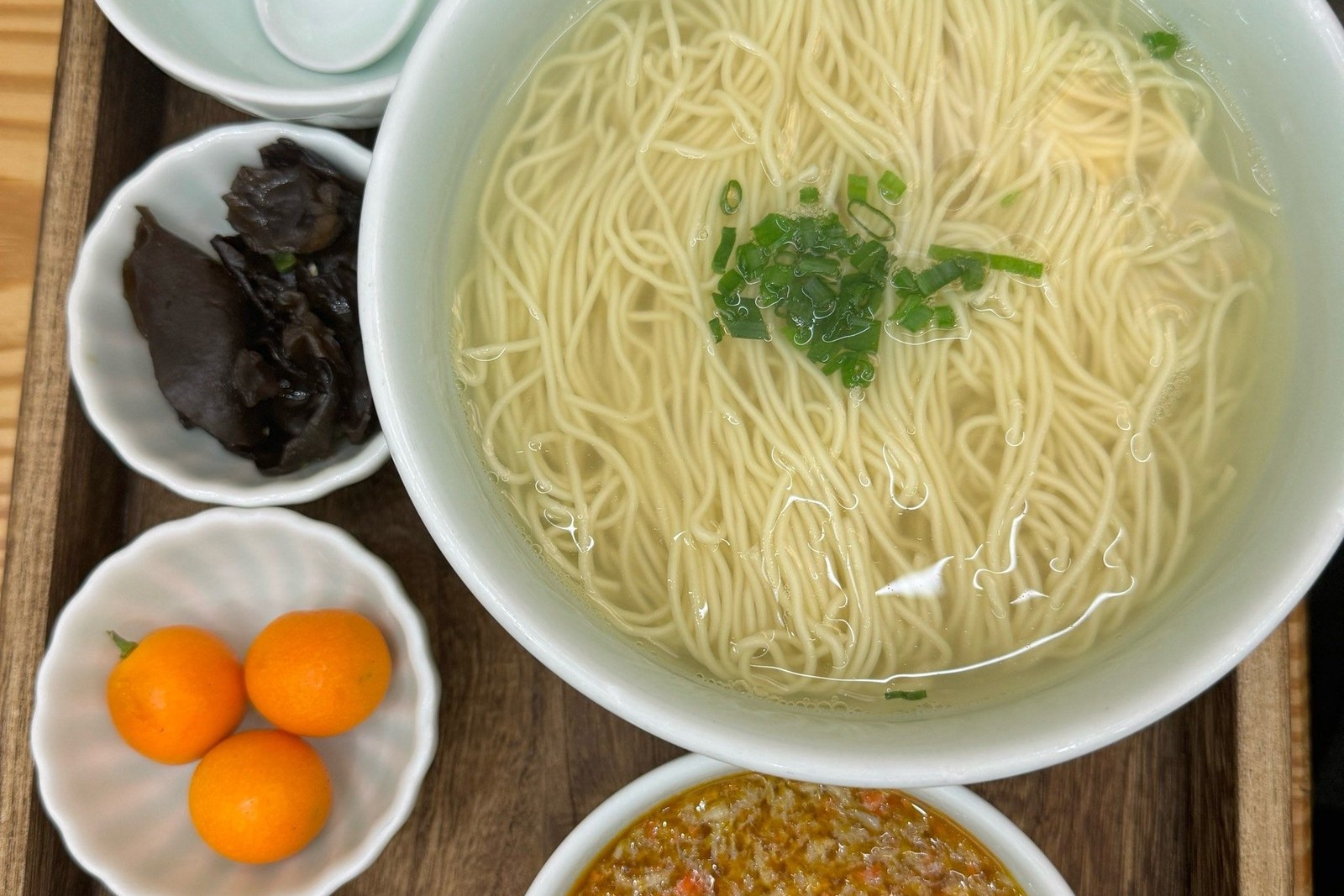
flowcloud would say the crab noodle is Ninghe’s fair trade: a whole marsh’s autumn, picked apart and ladled back, for the price of lunch.
Where to find it: The noodle counters around the Lutai markets and the wetland-ring restaurants serve it daily in season, and the crab depots can point you to the kitchen next door. All checked November 2026.