
The bowl arrives sweating. 清补凉 qīngbǔliáng is served in a tall glass or a shallow enamel bowl, and the outside of the vessel is beaded with condensation before it reaches the table, because the whole point of it is that it is colder than the evening. Look into it and you are looking at a list: kidney beans and mung beans cooked soft, cubes of taro and sweet potato, strips of 凉粉 liángfěn, the dark translucent jelly made from an herb rather than a bean, fresh coconut flesh scraped into curls, peanuts, sometimes sago, sometimes a scoop of ice cream on top, and over all of it a ladle of coconut milk or coconut water poured so that everything else shows through it. In Haikou this is not a dessert in the restaurant sense. It is what the city eats at ten at night, on the pavement, from a stall with plastic stools, for less than the price of a coffee.
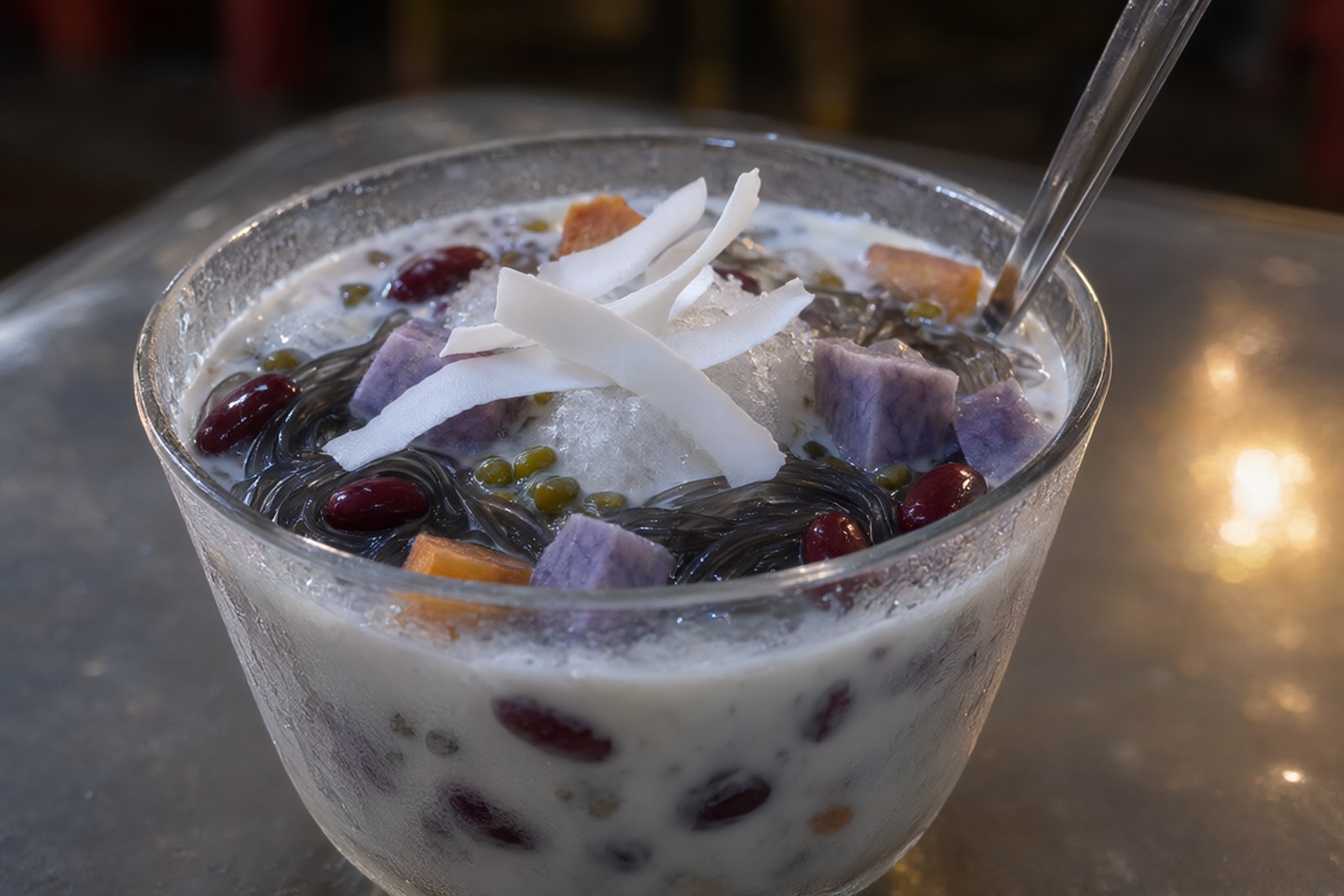
The name is older than the version you will be given. 清补凉 qīng bǔ liáng means roughly clear, nourishing, cooling, and it began as a medicinal idea rather than a pudding: a decoction of mild herbs and grains, drunk in the humid south to keep the body from overheating. In Guangdong and Guangxi the 清补凉 soups are still recognisably that, a thin and faintly bitter broth of 淮山 huáishān, lotus seed, lily bulb and Job’s tears. What happened in Hainan is that the coconut took over. The island had the coconuts, and the market had a population that wanted something cold and sweet rather than something warm and virtuous, so the herbal base was gradually replaced by coconut milk, the grains were joined by beans and taro and jelly, and the whole thing was iced. The older name survived the change of contents, which is why a bowl of cold coconut dessert is still called a cooling tonic.
Two Ways to Make It
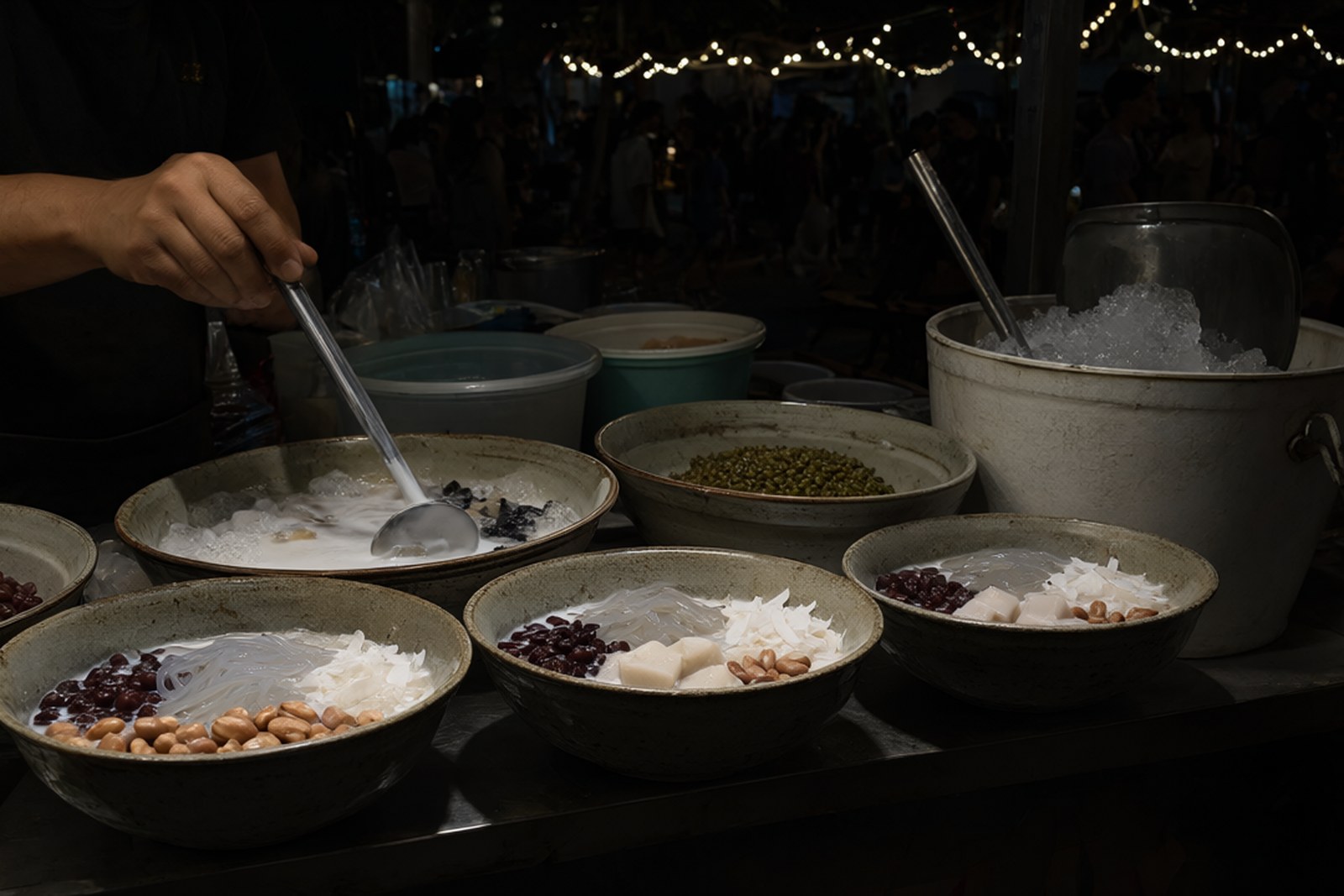
The distinction that matters locally is the base, and it is the first thing a regular will specify. 椰奶清补凉 yēnǎi qīngbǔliáng uses coconut milk, the thick white liquid pressed from the flesh of a mature coconut, which makes the bowl opaque and rich and slightly heavy. 椰子水清补凉 yēzi shuǐ qīngbǔliáng uses the clear water from inside a green coconut, which keeps the bowl transparent and lighter and lets the flavour of the individual ingredients come through separately. A third version, commoner in the older shops, adds 冰沙 bīngshā, a spoonful of shaved ice, so the bowl stays cold while you eat it without being diluted into water.
The solids are a matter of doctrine. Beans must be cooked to a softness that stops just short of paste, so they still have a skin; taro and sweet potato are steamed and cubed, never mashed; the jelly is cut into strips rather than cubes in most Haikou stalls because that is how it sits on the spoon. Peanuts go in either boiled or roasted, and the argument between the two camps is genuinely felt. What nobody argues about is the fresh coconut flesh, scraped from a mature nut with a spoon and added at the end so it keeps its bite. A bowl made with dried coconut is instantly recognisable and not forgiven.
Words and Names
清补凉 qīngbǔliáng is the dish, and it is written and pronounced the same across Hainan, Guangdong and Guangxi even though the contents differ. 椰奶 yēnǎi is coconut milk, 椰子水 yēzi shuǐ coconut water, 冰沙 bīngshā shaved ice. 凉粉 liángfěn is the dark jelly; in Hainan it is usually made from 凉粉草 liángfěncǎo, a herb of the mint family, rather than from the mung-bean starch that carries the name in the north. 薏米 yìmǐ is Job’s tears, 绿豆 lǜdòu mung bean, 红豆 hóngdòu red bean, 芋头 yùtou taro, 西米 xīmǐ sago, 花生 huāshēng peanut. 海南清补凉 Hǎinán qīngbǔliáng is the island version as a whole, and the 文昌 Wénchāng and 海口 Hǎikǒu variants are the two everyone names.
What the Locals Know
Order by base first, and be specific: say 椰奶 or 椰子水 and only then start listing what you want left out, because most stalls assemble the bowl in front of you and will skip anything you name. Evening is the hour. The stalls set up around dusk and run past midnight, and the busiest ones sell out of taro before eleven. The proper temperature is just above freezing, which means the ice goes in the bowl rather than around it, and the correct rate of eating is fast enough that it never quite becomes soup. Look for a stall where the beans are cooked in an urn you can see and the coconut flesh is being scraped to order; a stall working from pre-cut plastic trays is a shortcut you can taste. Prices are low and barely vary, eight to fifteen yuan for a bowl, a little more with ice cream, and the coconut-water version is usually the cheaper of the two because the water comes free with the nut.
flowcloud would say that qingbuliang is the most honest thing a hot city has invented, since it takes a list of ingredients nobody would combine on purpose and proves that cold and sweet and faintly nourishing can be the same mouthful.
Where to find it: the stalls around 海大南门夜市 Hǎidà Nánmén Yèshì, the night market at the south gate of Hainan University, and 骑楼小吃街 Qílóu Xiǎochī Jiē, the snack street in the old arcades. Ask for 椰奶清补凉 yēnǎi qīngbǔliáng to start, point at what you want in the bowl, and go after nine at night when the ice and the crowd are both at their best.