
Qingpu Zhuanggao: The Intangible-Heritage Steamed Rice Cake Whose Name Is a Dialect Word for Steaming, Rice Flour Sifted into Wooden Moulds over Ruo Leaves and the New-Year and Wedding Cake of Qingpu District, Shanghai
米粉过筛箬叶香,一方焋糕年味长。Mǐfěn guò shāi ruòyè xiāng, yī fāng zhuànggāo nián wèi cháng – Rice flour through the sieve, the scent of ruo leaves; one square of zhuanggao carries the new-year taste long.
青浦焋糕 Qīngpǔ zhuànggāo Qingpu zhuanggao is the steamed rice-cake trade of 青浦区 Qīngpǔ Qū Qingpu District, Shanghai – the district west of the city where the old market towns keep a 米糕 mǐgāo rice-cake line with a name all its own. The name is the first taste: 焋 zhuàng, the local dialect word for steaming in a mould – a verb the cake owns so completely that the district lists the whole craft as its 非遗 fēiyí intangible heritage. The making is the discipline: 糯米粉 nuòmǐfěn glutinous rice flour and rice flour sifted 层层过筛 céngcéng guòshāi layer by layer into 木模 mùmú wooden moulds, the filling of 豆沙 dòushā red-bean paste or sugar set in the middle, 箬叶 ruòyè ruo leaves lining the mould bottom so the steam carries a green reed scent into the crumb – the squares coming off the steamer soft, white and 松甜 sōngtián loose-sweet, sweetened barely past the rice itself. The cake is the calendar’s own: steamed for 年节 niánjié the new-year tables, boxed for 婚嫁 hūnjià weddings and house-warmings, the moulds working hardest in the twelfth month (worth confirming the details – which market-town workshop steams which weeks and where the moulds run off-season turns over as craft trades do, and the specific doors are best confirmed in the district rather than recited). The clientele is the district’s own gifting calendar plus the city’s heritage-table pilgrims. The blunt definition: the district that made a verb of steaming – the taste of Qingpu eaten one sifted, leaf-lined square at a time.
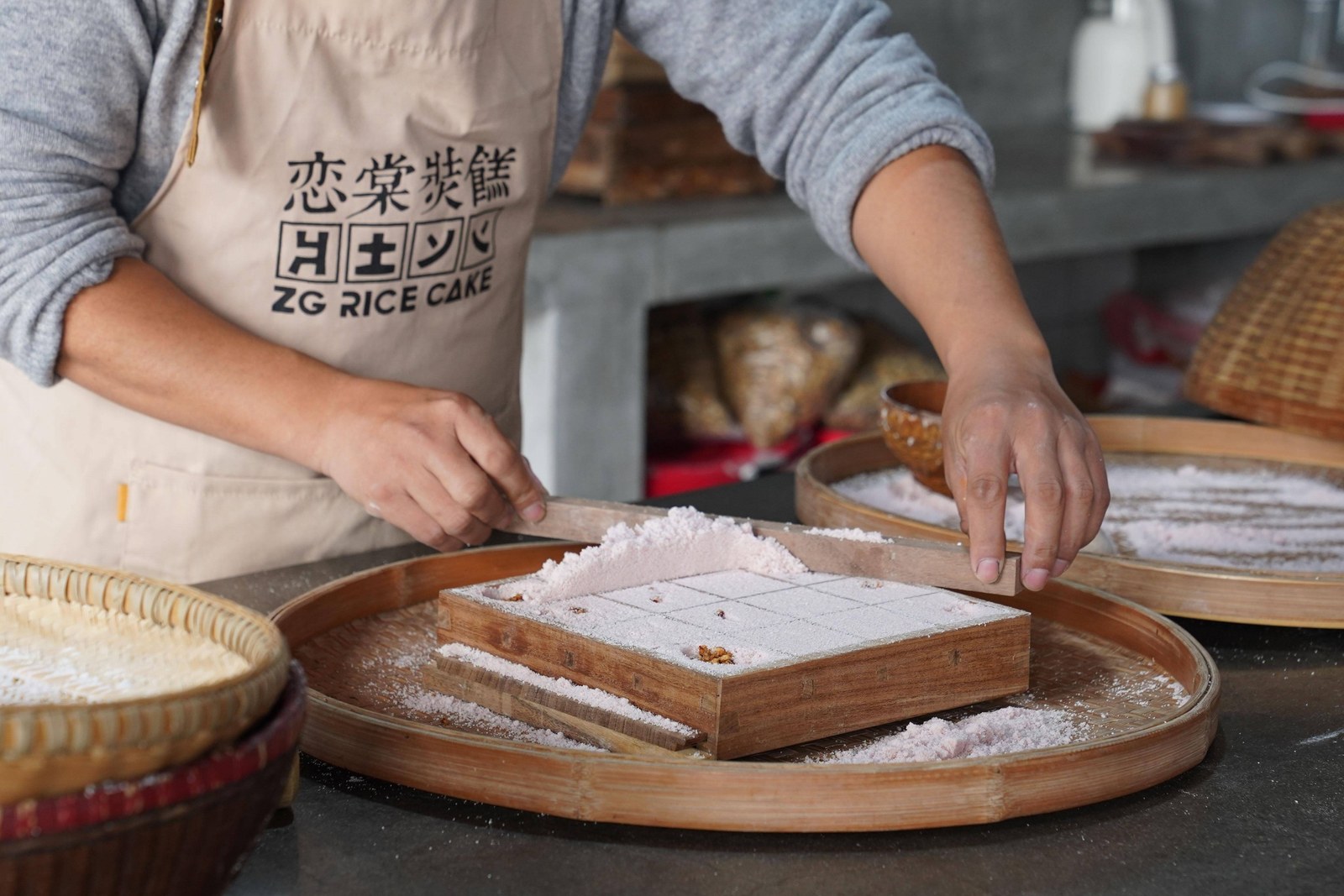
Call it honestly: heritage-cake money on a festival clock. Getting there is one door: 青浦区 Qīngpǔ Qū Qingpu District is reached by 地铁17号线 Dìtiě 17 hào xiàn Metro Line 17 to 青浦新城站 Qīngpǔ Xīnchéng Zhàn Qingpu New Town station for the district’s urban side, with the old market towns of 朱家角 Zhūjiājiǎo Zhujiajiao and 金泽 Jīnzé Jinze further west along the line’s bus and taxi connections (worth confirming the details for which town’s workshops steam through which months, the craft being season-heavy rather than year-round). One square at the steamer prices at pocket change, a boxed dozen at street-snack-to-souvenir money, a festival order for a family table at casual-neighbourhood money – though exact figures are worth confirming the details on rather than quoting, the workshops being small and repriced by batch and gift season. The crowds run to the calendar: the weeks before 春节 Chūnjié Spring Festival stack the orders and sell the boxes out by mid-morning, weddings and feast weeks spike between, and a weekday mid-morning in the off-season, when the sieve runs for the walk-in trade and the steamer smells of ruo leaf, is the eater’s own hour (worth confirming the details for individual workshops’ hours, which follow the mould batches more than any posted sign).
The honest star is the crumb itself, graded batch by batch. What gets oversold is the “lost court pastry” framing: guides sell a relic cake where every box carries a dynasty, and a first-timer may meet an ordinary workshop counter of wooden moulds, flour sieves and stacked boxes – which is not the disappointment but the point. What repays the effort is grading the cake the way the district does: a crumb judged by whether the sifted layers part soft without turning gluey by the last bite, a filling judged by whether the 豆沙 dòushā tastes of beans cooked down that week rather than sugar alone, a bottom judged by whether the 箬叶 ruòyè still speaks through the steam. The test costs nothing: buy one square warm from the batch before you buy the boxes, break it and watch whether it parts soft instead of crumbling dry, and buy where the district’s own gift bags queue rather than where the heritage banners hang – a craft that has sifted the same mould for generations grades its steamers daily, and the local order sheet is the certificate (worth confirming the details – the workshops migrate with the leases, and today’s plainest counter may be next season’s remembered one).
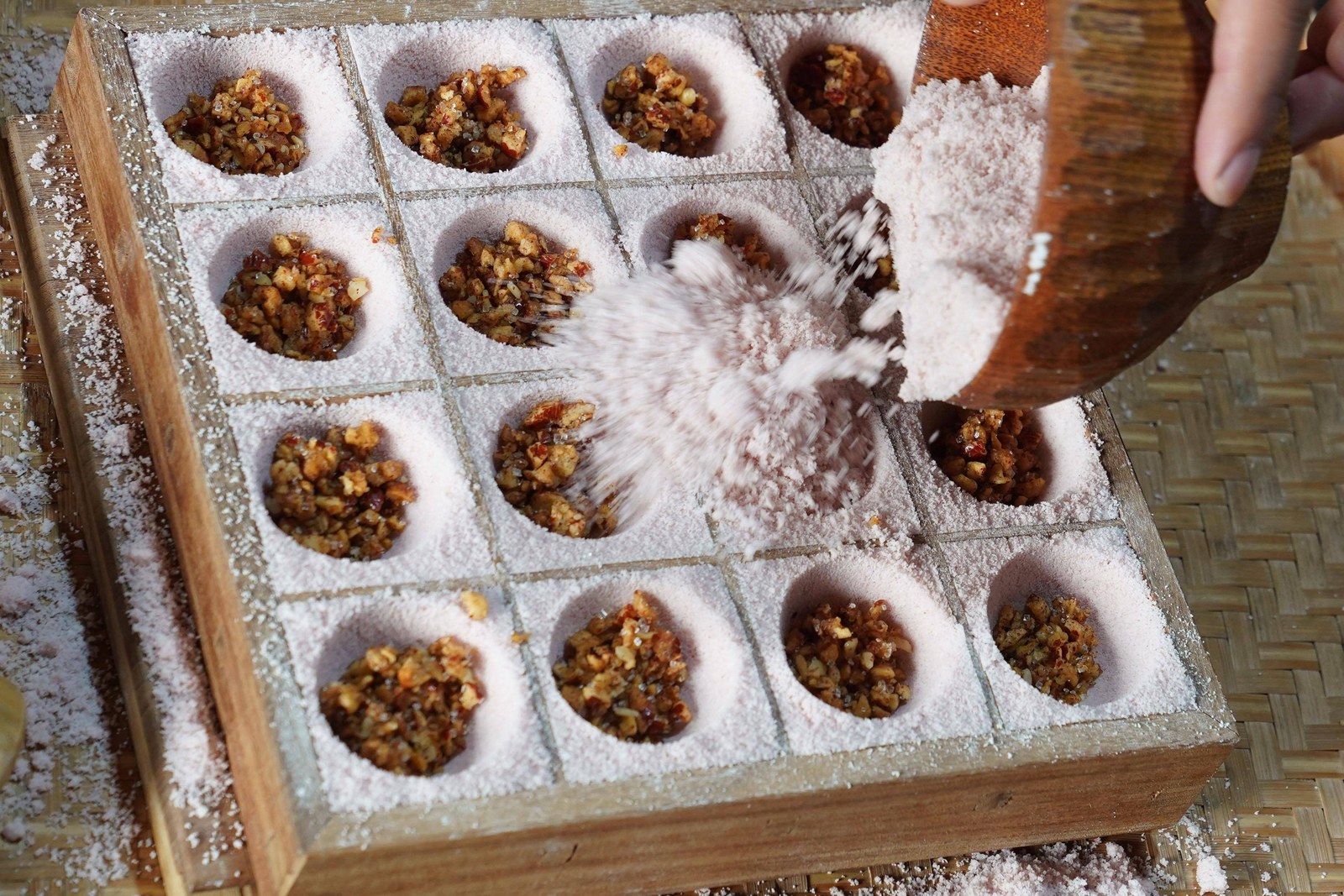
The district’s deepest habit is the mould arithmetic itself: the twelfth month fills the order books, the first days of the year empty them, and the sieves rest between – a rhythm the workshops plan around and the district’s families keep without any signboard, the cakes boxed and carried wherever a new table is being opened. Time it right – a weekday mid-morning in the off-season, the batch warm – and the square explains the district better than any plaque: the dialect named the verb, and the mould keeps it in print (worth confirming the details – which workshops still sift and steam on site today, the trade thickening toward the festival weeks and thinning to the walk-in regulars between).
The rest of this Qingpu list keeps other tables: the reed-leaf bundles of 朱家角扎肉 Zhūjiājiǎo zhāròu Zhujiajiao zharou braise in the tanks of 北大街 Běidà Jiē North Street, the clear-water crabs of 淀山湖大闸蟹 Diànshānhú dàzháxiè Dianshan Lake hairy crab steam along the lake’s east shore, the pale-gold tumble of 银鱼炒蛋 yínyú chǎodàn silverfish scrambled eggs lands on the lakeside tables, and the wrapped bundles of 阿婆粽 āpó zòngzi apo zongzi boil in the old town of 朱家角 Zhūjiājiǎo Zhujiajiao – one district, four more tables, all inside 青浦区 Qīngpǔ Qū Qingpu District; and when the cake run needs a base in the new town or a broader route, the stay-and-street notes for the district pick up where the squares leave off.
Words and Names
What the Locals Know
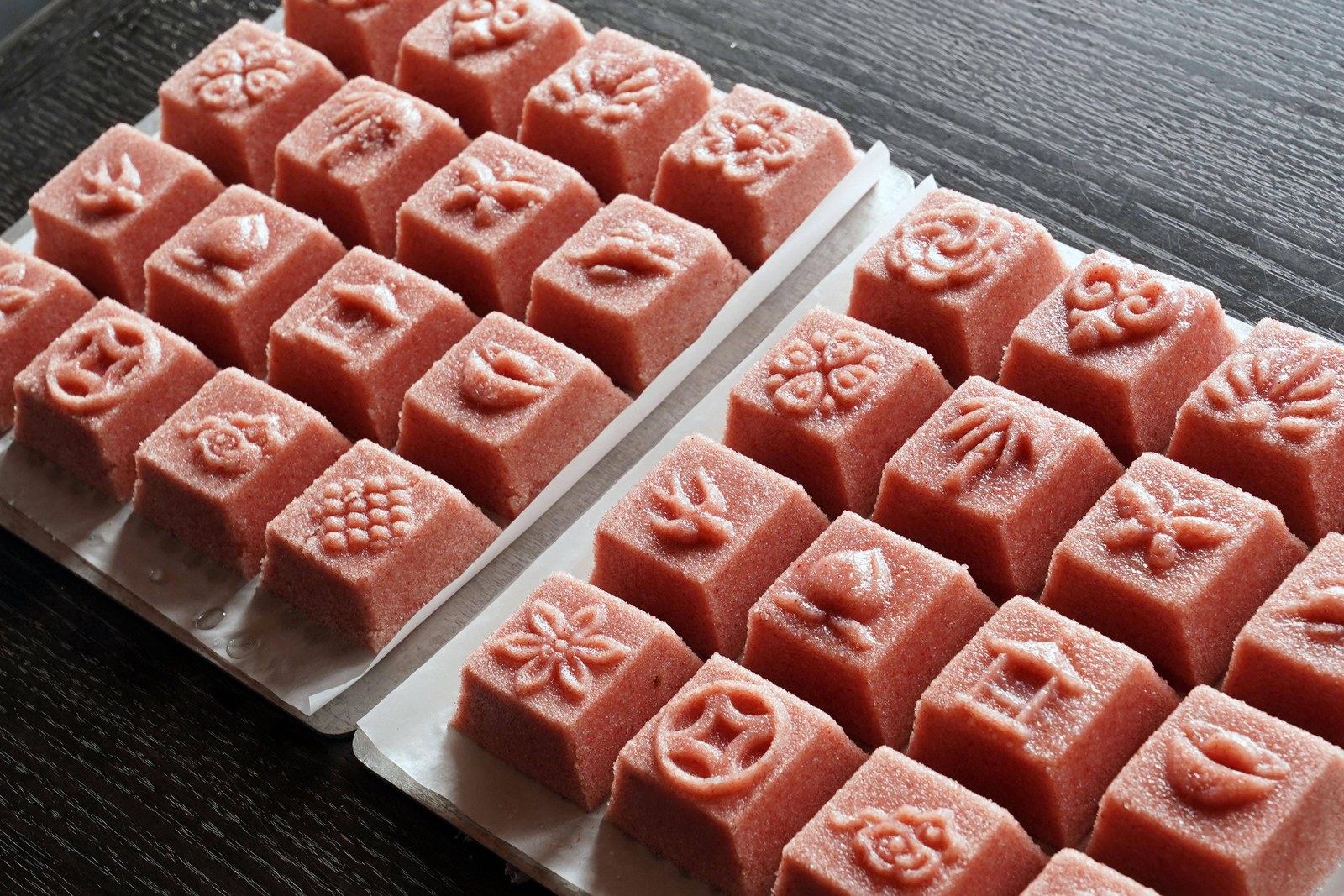
flowcloud would say that the 青浦焋糕 Qīngpǔ zhuànggāo is the intangible-heritage steamed cake and the festival calendar of Qingpu District, Shanghai – a 焋 zhuàng steamed-in-the-mould discipline where the 层层过筛 céngcéng guòshāi sifted flour and the 箬叶 ruòyè leaf linings answer the 木模 mùmú wooden moulds and the 年节婚嫁 niánjié hūnjià new-year and wedding orders of the district’s old market towns – and that the honest move is to buy one square warm from the batch, break it before you buy the boxes, and let the local order sheet cast the vote, because the dialect named the verb and the mould keeps it in print. All checked October 2026.
Where to find it: 青浦区 Qīngpǔ Qū Qingpu District, Shanghai – the steamed-cake belt of 青浦焋糕 Qīngpǔ zhuànggāo through 青浦新城 Qīngpǔ Xīnchéng Qingpu New Town and the old market towns west, where the 非遗 fēiyí heritage workshops keep the 层层过筛 céngcéng guòshāi sifted squares on 箬叶 ruòyè ruo-leaf linings, reached by 地铁17号线 Dìtiě 17 hào xiàn Metro Line 17 to 青浦新城站 Qīngpǔ Xīnchéng Zhàn Qingpu New Town station and the connecting buses or taxis west (worth confirming the details for which town’s workshops steam through which months and which counter holds which frontage today, craft doors turning over as craft trades do), where the trade keeps the festival clock – the 春节 Chūnjié weeks the stacked orders, wedding and feast weeks the spikes, off-season weekday mid-morning the eater’s own; pocket-change to souvenir-box money, so call it worth confirming the details rather than a fixed number, and let the local order sheet cast the vote. Qingpu zhuanggao is the intangible-heritage steamed rice cake whose name is a dialect word for steaming, rice flour sifted into wooden moulds over ruo leaves and the new-year and wedding cake of Qingpu District, Shanghai – the taste of 青浦区 Qīngpǔ Qū Qingpu District eaten one sifted, leaf-lined square at a time. All checked October 2026.