
清远鸡 Qīngyuǎn jī, the Qingyuan chicken, is the bird the whole province means when it says a good one, and the city has been raising it for centuries. Strictly it is the 清远麻鸡 Qīngyuǎn má jī, the mottled Qingyuan chicken: a small, slow-growing, free-range breed with a speckled brown-and-gold plumage, a small head, thin legs and a body that stays lean because it spends its life walking the hills and groves rather than sitting in a shed. The result is meat with a firmer grain and a cleaner, sweeter taste than a commercial bird, and skin that sets to a pale, glossy gold when it is poached. In Guangdong the name 清远鸡 on a menu is a promise.
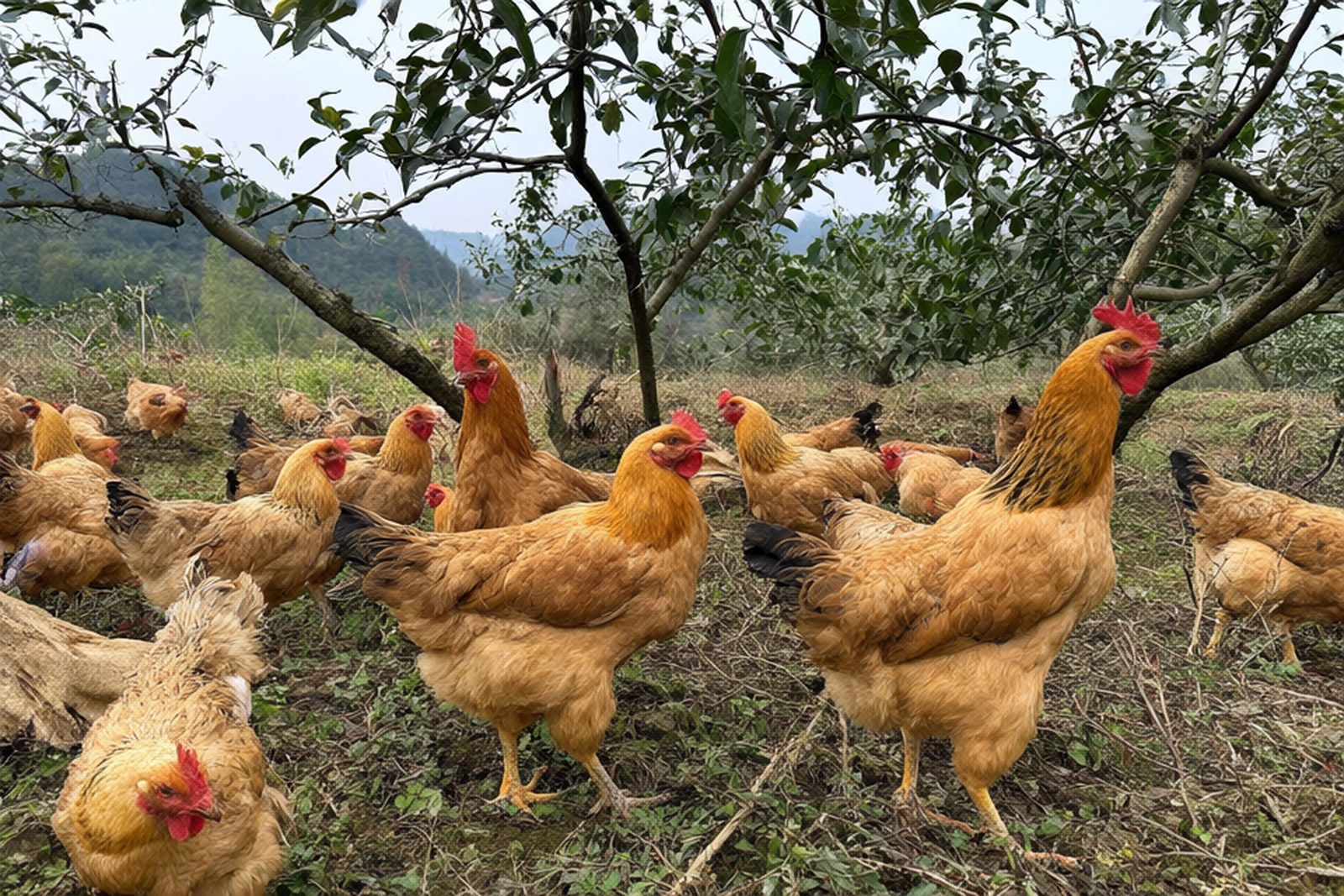
The breed is the point, and it is protected as a local one. A true 清远麻鸡 is a slow bird: it takes months rather than weeks to reach the table, it is raised outdoors under the fruit trees and on the hillsides around the city, and it is fed on grain and whatever it finds. The mottling of the feathers gives it the name 麻, hemp or speckled, and the small frame is what makes the flesh fine rather than coarse. Anything labelled 清远鸡 in a Qingyuan market will be sold with a note of how long it was raised, because the local buyer knows the difference, and a bird raised free for a season is not the same food as a bird raised fast in a shed.
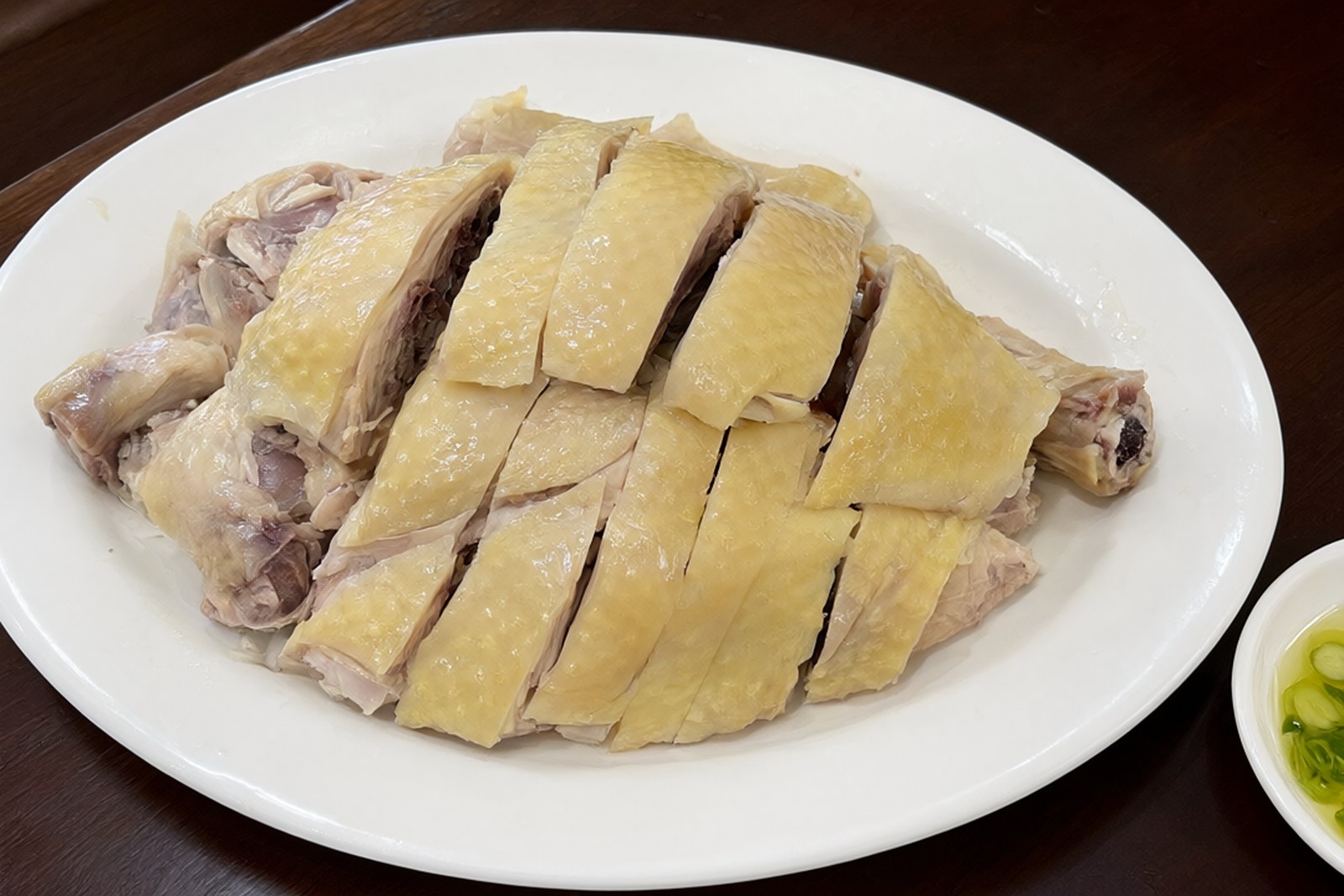
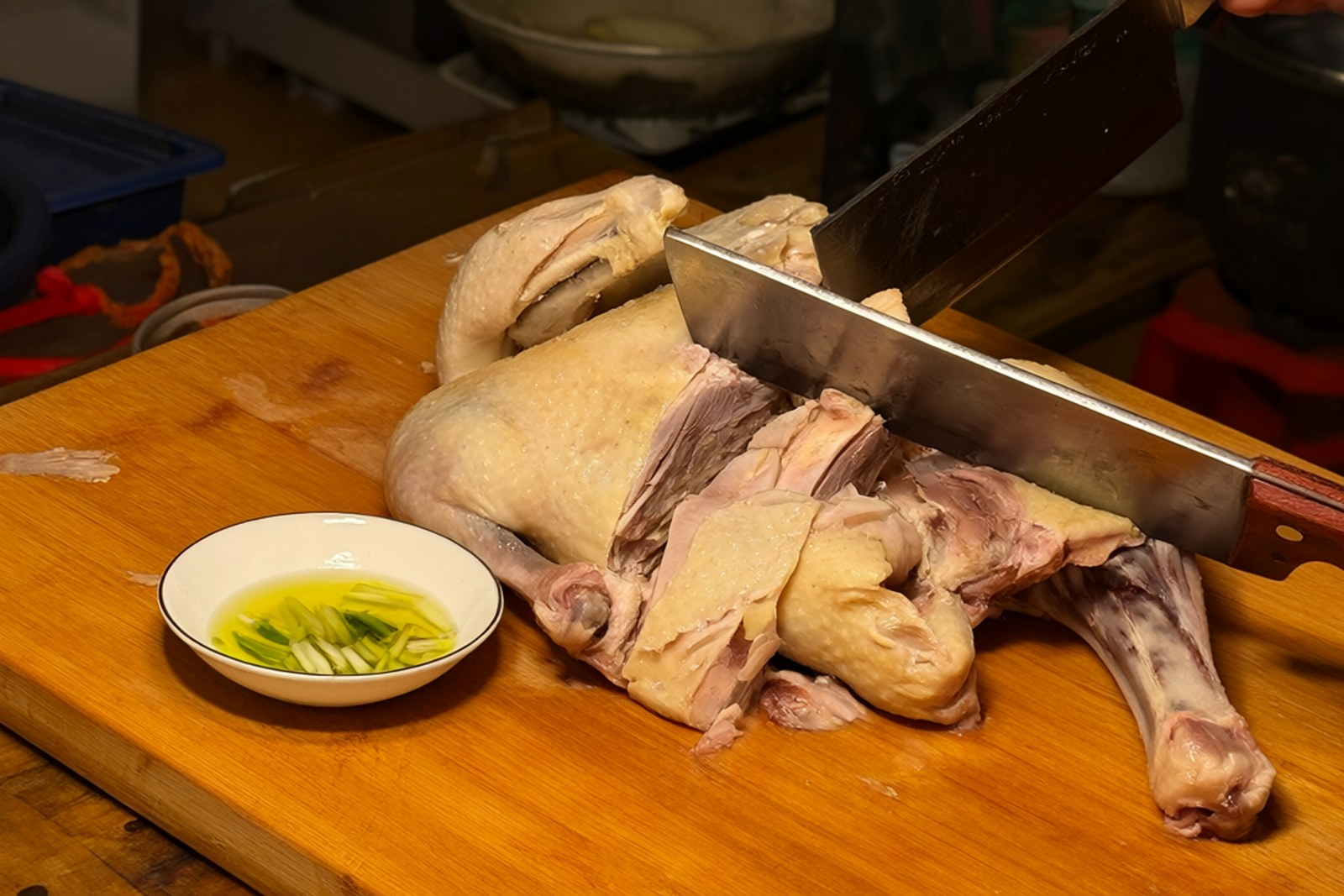
The city eats it above all as 白切鸡 bái qiē jī, poached white-cut chicken, and the method is deliberately austere. The whole bird goes into water that is brought to a bare simmer and then held just below a boil, with ginger and a little salt, for a time judged by the size of the bird; it is then lifted out and plunged into iced water or hung to cool, which tightens the skin and sets it to a translucent gold. It is chopped through the bone into neat pieces, arranged back into the shape of the bird, and served at room temperature, barely dressed, with a dip of 姜葱油 jiāng cōng yóu, ginger and scallion in hot oil, and a little light soy. Nothing hides the chicken, which is exactly why the breed matters.
Beyond the 白切 there are the dishes that a Qingyuan kitchen makes from the rest of the bird. The bones and the feet go into a clear soup with 淮山 huái shān, Chinese yam, and 枸杞 gǒu qǐ, goji, a slow pot for the family table; the meat is stir-fried with 沙姜 shā jiāng, sand ginger, a sharper root that cuts the richness; and the bird is steamed with 冬菇 dōng gū, dried shiitake, and a little 陈皮 chén pí, aged peel, for the flavour of the woods it was raised in. In the city’s 农家菜 nóng jiā cài, the farmhouse restaurants, the chicken is usually bought live at the door and cooked to order, and the price is quoted by weight before it is killed.
Words and Names
鸡 jī is chicken; 清远鸡 Qīngyuǎn jī is the local one and 清远麻鸡 Qīngyuǎn má jī the full breed name, 麻 má meaning the speckled plumage. 白切鸡 bái qiē jī is the poached, white-cut dish; 姜葱油 jiāng cōng yóu is the ginger-and-scallion oil served with it. 沙姜 shā jiāng is sand ginger, 冬菇 dōng gū dried shiitake, 陈皮 chén pí aged tangerine peel, 淮山 huái shān Chinese yam and 枸杞 gǒu qǐ goji. 农家菜 nóng jiā cài is farmhouse cooking, and 广东 Guǎngdōng the province that buys the bird.
What the Locals Know
Ask for the bird by weight and see it before it is cooked, because in Qingyuan the chicken is sold live at the farmhouse door and the price follows the weight. Ask how long it was raised; a good 清远麻鸡 takes months, and a bird that grew fast will taste of nothing. Order the 白切 first and eat it at room temperature, not hot, because the skin sets as it cools and the flavour opens. Use the 姜葱油 generously and add a drop of light soy, not dark. And if the bones are used for a soup, take it, because it is part of the same bird.
flowcloud would say that a city which spent centuries breeding a bird for slowness, raising it on the open hills so it would come to the table lean and firm, and then cooking it in water and nothing else, has understood that the surest way to show off good ingredients is to refuse to dress them up.
Where to find it: the 农家菜 farmhouse restaurants and the markets of 清远市 and its districts, where the birds are sold live by weight and cooked to order. A whole free-range bird runs ¥80 to ¥180 depending on weight and age, and a plate of 白切鸡 ¥40 to ¥80. 清远市 is a high-speed rail stop from 广州 in about half an hour on the frequent line to 清远站 Qīngyuǎn zhàn.