
The Lake’s Own Banquet: Qinhu Eight Fresh, Taizhou
簖蟹横行芦荡里,八鲜一桌是溱湖 Duàn xiè héngxíng lúdàng lǐ, bāxiān yī zhuō shì Qínhú – The weir crabs sidle through the reed marshes; one table of eight freshes is Qinhu itself
正文:溱湖八鲜 Qínhú bāxiān the Qinhu Eight Fresh is the wetland’s own banquet list – the eight creatures and plants the lake raises best, headed by 簖蟹 duànxiè the weir crab, the river crab caught as it climbs the 簖 duàn, a bamboo weir set across the lake’s channels that the climbing crabs must scale on their autumn migration. The canon runs crab, 银鱼 yínyú silverfish, 青虾 qīngxiā green shrimp, soft-shell turtle, river mussel, pond snail, waterfowl and the lotus-and-water-chestnut row – eight wetland staples cooked in the lake towns’ plain, steaming, broth-forward style, where seasoning exists to prove how fresh the ingredient is. The lake’s clear reed-filtered water is the argument: everything on the list tastes of clean water, and the towns around 溱湖 Qínhú Qinhu – Qintong first among them – serve the eight freshes as a set menu that reads like a map of the marsh.
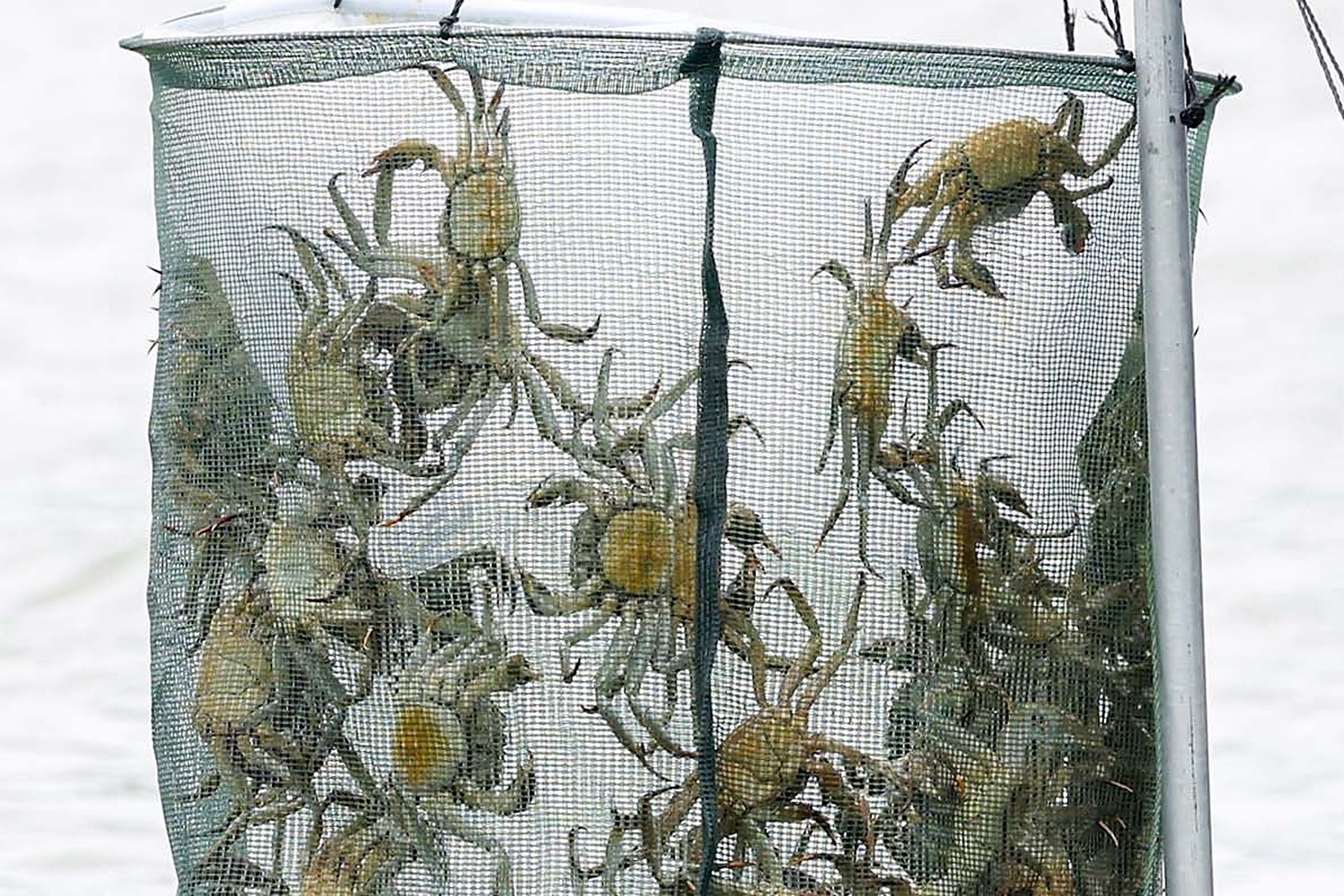
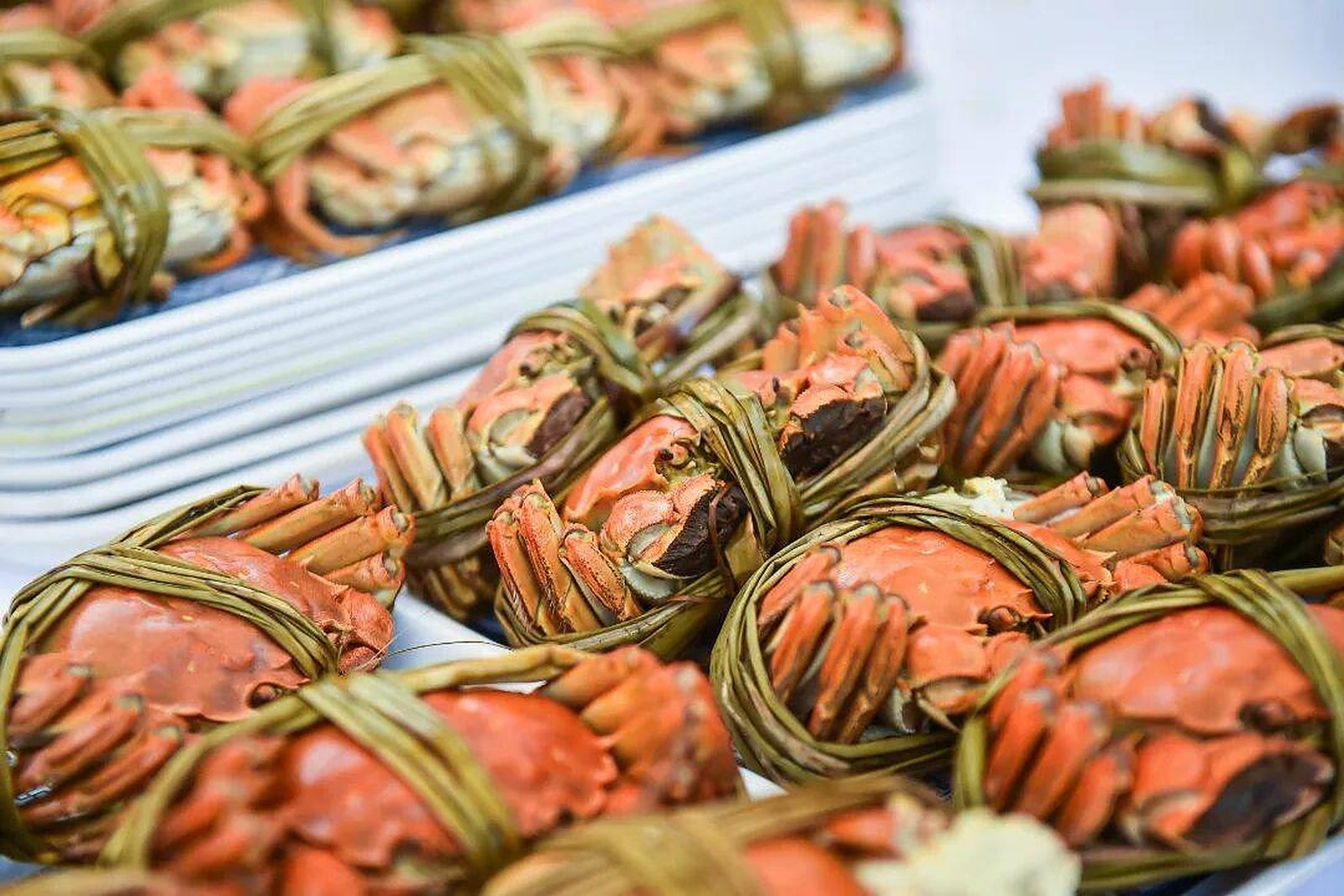
The crab is the headliner and the weir is its story. Every autumn the migrating crabs climb the bamboo fences, the harvesters lift the traps dripping at dawn, and the tied ranks – straw-bound, stone-heavy, autumn-gilded – go straight to the lakeside kitchens. The classic serving is steamed with ginger-vinegar, the roe rust-orange and the meat sweeter than the sea crab’s; the honest houses buy by the trap, not the tank.
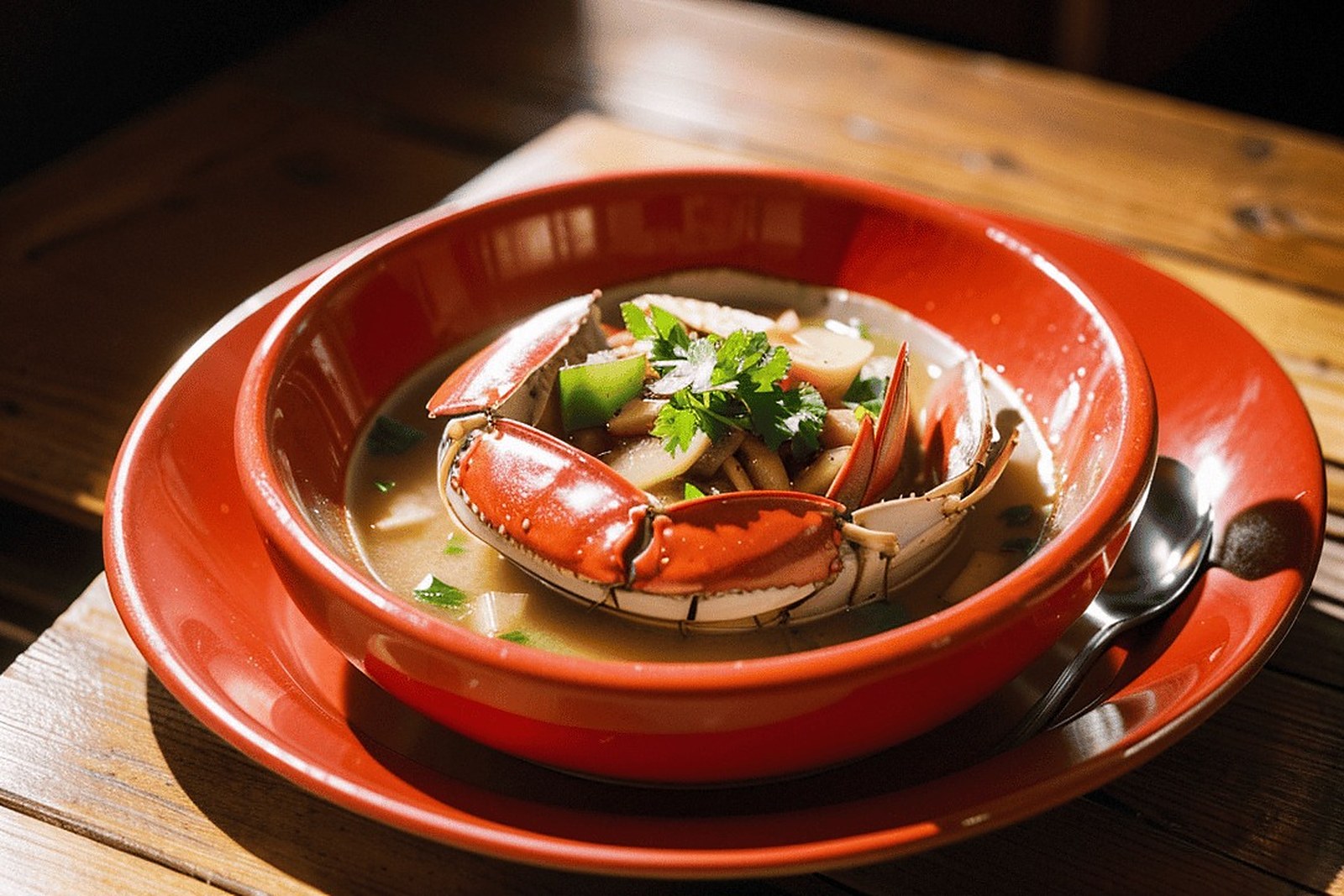
The other seven freshes keep the table honest. Silverfish – paper-thin, translucent – go into egg-drop soup that eats like silk; the green shrimp blanch to a sweetness the coast cannot copy; the turtle stews with ham into the banquet dish the villages save for honoured guests; the mussels, snails and water plants fill the vegetarian-looking middle of the table while tasting of nothing vegetarian. A full eight-fresh dinner is a procession, not a plate.
The place to eat the list is the lake itself – the restaurant rows at the wetland park gate and the courtyard houses of Qintong, where the morning’s catch arrives wet from the traps. Autumn is the season of seasons, when the crab runs the weir and every table smells of ginger and reed water; but the lake serves the list year-round, and the kitchens’ rule holds in every month: the fewer the seasonings, the truer the lake.
The same city holds more flavors worth chasing: 蟹黄汤包 Xièhuáng Tāngbāo the crab-soup buns, 黄桥烧饼 Huángqiáo Shāobǐng the sesame campaign biscuits, 泰州干丝 Tàizhōu Gānsī the morning shredded tofu, or 靖江猪肉脯 Jìngjiāng Zhūròupú the sweet pork jerky – four more doors into the same 泰州市 Tàizhōu Shì Taizhou City table.
Words and Names
What the Locals Know
flowcloud would say Qinhu’s eight freshes are a lake translated into dinner: a weir, a reed bed and eight creatures that never needed the sauce, served in the towns that have fished them for a thousand autumns. All checked November 2026.
Where to find it: The eight freshes are a lake-district meal – the wetland park’s gate restaurants and Qintong’s courtyard kitchens serve the set banquet and the single-dish picks, crab season runs from the equinox deep into autumn, and the freshness test is the cooking: steamed, souped or quick-fried, never heavy-sauced; order the weir crab first and let the kitchen fill the rest by the day’s catch. All checked November 2026.