
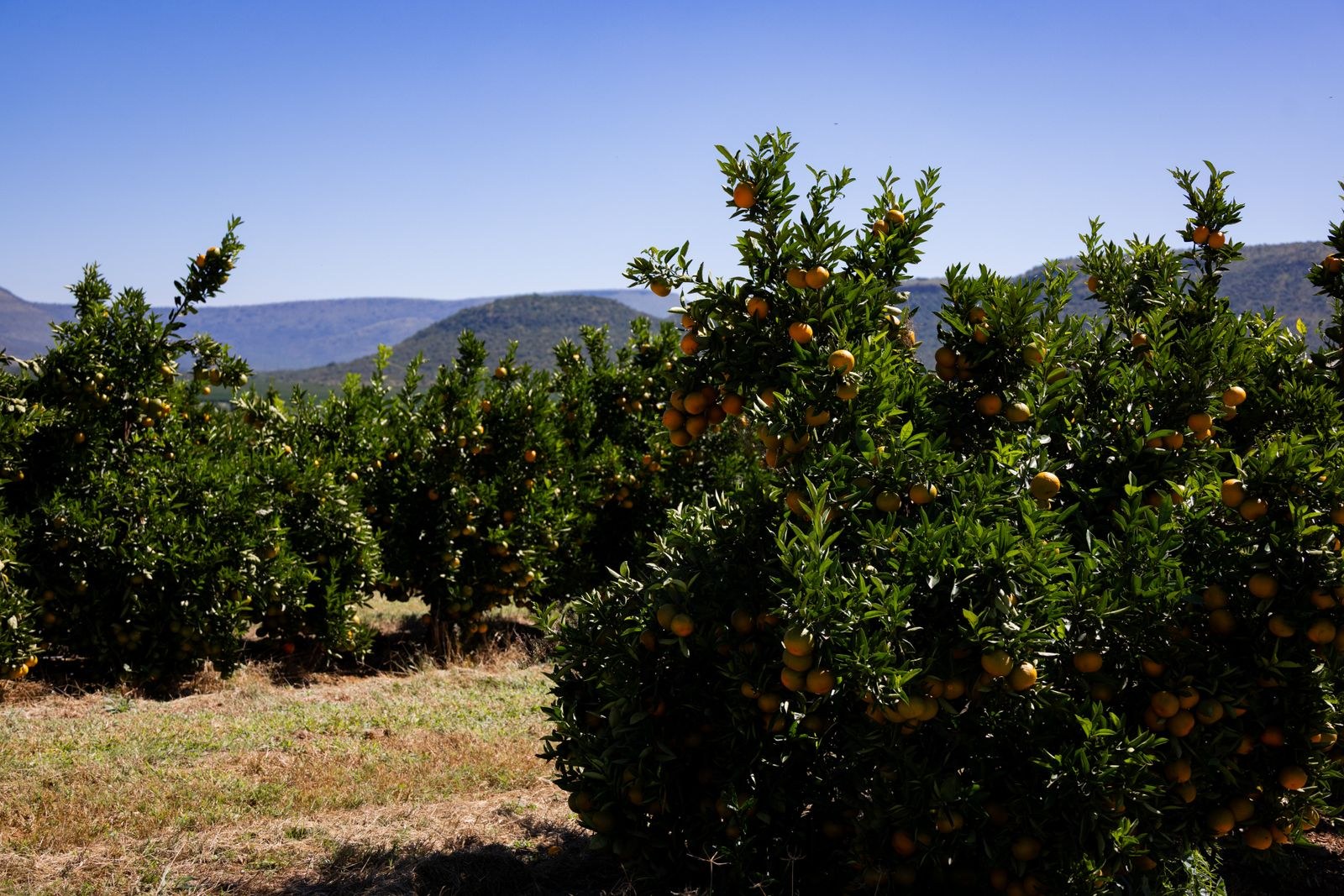
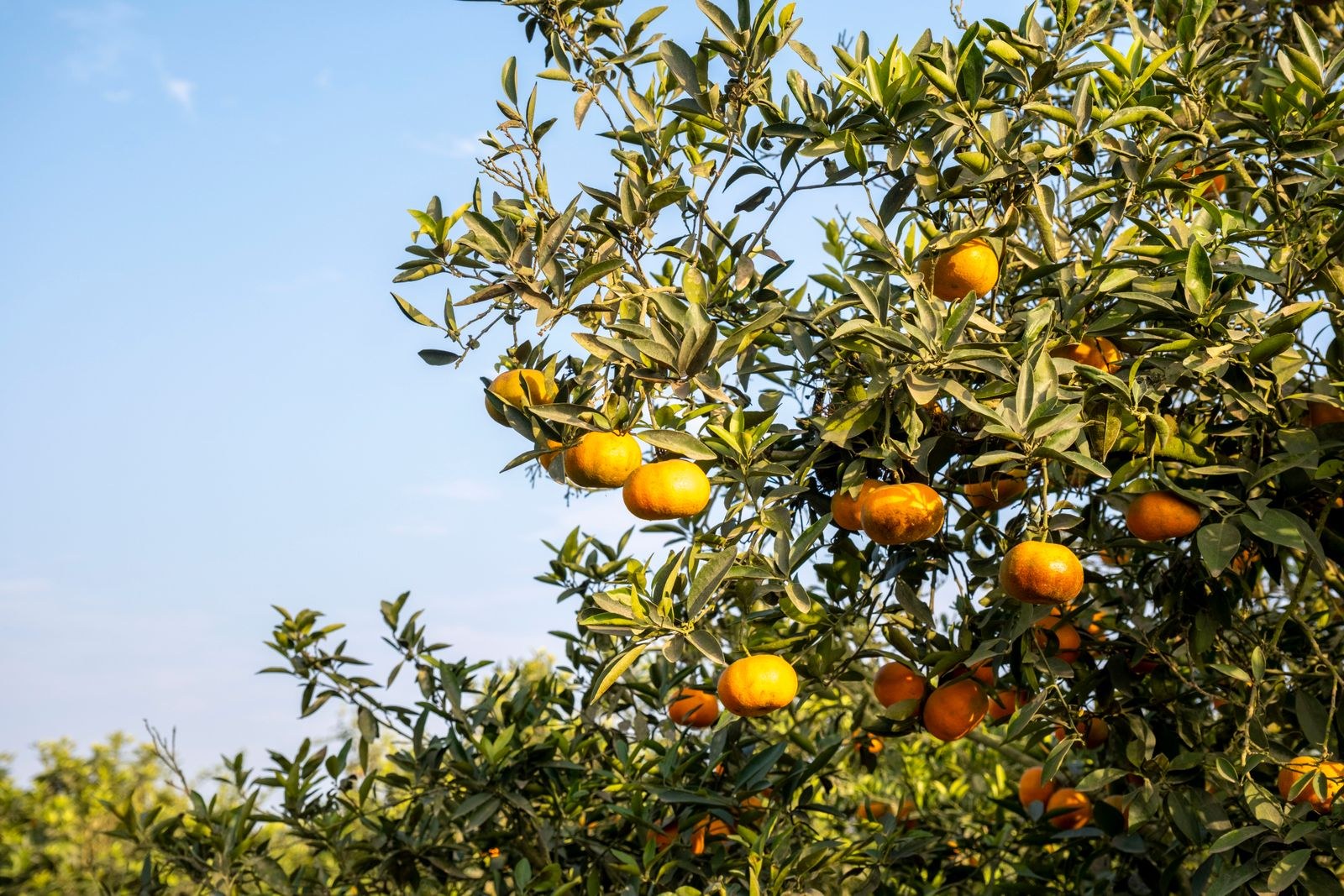
琼中绿橙 Qióngzhōng lǜchéng, the green orange of Qiongzhong, is the fruit that answers for 琼中黎族苗族自治县 Qióngzhōng Lízú Miáozú Zìzhìxiàn, the Li-Miao autonomous county at Hainan’s geometric centre – 2,704.66 square kilometres of the island’s green heart, source highlands of the Nandu, Changhua and Wanquan rivers, forest over 86 per cent of the land by the 2026 county profile. A national geographical-indication product with its trick in the name: near latitude 18°N chlorophyll retreats slowly and the peel never finishes turning while the flesh ripens – skin green, flesh red, thin-skinned, juicy, sweet-acid balanced, the fibre finer than an ordinary orange, in the county’s own description. The orchards anchor in 湾岭镇 Wānlǐng Zhèn Wanling and 黎母山镇 Límǔshān Zhèn Limushan Town, the festival at the county seat 营根 Yínggēn Yinggen.
The paperwork comes in three layers, kept apart. In 2006 the certification trademark 琼中绿橙 was approved by the national trademark authority – Hainan’s first geographical-indication certification trademark, the month disputed, so the year stands alone. On 19 March 2008 the old quality-technique supervision commission granted product protection under Announcement No. 30 of 2008, effective 1 January 2009 over the county’s whole administrative area; on 9 June 2025 the National Intellectual Property Administration recognised it a third time. The 2008 registration fixes the agronomy too: variety 红江橙 Hóngjiāng chéng Hongjiang orange, orchards below 600 metres, slopes under 25 degrees.
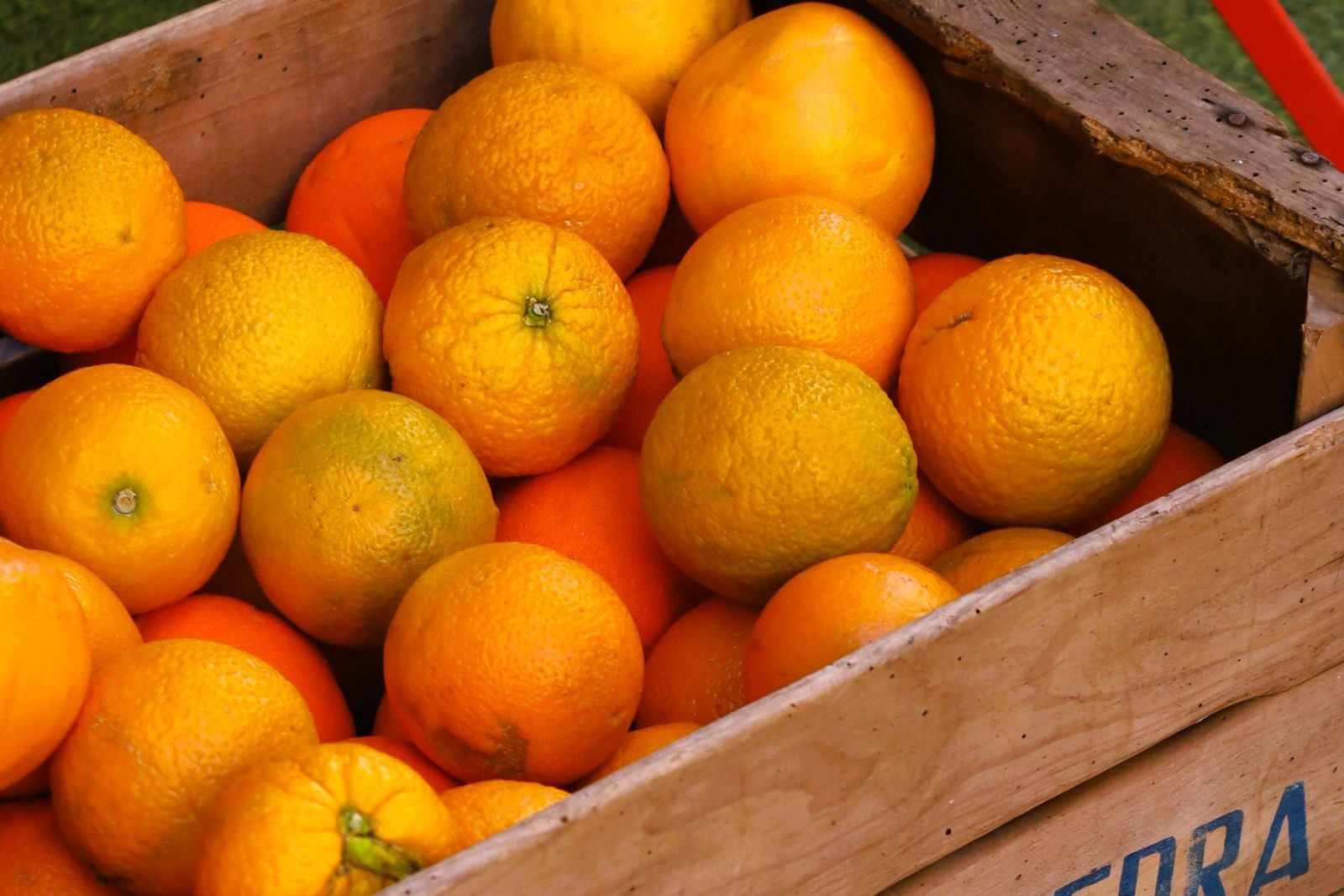
The variety is a Guangdong emigrant. Hongjiang orange gloried at Lianjiang’s Hongjiang farm in the 1980s, and Qiongzhong brought it over in the late 1980s – usually dated 1988, one 2025 account says 1989 – planting it as 琼中红江橙, then 琼中红橙, then 海南绿橙, until 2003 fixed the name 琼中绿橙. Chengmai’s Fucheng orange is the sibling from the same mother stock, a 2003 planting that must hang until its peel yellows; a Qiongzhong orange is picked green. The fruit card: about 300 grams, 75 per cent edible, 12 to 14 per cent soluble solids, the provincial standard DB46/T 175-2020 shipping a box at a 10.5 floor and a sugar-acid ratio of 25.
The output series must be read with its years, because the industry has been through replanting cycles. In 2025 the provincial government carried 30,000 mu planted, 19,000 mu in bearing, an expected 20 million jin worth about 184 million yuan – the November official estimate; a market-regulator retrospective early in 2026 put whole-chain value at 216 million yuan, 60 million of it online, and both figures stand with their dates. 2024 printed 10,000 tonnes and 175 million yuan. In 2017 the crop sank to 5 million jin worth 70 million – the replanting years – before the climb back. Around the fruit: more than 330 orchards, four processing plants cleaning half a million jin a day, and the five-unity regime of supervision, sorting, packaging, traceability and authorised sales – a QR code on every box, one fruit one code.
The modern orchards have names. 海南翔尔生态农业 Xiang’er at Limushan Town runs plant-protection drones and water-and-fertiliser automatic irrigation, general manager 王有华 Wang Youhua’s own account, its base a second-batch national green pest-control demonstration ground since 2023; 海南有橙福农业 Youchengfu’s thousand mu ran about 2 million jin the same year. The market push followed the brand: November 2023 took the orange to Beijing to launch 琼中好味 Qióngzhōng hǎowèi, the all-produce brand with the green orange as flagship, eight buyers signing for 6.4 million jin at 58 million yuan; a Shenzhen promotion and a JD storefront followed; by late 2025 Haikou pickup points promised one-hour delivery. Canadian buyers, the provincial daily noted, have ordered the fruit across an ocean to Vancouver tables – and counterfeits came with the value: in 2021 stalls resold outside oranges under the Qiongzhong name, association chairman 连英周 Lian Yingzhou pricing the real fruit at about 13 yuan a jin against 5 to 8 for the fakes, that year’s prices.
Words and Names
琼中绿橙 Qióngzhōng lǜchéng is the fruit, 绿橙 lǜchéng the green orange and 红江橙 Hóngjiāng chéng the Hongjiang orange variety inside the green skin. 琼中好味 Qióngzhōng hǎowèi is the county’s all-produce brand, launched in Beijing in November 2023; 雨林橙王 yǔlín chéngwáng the rainforest orange king the growers contest each season. The registers keep their names apart: 地理标志证明商标 is the 2006 certification trademark, 地理标志产品 the product protection of 2008 and 2025 – one trademark, two product protections, three layers on one fruit.
What the Locals Know
The season runs from early October to early December, best in mid-to-late November, the fruit hanging into late December if the market allows. The harvest is a festival now: the 2025 green-orange tourism season opened on 8 November at Yinggen’s 三月三广场, the third-month-third square, under the banner 橙邀天下 乐享琼中, with a market in three boards, tasting, buying, heritage, growers contending the rainforest-orange-king title, honey and Shanlan rice wine stalls beside the oranges, and a market-regulator intellectual-property desk at the gate. Pick-your-own runs about 30 yuan a head plus fruit by the jin, a 2025 visitor’s snapshot that will move.
The provincial travel guide prints the day route that strings the county’s foods together: out from Haikou, green-orange picking at Wanling, on to 鸭坡村 Yāpō cūn Yapocun village, then lunch in Wanling old town – the list names rice-cooker chicken at the Haishan Island restaurant – and back. Orchards along the G224 pick and ship the same day, and the November 2025 arrangement gives Haikou one-hour delivery. The orange, the rice-cooker chicken and Yapocun’s tray feast are one afternoon’s work.
What the record refuses to give: a brand-value figure – the 2024 league table that multiplied a number belongs to the county’s honey, not the orange – any current official guidance price, the 13-yuan line being 2021 and expired, and a 2012 flourish one old county page carried with no details and no second source; none of it is printed here. The derivative lines – juice, wine, vinegar – stay one-sentence items in the county’s accounts.
flowcloud would say that 琼中绿橙 is a fruit out of step with its own colour – chlorophyll too slow for the tropics, a red-fleshed orange that ships green – carried by a 2006 trademark, a 2008 protection and a 2025 recognition, worth 184 million yuan in a good November and worth counterfeiting the moment it was.
Where to find it: the orchards of 湾岭镇 Wānlǐng Zhèn Wanling Town and 黎母山镇 Límǔshān Zhèn Limushan Town along the G224 – Xiang’er’s base and Youchengfu’s thousand mu both take visitors in season; the November tourism season at Yinggen’s 三月三广场 for the market and the orange-king contest; and the official Haikou pickup points, one-hour delivery as of late 2025. Come in mid-November for the best fruit, buy the QR-coded boxes rather than roadside stalls, and take the day route through Yapocun while you are there.