
琼中蜂蜜 Qióngzhōng fēngmì, the honey of Qiongzhong, is wildflower honey from the Chinese native bee, 中华蜜蜂 Zhōnghuá mìfēng, Apis cerana cerana, kept in boxes on green slopes across the Li-Miao autonomous county in Hainan’s forested centre. The county counts more than 1,300 nectar and pollen plants, flowers in every month of the year and no winter dormancy – the province’s science department and the island dailies file it as honey from Hainan’s ecological core zone. The anchors: 什仍村 in 长征镇 Chángzhēng Zhèn Changzheng Town, the county’s show apiary, and 鸭坡村 Yāpō cūn Yapocun in 湾岭镇 Wānlǐng Zhèn Wanling Town, where families cut their own comb on holiday mornings.
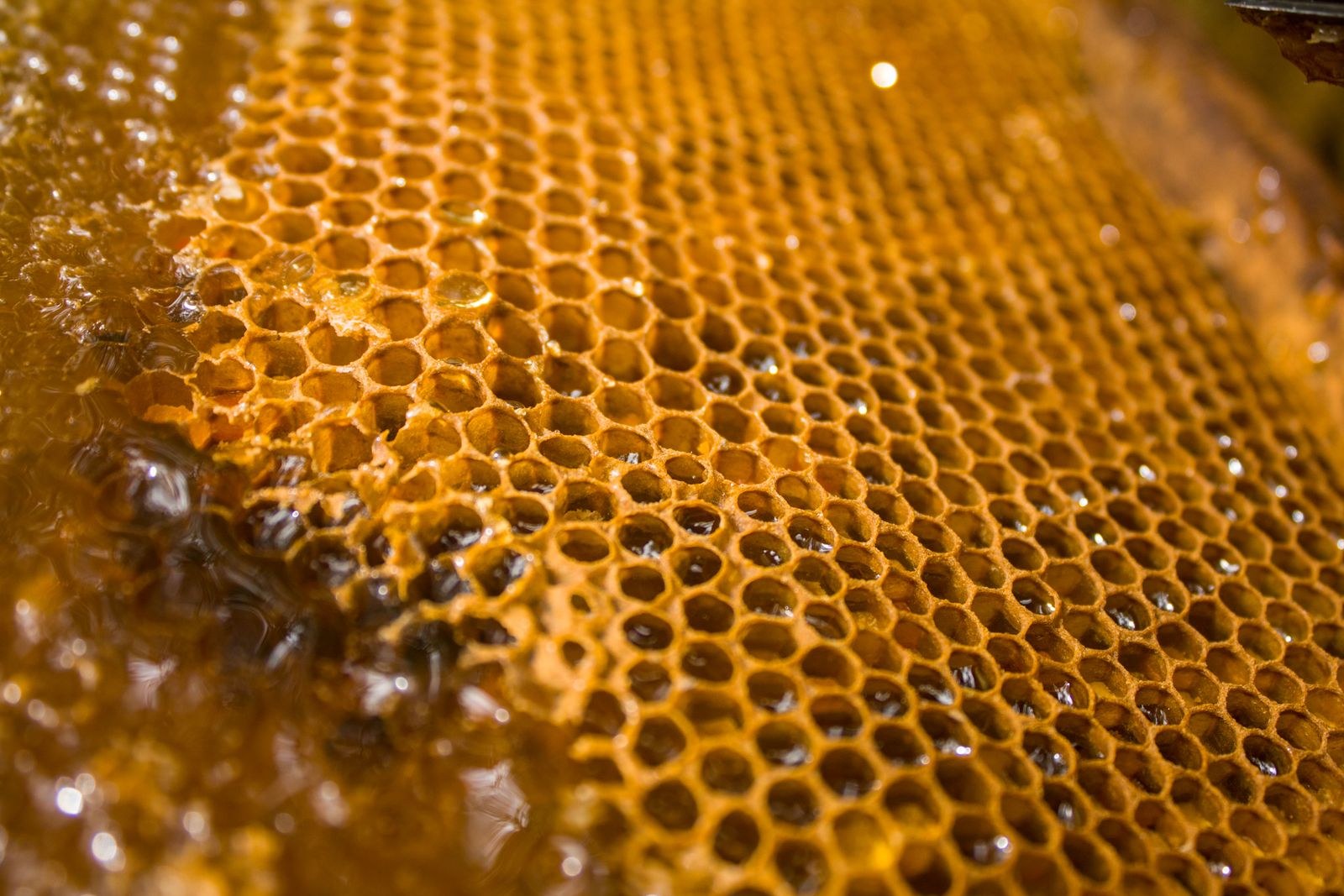
The paper trail is a 2009 collective geographical-indication trademark, approved by the national trademark authority, the year the province’s science department, the central news services and the county all carry. The register keeps it distinct from the green orange’s product protection one article over: a collective trademark is held for the members of a trade, a product protection binds a territory. The honours carry a wording the county is careful about: Qiongzhong is a co-built 中华蜜蜂之乡 – a Hometown of the Chinese native bee recognised under a joint programme – not a solo-titled county, and the text keeps the co-built. A mature-honey pilot and a national bee-system demonstration county across two five-year plans hang beside a chain of association, cooperatives, enterprises, science bases and households, with a 2017 live-frame beekeeping standard and usage rules under the trademark.
Quality control is batch by batch: every lot from every cooperative and every big keeper is tested before the 琼中蜂蜜 label is authorised, and a failing batch means three years off the mark and a blacklist. The keeper’s test is older. 卓定雄 Zhuo Dingxiong of the Limu Mountain Lüyuan cooperative demonstrates with a spoon: real honey pours in slow threads, clings, hangs, and the falling bead pulls back in on itself – honey that does none of that has been thinned. His cooperative’s hives sit in the shade of rubber trees, bees working the understory flowers below.
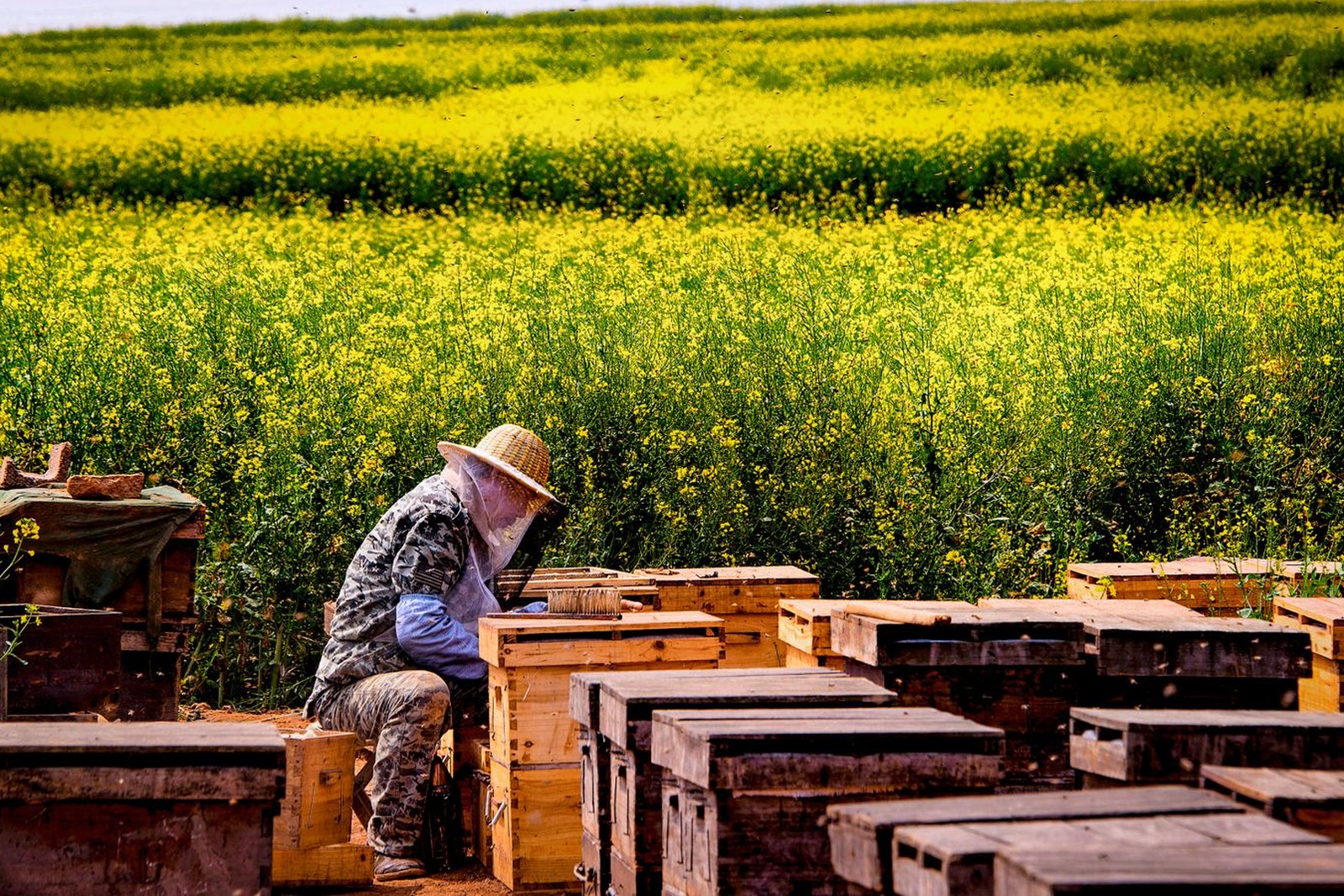
The counts, with their years: 4,000-odd beekeeping households and 61,000 hives, figures the 2018-to-2021 accounts agree on, concentrated in Wanling, Changzheng, Diaoluoshan and Hongmao; 19 cooperatives across those years; demonstration bases up from 11 in 2018 to 15 in 2021. Output runs near 910,000 jin – the science department’s May 2018 line said 915,000 – with the value moving from about 36.6 million yuan in 2018 to about 45 million in 2021. In May 2025 the industry’s own league table added a different kind of number: the brand’s value up from 89 million yuan in 2023 to 520 million in the 2024 national honey-brand list, a 484 per cent jump, the fastest growth on the table – a paper valuation, not a harvest figure, and printed here as such. Retail runs about 100 to 150 yuan a jin as of late 2026; the provincial daily’s 2019 beekeepers sold at a little over 100.
The show apiary is at 什仍村, the village the county bills as a bee town: every hive wired with a sensor and a camera – bring the swarm to the experts and the mountain into consumers’ living rooms – bee racks with a national patent, a house trademark, and a ledger that lifted five village collectives and 93 households out of poverty; in 2018 the village was one of only three bee-specialty villages named in the first national harvest festival’s hundred. The pedigree: 高景林 Gao Jinglin of the provincial academy began monitoring hives with computers and sensors in 1992, a quarter century before the wiring caught up. The festivals follow the bee: on 20 May 2018, World Bee Day’s China main venue sat in the county, its summit forum at the Yunhu farm, and the county head answered with a five-part industry: honey, pollination, health, culture-tourism, eco-monitoring. In 2021 the first Bee Culture Festival ran at the Baihua Ridge scenic area into June, keepers and visitors trading songs, one keeper selling a hundred bottles on the opening day.
Words and Names
中华蜜蜂 Zhōnghuá mìfēng is the Chinese native bee, the small dark bee that works the county’s flowers; 百花蜜 bǎihuā mì is the hundred-flower honey it makes. 摇蜜 yáo mì is spinning the comb; 挂丝 guà sī is the hanging thread real honey pours in. 蜂情小镇 fēngqíng xiǎozhèn is the bee-town bill 什仍村 carries, a pun with the word for charm, 风情, with the bee swapped in. And two phrasings the record is strict about: 地理标志集体商标 is the collective trademark of 2009, a different instrument from a product protection, and 共建 – co-built – is the word that stays inside the hometown title.
What the Locals Know
The harvest concentrates around Qingming, March into May, when the spring flowers finish. The work runs six steps – open the hive, lift the comb, cut the capping, spin, filter, bottle – and visitors join it: Yapocun runs parent-child cutting and extracting benches over the May holiday, where a young visitor from Guizhou, 张玉婷 Zhang Yuting, gave the provincial daily the verdict that honey harvested by yourself is sweeter; the county hangs honey-harvest festivals off the third-month-third holiday; and five honey routes printed in 2018 string villages from 什寒 Shihan to the Limu Mountain forest park and Shuichao at the county seat into one itinerary.
The county’s tricks for reaching buyers are concrete. Bee adoption: a thousand yuan a year buys a hive’s use rights, ten jin of honey guaranteed, and a visit to harvest your own – the Mi Yuan cooperative at Jiacha farm ran it with keeper 梅学国 Mei Xueguo and a hundred-odd poverty-lifted households behind him. Every village has an e-commerce station. The county science association’s vice-chair 邓群青 Deng Qunqun describes the honey as carrying more than a hundred nutrients from the Wuzhishan massif’s flowers – an official’s description, quoted as one, not a laboratory claim.
What the record refuses: single-flower honeys named from aloeswood, rosewood or boni spice, which circulate in promotional copy with no first-hand source behind them; a current official retail price; the village’s present hive count – the 7,000 and 8,000 figures are 2018 plans; and the native-bee fingerprint database, still a 2021 plan when last reported. None of it is printed as fact here.
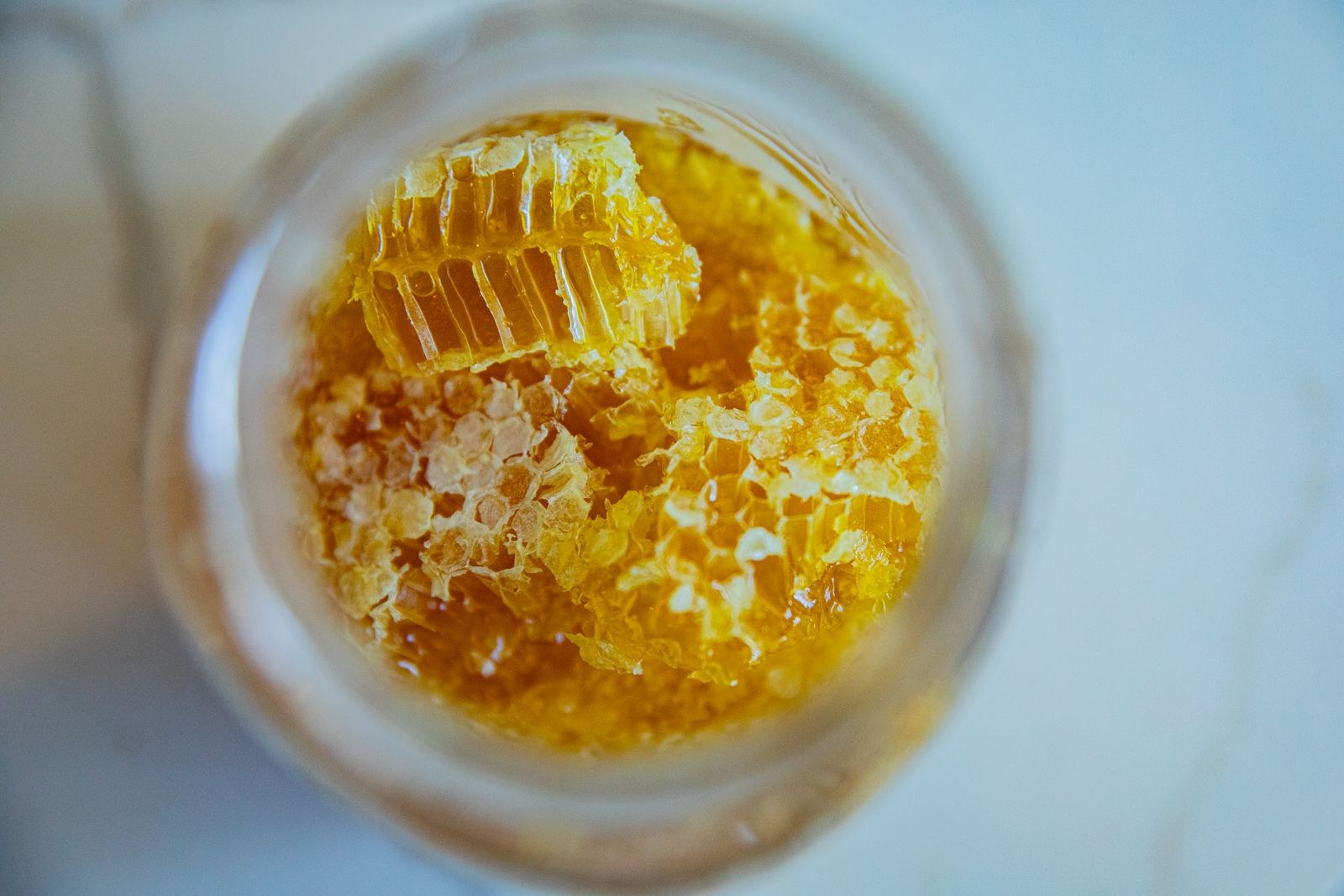
flowcloud would say that 琼中蜂蜜 is a winter that never happens – flowers in all twelve months, a native bee that never sleeps, every batch walking past a test bench before the label goes on – and a brand whose paper value quintupled the year the county entered the league table.
Where to find it: the smart apiary at 什仍村 in 长征镇 Chángzhēng Zhèn, by appointment through the bee cooperatives; Yapocun’s extracting benches in 湾岭镇 Wānlǐng Zhèn over the May holiday; and the May-June bee festival at the 百花岭 Baihua Ridge scenic area. Retail runs about 100 to 150 yuan a jin as of late 2026 – buy the tested, GI-labelled jars, and the comb-in-glass packs travel best as gifts.