
Qiongzhong’s Small Yellow Cattle, Raised on Leaves and Salt Calls
琼中小黄牛 Qióngzhōng xiǎo huángniú, the small yellow cattle of Qiongzhong, are Hainan’s own hill cattle – 雷琼牛 Léiqióng niú Leiqiong cattle, the island’s local type on the national livestock genetic-resources protection list – turned loose on the county’s slopes and left to browse. The nickname system tells the story: the meat is called 鹿肉 lùròu, deer meat, or 野牛肉 yěniúròu, wild beef, because the animals graze on leaves with herbs in them, and the herds are the small yellows that never come home, released to the hills and mustered rarely. The anchors: the grazing country of 上安乡 Shàng’ān xiāng Shang’an and 红毛镇 Hóngmáo Zhèn Hongmao Town in the county’s high country, and the tables of the county seat 营根 Yínggēn Yinggen. The county’s own accounts call stock-raising a pillar of farm income.
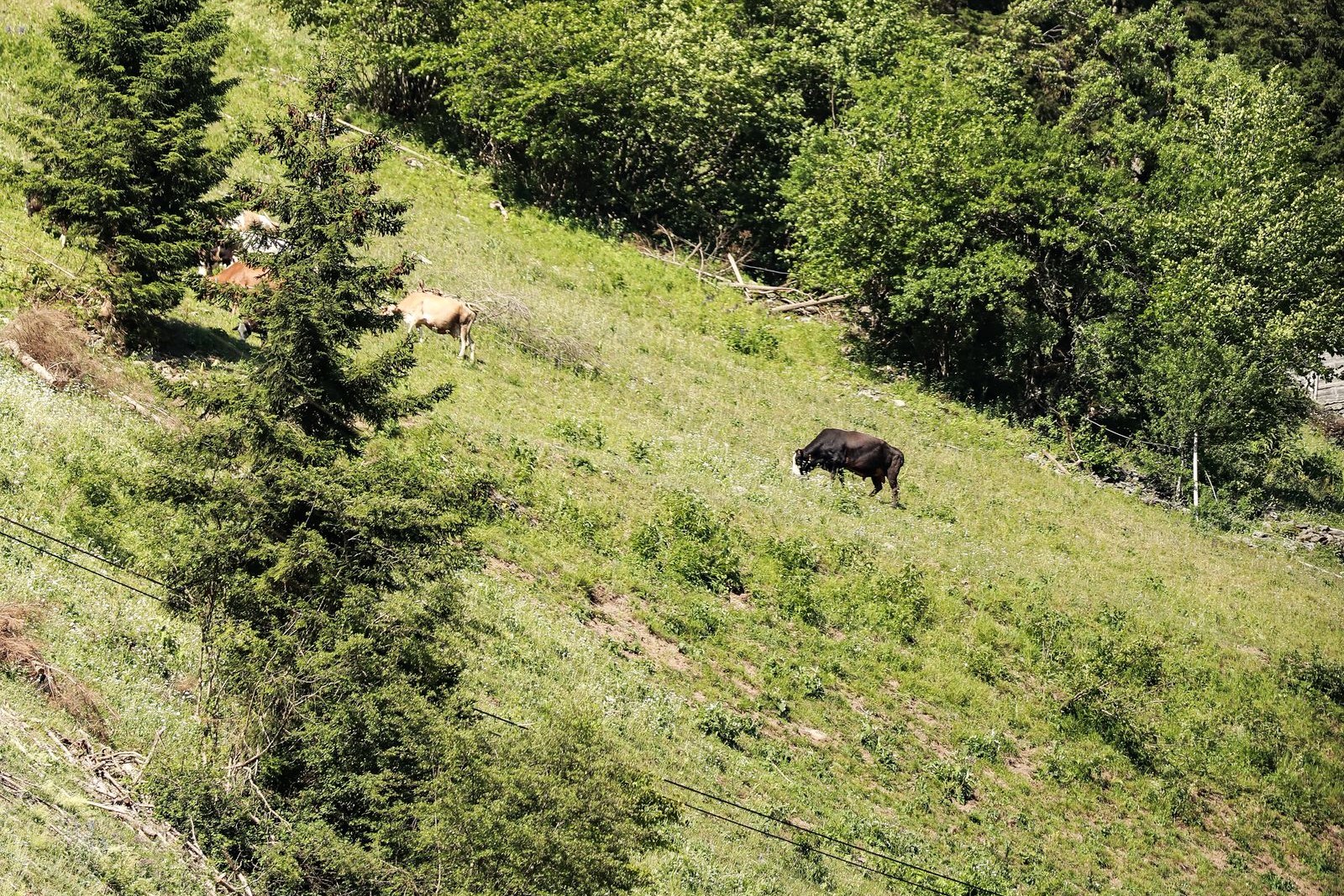
The breed card, from the province’s own vets: small-bodied, wild-tempered, heat- and drought-hardy, disease-resistant – the description of senior veterinarian 汪达付 Wang Dafu, who came from Zhengzhou more than twenty years ago to work the island’s improvement programme, begun around 2000 with imported embryos and mainland bulls. The island’s water buffalo survive only as household draft animals; the small yellows do the meat work. The carcass the county prints: fine fibre, deep red, low moisture, and a hide that is thick and rich in collagen – which is why the skin stays on the plate here, chewed crisp in the hotpot where other kitchens would discard it.
The husbandry is the spectacle. Herds are released above 700 metres – the provincial government and the central media print 700; the county’s older food page said 800 – to eat tree leaves, herbs among them, and drink from flowing springs, working through dew-wet leaves in the sunshine. Then the muster: every week to every month, each owner climbs up and calls the lead ox the family’s own way, walks the herd down to a fixed place, and puts out salt – one part appetite, one part minerals. Between salt calls the animals are on their own; the mountain keeps the herds mixed and only the lead ox knows whose call is whose.
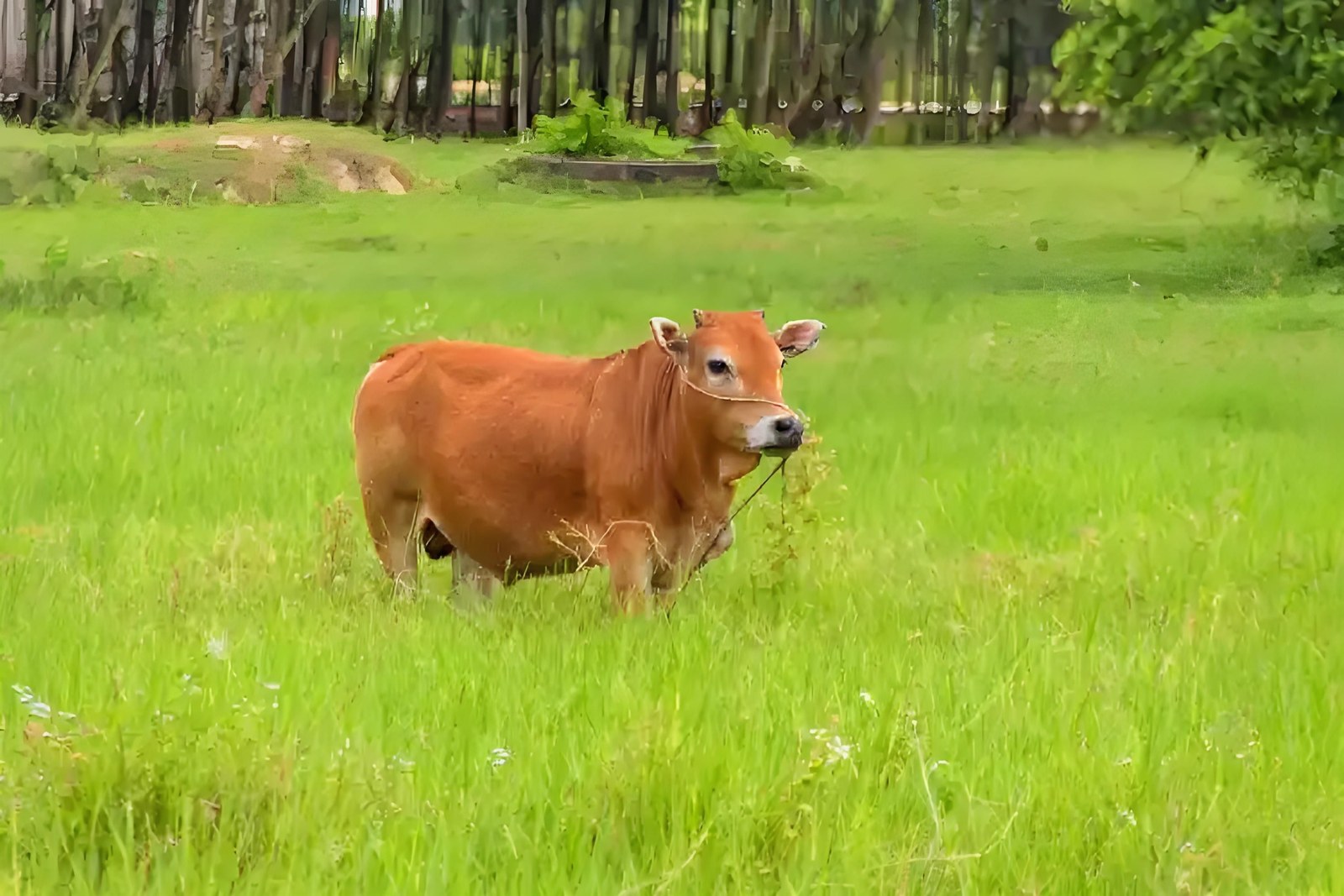
The industry’s paper stops at 2015, and the text stops with it. A 2017 provincial-daily industry profile citing 2015 figures: 14,352 head raised across the year – 8,021 on hand, 6,331 slaughtered – 638 tonnes of beef worth 63.8 million yuan, 12 per cent of the county’s livestock output, with Shang’an’s own small yellows at 3,145 head. The county’s environmental plan printed a different 2015 – 15,000 cattle all told, 6,700 of them yellow – the two registers disagree, and both are carried here, unmerged. Around the herds: 1.194 million mu of grassland, nearly a third of the county; twelve cattle cooperatives, three each in Hongmao and Wanling. The same profile priced a finished head at about 15,000 yuan with a 6,000-to-7,000-yuan profit, and a hundred-million-yuan investment project was announced – with no public follow-up since, and none invented here. The 1979 archive counted 37,100 head, two and a half to a household, 746 four-level cattle farms.
The meat’s modern route runs through e-commerce: in 2022 Qiongzhong beef made the rural-revitalisation platform’s ten hit products, and the state-owned Meiwei company under the central-Hainan food-basket group buys fresh-slaughtered cattle, prioritises households lifted out of poverty, and ships cold-chain next-day. The eating public’s line is older and better: 琼中归来不吃牛 – from Qiongzhong, one does not eat beef elsewhere – the food writers’ sentence for the county’s beef, and one the Haishan Island restaurant at Wanling earns a share of, its jerky made entirely from local mountain cattle. The county’s 52 peaks above 1,000 metres stand behind the label.
Words and Names
小黄牛 xiǎo huángniú is the small yellow cattle; 雷琼牛 Léiqióng niú is the Leiqiong breed card they file under. 放养 fàngyǎng is the free-ranging; 盐巴 yánbā is the salt the muster delivers; 头牛 tóuniú is the lead ox the call addresses. 山柚油 shānyòu yóu is Hainan’s camellia-seed oil, the county’s frying fat for dry-fried beef. 牛皮 niúpí is the hide, eaten here, crisp in the hotpot. 上安小黄牛 is Shang’an’s own sub-brand of the county’s cattle.
What the Locals Know
The kitchen map runs wide. Dry-fried, the meat wants little beyond Hainan’s camellia oil, sesame and coriander. The hotpot is skin-on – the hide blanched and sliced, crisp and springy, the memory point that separates a Qiongzhong beef pot from any other. The Li tables skewer the meat over charcoal; the restaurants red-braise it skin-on; some eateries crumb-fry skin-on cuts, a preparation the text reports softly. The county’s own specialities are 和平镇 Hépíng Zhèn Heping Town’s beef jerky and 上安乡 Shàng’ān xiāng Shang’an’s pan-fried beef slices, and the sinew – pale yellow, rubbery, round in section – goes to the patient. Hotels across Qiongzhong, Wuzhishan and Baoting serve a bamboo-tube beef, minced with pepper, curry and lemongrass powders and roasted – bamboo as vessel here, a different dish from the county’s bamboo-tube rice.
In the county’s tourism villages the hospitality plate is beef: a dish of jerky, pepper-fried slices, charcoal-grilled slices – the county government’s own description of a Li-Miao welcome. The county’s 2017 food page prints four official addresses in and around the county seat – the Qiongzhong Hotel, the A’wuzai crab-congee house, the Wenlai roast-chicken shop at Jiacha farm, and the Haishan Island restaurant out at Wanling – and visitor accounts add clay-oven beef hotpot rooms in Yinggen where the meat is cut to order over charcoal. Online, the cold-chain box makes the repurchase case: next-day across the island.
What the record refuses: any herd count after 2015 – the text prints none – the investment project’s fate, an altitude more precise than above-700-metres, and any kinship with the county’s five-toe pig beyond sharing a mountain. The nicknames stay nicknames; nobody has filed the beef as venison anywhere that matters.
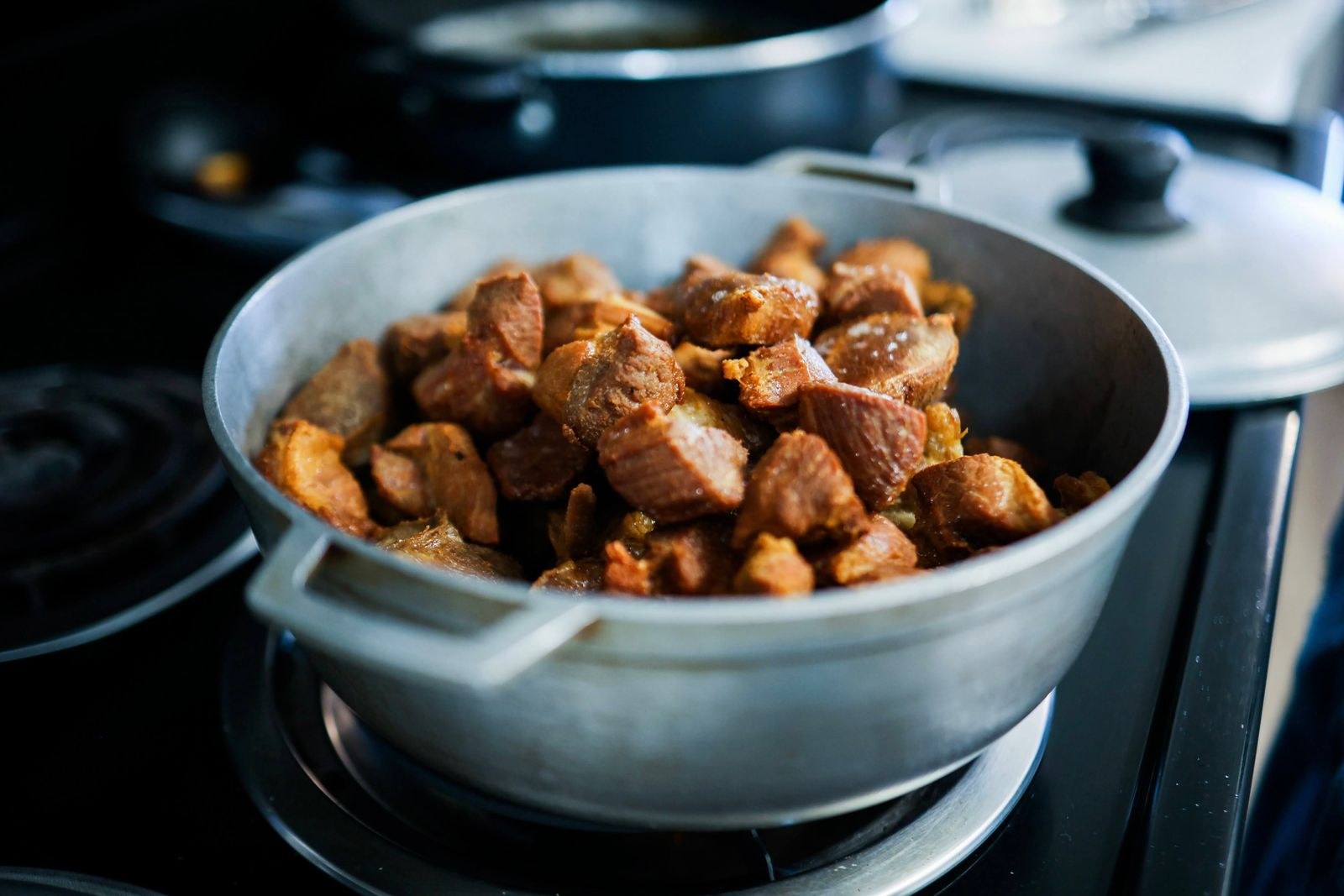
flowcloud would say that 琼中小黄牛 is a husbandry written in negative space – no fences in the account, no feed bill, one salt call a week and a lead ox who answers it – and a beef the county eats skin-first, crisp where other kitchens throw the hide away.
Where to find it: 营根 Yínggēn Yinggen’s official four – the Qiongzhong Hotel, A’wuzai crab congee, Wenlai roast chicken at Jiacha farm – and the clay-oven beef hotpot rooms the county seat’s visitor accounts point to; the Haishan Island restaurant at 湾岭 Wanling for the jerky behind the from-Qiongzhong-no-beef-elsewhere line; and the cold-chain box online for the repurchase. Take the skin-on hotpot first, jerky home, and leave the herd on the mountain between salt calls.